Tag: Sparrowhawk

  • Raptors, raptors everywhere

    Standing on the Heugh on Holy Island with Jill and Steve, we’re all scanning towards Guile Point.  Cormorants, Shags, Red-breasted Mergansers and Eider are all bobbing about on the water, Pale-bellied and Dark-bellied Brent Geese, Bar-tailed Godwits, Grey Plover, Curlew and Oystercatchers are flying by, Common and Grey Seals are splashing in the surf as the tide falls…and I’m focused on the sea with one species in mind.  Then 2 distant white dots, gradually narrowing the gap toward us, and I know I’ve achieved that primary target.  Soon, I’ve got 2 very happy clients watching an immaculate drake Long-tailed Duck.  Outrageously attractive, he waved that eponymous tail in the air before taking off and vanishing out of sight around the headland.

    At the other end of the day we watched a flock of 20 Slavonian Grebes and a similar number of Common Scoter, another 6 Long-tailed Ducks, an elusive Black-throated Diver and 3 equally elusive Red-throated Divers and 2 Harbour Porpoises as the light faded to the point where even the impressive assembly of optical equipment wasn’t offering an advantage any more.

    Sandwiched in between though, was a veritable feast of raptors;  we’d already had a couple of Common Buzzards (and I’d had 2 on the drive to Hauxley before collecting Jill and Steve), 2 Sparrowhawks and several Kestrels by lunchtime, but the best was yet to come.  First a Merlin perched on a post in front of us for 10 minutes, then we found 2 Peregrines sitting on boulders at low tide.  Soon a wave of panic spread through the assembled waders, and the Barnacle, Greylag, Pink-footed and White-fronted Geese, as the 2 Peregrines swooped back and forth.  Then, our second Merlin of the day began harrassing one of the Peregrines. As chaos raged across the mudflats, one of the Peregrines made a kill; an unfortunate Redshank.  It took it’s prize to a rock and began plucking it…and 2 more Peregrines arrived!  All 3 tussled over the spoils of the hunt, before 2 of them conceded and sat a little distance away.  A dry, cold wintry day and spectacular drama played out by some excellent wildlife.  The Northumberland coast in the winter – there’s nothing better 🙂

  • It’s good to be back

    After a planned break from days out with clients, and regular exercise and ice-pack treatment for my knee, we had a mini-Safari on Wednesday afternoon.  Southeast Northumberland is our local patch, so I was getting back into the swing of things with something comfortingly familiar.

    I collected Alastair and Zoe from Church Point and we set out on an exploration of the River Wansbeck.  Stunning Red-breasted Mergansers and Goldeneye, and subtly attractive Little Grebes (amazing how many people still think of them as Dabchicks – a far nicer name!),  were diving along the edge of the river.  A handsome drake Goosander flew upstream and the first of the afternoon’s 4 Sparrowhawks drifted high overhead.  A flock of Long-tailed Tits, those noisy endearing pink and white fluffballs, made their way in procession from one side of the river to the other and Mallards began dropping out of the sky and following each other through the vegetation, quacking noisily.  As daylight faded a flock of Teal drifted backwards and forwards between a reedbed and open water, roosting Pheasants (my vote for most underrated bird in Britain) flushed from a Hawthorn hedge as we made our way back to the car in the dark, and it was time to return Zoe and Alastair to Newbiggin.

  • Bittern by the birdwatching bug

    Clients often comment that what really appeals to them about birdwatching is that every day is different and there’s always something new to learn. I couldn’t agree more; I have lots of days out with clients, and a lot of time in the field on ‘non-client’ days, and still feel enthusiastic every morning when I wake up, knowing that I don’t know what the day will bring.

    Thursday was Peter and Alison’s second day out with us, and this time we were birdwatching around Druridge Bay and southeast Northumberland.

    The weather forecast had shown the edge of the rain staying south of Newcastle all day, so that should have been alright…

    As it turned out, we had rain for a good chunk of the day, but the birdwatching was still excellent.  From Black-headed Gulls, and a lesson on moult and ageing, Mediterranean Gulls scavenging in the Church Point car park, 4 Short-eared Owls and a Hen Harrier quartering the ash lagoon bank, a Sparrowhawk hunting as a group of Starlings came swirling in to roost, a tiny Goldcrest flitting about in a windswept Willow, a skittish Water Rail apparently struggling to summon the courage to run across the gap between reedbeds, a thousand Pink-footed Geese flying in at dusk, 300 Barnacle Geese taking to the air together, all the way to the finale of the trip as a Bittern flew between the north and south pools at East Chevington as dark descended, it was another day of outstanding experiences.

    And tomorrow…is another day 🙂

  • Arrivals

    The autumn regularly produces excellent birdwatching experiences, and our Friday afternoon Lindisfarne mini-safari was no exception.

    I collected Pat and Ian from Glororum and we headed north towards Holy Island.  With the tide falling, the newly exposed mud provided a veritable banquet for the massed waders and wildfowl.  As far as the eye could see the shoreline was lined with Pale-bellied and Dark-bellied Brent Geese, Barnacle Geese were arriving and the mud was a hive of activity with Wigeon, Teal, Bar-tailed Godwits, Curlews, Redshanks, Oystercatchers, Knot, Dunlin and Grey Plover all tucking in.  2 Carrion Crows were administering a warm welcome to a Peregrine, and a Little Egret flew in, landing beside another egret that was stalking around the edges of a pool on the mudflats.  As the afternoon wore on, we relocated to Bamburgh, and the rocks there produced excellent views of the waders we’d seen earlier as well as a few Purple Sandpipers.

    Then came one of those real experience moments.  Despite the strong offshore winds 3 Fieldfares were battling against the headwind, low over the waves.  They crossed the beach, flew by us and as they dropped towards the shelter of the coastal fields they were intercepted by 2 Sparrowhawks.  The final act of the encounter happened out of sight, but you can’t help thinking that it was a cruel end to a herculean effort.

  • Raptorfest

    We don’t usually do North Pennines trips in September; by this time of the year we’re focused closely on the coast, and our inland visits tend to be limited to our own photography projects.  However, when we had a ‘phone call on Monday “we’re stopping in Allendale, what can you do for us this week?”, it seemed logical to head into the bleak open expanse of southwest Northumberland and Upper Teesdale.

    I collected Jan and Pete from their holiday cottage and we headed cross country as I explained that birdwatching in the North Pennines tends to be about quality rather than quantity…

    Sure enough, the mouth-watering quality of birdwatching on the moors was soon evident.  After lots of obligingly photogenic Red Grouse we went through a remarkable period of raptor sightings.  Kestrels and Common Buzzards were followed by a Peregrine harassing a Carrion Crow, a Common Buzzard somehow getting embroiled in that same dispute, a Merlin that raced across the fell behind the intriguing 3-way dogfight, more Kestrels and Common Buzzards, and a Sparrowhawk that had caught a Lapwing (which broke free and flew off, with the Sparrowhawk in pursuit).

    Then we had a quantity of quality, as our afternoon and evening produced no less than 73 Black Grouse! 54 Blackcocks and 19 Greyhens was an extraordinary total for one trip and we enjoyed the sight of the cryptically patterned Greyhens, the iridescent blue of the adult Blackcocks and we picked out a few young birds amongst the groups as well.

    Rounded off with a carmine pink sky just after sunset, we’ll have to think about adding some autumn North Pennines trips into our schedule for 2012 🙂

  • Heron aid

    Our 3rd Druridge Bay/southeast Northumberland trip in 5 days began with an old friend as our regular Little Owl sat sleepily in the sunshine, only opening an eye to check who we were before nodding off again.  Further north, we watched a flock of 59 Pink-footed Geese as they headed south high overhead.  3 Grey Herons flew south past us, then north over Warkworth before heading south again.  Incredibly. later in the afternoon, the same 3 herons flew south overhead at East Chevington, followed soon after by another 4, and we found another 3 sitting in a recently mown field near Hauxley.  East Chevington also produced a good flock of Lapwing, with several Ruff scattered amongst them, and Cresswell held a flock of Dunlin with a Little Stint.

    As sunset approached we settled to the waiting game of quiet observation by a small pool.  Tawny Owls called nearby, a Buzzard was perched obligingly in the open, a Sparrowhawk was hedge-hopping to see what it could scare up for dinner, Jackdaws and Rooks were gathering noisily before going to roost and there was a notable level of panic and a high level of alertness in the assembled ducks.  The cause of the panic didn’t show itself though, and we walked back to the car with Common Pipistrelles flying just above our heads before I returned Tamasin and Daniel to Newbiggin.

  • Go(at) on, make my day

    Yesterday saw something we haven’t done before; a mid-August Kielder Safari.

    Andrew, Nick (on his 3rd trip with NEWT), Stephen and Georgina all arrived at our starting point within minutes of each other.  Under a deep blue sky, with some big fluffy white clouds, conditions looked perfect and we set off for the western reaches of Northumberland.

    Common Buzzards were seen en route, a good sign that conditions were right for raptors.  The thing that makes our Kielder Safaris so special is the access we’ve been granted by the Forestry Commission, allowing us to take our clients on a drive along remote tracks that are not open to vehicle access by the general public.  With so little disturbance, the wildlife along the tracks is often very approachable.  A family party of Common Crossbills perched obligingly in trees just ahead of us, and kept flying down to the track to eat grit, Siskins, Chaffinches and a Spotted Flycatcher were all watched as they went about their business close by and a Sparrowhawk twisted, turned and swooped through the trees just a few metres away, hot on the tail of a flock of Siskins and Chaffinches.  Perhaps one of the most extraordinary moments of the trip was something I’ve never seen before, in over 40 years of birdwatching;  as we watched a juvenile Common Buzzard soaring above a remote steep-sided valley, Andrew noticed a second bird further along the valley.  The juvenile flew in that direction and the second bird, an adult buzzard, flew up towards it, rolled on it’s back in mid-air and passed prey up to the juvenile.  I’ve seen that happen so many times as courtship behaviour in all of our harrier species, but I’ve never seen a food pass between Common Buzzards, and to see it executed so gracefully by this broad-winged raptor was breathtaking.  We continued on our way with Wheatear, Stonechat, Kestrel, Raven, Pochard, Tufted Duck and Mandarin all joining the day list.

    Perhaps the best of the day though came near the end; as we drove across the Forest Drive, a large mammal crossed the track ahead of us.  Looking like a dark Roe Deer on steroids, the nanny Wild Goat was soon followed by a billy goat and 2 kids.  We’ve seen Wild Goats with clients on our trips before, but never at such close quarters.

    We’ll be visiting Kielder again on 31st August and 2nd September, so give us a call on 07908 119535 to find out how you can share the experience of the border forests, and the unknown quantity of those remote tracks, with us.

  • Happiness is a state of ‘find’

    A couple of months after I left my teaching career, I was sent a link to this webpage… and I ended up in a pub at 10:00 on a Tuesday morning, explaining my ideas to an interview panel.

    A few weeks after that interview I found myself on an Enterprise Island residential weekend and when we were asked the question “how will you know when your business is a success?”  almost everyone answered that the measure of that would be if their customers were happy.

    We had our first Cheviots Safari of the year yesterday.  I collected Sally and Tony from Morpeth and we headed northwest.  On a day that was cold, windy and overcast, the quality of the birdwatching in the Northumberland hills more than made up for the weather; 3 Ring Ouzels perched obligingly in one tree, allowing us a prolonged opportunity to watch them, Curlews were displaying high over the heather moorland, male Red Grouse were as stunning as ever, Chaffinches, Willow Warblers, Chiffchaffs, Blackcaps, Robins, Redpolls, Meadow Pipits, Mistle Thrushes and Wrens were all singing and we had an unexpected bonus in the shape of a White Wagtail.  A real highlight of the day, although it wasn’t a highlight so much as a constant backdrop, was the number of raptors; 14 Common Buzzards (including 7 in the air at the same time), 2 Kestrels chasing each other around and a Sparrowhawk would have been a good haul on a cold day, but as we watched a Peregrine go into a stooping dive we were amazed to see that the object of it’s ire was a Goshawk, beating it’s way steadily across the hillside.  As the falcon repeatedly buzzed the ‘phantom of the forest’, buzzards were hanging in the wind high above it, and a kestrel was hovering against the hilltop.  It was one of those moments that I really can’t do justice to in writing.

    And the connection to the anecdote at the start of this post?  My answer to the question was that I would consider NEWT a success if I was happy with what we’re doing.  Of course, me being happy requires happy clients… and the reason we had Sally and Tony out with us yesterday was that Sally had been given a gift voucher by one of our previous clients.  Happiness is infectious 🙂

  • Autumnal February

    Finishing a mini-safari at dusk combines two of my greatest pleasures; showing our clients the wildlife and landscape of Northumberland, and still being outside as it gets dark.

    I met up with Alastair, Roz, Keith and Marian mid-afternoon last Thursday for a few hours of wildlife and birdwatching around Druridge Bay and Southeast Northumberland.  As I got out of our Landrover in the car park at Church Point, it occurred to me that it was so cold and misty that I’d be really quite excited if it was mid-October 🙂  Even so, in mid-February a mini-safari finishing at dusk is still exciting.

    Beside the River Coquet, a wave of panic rippled through the Jackdaws and Woodpigeons.  No sign of any cause though.  Then another wave of panic and a Sparrowhawk raced by, narrowly missing a Black-headed Gull perched on a fence post.  A group of Roe Deer were spotted by Marian, walking along a ridge opposite us and vanishing behind the bushes before reappearing and then vanishing again.  At least 28 Goldeneye were displaying on the river, the comical contortions of the drakes providing good entertainment.  Almost as good as the entertainment provided by the sense of humour of all 4 clients 🙂

    A flock of 25 Goldfinches was well appreciated, as were all of the tiny lambs in the fields nearby and no fewer than 9 Grey Herons all sitting around one small pool.  A pair of Pintail were dabbling, as dabbling ducks do, and Alastair’s sharp eyes provided a Barn Owl for the list as it ghosted it’s way through the sky above the flooded meadows.

    Dusk beside a pool with a wader roost is almost indescribable; Lapwing, Curlew and Dunlin all huddled close together is quite a sight but the thing that takes almost everybody by surprise is the noise.  The level of vocalisation between the birds is extraordinary, and then the Lapwings fall silent as they begin to fly off to feeding areas.  Then, as the light faded to a level where binoculars, and even our eyes, weren’t really sufficient anymore, the trumpeting of 24 Whooper Swans coming to roost rounded the day off.

  • Feeding time

    I’ve never been good at sitting in the office and concentrating on one task for any length of time.  Having an office window that looks out over the 76ha of mixed woodland of Choppington Woods LNR is a real blessing, allowing me to mix work and birdwatching.  When I need to stretch my legs, a quick trip downstairs lets me open the patio door and turns the kitchen into a very comfortable and convenient bird photography hide.

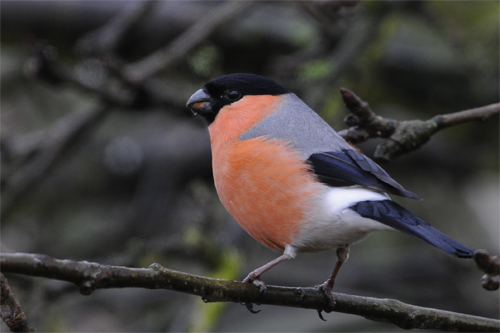
    Our garden is currently hosting at least 8 Bramblings, along with Greenfinches, Goldfinches, Chaffinches, Bullfinches, Blue, Great, Coal and Long-tailed Tits, occasional visits from Siskin, Redpoll and Treecreeper and regular fly-throughs by our local Sparrowhawks.

    It’s a wonder I ever get any work done 🙂

    European Goldfinch, bird photography, wildlife photography
    Goldfinch
    Chaffinch, bird photography, wildlife photography
    Chaffinch
    Bullfinch, bird photography, wildlife photography
    Bullfinch
    Brambling, bird photography, wildlife photography
    Brambling
    Brambling, bird photography, wildlife photography
    Brambling