Tag: Gannet

  • Something in the air; Holy Island birdwatching 10/10/2013

    Mist, drizzle, rain, howling north/northeasterlies, dreich…just what I pray for on our Lindisfarne birdwatching trips in mid-October 🙂

    I collected Malcolm from Newbiggin, and we headed north in weather that can best be described as less than pleasant.  Dunlin, Curlew, Lapwing, Redshank, Oystercatcher and Bar-tailed Godwit were on the mud by the causeway as we crossed onto the island, and the heaviest shower of the morning greeted our arrival in the carpark so, as it eased slightly, we set off to walk around the village.  Occasionally, the weather conditions will throw out an oddity with the visible migration of just one species, and this was one of those days.  Although every tree and bush seemed to hold Robins and Song Thrushes, the high-pitched flight calls of one of our favourite winter visitors cut through the rushing wind.  Redwings, those beautifully marked thrushes, were arriving from the north.  Overshooting the island on the strong breeze they turned back into the headwind just over St Cuthbert’s Isle and battled back towards the sanctuary of the trees around St Mary’s Church.  Wave after wave of birds arrived, intertwined with wave after wave of rain and we had one of those frustrating moments that birdwatchers occasionally suffer during poor weather in the autumn.  Malcolm spotted a warbler flitting in and out of cover (the warbler that is, not Malcolm!) and, with rain spotting our binoculars, and the sudden arrival of another heavy shower, we only had a split-second to identify it as a Phylloscopus warbler with an obvious pale supercilium and a yellowish breast before it dropped back into the depths of the bush and we took shelter ourselves.  As the rain eased we checked the bushes again and a Chiffchaff popped out, very different to the earlier bird.  Another rain break, and now both birds had departed…

    Down the coast, a short spell of seawatching produced an impressive raft of Eiders on the rather angry-looking sea, and a stream of Gannets heading south as we headed that way ourselves and back to southeast Northumberland.  It’s always a pleasure to have a local birdwatcher as a client on one of our trips.  With local knowledge, and a slightly different perspective on the issues that affect our wildlife and landscape, there’s always so much to chat about that the day seems to go too quickly.

  • Stoats, Sandpipers, Starlings and Sparrowhawks; Druridge Bay birdwatching 30/09/2013

    With a brisk southeasterly wind rattling the Northumberland coast, I arrived in Alnmouth on Monday morning to collect John, Annie and Steve for a day of bespoke birdwatching.

    Starting with a seawatch, Gannets were streaming south , occasionally pausing to circle and then plunge into the sea, and Common Scoter were dotted amongst the rafts of Eider, appearing for brief periods as they rode up and over the considerable swell.

    Heading south to Druridge Bay produced the expected crop of passage waders; Redshank, Curlew, Black-tailed Godwit, Dunlin, Lapwing and Ruff were expected and two Curlew Sandpipers were a nice find.  Teal, Mallard, Wigeon, Tufted Duck, Gadwall, Goosander and Pintail provided wildfowl interest and skeins of Canada, Greylag and Pink-footed Geese, which we’d seen earlier in the afternoon as they fed in nearby fields, began to arrive at their overnight roosts.  A Stoat was all energy as it raced backwards and forwards, exploring every nook and cranny along the edge of the water and, as dusk approached, we watched one of the great wildlife spectacles as a murmuration of Starlings swirled above a reedbed before dropping in to roost.  The mass of birds attracted the attention of a Sparrowhawk, and the female raptor made several low passes through the tops of the reeds above the roosting Starlings.  They weren’t going to be tricked into flying out and becoming an easier target though, and the Sparrowhawk soon settled on a fence post.  Then a second Sparrowhawk appeared, this time a male, and the two birds perched on adjacent fence posts, allowing an excellent comparison of their gender differences.  As we headed off, in the fading light and bitterly cold wind, it looked like they would be going without their supper…

  • Birdwatching in an iconic landscape; Lindisfarne 23/09/2013

    After two long hard days offshore (8hr pelagic on Saturday – blog post coming soon! – and 14hr offshore on Sunday for a North East Cetacean Project transect survey) today brought some light relief from the rolling swell of the North Sea as I headed north to Seahouses to collect Phil and Ann (who had won a morning out with NEWT in a competition on Visit Northumberland) and Rachael and Alex, who by happy coincidence were all staying at St Cuthbert’s House.

    In weather that was glorious, even by the high standards set during this year, we headed north towards Holy Island.  In the north of Northumberland, with a falling tide, it was looking like a good waders and wildfowl morning.  Mudflats were dotted with a mosaic of Mallard, Shelduck, Curlew, Dunlin, Lapwing, Redshank, Oystercatcher and Pink-footed Geese and, as we drove along the coastal road towards Holy Island, we had the treat of watching a Sparrowhawk as it flew just ahead of us, only inches above the road.  Ringed Plover and more Dunlin, Curlew and Redshank were feeding in the mud of Holy Island harbour, Pied Wagtails were, well, wagging their tails along the pebbly edge of the harbour, a flock of House Sparrows was engaged in stripping the seeds from grasses just above the tideline and House Martins and Swallows were sallying back and forth in search of insects in the warm autumn sunshine.  Flocks of waders in flight are a spectacle to rival any other and as we watched, and listened to, a group of Grey Seals that were hauled out on the sandbanks between the island and the mainland, the amorphous twisting turning shapes in the air high overhead resolved into flocks of Golden Plover and Bar-tailed Godwit.

    The final part of the plan for the morning was a short session of seawatching.  Sandwich and Common Terns were diving close to the shore, Gannets were a bit further out and the sea was dotted with the dark shapes of Eiders.  Turnstones were perched on the top of rocky outcrops, a Harbour Porpoise proved elusive as it surfaced to breathe and an Arctic Skua raced south before everyone could get on to it.  Obligingly it came back north, settled on the sea for a little while and then continued steadily north before breaking off into a aerobatic attack on a Sandwich Tern with another skua joining in as the tern twisted and turned in an attempt to evade the pirates of the sea as they attempted to rob it of it’s recent catch.

    Lots of birds, lots of interesting wildlife behaviour to watch, and four clients who were all great fun to spend the morning with – if I ever suggest that I’m going to return to teaching, just point me in the direction of this blog post 🙂

  • Stumbling across a twitch

    Late August/early September is an exciting time on the Northumberland coast; wader passage is still ongoing, wintering wildfowl are arriving and you just never know what could turn up…

    I collected Andy and Lia from Alnwick and we set off for a day birdwatching on the Northumberland coast from Bamburgh to Druridge Bay.  Knot, Turnstone, Oystercatcher, Curlew, Sanderling and some very elusive Purple Sandpipers started the day for us, as Linnets fluttered around in the long grass, Meadow and Rock Pipits were around the tideline, Gannets were soaring majestically by and Eider and Common Scoter were bobbing around just beyond the surf and a mixed flock of Common and Sandwich Terns were flushed by walkers before settling back on the rocks close to the breaking surf.  Offshore a small flock of birds grabbed my attention, and through the telescope resolved into one of Northumberland’s winter specialities; seven Pale-bellied Brent Geese steadily heading north were our first of the autumn.

    Further south, waders were still the main focus of our day;  Dunlin, Redshank, Greenshank, Snipe, Whimbrel, Black-tailed Godwit, Bar-tailed Godwit and Ruff were all pottering about in the water’s edge.  When we arrived at East Chevington to look for the Spotted Crake, there were a few local birders already there.  With an astonishing amount of luck, we’d arrived just as a White-rumped Sandpiper was being watched 🙂  Not the easiest of birds to identify, but as it wandered around a flock of sleeping Teal with Dunlin and Snipe alongside for comparison it stood out quite well.

    Another cracking day’s birdwatching, with a proper rarity to add a touch of the unusual 🙂

  • Whales and Dolphins; NEWT’s North Sea Pelagic 31/08/13

    Our annual Whale and Dolphin Cruise on Glad Tidings V is one of the highlights of our North Sea Pelagic programme.  With over 40 people booked on to this year’s sailing, we were going to need to be organised and efficient getting everyone on to the boat – luckily I’m married to Sarah, so organisation and efficiency just seem to happen to me 🙂

    Saturday was also the first day of our Whales, Waders and Wildfowl holiday, so I collected Bill from The Swan and we drove north, pausing in Amble to collect Ruth as we passed through.  Warm, sunny, windy and with plenty of whitecaps offshore were conditions that could make finding cetaceans tricky.  As we sailed south we came across a raft of Gannets, Sooty and Manx Shearwaters and plenty of Grey Seals ‘bottling’ amongst them.  There wasn’t any sort of feeding activity of note though, but eventually we managed brief views of a small group of Harbour Porpoise nearby.  Continuing on our way, there was a sighting of Minke Whale from the front of the boat…just as I watched a White-beaked Dolphin breaching away to the east 🙂  Eventually we had seven or eight dolphins around the boat, allowing everyone on board the opportunity to enjoy close views of our favourite cetacean.  As we made our way slowly back towards Seahouses, two more Minke Whales appeared and we’d struck gold, silver and bronze in one trip 🙂

    Northern Gannet,Morus bassanus,North Sea,Northumberland,North Sea Pelagics,whale watching, dolphin watching,whale watching Northumberland,dolphin watching Northumberland

    Northern Gannet,Morus bassanus,North Sea,Northumberland,North Sea Pelagics,whale watching, dolphin watching,whale watching Northumberland,dolphin watching Northumberland

    Grey Seal,Halichoerus grypus,North Sea,Northumberland,North Sea Pelagics,whale watching, dolphin watching,whale watching Northumberland,dolphin watching Northumberland

    White-beaked Dolphin,Lagenorhynchus albirostris,North Sea,Northumberland,North Sea Pelagics,whale watching, dolphin watching,whale watching Northumberland,dolphin watching Northumberland

    White-beaked Dolphin,Lagenorhynchus albirostris,North Sea,Northumberland,North Sea Pelagics,whale watching, dolphin watching,whale watching Northumberland,dolphin watching Northumberland

  • Deep water; NEWT’s North Sea Pelagic 14/08/2013

    Probably my favourite pelagic of all of the North Sea pelagic trips that we run (although I enjoy all of them immensely!) is our 10hr Farne Deeps – Northumberland’s ‘Ultimate Pelagic’.  The forecast looked about as promising as it gets and I arrived at Royal Quays in good time, to discover that most of our participants were already there 🙂  This was just a day before I would be heading south to the British Birdwatching Fair and five of our participants would also be visiting Rutland over the coming weekend.

    As we sailed north east we soon found our first cetaceans of the day, a small pod of Harbour Porpoise.  10 minutes later our progress northeast was slowed as we enjoyed prolonged views of a Minke Whale.  Continuing towards the Farne Deeps, a deep-water offshore area that I’ve been interested in since the late 1990’s and the North East Cetacean Project has been surveying since 2009, we encountered our first White-beaked Dolphins of the trip.  In an interesting rolling swell seabirds were passing by too; Fulmars, Gannets, Kittiwakes, Guillemots, Razorbills, Manx and Sooty Shearwaters, Great and Arctic Skuas and the occasional Puffin all attracted interest.  Small groups of White-beaked Dolphins were found in locations where we expected them before we headed further offshore to the area that we’ve shown to hold large aggregations of dolphins in the mid-late summer.  Almost exactly where we would expect them to be we found several dolphins breaching.  Others began bow-riding and soon there were groups of White-beaked Dolphins in every direction; tail-slapping, breaching, spy-hopping and just generally performing.  Eventually as many as 60 of these stunningly beautiful dolphins were in view and all of the photographers on board were busy filling their memory cards.  16 years of organising North Sea pelagic trips and they just get better every year 🙂

    Minke Whale,Balaenoptera acutorostrata,North Sea,Northumberland,North Sea pelagics,whalewatching Northumberland,dolphin watching Northumberland,www.northernexperiencepelagics.co.uk

    White-beaked Dolphin,Lagenorhynchus albirostris,North Sea,Northumberland,North Sea pelagics,whalewatching Northumberland,dolphin watching Northumberland,whalewatching North Sea,dolphin watching North Sea,Farne Deeps,www.northernexperiencepelagics.co.uk

    White-beaked Dolphin,Lagenorhynchus albirostris,Farne Deeps,North Sea,Northumberland,North Sea pelagics,whalewatching North Sea,dolphin watching North Sea,whalewatching Northumberland,dolphin watching Northumberland,www.northernexperiencepelagics.co.uk

  • “That’s a big dorsal fin…”; NEWT’s North Sea Pelagic 10/08/2013

    Sometimes things go right, sometimes things go wrong, and sometimes things go just right and completely wrong all at the same time…

    We set sail from Beadnell with a full boat, and stopped just outside the harbour to ask a local yachtsman if he’d seen any whales or dolphins during the day.  “Yes, White-beaked Dolphins, about 6 of them, 3 miles E of Boulmer…6 hours ago”.  Even though his sighting was before lunchtime, it was still encouraging news, particularly as our plan was to head south as far as Boulmer anyway.

    Gannets, Fulmars, Guillemots, Razorbills and Puffins were soon spotted and then, as we headed from Craster towards Boulmer, Andy spotted a dark shape away to the east.  We stopped and waited, then it surfaced again.  Guessing where it would surface next I lifted my binoculars and then almost dropped them as the centrally-placed, upright, dorsal fin of an Orca passed across my field of view!  I’m notoriously sceptical of claims of Orca in the north east but, with over 1000h offshore, I always thought I’d bump into one eventually 🙂 I needed a longer lens on my camera so I reached into my camera bag, took out a 300mm f2.8, removed the 70-200 from the camera…and then broke the camera lens mount as I tried to attach the longer lens 🙁  As the distant dark shape appeared again, still heading slowly north, we suddenly had White-beaked Dolphins close by too.  Eventually we had ~20 of them close to the boat, and I was stuck with one broken camera and a spare camera body that had decided that it wasn’t going to communicate properly with the lens.  I managed to get a few record shots of the dolphins, and planned to set my alarm for early on Sunday morning so I could try to sort out camera issues before heading offshore on a North East Cetacean Project survey.

    White-beaked Dolphin,Northumberland,North Sea,North Sea Pelagics,Dolphin watching North Sea,Dolphin watching Northumberland,Whale watching North Sea,Whale watching Northumberland

  • Supporting cast; NEWT’s North Sea Pelagic 19/07/2013

    In late July there are a few species that we’d be amazed to not find on a North Sea pelagic trip; Guillemot, Razorbill, Puffin, Kittiwake, Fulmar and Gannet are all great birds to see, and are all part of the experience that is the North Sea in mid-summer.  There are other species that can overshadow the regular cast list though; Sooty Shearwater is a real ‘birders bird’, close views of any of the skuas grab the attention and, with seabirds covering such vast distances, there’s always the possibility of something completely unexpected.  But, for crowd-pleasing spectacular there’s little that can compete with our marine mammals.  Grey Seals often pop their heads up as we pass, but the real awe-inspiring species are whales and dolphins.  Our previous pelagic had been illuminated by Minke Whales but on this trip we were confident of finding a different species.  Ten years of finding, studying, and mapping the distribution of, White-beaked Dolphins gives us a narrow target area to search in the third week in July…

    As we headed north, a shout from Jimmy alerted everyone to the presence of a small pod of dolphins ahead of us.  Sure enough, the White-beaked Dolphins came across to investigate our boat and we soon had 12 of them around us 🙂  Once I was sure that everyone had seen them – which didn’t take too long! – I waited for them to surface alongside us so that I could take photographs of their dorsal fins.  Through a combination of NEWT pelagic trips and survey work for the North East Cetacean Project, we’ve built up a catalogue of individual White-beaked Dolphins off the Northumberland coast.  Having been the first pelagic tour operator to regularly find White-beaked Dolphins off the Northumberland coast, and the only one to have contributed to the Marine Conservation Zones project, we’re proud to have been involved in leading the way in groundbreaking research to map the distribution and abundance of White-beaked Dolphins. We’d like to thank all of our clients who’ve contributed, and continue to contribute, to the catalogue too 🙂

    Of course, dolphin dorsal fin images aren’t the most exciting shots you can get, and the glassy calm water produced lots of other interesting possibilities…

    White-beaked Dolphin,Lagenorhynchus albirostris,Northumberland,North Sea,North Sea pelagics,dolphin watching Northumberland,whale watching Northumberland

  • Wading through bird identification

    Along with my passion for seabirds and raptors, there’s another group of birds that always set my pulse racing.  With an endearing habit of poking their faces into gooey mud in search of food, waders are always exciting 🙂  Large flocks of Knot, Dunlin and Golden Plover are a spectacular sight during the winter months, rivalling the huge murmurations of Starlings that attract so much attention, but there’s one time of year when I think waders are particularly good…

    I collected Jamie and Louise from Alnwick and we headed southeast towards Druridge Bay.  Marsh Harriers, Little Egrets and a steady northward flow of Gannets were all good, but a mixed flock of waders was the sort of spectacle that late July can produce.  ~200 Knot, 150 Dunlin, 12 Turnstone and a Sanderling would be a good mixed flock at any time of the year, particularly at a fairly short distance.  This isn’t just any time of the year though, this is the time when adult waders, still in breeding plumage, are heading down our coastline on migration; Red Knot being properly red, with a stunning silvery wash to their upperparts, Dunlin with solidly black bellies, Turnstone with rich mahogany upperparts, white heads and striking face patterns and a lone Sanderling – not the stark black-and-white of the birds we see dodging the onrushing tideline during the winter, but with the brick red/orange face and throat that can make you look twice before you’re sure what you’re looking at.  Who said that July can be a dull month…

  • A Whale of a time; NEWT’s North Sea Pelagic 12/07/13 Part 2

    It was a chance I wasn’t going to miss; I was on the PV St Oswald, we were about to pass the SarahJFK in the River Tyne at North Shields, Sarah was on board with 10 of our clients and a late withdrawal had left a space free 🙂  The smoothest of  ship-to-ship transfers – accomplished by two excellent skippers who I would trust with my life – took place, and I was heading back out into the North Sea for another 4hr sailing 🙂

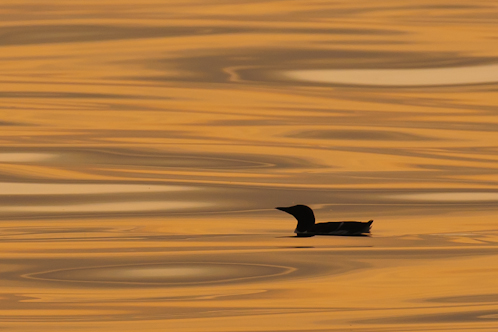
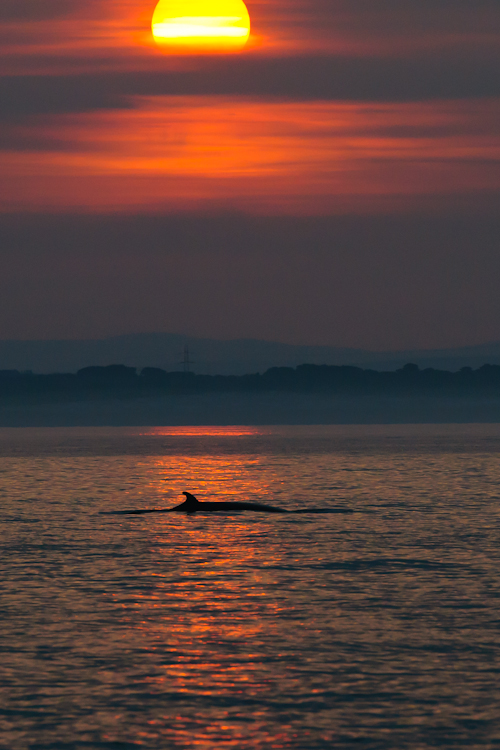
    Heading back to the location of the last White-beaked Dolphin sighting I’d had during the survey, we were on the North Sea in quite remarkable conditions.  So flat that it looked like glass, Gannets, Fulmars, Manx Shearwaters, Puffins, Guillemots and Razorbills were all reflected in the glassy surface.  A small group of dolphins surfaced, but only myself on the starboard side, and Jon on the back of the boat on the port side managed to see them as they were directly in front of us.  We continued our search as a spectacular sunset started to develop and then, as we headed back through the area where the dolphins had been, and it suddenly turned overcast, Ruth said “there’s something over there”.  That something was a Minke Whale, and soon everyone on board had excellent views as it surfaced and fed 🙂  Could it get any better?  Of course it could…then there were 2 together!  Away to the south, what was, probably, a 3rd Minke Whale surfaced and then the sort of magic that our summer evening North Sea pelagic trips seem to produce so often happened.  The sun broke through the clouds and I could see some interesting photographic opportunities developing…as long as the whale was going to be obliging 🙂

    Northern Fulmar,Fulmarus glacialis,North Sea,Northumberland,North Sea Pelagics,Whalewatching. Dolphin watching,Birdwatching

    Common Guillemot,Uria aalge,North Sea,Northumberland,North Sea Pelagics,Whalewatching,Dolphin watching,Birdwatching

    Minke Whale,Balaenoptera acutorostrata,North Sea,Northumberland,North Sea Pelagics,Whalewatching,Dolphin watching,Birdwatching

    We’ve got a few spaces remaining on some of this year’s North Sea pelagic trips so give us a call on 01670 827465 to find out what’s available and to book your place.  You’ll get to spend time on the North Sea and all of the sightings we make on our pelagic trips are contributing to a genuinely groundbreaking research project that’s the only one providing vital information about the distribution and abundance of Northumberland’s whales, dolphins and porpoises, to the ongoing Marine Conservation Zones process.