Tag: Gannet

  • A Whale of a time on a millpond

    Our ‘Whale and Dolphin Cruise’ has become an integral part of the Northern Experience Pelagics annual itinerary, and with an excellent weather forecast for yesterday’s sailing (and some detailed discussions between Martin and our skipper, John) optimism was running high.

    As we boarded Glad Tidings 5 with 50 clients, there was a really sociable atmosphere.  Plenty of returning clients, and lots of new faces, were soon scanning the sea all around the boat.  Martin started in the wheelhouse with John and they soon spotted a distant whale surfacing.  The quite young animal surfaced again as we passed, another could be seen away to the north near the Farne Islands, and we headed in the direction of a feeding frenzy of Gannets.  Another whale appeared, then another, and another.  All told, in 4 hours we had 5 or 6 different Minke Whales 🙂  Gannets provided a spectacular wildlife experience as vast flocks plunged into the sea in search of Herring, 3 Sooty Shearwaters soared effortlessly past the boat, a single Great Skua carved a path through the circling mass of Gannets, Fulmars glided by on stiff outstretched wings, a small flock of Kittiwakes lifted from the water as the boat approached, and one of the largest cheers of the day came when a small pod of Harbour Porpoises surfaced just ahead of us.  Martin was kept busy, answering lots of questions from our very enthusiastic clients about whales and dolphins in the North Sea, and managed to grab a few images as well 🙂

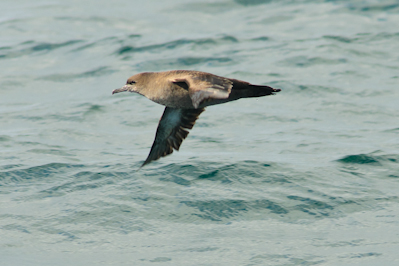
    Sooty Shearwater,Northumberland,North Sea,pelagics,bird photography
    Sooty Shearwater
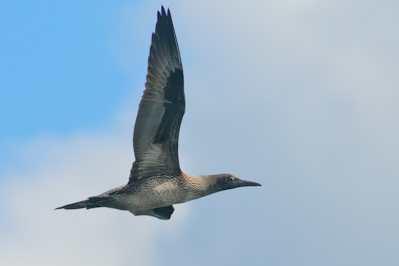
    Northern Gannet,pelagics,North Sea,Northumberland,bird photography
    Northern Gannet
    Northern Gannet,North Sea,Northumberland,pelagics,bird photography
    Northern Gannet
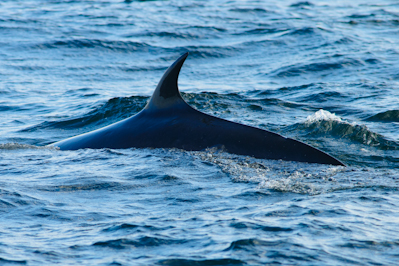
    Minke Whale,whale watching,dolphin watching,North Sea,Northumberland,pelagic,wildlife photography tuition
    Minke Whale
    Minke Whale,whale watching,dolphin watching,North Sea,Northumberland,wildlife photography tuition
    Minke Whale
    Minke Whale,whale watching,dolphin watching,North Sea,Northumberland,wildlife photography tuition
    Minke Whale
    Minke Whale,whale watching,dolphin watching,North Sea,Northumberland,wildlife photography tuition
    Minke Whale

  • The darkening gloom

    Despite protestations from Sarah, I still think that you really can’t beat the evening when it comes to wildlife experiences.

    As the rain poured (and I really do mean poured) down on Sunday afternoon, I ‘phoned Peter to check that he was managing to make his way to Northumberland successfully for our evening mini-safari around Druridge Bay and southeast Northumberland.  As I collected him at 6pm, the weather was improving and we headed to the coast.  Our regular Little Owl was perched at the entrance to its nest hole, soaking up the warm rays of the evening sunshine, lazily turning its head to peer at us from above.  An adult Mediterranean Gull was a surprise find just south of Cresswell village and, as Gannets soared offshore on those remarkably long thin wings, we headed to Cresswell Pond.  All of the assembled Lapwings, Curlew, Golden Plover, Dunlin, Oystercatcher and Avocets lifted in alarm as a Barn Owl passed by on its way to the dunes in search of volesWillow Warblers were flycatching, Linnets were looking shockingly red in the low sunlight and we continued on our way up the coast.  Three more Barn Owls gave an impressive tally for an evening’s birdwatching and a female Marsh Harrier perched very obligingly on a fence post.  The light was deteriorating and as we stood by a river, swollen by the heavy rain, a leap, a small splash and the top of its head racing across from one bank to the opposite was the one Otter of the evening.  A ferocious predator making its way into the darkening gloom.

  • Against the light

    In near-perfect conditions we arrived at Seahouses yesterday evening for our 3hr coastal cruise on Ocean Explorer.  As well as some of our ‘regulars’ we had Andy, Jan and Sam on board, on their final evening in Northumberland.

    Soon after heading south down the coast towards Dunstanburgh we came across a couple of Harbour Porpoises.  Typically shy, they surfaced a few times and then vanished into the depths.  Gannets featured throughout the evening, passing both north and south, and one or two were seen diving.  Puffins, Guillemots and Razorbills were bobbing about on the water and a mixed flock of Arctic and Common Terns and Kittiwakes had found something to hold their interest.  We stopped to see if anything else would come along, and were soon joined by a Fulmar, stunning in the beautiful light.

    Fulmar,bird photography tuition,Northumberland

    We gradually headed north, and approached the Farne Islands as the sun began to set.  Grey Seals poked their heads out of the water and came off the rocks to investigate our boat, Cormorants and Shags perched sentinel-like on the rocky islets, Turnstones prodded and poked their way around the edge of the mass of Seals and Sam punched the air in elation as his first Curlew flew by 🙂  The setting sun provided an opportunity to experiment with an aspect of photography that I’ve never really been able to get to grips with, and one which I’ve always been fairly ambivalent about.  Excellent light, excellent location, all the ingredients were there to convince me…

    Farne Islands,Inner Farne,Northumberland,landscape photography tuition,seascape photography


    Farne Islands,Northumberland,landscape photography tuition,wildlife photography tuition,seascape photography

  • White-beaked Dolphins

    Friday was our final Royal Quays evening pelagic for this summer, and we were heading once again on to the North Sea in search of a species that has come to occupy much of my time; White-beaked Dolphin.  My first encounter with them was in 2003, on an evening pelagic, and we’ve found them many times since then.

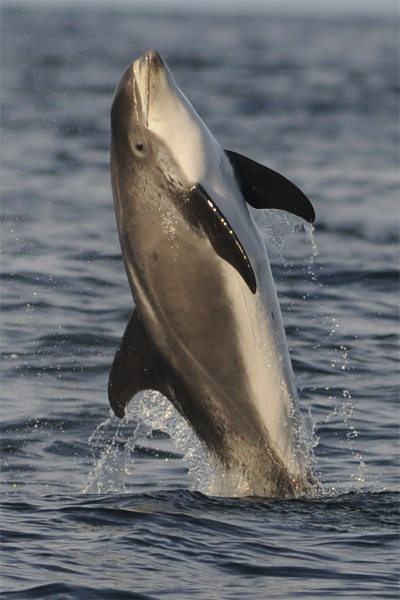
    I’ve spent long, difficult days offshore in the winter, researching their distribution while leading the North East Cetacean Project, I’ve stood on a clifftop with clients (on an Otter and Badger Safari!) as a pod covering several square miles of the North Sea passed by, I’ve taken photos like this one on flat seas in beautiful weather

    White-beaked Dolphin,dolphin watching trips,whale watching trips,Northern Experience Wildlife Tours

    and I’ve had brief encounters in conditions where I was surveying but would never have taken clients out.  I’ve spent several hours watching them bow-riding

    and I’ve laid on the front of a boat, looking down at a dolphin that was bow-riding upside down looking at me.

    On Friday though, we witnessed behaviour that myself and Andy (who was also on board) had never come across before.  We think that what happened was a small group, including a tiny calf, were resting near the surface and we inadvertently woke them up.  The first indication we had that there were any dolphins around was when an adult crossed close to our bow, tail-slapping.  Another adult (or possibly the same one) then began breaching and for 20 minutes we found ourselves shadowed by a pod of about 10 animals.  No bow-riding, no interaction other than escorting us as we travelled slowly through their area, and a rare insight into the behaviour of a pod of dolphins protecting the next generation.  Eventually the pod dropped away from us and, as we headed south, we saw them for the final time as they milled about distantly in our wake.

    We’ve got just one place still available for our September Royal Quays trips (that space is on September 22nd), our Whale and Dolphin Cruise from Seahouses on September 8th is filling rapidly and we’ve got a few spaces on our Farne Deeps trip from Royal Quays in search of White-beaked Dolphin, Minke Whale and seabirds on August 15th and our evening RIB trips from Seahouses.  Click here for more details or to book, or call 01670 827465 to reserve your place before they’re all sold out.

  • My lucky Tilley hat

    It protects my head from attack by Arctic Terns on trips to the Farne Islands, it prevents me getting sunburn, but now it seems to have developed an additional, almost mystical, power…

    With a spell of settled weather, and incredibly obliging sea conditions, I was full of optimism as I arrived at Seahouses Harbour for the first of this year’s Northern Experience Pelagics Farne Deeps trips.  We boarded Ocean Explorer and headed offshore, in search of Minke Whale and White-beaked Dolphin.  As always we found birds close to land, and then a period with little wildlife other than an occasional Gannet gliding by.  With land-based trips you learn to ‘read’ the habitat and weather conditions.  At sea, you don’t have that luxury; whatever the sea bed is like, the surface always looks pretty much the same 🙂  The wildlife itself provides the visual clues, and splashing in the distance simply didn’t look right for diving Gannets. Alan slowed the RIB and I scanned the horizon.  Again the same splashing, and it became obvious that there were lots of Gannets sitting on the sea in that area as well.  The first dorsal fins began to appear, and soon we could see a small pod of White-beaked Dolphins heading towards us.  Then more appeared…and more…and more.  Eventually we had between 60-100 dolphins bow-riding, breaching, feeding and generally providing excellent entertainment for all on board.

    White-beaked Dolphin [Lagenorhynchus albirostris],whale watching,dolphin watching,Northumberland

    White-beaked Dolphin [Lagenorhynchus albirostris],whale watching,dolphin watching,Northumberland

    White-beaked Dolphin [Lagenorhynchus albirostris],whale watching,dolphin watching,Northumberland

    White-beaked Dolphin [Lagenorhynchus albirostris],whale watching,dolphin watching,Northumberland

    White-beaked Dolphin [Lagenorhynchus albirostris],whale watching,dolphin watching,Northumberland

    The dolphins, Gannets and the fish they were feeding on drifted away so we sat with engines off and had our own meal break.  Just over half an hour later we encountered the dolphins again and they charged headlong towards the boat.  After another long session of breaching and bow-riding, we stopped the engines and let the dolphins head off to whatever they were planning to do next.

    We were heading back to shore at just over 30knots when my Tilley hat was lifted from my head by the breeze and landed in the wake 🙁  Now, one of the things about a Tilley hat is that if it falls in the water it floats.  Alan turned the boat and a few minutes later we recovered my hat 🙂  After nearly 4 hours of staying firmly on my head, it was a surprise that it had suddenly departed seawards…

    We’d just started heading again towards the shore when Sue said that she’d seen a fin and thought it might be a Harbour Porpoise.  Alan slowed the boat right down, and the fin surfaced again.  Much better than a porpoise though, it was a distant Minke Whale 🙂  We watched it surface several times, and then it became obvious that although everyone on board was watching a Minke Whale not everyone was looking in the same direction!  There were at least two, and possibly three, whales around us and, even though the dolphins were spectacular, there was something really special about watching these huge marine mammals as they surfaced with a stunning sunset, and the distant Northumberland coast, as a backdrop.

    The best pelagic that we’ve organised? Probably…

    We’re heading to the Farne Deeps again on August 15th (from Royal Quays) so give us a call on 01670 827465 to book your space before it sells out.
  • Elusive

    With our focus in late-July on the North Sea and its enigmatic wildlife, a land-based trip makes a pleasant change from riding the waves.  I collected Catherine, Mark, Jacob and Izzy from their holiday accommodation in Howick and we set off down the Northumberland coast towards Druridge Bay.

    We started at Newbiggin, following up a recent report of a small pod of White-beaked Dolphins. Only brief sightings of distant dorsal fins were possible, proving just what an elusive species this can be.  An adult Mediterranean Gull drifted close by with a few Black-headed Gulls, Jacob  concentrated on the flight identification of Common, Arctic and Sandwich Terns, and another short spell of seawatching just up the coast produced lots of Eiders, and a Gannet heading south.

    Cresswell Pond produced Little Gull, Black-tailed Godwit, Avocet, Curlew and lots of Lapwings, and then a real star performer as a Barn Owl quartered the dunes.  As is often the case, we had a particular target species for the evening and, as Mallards scattered from one section of a pond, and a small group of Teal suddenly became very alert, we concentrated on scanning that area.  Sure enough, the swishy, waving tail of an Otter was soon spotted near the Teal, and for a few minutes it gave brief views of it’s tail, head and body as it spread panic throughout the assembled wildfowl.  As darkness descended it vanished into the inky gloom and we headed back to the car, encountering Common Frog, Common Toad and Pipistrelles on the way.

  • A damp day in North Northumberland

    As I got home on Tuesday night after our evening pelagic the rain was still hammering down.  With a forecast of more rain for Wednesday, and a planned Farne Islands safari, I started thinking about a contingency plan as I dried off all of my camera equipment.

    Wednesday dawned…with more heavy rainfall.  I needed an idea of what was happening further north and a quick text to William was soon answered; the rain in Seahouses was light and sea conditions were fine so boats were sailing 🙂  I collected Louise and Martin from Warkworth and we headed north along some decidedly damp roads.  A morning birdwatching on the Northumberland coast, including Grey Seal, Roe Deer, Swallow nestlings, Shelduck, Eider, Curlew, Oystercatcher, Redshank and a very obliging Whitethroat, was followed by a lunch break just north of Bamburgh Castle, and then it was time to board Glad Tidings for the sailing across to the islands.  With a bit of swell on the sea, a chilly wind kicking spray from the bow, and another oppressive sky the islands were incredibly atmospheric.  Puffins were sitting in huge rafts just off the islands, Guillemots and Razorbills were flying back to the cliff ledges with fish, Gannets were soaring majestically by the boat, Grey Seals lazed in the surf and Kittiwakes called incessantly from their precipitous nest sites.  As we landed on Inner Farne the aerial bombardment from the Arctic Terns was much reduced from the level of recent weeks, and there were plenty of young terns trying out their wings in short flights across the boardwalk.  Sandwich Terns were carrying food back to quite large chicks and the island seemed to be awash with Puffins.  Every flat area next to the sheer cliff faces was covered in them and hundreds were flying around the island.  Louise, like many of our clients when seeing Puffins for the first time said “Aren’t they small”.  Everyone expects them to be bigger than they actually are.  Kittiwake chicks were almost too big for the nest ledges, and Razorbills and Guillemots were watched at close quarters too.  With the poor weather the number of visitors to the island was quite low, making for quite a different experience to our trips earlier this year when all of the boats were full.

    Most of our Farne Islands trips this year have been on Glad Tidings 1, and Bobby and Billy always keep their passengers entertained.  Now, as I look out of my office window while I’m typing this on a fine, dry, sunny afternoon, Bobby’s words, as he delivered us safely back to Seahouses come to mind “Aye, it’s improved.  Now it’s like a fine autumn day rather than a bad winter one”.

  • Dark night

    This has been a difficult year for boat operators on the east coast, with unseasonable winds and frequent heavy rainfall making it unwise to head out to sea.

    Tuesday was the first of this year’s evening pelagics to survive the weather so, as we set out from Royal Quays on the SarahJFK, I was full of optimism.  Soon after leaving the mouth of the Tyne, Allan spotted a Harbour Porpoise, although it remained typically elusive.  Kittiwakes were following us throughout the evening, no doubt wondering if we were going to throw any scraps overboard, Gannets and Fulmars were passing by and, all around us, the sky looked heavy with something…

    I’d had a call earlier in the day to say that a small pod of dolphins were passing Newbiggin, so I took a guess on where they would be by mid-evening and asked Allan to plot a course that would take us through the area.  Sure enough, just where we expected them, 6 White-beaked Dolphins, including the smallest calf that I’ve seen in the ten years since we first found White-beaked Dolphins on one of our pelagic trips, appeared in front of the boat and then came in to bow-ride 🙂  They stayed with us for several minutes before heading south, probably to feed, and we continued north.    5 Manx Shearwaters were heading north, and a flock of 30 Common ScotersAll the while the weather around us was looking poor, and eventually we found ourselves in a heavy, misty drizzle as we headed back to port, and by the time we docked it was properly dark – not something we’d normally expect in mid-July.

    Glowering, oppressive weather conditions, remarkably good visibility, a sea state that was ideal for cetacean spotting, a boat full of enthusiastic clients and a pod of dolphins…perfect 🙂

  • (Not the) Farne Islands 09/07/2012

    Yesterday was a Farne Islands Prestige Tour…or at least that was the plan…

    As I drove towards Seahouses to collect Dick and Jenny, having already figured out that there weren’t going to be any sailings to the islands in those conditions, I received the call that confirmed it.  So, what to do instead?  A quick discussion with clients who had realised before I arrived that it wasn’t a day for heading across to the Farnes…and then we were off on a tour of the Northumberland coast.  Grey Seals were ‘bottling’ just offshore, female Eiders were supervising the creches of this year’s youngsters, Shelduck were feeding along the tideline and Oystercatchers and Redshank were probing next to the breaking surf.  We headed south to see what the weather at that end of the coast would bring…and had a not too bad afternoon around Druridge Bay 🙂  Mediterranean Gulls were loafing alongside Black-headed Gulls, a female Marsh Harrier flew across in front of the car (and we later found her again, perched in a bush overlooking her nest site), Dick found a Long-eared Owl that performed for over ten minutes – hunting amongst the reeds and rushes in broad daylight, Jenny spotted a Roe Deer and a Brown Hare lolloped into view nearby, no less than 23 Little Gulls were in a roost that also had three Black-tailed Godwits, a Dunlin, still with a solidly black belly, was sleeping next to a small pool and we even managed a spot of seawatching; a huge flock of Gannets and terns was circling and plunging, three Arctic Skuas pursued and robbed the successful terns and a raft of Common Scoter rose into view, and then fell again, just beyond the surf.  Perhaps the most unusual sight of the day though, was a Barn Owl carrying prey, not unusual in itself, but the bird flew 3/4 of the way anticlockwise around the north pool at East Chevington, then flew back all the way it had just come before flying 3/4 of the way around the pool clockwise to get back to where it had been five minutes earlier.  Wildlife, you never know when it’s going to appear, you never know what it’s going to do…

  • Through our clients eyes

    After four years of guiding visiting birdwatchers around some of the stunning habitat that we have in Northumberland, one thing we’ve learned above all else is that hardly any two people hear, or see, things the same as each other.

    As I drove to Rothbury, to collect Bill, Kate, Gerry and Ieva, I was wondering what the day would bring.  I knew what the weather would be like; clear blue skies, glorious sunshine, maybe a cool breeze on the coast.  What had me gripped though, was what a group of clients from the US would find most entrancing about Northumberland’s wildlife.

    As the day progressed I found myself seeing and hearing some of our regular species as if for the first time.  With clients who were already familiar with some of our birds, but unfamiliar with others, we paid an incredible deal of attention to Tree Sparrows, Little Grebes, Shovelers, Shelducks and the other birds that we see on most, if not all, of our Druridge Bay trips.  As each new species was observed, a field guide was produced to check relevant ID features (always a good approach if dealing with an unfamiliar bird).  A Willow Warbler perched obligingly in full view just a few metres away, singing his descending silvery cadence, two Reed Warblers delivered their metronomic chuntering from adjacent reedbeds, Avocets dozed in the bright, warm sunshine, strings of Gannets flew northwards into the stiffening headwind, Puffins swirled around Coquet Island, Eiders bobbed about on the swell and a Turnstone, respendently white-headed on it’s northward journey to the breeding grounds, played Sanderling-like with the onrushing tide.  As Kate demonstrated some excellent field ability, picking out a distant Roseate Tern, a Stonechat grabbed our attention.  Starkly black and white, with a rich orange breast, as he flitted away from us along the fenceline he flashed a white rump and big white wingbars.  Almost certainly a Siberian Stonechat, he evaded all of Ieva’s attempts to photograph his striking rump and then vanished across the fields in pursuit of a Meadow Pipit.

    Bird of the day?  I’ll leave that one to Bill “For me, it has to be Sedge Warbler