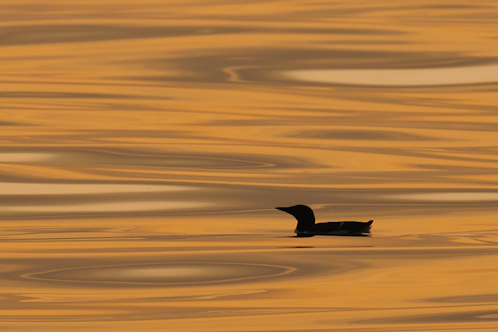
Tag: Fulmar

  • Variety is the spice of life; Coastal safari 26/05/2014

    A brilliantly sunny Bank Holiday Monday is the only time you’re likely to encounter anything even remotely approaching crowds of people in Northumberland, but it does happen occasionally.

    I collected Marcus, Alison, Norman (Grandad) and Isobel from their holiday cottage in the shadow of the Wandylaw wind farm, and we set off for a day wildlife-watching.  With it being such a sunny morning, I thought it would be worth starting with one of our trickier animals; if it’s too cold they won’t be out and about, if it’s too warm they’ll already have slithered off somewhere cooler, and if they feel the ground vibrate as you approach they’ll beat a hasty retreat.  We know just the spot to see them when everything falls into place though; a warm, bare, stony patch of earth surrounded by tall grass.  At first we couldn’t see any sign, but I crept through the vegetation for a closer look.  Two Adders weren’t keen on this, and quickly slithered away into the long grass.  The third one was much more obliging though, and I motioned for Isobel to come a bit closer.  Incredibly, the snake remained coiled, and settled, for a few minutes.  It eventually lifted it’s head to fix us with a baleful reptilian glare for another minute before following it’s companions into the vegetation and out of sight.

    In the bright sunshine Kestrels hovered over roadside fields, Willow Warblers sang their silvery descending cadence, Chiffchaffs endlessly repeated their name, Chaffinches were proclaiming their territories (and Isobel had done a very impressive colouring of a Chaffinch picture), the scratchy rattle of Whitethroat song buzzed through the warm air, flotillas of goslings patrolled the water with their parents in close attendance and darting damselflies added a streak of azure to the lush green of the grass.  Down on the coast, dainty Avocets swept the water edge for morsels, Grey Plovers (probably my favourite wader, certainly when they’re in their summer finery) chased back and forth, Common andSandwich Terns roosted together, Fulmars rode the updraft of the warm breeze along the clifftops, Eiders were resplendent in the sunshine, and ‘wooly bear‘ caterpillars and cuckoo spitwere just the thing for a six year old to enjoy 🙂

    Most entertaining though, judging by the giggling, was a Rook that was rummaging through a bag of rubbish and found what it seemed to consider a suitable food item.  That item was a (full) dog-poo bag…  So disgusting that I almost titled the blog after it 🙂


  • Watching; Bespoke Safari 25/04/2014

    The first part of the Bank Holiday weekend was a washout, with our scheduled Dark Skies event, for a Hen Party in Kielder, falling victim to the weather 🙁 Sunday was a bespoke wildlife Safari for Claire and Sophie and, as I collected them from home in Gosforth, things were looking a bit more promising.  Away inland we could see a lot of general murkiness, so we headed for the Northumberland coast – planning to drop down to Druridge Bay as the afternoon progressed.

    Glorious, yet chillingly breezy weather was waiting for us at Bamburgh and we watched Eider and Common Scoter as they bobbed about in the swell.  We checked the wake of very passing boat for any sign of Bottlenose Dolphinsand continued south down the coast.  Willow Warblers, Sedge Warblers, Reed Buntings andWhitethroats were singing all around and Little Grebes were diving for prey before bobbing back to the water’s surface.  Our picnic stop featured Fulmars arcing just above the clifftops a few metres away from us and a viewpoint over the River Wansbeck revealed lots and lots of ducklings; Gadwall, Mallard, Shelduck all had broods of between eight and eleven – although this prime source of Otter food didn’t seem to have attracted the attention of any Otters.  A Roe Deer on the far bank appeared than quickly vanished again as it made it’s way through the bushes, and Swifts, Swallows, House Martins andSand Martins feasted on the buzzing clouds of insects overhead.  As daylight faded we arrived at one site to find a Mallard and a Grey Heron both staring intently into a hole that we’ve long suspected of being an Otter holt.  More Mallards, and the three of us, joined the staring contest but the adversary that eventually flushed the heron, and had the Mallards waddling away at a rate of knots, remained unseen as bats began flitting past our ears.

  • All adding up; Bespoke wildlife tour 20/05/2014

    Even after 20 years living in Northumberland, I’m sometimes still amazed at what can be seen in one day, with seven mammals in a day in June 2010 showing what’s possible with planning and just a bit of luck 🙂  Sometimes you just have to hope that the weather’s helpful though…

    I collected Mike and Jane from Greycroft and we set off towards the foothills of the Cheviots.  Our first targets for the day were reptiles…and it wasn’t looking promising; thick low cloud and a cold breeze really aren’t the ideal conditions for these cold-blooded predators.  Nevertheless, we made our way along a track with several likely sunning spots.  All were devoid of reptiles, but an hour later, as we were surrounded by the songs of Blackcaps, Garden Warblers, Sedge Warblers andChaffinches, it turned slightly brighter and the temperature rose (from ‘chilling’ to ‘almost warm’!) so I suggested it was time to retrace our route.  Almost as if scripted, the most likely looking spot had an Adder laid in it 🙂  It slithered away into the grass and out of sight as we headed on our way.  Our next destination was the southeast Northumberland coast and Druridge Bay.  Despite a concentrated session checking their regular hang-outs we didn’t manage to find any Red Squirrels, although it was cold and windy which doesn’t help.  Birdwatching our way up the coast produced Fulmar soaring along the cliff tops as we ate our lunch,  House andSand Martins hawking insects, Dunlin andGrey Plover feeding up on their way north, and a Grey Heron that had found a rich vein of Eels.  It caught, and consumed, four in less than an hour!  Jane spotted a Roebuckas we drove alongside the fields, and then another two by the River Coquet.  Our final stop was in the shadow of Bamburgh Castle, with Common Eider just offshore, as well as waddling up the beach, and a small group of Common Scoter just beyond them.

    With a rich variety of mammals, birds, reptiles, flowers and other wildlife, Northumberland in May really is an excellent destination for the keen naturalist.  I like it almost as much as I like the winter 🙂

  • Deep water; NEWT’s North Sea Pelagic 14/08/2013

    Probably my favourite pelagic of all of the North Sea pelagic trips that we run (although I enjoy all of them immensely!) is our 10hr Farne Deeps – Northumberland’s ‘Ultimate Pelagic’.  The forecast looked about as promising as it gets and I arrived at Royal Quays in good time, to discover that most of our participants were already there 🙂  This was just a day before I would be heading south to the British Birdwatching Fair and five of our participants would also be visiting Rutland over the coming weekend.

    As we sailed north east we soon found our first cetaceans of the day, a small pod of Harbour Porpoise.  10 minutes later our progress northeast was slowed as we enjoyed prolonged views of a Minke Whale.  Continuing towards the Farne Deeps, a deep-water offshore area that I’ve been interested in since the late 1990’s and the North East Cetacean Project has been surveying since 2009, we encountered our first White-beaked Dolphins of the trip.  In an interesting rolling swell seabirds were passing by too; Fulmars, Gannets, Kittiwakes, Guillemots, Razorbills, Manx and Sooty Shearwaters, Great and Arctic Skuas and the occasional Puffin all attracted interest.  Small groups of White-beaked Dolphins were found in locations where we expected them before we headed further offshore to the area that we’ve shown to hold large aggregations of dolphins in the mid-late summer.  Almost exactly where we would expect them to be we found several dolphins breaching.  Others began bow-riding and soon there were groups of White-beaked Dolphins in every direction; tail-slapping, breaching, spy-hopping and just generally performing.  Eventually as many as 60 of these stunningly beautiful dolphins were in view and all of the photographers on board were busy filling their memory cards.  16 years of organising North Sea pelagic trips and they just get better every year 🙂

    Minke Whale,Balaenoptera acutorostrata,North Sea,Northumberland,North Sea pelagics,whalewatching Northumberland,dolphin watching Northumberland,www.northernexperiencepelagics.co.uk

    White-beaked Dolphin,Lagenorhynchus albirostris,North Sea,Northumberland,North Sea pelagics,whalewatching Northumberland,dolphin watching Northumberland,whalewatching North Sea,dolphin watching North Sea,Farne Deeps,www.northernexperiencepelagics.co.uk

    White-beaked Dolphin,Lagenorhynchus albirostris,Farne Deeps,North Sea,Northumberland,North Sea pelagics,whalewatching North Sea,dolphin watching North Sea,whalewatching Northumberland,dolphin watching Northumberland,www.northernexperiencepelagics.co.uk

  • “That’s a big dorsal fin…”; NEWT’s North Sea Pelagic 10/08/2013

    Sometimes things go right, sometimes things go wrong, and sometimes things go just right and completely wrong all at the same time…

    We set sail from Beadnell with a full boat, and stopped just outside the harbour to ask a local yachtsman if he’d seen any whales or dolphins during the day.  “Yes, White-beaked Dolphins, about 6 of them, 3 miles E of Boulmer…6 hours ago”.  Even though his sighting was before lunchtime, it was still encouraging news, particularly as our plan was to head south as far as Boulmer anyway.

    Gannets, Fulmars, Guillemots, Razorbills and Puffins were soon spotted and then, as we headed from Craster towards Boulmer, Andy spotted a dark shape away to the east.  We stopped and waited, then it surfaced again.  Guessing where it would surface next I lifted my binoculars and then almost dropped them as the centrally-placed, upright, dorsal fin of an Orca passed across my field of view!  I’m notoriously sceptical of claims of Orca in the north east but, with over 1000h offshore, I always thought I’d bump into one eventually 🙂 I needed a longer lens on my camera so I reached into my camera bag, took out a 300mm f2.8, removed the 70-200 from the camera…and then broke the camera lens mount as I tried to attach the longer lens 🙁  As the distant dark shape appeared again, still heading slowly north, we suddenly had White-beaked Dolphins close by too.  Eventually we had ~20 of them close to the boat, and I was stuck with one broken camera and a spare camera body that had decided that it wasn’t going to communicate properly with the lens.  I managed to get a few record shots of the dolphins, and planned to set my alarm for early on Sunday morning so I could try to sort out camera issues before heading offshore on a North East Cetacean Project survey.

    White-beaked Dolphin,Northumberland,North Sea,North Sea Pelagics,Dolphin watching North Sea,Dolphin watching Northumberland,Whale watching North Sea,Whale watching Northumberland

  • Supporting cast; NEWT’s North Sea Pelagic 19/07/2013

    In late July there are a few species that we’d be amazed to not find on a North Sea pelagic trip; Guillemot, Razorbill, Puffin, Kittiwake, Fulmar and Gannet are all great birds to see, and are all part of the experience that is the North Sea in mid-summer.  There are other species that can overshadow the regular cast list though; Sooty Shearwater is a real ‘birders bird’, close views of any of the skuas grab the attention and, with seabirds covering such vast distances, there’s always the possibility of something completely unexpected.  But, for crowd-pleasing spectacular there’s little that can compete with our marine mammals.  Grey Seals often pop their heads up as we pass, but the real awe-inspiring species are whales and dolphinsOur previous pelagic had been illuminated by Minke Whales but on this trip we were confident of finding a different species.  Ten years of finding, studying, and mapping the distribution of, White-beaked Dolphins gives us a narrow target area to search in the third week in July…

    As we headed north, a shout from Jimmy alerted everyone to the presence of a small pod of dolphins ahead of us.  Sure enough, the White-beaked Dolphins came across to investigate our boat and we soon had 12 of them around us 🙂  Once I was sure that everyone had seen them – which didn’t take too long! – I waited for them to surface alongside us so that I could take photographs of their dorsal fins.  Through a combination of NEWT pelagic trips and survey work for the North East Cetacean Project, we’ve built up a catalogue of individual White-beaked Dolphins off the Northumberland coast.  Having been the first pelagic tour operator to regularly find White-beaked Dolphins off the Northumberland coast, and the only one to have contributed to the Marine Conservation Zones project, we’re proud to have been involved in leading the way in groundbreaking research to map the distribution and abundance of White-beaked Dolphins. We’d like to thank all of our clients who’ve contributed, and continue to contribute, to the catalogue too 🙂

    Of course, dolphin dorsal fin images aren’t the most exciting shots you can get, and the glassy calm water produced lots of other interesting possibilities…

    White-beaked Dolphin,Lagenorhynchus albirostris,Northumberland,North Sea,North Sea pelagics,dolphin watching Northumberland,whale watching Northumberland

  • A Whale of a time; NEWT’s North Sea Pelagic 12/07/13 Part 2

    It was a chance I wasn’t going to miss; I was on the PV St Oswald, we were about to pass the SarahJFK in the River Tyne at North Shields, Sarah was on board with 10 of our clients and a late withdrawal had left a space free 🙂  The smoothest of  ship-to-ship transfers – accomplished by two excellent skippers who I would trust with my life – took place, and I was heading back out into the North Sea for another 4hr sailing 🙂

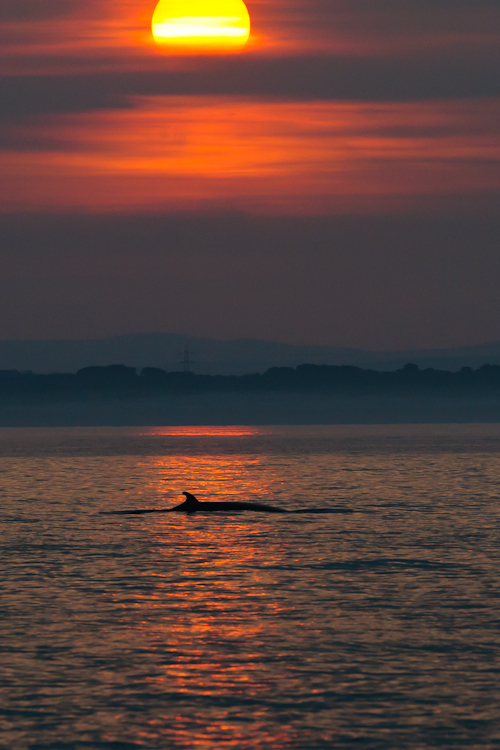
    Heading back to the location of the last White-beaked Dolphin sighting I’d had during the survey, we were on the North Sea in quite remarkable conditions.  So flat that it looked like glass, Gannets, Fulmars, Manx Shearwaters, Puffins, Guillemots and Razorbills were all reflected in the glassy surface.  A small group of dolphins surfaced, but only myself on the starboard side, and Jon on the back of the boat on the port side managed to see them as they were directly in front of us.  We continued our search as a spectacular sunset started to develop and then, as we headed back through the area where the dolphins had been, and it suddenly turned overcast, Ruth said “there’s something over there”.  That something was a Minke Whale, and soon everyone on board had excellent views as it surfaced and fed 🙂  Could it get any better?  Of course it could…then there were 2 together!  Away to the south, what was, probably, a 3rd Minke Whale surfaced and then the sort of magic that our summer evening North Sea pelagic trips seem to produce so often happened.  The sun broke through the clouds and I could see some interesting photographic opportunities developing…as long as the whale was going to be obliging 🙂

    Northern Fulmar,Fulmarus glacialis,North Sea,Northumberland,North Sea Pelagics,Whalewatching. Dolphin watching,Birdwatching

    Common Guillemot,Uria aalge,North Sea,Northumberland,North Sea Pelagics,Whalewatching,Dolphin watching,Birdwatching

    Minke Whale,Balaenoptera acutorostrata,North Sea,Northumberland,North Sea Pelagics,Whalewatching,Dolphin watching,Birdwatching

    We’ve got a few spaces remaining on some of this year’s North Sea pelagic trips so give us a call on 01670 827465 to find out what’s available and to book your place.  You’ll get to spend time on the North Sea and all of the sightings we make on our pelagic trips are contributing to a genuinely groundbreaking research project that’s the only one providing vital information about the distribution and abundance of Northumberland’s whales, dolphins and porpoises, to the ongoing Marine Conservation Zones process.

  • Mirror calm; NEWT’s North Sea Pelagic 05/07/13

    The North Sea can be a strange place.  I’ve been out there in calm, sunny conditions, heavy rain, and I’ve carried out survey work for the North East Cetacean Project in conditions – dense fog, white-out blizzard, ‘interesting’ swell – where we wouldn’t have hesitated to cancel the trip if it was part of our North Sea Pelagics programme.  Yesterday was probably the oddest conditions I’ve seen though…

    The northward stretch of our trip was in very calm sunny conditions that Mary likened to the Greek islands and Andy thought was reminiscent of a sheltered Scottish sea loch.  Gannets were soaring by, Puffins were bobbing about on the barely noticeable swell, small rafts of Guillemots weren’t doing very much at all and there didn’t seem to be a great deal of activity until we were just off Cresswell and amongst the flocks of gulls and terns.

    Then, the journey south brought conditions that were just surreal.  First the sea began to flatten, until what little swell there had been was gone, and it was mirror calm.  Then a hazy mist developed and the reflection of the sky in the water meant that it was no longer possible to see where the sea ended and the sky began; all was a monochrome canvas in front of us – no visible horizon, just a flat grey sheet liberally washed with dense flocks of gullsFulmars and Manx Shearwaters were gliding by just above their own reflections, a flock of Common Scoter flew north just after a Red-throated Diver had passed by and a Harbour Porpoise betrayed the interface between air and water as it surfaced nearby.  As the deep red orb of the sun dipped below the horizon away to the north west, the temperature dropped dramatically and we sailed back into the Tyne.

    All of our evening pelagics from North Shields are sold out (except for one place remaining on July 26th) but we still have a limited number of spaces on our Farne Deeps pelagics, our all day pelagics from Royal Quays in September and our Whale and Dolphin Cruise on August 31st.  Give us a call on 01670 827465 for more details, to check availability or to book 🙂

  • Sunset spectacular; NEWT’s North Sea Pelagic 28/06/13

    We’ve seen some fantastic wildlife during the 16 years that I’ve been running pelagics in the North Sea off Northumberland; Wilson’s Petrel, Great Shearwater, Grey and Red-necked Phalaropes, Sabine’s Gull, Ocean Sunfish, Minke Whale and White-beaked Dolphin are just a few of the highlights.  One thing that so many clients mention though, is just what an experience it is to be offshore approaching sunset and to see the Northumberland coast in a different light (no pun intended!).

    Last Friday brought a reasonable amount of swell, the ‘usual suspects’ – Gannet, Fulmar, Kittiwake, Guillemot, Puffin, Razorbill, Manx Shearwater – and a dense feeding flock of terns and gulls just off Cresswell.  The other thing the trip brought though was probably the best sunset I’ve ever seen on a pelagic.  As the sun dropped out of sight and we were approaching the Tyne piers, the sky away to the northwest was a stunning pinky-orange.  Some things really do take your breath away 🙂

  • The power of the sea

    We rarely let the weather get the better of us.  Apart from our annual programme of North Sea Pelagics, where the weather really can make a difference to a trip going ahead or not, we can pretty much cope with anything the elements throw at us.

    I collected Harry and Maureen for their mini-safari on the North Northumberland coast as the first drops of rain began to speckle the windscreen of the car.  Straight down the coast and we were soon watching Eiders and Common Scoter riding up and over the surf, Guillemots, Puffins and Razorbills loafing offshore, Gannets and Fulmars soaring effortlessly over the sea, Swallows hawking insects within a few feet of us and Rooks foraging around the car park in search of discarded morsels of food.  All of this was in heavy rain, but positioning the car at just the right angle to the wind made it possible to watch all of these birds and the dark majesty of the sea as a backdrop.  Along the coast towards Holy Island a huge group of Grey Seals were basking in the improving weather and, all too soon, it was lunchtime and the end of the trip.