Tag: Fulmar

  • Sailing the ocean blue; Seal Safari 20/06/2013

    In any list of ‘Northumberland’s Big 5’ there will always be disagreements about the species that should be included.  One species that really epitomises the wildlife of North Northumberland is the ‘hook-nosed sea pig’…or Grey Seal to give it a less offensive handle than the translation of it’s Latin name 😉

    I collected John and Jennifer from Church Point and we drove northwards along the Northumberland coast.  Arriving in Seahouses, ready for our Seal Cruise on Glad Tidings V, conditions were near perfect; beautiful blue sky, calm sea and just the slight breeze that always seems to be present on the coast, even on calm days.  As the distance between ourselves and the mainland increased, streams of Fulmars, Kittiwakes, Puffins, Guillemots and Razorbills were heading to and from the islands, Gannets were passing by in impressive groups, Cormorants and Shags were sitting like sentinels at the gates of some mystical wildlife world and then we came across the seals.  Bathing in the sunshine, and only occasionally lifting their heads to avoid unexpected sprays of breaking surf, they allowed a close approach that had an entire boat full of camera-wielding visitors clicking away like a knitting circle.

    Back on dry land we sat and had lunch, just along the coast from the impressive bulk of Bamburgh Castle, and then continued north to look for more seals.  As high tide approached they could be seen ‘bottling’ close to Holy Island, and we made our way back down the coast.

  • Back to school

    Occasionally I still get to do the whole school teacher role…but it’s enjoyable for me and my students 🙂

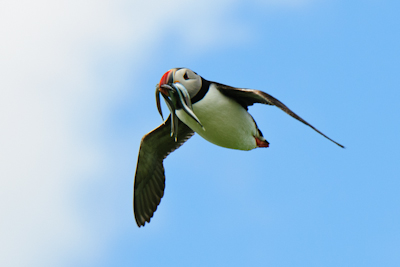
    I met up with Carol at Seahouses Harbour last Saturday for an all-day one-to-one photography session, only to learn the inevitable – conditions weren’t suitable for landing on Staple Island, so we were going to be sailing at noon, and spending 3hrs on Inner Farne.  We had a wander down the coast and worked through all of the relevant settings on Carol’s camera, so that once we were on the island and the air was filled with birds, the only thing to concentrate on would be technique; camera settings were all sorted and should take care of themselves 🙂  It was a rewarding afternoon as Carol soon worked out where to stand to get the shot she was after, how to decide which bird to follow through the lens and when to hit the shutter release.  Minor adjustments to camera settings were made as needed and the birds offered lots of opportunities.  Puffins, Razorbills, Guillemots, Fulmars, Kittiwakes and Shags all passed before the lens and Carol was delighted at her ability to capture that classic Farnes shot of a Puffin flying with beak filled with Sandeels.

    bird photography holidays,bird photography tuition,Atlantic Puffin,Fratercula arctica,Inner Farne,Farne Islands,Northumberland,www.northernexperienceimages.co.uk

    Tuesday brought another Farnes photography session, this time the latest in our Beginners Photography series.  Dave had been with us on our Dawn on the Coast session in April, and was back for something a bit warmer at a more civilised time of the day 🙂  We sailed around the islands before landing on Inner Farne.  Puffins were again flying by with substantial beakfuls of Sandeels and the cold southerly breeze was a reminder of the often harsh conditions faced by the Farne Islands birds (and Rangers!), even during the summer months.  I’ll be giving a talk about the Farne Islands at the Bird Fair at Rutland Water this year so if you’re there please do come along and find out more about this extraordinary wildlife experience.

  • Seabird Spectacular 10-13 June 2013; birdwatching on the Northumberland coast

    Arriving at The Swan on Monday evening I met up with Ronnie and Liz at the start of our Seabird Spectacular holiday.  Of all of our holidays, this is the one that concentrates on the really outstanding wildlife available on the Northumberland coast in the summer.

    Tuesday started out very nice, although cloud cover was increasing and, by lunchtime, eventually it was overcast, misty and spotting with rain.  We’d spent the morning around Druridge Bay, with one of the highlights being a very obliging male Reed Bunting who sat just a few metres away from us and sang for over 20 minutes, Wall and Green-veined White Butterflies flitted across the tracks ahead of us, Sedge and Reed Warblers played hide-and-seek in the edge of the reeds and a male Marsh Harrier quartered a reedbed, giving prolonged views at relatively close range.  As we ate lunch, overlooking the North Sea, watching Eiders, Guillemots, Kittiwakes, Fulmars and Gannets, the southeasterly breeze was starting to build a noticeable swell…

    The inevitable happened and our planned sailing around Coquet Island was cancelled on safety grounds, so we continued around Druridge Bay.  Sandwich Terns and a Grey Seal were near the weir between Amble and Warkworth and we ended up watching five Otters as they munched their way through a feast of Eels 🙂 A Great Northern Diver flew south between Coquet Island and the mainland and we could see clouds of Puffins and a few ghostly white Roseate Terns from our clifftop vantage point.  Swifts were around in good numbers – a scythe-winged menace to flying insects – and at the end of the day we returned to The Swan and were joined for dinner by Sarah.

    After Tuesday’s cancelled boat trip it was a relief to see that the wind had died down by Wednesday morning, and our all-day birdwatching trip to the Farne Islands went ahead as planned.  There were lines of Puffins, Guillemots and Razorbills streaming back towards the islands, Gannets were effortlessly heading either to or from the Bass Rock, and the sights, sounds and smells of the seabird colony were just a few minutes away when we came across two Harbour Porpoises. Cormorants and Shags perched sentinel-like  on the Scarcar rocks and landing on Staple Island we watched Guillemots, Fulmars, Kittiwakes, Puffins, Razorbills, Shags and Rock Pipits at close range before having our picnic lunch in superb weather conditions on this magical rock just a few miles offshore from the Northumberland coast.  Transferring across to Inner Farne at 13:00, via a brief detour to look at the Grey Seals lazing in the sunshine, we were greeted by Head Ranger David Steel and then enjoyed the very different experience of running the gauntlet of a succession of angry Arctic TernsCommon and Sandwich Terns were around too, and we watched Puffins skilfully avoiding the attention of Black-headed and Lesser Black-backed Gulls.  A pair of Rock Pipits nesting beneath the boardwalk were carrying beakfuls of food and I had a Farnes ‘tick’ in the shape of a Swift soaring over the lighthouse buildings.  We tried to find a Roseate Tern in amongst the roost by the Inner Farne jetty, but without success.  Back to The Swan for tea, reflection on a successful day and my Plan B…

    Today was planned to be a one-day extension to the holiday, visiting the North Pennines, but we’ve moved that to tomorrow and the ladies have an extra afternoon out with me, to take the boat trip around Coquet Island 🙂

  • Birdwatching on Holy Island 29/05/2013

    After collecting Stephen for his second trip of the week, we drove north and met Susan near Holy Island, for her third trip in four days.  Our Lindisfarne safaris are always an interesting guessing game, other than in the winter when we know that we’ll find vast flocks of waders and wildfowl – although even then there’s the unknown quantity of wintering raptors.

    We started down the coast in the shadow of Bamburgh Castle; sheltering from the wind and rain, we watched Gannets soaring effortlessly, Common Scoter and Eider riding the swell like the most accomplished surfers in the world, Fulmars and Kittiwakes fighting into the stiffening breeze and a Red-throated Diver sliding beneath the waves and resurfacing out of sight.

    What would appear at first glance to be a long line of boulders, exposed at low tide, resolved through binoculars, as expected, into several thousand Grey Seals.  The ‘hook-nosed sea pigs’ (surely the most unflattering translation of the Latin name for any animal) were lazing on the exposed sand

    On Holy Island itself the weather improved dramatically and we watched a flock of Ringed Plover and Dunlin in the harbour, with a surprise find in the form of a Little StintMeadow Pipits were song-flighting, Skylarks rose higher and higher, delivering their outstandingly complex songs, and Lapwings were tumbling over nearby fields as we worked our way slowly along a hedgerow getting close views of Dunnock and House Sparrow, and listening at close range to the repetitive notes of a Song Thrush.  Surprise find of the day was a group of eight Roe Deer between Chare Ends and the Straight Lonnen.  We’ve seen them on the island before, but never so many together at once.

    After a day with two enthusiastic clients who had been excellent company on multiple trips during the week, it was time to drop Susan off and take Stephen back south.  Sometimes, I think what really makes our trips work is the clients that we have 🙂

  • A chance encounter

    “The man sitting at Table 7 is walking the entire coastline of the mainland UK to raise money for the Alzheimers Society and Alzheimer Scotland”

    Chris’ comment as we arrived to spend Friday evening, as we do most Friday evenings, at The Swan suggested a customer with a fascinating repertoire of anecdotes… As Philip was about to head to his room, he came across to say goodnight to Chris and Kirsty, and we all got talking.  As he’s passionate about wildlife, fly-fishing, photography and sustainability there were plenty of shared interests to chat about 🙂  When we discovered that he hadn’t had much publicity for the Northumberland coast section of his walk, a flurry of texts and tweets (at 22:30 on Friday night) led to interviews on BBC Radio Newcastle and Radio Northumberland on Saturday as he walked from Cresswell to Blyth.  The other thing we could help him with was transport to Cresswell on Saturday morning, and some company for the first part of the walk.

    Martin collected Philip at 10:00 and accompanied him for a very wet five miles down the coast to Newbiggin.  Fulmars were soaring steeply above the clifftops, Gannets were heading north into the strong breeze and Skylarks sang overhead during interludes between showers.  As they reached Newbiggin a lady came out of her house and put some money into Philip’s collection tin – she had been keeping an eye out for him after hearing his interview on BBC Radio Newcastle!

    Philip’s a fascinating man, undertaking an amazing journey for a very worthy cause so if you can help him in any way, please do;  follow him on Twitter, donate via JustGiving or check the schedule for the rest of his walk and think if you can help in some way as he passes along your stretch of the coastline 🙂

  • Arrivals

    As I pulled into the car park at The Swan, Peter and Elizabeth were sitting in the bright sunshine.  There was still a cold edge to the breeze though, and we set out to explore Druridge Bay, south east Northumberland and the Northumberland coast.

    Masses of frogspawn was evidence that our amphibians were getting on with business as usual, regardless of the weather, and a newt rose to the surface of a small pond to take a gulp of air before sinking out of sight back into the murky depths.  Chaffinches, Robins, Song Thrushes and Blackbirds were singing, and a Chiffchaff was a welcome sound – we’d normally expect to start hearing them in mid-March, but this was our first this year.  A flock of Redwings were blown by like scraps of paper on the strengthening breeze and, just south of Cresswell, Fulmars glided effortlessly by, riding the updraft of the wind seemingly perilously close to the cliffs.

    Another amphibian joined the day list, as a Common Toad walked along the path towards us, realised we were there, then retreated to the edge of the path and tucked all of it’s legs in so that it resembled a stone and waited for us to pass by.  A Greylag Goose was incubating and I mentioned that the same site usually held a pair of Mute Swansand one appeared, but we didn’t see where from.  The mystery was solved a few minutes later as it’s mate walked out of a reedbed, straight over the incubating Greylag and paddled across the water.  Incredibly the Greylag barely gave the swan a second glance, but just sat tight on it’s nest.

    A Brown Hare sat haughtily in a roadside field, and a Sparrowhawk flew just ahead of the car for over 100m, before perching on a hedgerow and staring menacingly at us as we drove by.  By early evening the wind had really stiffened again and it started raining.  This didn’t dissuade a sub-adult male Marsh Harrier from hunting over a reedbed close to our position, and he eventually dropped into the reeds and onto prey; judging by the squealing he may have caught a Water Rail. Sand Martin, Swallow and House Martin in one flock were additions to the year list, 18 Red-breasted Mergansers were displaying, a few Goldeneye were busy feeding and, as we finished our day, along one of NEWT’s favourite rivers, a dark shape moving slowly along the water’s edge caused some excitement.  Was this our quarry, the sinuous predator that terrorises fish, birds and small mammals?  No, it was a Moorhen…

  • Early rise

    Saturday 03:30 and the alarm clock starts ringing.  After eight long days out of the office, things were going to be topped off nicely with an early start for our ‘Dawn on the Coast’ Beginners Photography session.  I arrived just ahead of Dave, and met up with Steve who had arrived early.  In the shadow of Bamburgh Castle, with the North Sea washing close to our feet, we worked our way through the holy trinity of photography (shutter speed, aperture and ISO) and various compositional techniques as the approaching dawn illuminated the landscape around us.  Snow, driven by a strong northerly breeze, passed by almost horizontally and the broken cloud to the east produced intermittently good lighting conditions.  Red-breasted Mergansers and Fulmars flew by, Common Scoters and Eider were riding on the swell, Purple Sandpipers crept around the base of the rocks and we finished our session as less amenable weather approached from the east.

  • Every cloud has a silver(y) grey lining

    Our final full-day pelagic for 2012 was on Saturday and, although I was really looking forward to it, it’s always a shame when we reach the end of our offshore season.

    With strong winds on Thursday, and charter boats cancelling trips on Friday, I still felt that we’d be able to sail.  We gathered at Royal Quays just before 09:00 and boarded the SarahJFK.  Brian spotted a Great Spotted Woodpecker just after we set sail, and as we headed downstream we could see a little bit of swell and a few whitecaps offshore.  A skein of Pink-footed Geese high overhead were heading south, and we weren’t too far out of the river when we had our first skua of the day; and it was one of those ‘is it, isn’t it?’ moments as what was probably a dark Pomarine Skua flew north low over the waves.  Three Great Skuas were heading the same way, and another one later caused a ‘dread’ amongst the birds gathered round a fishing boat.  Fulmars and Kittiwakes were with us throughout most of the day and Gannets were soaring by on the breeze.  Our first Sooty Shearwater was in a raft of gulls behind a trawler, and we had at least five more during the day.

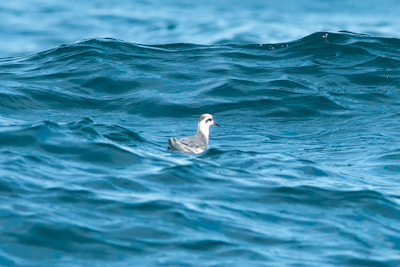
    As the swell began to ease slightly we were 8 miles off Cresswell, heading north west, when I saw two small waders flying up and over a wave crest.  As they dropped onto the sea I shouted “Grey Phalaropes!” and called to Allan to stop the boat.  Eventually we all had excellent views of these two tiny birds as they bobbed about in the swell.  They were the 2nd and 3rd that I’ve seen on pelagics I’ve organised, following the 1st out in the Farne Deeps in 2010.

    Grey Phalarope,Northumberland,bird photography,pelagic birdwatching trips,pelagic wildlife trips

    Grey Phalarope,Northumberland,bird photography,pelagic birdwatching trips,pelagic wildlife trips

    Grey Phalarope,Northumberland,bird photography,pelagic birdwatching trips,pelagic wildlife trips

    We headed towards the coast, and turned to make our way back towards Royal Quays.  Our only Manx Shearwater of the trip was followed soon after by a Pomarine Skua, found by Cain, six Red-throated Divers (including four flying south together), 42 Pale-bellied Brent Geese heading north, 20 Wigeon and 30 Common Scoter.  With only one Manx Shearwater, and no Arctic Skuas at all, this was quite an unusual pelagic but, if you like waders, and you like seabirds, then phalaropes are a dream bird 🙂

  • A Whale of a time on a millpond

    Our ‘Whale and Dolphin Cruise’ has become an integral part of the Northern Experience Pelagics annual itinerary, and with an excellent weather forecast for yesterday’s sailing (and some detailed discussions between Martin and our skipper, John) optimism was running high.

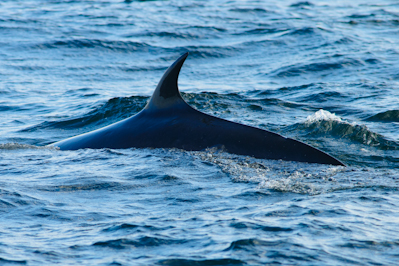
    As we boarded Glad Tidings 5 with 50 clients, there was a really sociable atmosphere.  Plenty of returning clients, and lots of new faces, were soon scanning the sea all around the boat.  Martin started in the wheelhouse with John and they soon spotted a distant whale surfacing.  The quite young animal surfaced again as we passed, another could be seen away to the north near the Farne Islands, and we headed in the direction of a feeding frenzy of Gannets.  Another whale appeared, then another, and another.  All told, in 4 hours we had 5 or 6 different Minke Whales 🙂  Gannets provided a spectacular wildlife experience as vast flocks plunged into the sea in search of Herring, 3 Sooty Shearwaters soared effortlessly past the boat, a single Great Skua carved a path through the circling mass of Gannets, Fulmars glided by on stiff outstretched wings, a small flock of Kittiwakes lifted from the water as the boat approached, and one of the largest cheers of the day came when a small pod of Harbour Porpoises surfaced just ahead of us.  Martin was kept busy, answering lots of questions from our very enthusiastic clients about whales and dolphins in the North Sea, and managed to grab a few images as well 🙂

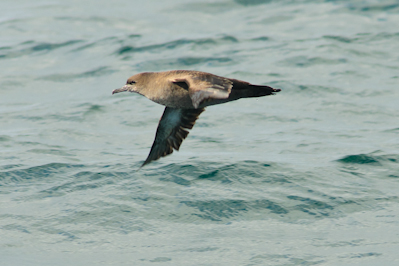
    Sooty Shearwater,Northumberland,North Sea,pelagics,bird photography
    Sooty Shearwater
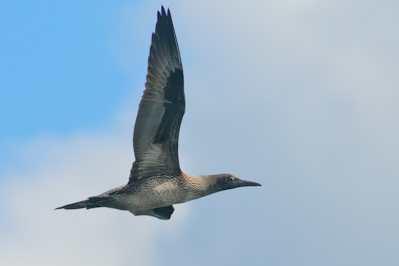
    Northern Gannet,pelagics,North Sea,Northumberland,bird photography
    Northern Gannet
    Northern Gannet,North Sea,Northumberland,pelagics,bird photography
    Northern Gannet
    Minke Whale,whale watching,dolphin watching,North Sea,Northumberland,pelagic,wildlife photography tuition
    Minke Whale
    Minke Whale,whale watching,dolphin watching,North Sea,Northumberland,wildlife photography tuition
    Minke Whale
    Minke Whale,whale watching,dolphin watching,North Sea,Northumberland,wildlife photography tuition
    Minke Whale
    Minke Whale,whale watching,dolphin watching,North Sea,Northumberland,wildlife photography tuition
    Minke Whale

  • Feels autumnal

    As I drove through the rolling hills of rural Northumberland to the west of Morpeth, the weather was looking superb; blue sky, sunshine, a nice breeze.  I collected Mark and Nicola and we headed back towards the coastal plain, for an afternoon of birdwatching around Druridge Bay and southeast Northumberland.

    The conditions looked good for raptors, and it wasn’t too long before we had our first Common Buzzards of the afternoon.  Then another raptor appeared, soaring just overhead.  With long, thin wings, and a long narrow tail, it didn’t look like another buzzard, but it had the sun behind it so was a difficult to view silhouette.  Eventually it moved away to the north and, as it engaged in some mid-air sparring with one of the buzzards, its identity was revealed; juvenile Marsh Harrier.  As the two protagonists drifted further north, the orange crown of the harrier flashed in the sunlight as the bird soared in circles, contrasting with the rich dark chocolate brown of the rest of its plumage.

    Reaching the coast, we stopped off at Newbiggin to look for Mediterranean Gulls and it didn’t take too long before we spotted our first as it flew across from the southern end of the bay and landed on the beach right in front of us.  More followed, including a juvenile bird, and Nicola soon commented that, regardless of any plumage differences, the structure of the birds was noticeably different to the nearby Black-headed Gulls.  Leaving the Meds behind we began our journey along the coastal road through Druridge Bay.  A quick check of the Bewick Drift Flash produced 9 Ruff, 10 Dunlin and a Curlew Sandpiper and we spent a little while comparing the differences between the two sandpipers as well as having a very close view of just how different male and female Ruff are in terms of size.

    Our picnic stop, overlooking the North Sea, produced a beach filled with Ringed Plovers, and a lone Sanderling, as well as soaring Fulmars and rafts of Eiders, bobbing in the gentle swell far below us.  It was starting to turn colder, breezier, and the first drops of rain started to fall.  Cresswell Pond was very productive, as it has been for a few weeks now, but a few species really stood out;  a Spoonbill, which had been at East Chevington during the afternoon, flew in and made its way right round the edge of the pond, sweeping that extraordinary bill from side to side in search of food, Yellow Wagtails arrived to roost and sat along the base of the reeds, where they provoked a very aggressive response from the Common Snipe that were feeding there and a Barn Owl came out following a heavy shower and caught a vole in the dunes away to the north before carrying it within a few metres of where we were sitting.

    The finale to the trip came beside a fast flowing river, downstream was dark, inky blackness, but upstream the water was lit by the eerie glow from a nearby town.  Daubenton’s Bats were trawling the water surface, their presence betrayed by the expanding circles where they’d gaffed prey at the surface.  Then, a ripple too big to be from a bat; and an Otter surfaced for a few moments before disappearing into the dark.