Tag: Ruff

  • Autumn winds

    Thursday afternoon found me leading an afternoon of birdwatching, and searching for Otters around our local area; Druridge Bay and southeast Northumberland.

    I collected Ruth and Margaret from the Swan at Choppington and we drove the short distance to Newbiggin to collect Mike and Maggie (for their second trip with us this week), Ben and Siobhan.  A ghostly white Mediterranean Gull drifted by the car before we headed north.  The River Coquet produced one of my own favourite wildlife experiences as we watched Salmon leaping, and Cormorants, Grey Herons and Goosanders fishing.  Lapwings, Redshank, Curlew and a Greenshank all flew by and, after enjoying our lunch by the river, we headed down the bay.  East Chevington produced lots of Knot, Dunlin, Ruff, Lapwing, Curlew, Golden Plover, Pintail, Goldeneye, Tufted Duck, Pochard, Gadwall, Mallard, Teal and Wigeon and our next stop was Cresswell.  Along the hedge leading down to the hide there were at least 8 Goldcrests, and from the hide there was another nice wader roost.  As well as the species we’d already seen at East Chevington there was a single Black-tailed Godwit, plenty of Turnstone and 2 Purple Sandpipers.  As the sun began falling towards the horizon, we settled into position to search for Otters.  Flocks of Pink-footed Geese filled the sky to the north and a Daubenton’s Bat moved back and forth over the water. All of the signs were there; ducks, Coots and Swans moving en masse from one spot to another, nervously moving back before reversing direction again and, successive groups of birds across the water exploding into the air in a state of panic.  The only thing that didn’t happen, was the Otter coming out into view!  Still, with a success rate of 75% on Otter Safaris since mid-April, we’re always optimistic whenever we go in search of them.

  • Heron aid

    Our 3rd Druridge Bay/southeast Northumberland trip in 5 days began with an old friend as our regular Little Owl sat sleepily in the sunshine, only opening an eye to check who we were before nodding off again.  Further north, we watched a flock of 59 Pink-footed Geese as they headed south high overhead.  3 Grey Herons flew south past us, then north over Warkworth before heading south again.  Incredibly. later in the afternoon, the same 3 herons flew south overhead at East Chevington, followed soon after by another 4, and we found another 3 sitting in a recently mown field near Hauxley.  East Chevington also produced a good flock of Lapwing, with several Ruff scattered amongst them, and Cresswell held a flock of Dunlin with a Little Stint.

    As sunset approached we settled to the waiting game of quiet observation by a small pool.  Tawny Owls called nearby, a Buzzard was perched obligingly in the open, a Sparrowhawk was hedge-hopping to see what it could scare up for dinner, Jackdaws and Rooks were gathering noisily before going to roost and there was a notable level of panic and a high level of alertness in the assembled ducks.  The cause of the panic didn’t show itself though, and we walked back to the car with Common Pipistrelles flying just above our heads before I returned Tamasin and Daniel to Newbiggin.

  • Call of the wild

    Yesterday was the second of four Druridge Bay/Southeast Northumberland afternoon and evening trips this week, and I collected Natalie and Clive from Newton on the Moor just after lunch before heading south.

    Starting with a short woodland walk, we enjoyed close views of those arboreal specialists Treecreeper, Nuthatch and Great Spotted Woodpecker, but this time Red Squirrel eluded us.

    At East Chevington, we were watching a roosting flock of Lapwing, Ruff and Curlew, and checking through the mass of assembled ducks, when a distant call caught my attention.  It was a minute or two before the birds appeared high in the sky to the north, but there they were; 29 Pink-footed Geese, the arrival that for me always heralds the end of the summer.

    A flock of Dunlin, Redshank and Curlew at Cresswell contained a Little Stint, and a brief seawatch produced a small flock of Knot heading north.

    A patient wait as the orange glow of the sunset illuminated the surface of a pond brought rewards as our attention was drawn to a scattering flock of Coot.  Just a few metres from the ripples left by the rapidly departing birds, the menacing shape of an Otter was twisting, turning and diving.  As it vanished in to the dark shadows of a reedbed, the final indication of it’s presence were the bright trails left by Mallards and Little Grebes as they made a frantic effort to be anywhere other than where the Otter was.  Even more exciting for me, was the completely unexpected appearance of a mammal that I haven’t seen since childhood, as the twilight was punctuated by a loud ‘plop’ and a Water Vole swam cross in front of us 🙂 Tawny Owls were calling and Common Pipistrelles flitted back and forth as the full moon, and cold wind, made the evening feel really autumnal.

    I dropped Natalie and Clive back at Newton on the Moor, and decided to avoid the roadworks on the A1 on the route home and instead took the minor road from Shilbottle to Warkworth.  I was still delayed though, but by a young Badger that trotted along the middle of the road ahead of me for a quarter of a mile before wandering into the verge and watching as I passed by.  Expect the unexpected…

  • Now, that was unexpected

    I collected Ian and Pauline from Rothbury for a Prestige Tour of Druridge Bay and southeast Northumberland and headed towards the coast in what could only be described as a stiff breeze 😉

    Nuthatches, Great Tits, Blue Tits, Coal Tits and a Treecreeper were all watched as we sat amongst the trees and Pauline spotted our only Red Squirrel of the trip as it ran between patches of fern nearby.

    Beside the River Coquet a Grey Heron sat impassively, Goosanders were sleeping along the riverbank and Curlew prodded around in the mud.  The wader roost at East Chevington was a bit lacking in variety; lots of Lapwings, 20 Ruff, 30 Curlew and single Knot and Bar-tailed Godwit.  An unfamiliar call heralded the arrival of 4 Snow Geese, accompanied by the 3 Bar-headed Geese that have been wandering around Druridge Bay this summer, and a juvenile Marsh Harrier was tossed around on the wind.  A good selection of ducks was on offer; Mallard, Shoveler, Teal, Wigeon, Tufted Duck, Pochard, Gadwall and Pintail. Birdwatching can be tricky in strong wind, but there was plenty to see.  As we drove towards Druridge Pools, I stopped the car so we could look at an unfamiliar shape flying from Cresswell towards Druridge.  A (presumably) escaped Eagle Owl! Druridge produced another magical moment as well, with a juvenile Peregrine hunting Teal above the main pool.

     As the final traces of daylight faded, a Tawny Owl serenaded us as the wind whipped around our ears.

  • White is the new Black

    We had back-to back birdwatching trips earlier this week, covering two of our favourite areas.

    On Tuesday afternoon I collected Keith and Jen from home in Monkseaton and we headed northwards up the Northumberland coast.  Our destination was the Holy Island of Lindisfarne, one of the birding hot-spots of the entire country.  The strong winds were the only downside to the afternoon, but the birdwatching was good.  After checking out a large group of Grey Seals we covered the area around the harbour and the Rocket Field.  Bar-tailed Godwits, Common Redshank and lots of Ringed Plover were along the shoreline and a delightful charm of Goldfinches were around the Heugh.  A distant group of Lapwings, Starlings and Golden Plover took to the air and the cause of their alarm was glimpsed briefly, although too briefly and too distant to make a positive ID.  Holy Island birdwatching stalwart Ian Kerr put us on to a Little Stint and, as we headed back through the village, groups of Golden Plover passed overhead.  Re-tracing our route back down the coast and checking the Budle Bay on the rising tide, we were just discussing the indications of the presence of predators when a huge number of birds lifted from the mud.  As well as the gulls and waders, Jackdaws, Rooks and Woodpigeons joined the throng as they came out of adjacent fields and trees.  This time the culprit was seen and identified; a Peregrine, that most majestic of raptors and one of the highlights of any birdwatching day on the Northumberland coast in the autumn and winter.  A quick seawatch produced Sandwich Terns feeding, and Gannets soaring effortlessly on the breeze.

    Wednesday was a full day out around Druridge Bay and Southeast Northumberland.  I collected Jayne and Andrew from Seahouses, and then Hilary and John from Alnmouth, before beginning our tour of some of the best birdwatching spots in our local area.  While we were watching Lapwings, Redshanks, Greenshanks, Ruff, Herons and Cormorants on the River Wansbeck I could hear a rough ‘sreee’ call from high overhead.  The strong breeze meant that it wasn’t straightforward to locate the bird, but eventually I picked it out.  It was an unfamiliar call, but a familiar species; a juvenile Common Cuckoo.  The walk back along the river produced a nice flock of Long-tailed Tits.  After lunch we stopped off at Cresswell Pond.  Hilary and John mentioned that they’d visited Cresswell once before – when they noticed a large group of birders and stopped, managing to see a Buff-breasted Sandpiper.

    Northumberland birdwatching following the floods of September 2008
    Buff-breasted Sandpiper and Ruff, Cresswell Pond, Northumberland 12/09/2008
    With luck like that, we joked about what this visit could produce...

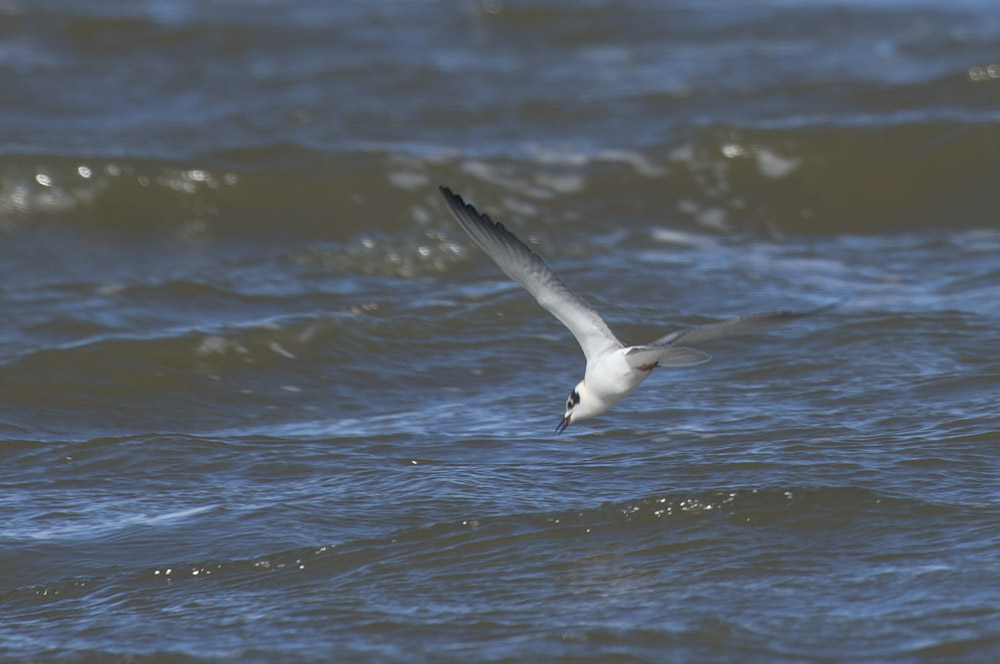
    When we arrived at the hide, Jaybee mentioned that he’d had a juvenile Sandwich Tern.  I scanned the pond but couldn’t see the tern anywhere and we settled to enjoying the quite remarkable views of Common Snipe that were available.  After checking through the assembled ducks, gulls and waders I scanned across the pond again and spotted a tern dip-feeding near the causeway.  The bird’s behaviour, combined with it’s very dark back, white rump and silver-grey wings caused me to get rather excited.  White-winged Black Tern is a very special bird, and a personal highlight as it’s the third Chlidonias tern that I’ve found in Northumberland.  Whiskered Tern is very rare and Black Tern is always a nice bird to see but White-winged Black Tern is such a beautiful species.  Jaybee kindly sent me some images to use 🙂

    White-winged Black Tern, a Northumberland birdwatching highlight 15/09/2010
    White-winged Black Tern, Cresswell Pond, Northumberland 15/09/2010
    Highlight of a day birdwatching on the Northumberland coast 15/09/2010
    White-winged Black Tern, Cresswell Pond, Northumberland 15/09/2010

    White-winged Black Tern, Northumberland, Birdwatching
    White-winged Black Tern, Cresswell Pond, Northumberland 15/09/2010
    As other birders began to arrive to enjoy the fruit of our good fortune we continued up the coast.  Eiders and a Goosander, as well as some very obliging Grey Herons, were seen as we stopped by the River Coquet.  A superb couple of day’s birdwatching, a beautiful rarity and clients who were excellent company.

  • Whistle while you work

    Yesterday was one of what are rapidly becoming our favourite trips; afternoon/evening safaris.  I collected Claire and Stuart from their holiday cottage near Brinkburn Priory and we headed towards the coast.

    Our regular Little Owl watched us imperiously, before turning tail and scuttling out of sight as a dog walker came along the track.  The coastal pools along Druridge Bay are hosting an ever increasing number of waders; Dunlin, Turnstone, Redshank, Knot, Ruff, Oystercatcher, Lapwing, Common Sandpiper and Curlew were all roosting, a Spotted Redshank called but remained frustratingly out of sight behind a reedbed, and Greenshank and Whimbrel both responded to imitations of their calls.  Then, that most majestic of waders graced the air in front of us, although only briefly; a Black-tailed Godwit flew low over the roost, everything panicked, and a Peregrine carved through the flock before heading out over the sea and then away high to the north.  Little Grebes and Grey Herons were both well appreciated, then it was time to check some of southeast Northumberland’s finest mammal sites.

    Red Squirrels always go down well with our clients, and the one we watched feeding was no exception.  A juvenile Great Spotted Woodpecker was equally obliging and we watched it for a while before moving on to our favourite site for Badger watching.  Probably the biggest Badger we’ve seen so far trotted across the hillside opposite us and a much smaller animal (maybe a young cub) made it’s way through the undergrowth just over the stream from our position.  As darkness approached we found ourselves on a hilltop with a Tawny Owl calling ‘ke-wick’ from the woodland below us.  After whistling at waders during the afternoon I imitated the quavering hoot of a male Tawny Owl and waited.  The bird called from closer.  I called again, and it came closer still.  Eventually it flew up into a bare tree, silhouetted against the final glow of daylight in the sky, only 20m away from us.  I switched to copying the bird’s ‘ke-wick’ call and it turned to face us directly, ready to challenge this impertinent intruder.  I remained silent, not provoking any further response, and the bird flew to a nearby tree, screeching defiantly as we made our way back down the hillside.  Common Pipistrelles and Daubenton’s Bats were picked up on the bat detector and seen as they flitted back and forth.  The final wildlife of the evening though was close to the cottage at Brinkburn, and was another piece of Northumberland magic; a doe Roe Deer and her fawn ran along the road in front of us.

    As Autumn approaches evening safaris mean finishing at a quite amenable hour, so give us a call on 01670 827465 to find out how you can share in these memorable experiences with us.

  • British Birdwatching Fair 2010

    We’ve been away for a few days, as part of the Birdwatching Northumberland consortium at the British Birdwatching Fair 2010.

    Thursday started very early for Martin, with a North Pennines Prestige Tour for clients who were staying at Wallfoot in Carlisle.  Managing to avoid the worst of the weather, avian highlights included Merlin, Goldcrest, Nuthatch, Red Grouse, Black Grouse, Whinchat and Wheatear.  The long drive down the M6 didn’t, unfortunately, miss the heavy rain.  However, a late arrival at the White Lion in Whissendine, and a few beers in the bar with such luminaries as Ipin set Martin up nicely for an early start on Friday.

    Sarah was at work (in her ‘proper’ job) so, apart from attending a couple of lectures, Martin was on the Birdwatching Northumberland stand for all of the first day.

    Saturday we planned to work ‘split’ shifts, but with Martin again spending most of his time on the stand; apart from another couple of lectures and one or two chats with clients, colleagues, suppliers, competitors and collaborators (both old and new).

    Another excellent curry at the White Lion, and a ‘few’ beers, on Sataurday night was followed by the dawning of the final day of Bird Fair 2010.  One of us was a bit ‘under the weather’ but perked up in time to give his talk ‘The North Sea – a new birding frontier’ at 3.30pm.  What could have been a bit of a graveyard shift managed to generate a lot of interest, with 134 bird fair attendees making their way to the lecture marquee to enjoy a brief history of the Northumberland pelagics.  There were a few questions at the end of the lecture, then Martin was stopped and asked some more, for the next 10 minutes, as he headed back to the stand – where other people who had been in the lecture were waiting to ask more questions.

    After three days at the Bird Fair we’d made a lot of new contacts, renewed some old acquaintances and we’ll shortly be entering exciting partnerships with some big names in the birding world.  Just a few very busy weeks to come first…

    A final night in the midlands was followed by the journey north on Monday, and then a Prestige Tour yesterday.  Beginning with  an actively feeding Dipper was a good start then, with a particular request for wading birds, it was good to strike a rich vein on the coast; Green and Common Sandpipers, Greenshank, Redshank, Spotted Redshank, Curlew, Whimbrel, Oystercatcher, Lapwing, Dunlin and Ruff.  What seemed to go down better than all of the other birds though were the always impressive Grey Herons.

  • Birdwatching; more than just a Hobby

    Our two Druridge Bay mini-safaris last Wednesday both featured one of my favourite birds; Black-tailed Godwit.  A group of eight flying N at dusk in torrential rain may have included the five that we saw at lunchtime.  With plenty of Curlew, Lapwing and Dunlin, as well as a few Ruff and Common Sandpipers there was a ‘busy’ feel to birdwatching the coastal pools.  Common Frog and Common Toad were perhaps to be expected in the damp conditions.

    Thursday featured more torrential rain, although all of it whilst we were travelling between sites in Druridge Bay.  After collecting two clients individually from Alnmouth we headed south.  Dave had a day to remember with no less than five ‘lifers’; Little Owl, Dipper, Hobby, Scaup and Arctic Tern.  The Hobby was one of those classic moments.  I was watching a group of Sand Martins when they all suddenly rose high above the water.  As I opened my mouth to suggest that there was a raptor about, Dave said “What’s this?”…and there it was, a first-summer Hobby, heading straight towards us low over the pool.  A Whimbrel flew by, giving it’s distinctive call, and the transition from the occasionally difficult birding of mid-summer to the more productive time of mid-July is well underway.

    Saturday was spent covering another three tetrads for the Bird Atlas and then on Sunday we had a few hours in our study area, searching for any sign of Hobby or Honey Buzzard.  With heavy overcast conditions, occasional light rain, and a cold breeze very few raptors were in evidence; just a Common Kestrel and a Common Buzzard to show for our efforts.

  • Wildlife photography in focus

    After a busy week I was looking forward to a couple of days catching up on admin and housework (no, really, I was looking forward to doing some housework…).  Then, on Saturday morning, the ‘phone rang and we took a booking for Sunday; a photographer visting the area was frustrated by the weather leading to sailing cancellations (Farne Islands, Isle of May, Coquet Island) so could we take him out and show him some of the better locations for wildlife and birdwatching photography in southeast Northumberland and Druridge Bay?

    We pride ourselves on being flexible so a meeting point was arranged, camera kit was cleaned, memory cards loaded, batteries charged.  Some excellent views of Red Squirrel, so close that only head shots were possible, were followed by a few hours in the birdwatching mecca that is Druridge Bay.

    Here are a few of my favourite images from Sunday and Monday.

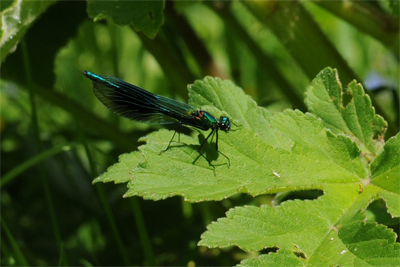
    Banded Demoiselle, River Blyth, Northumberland 20/06/2010
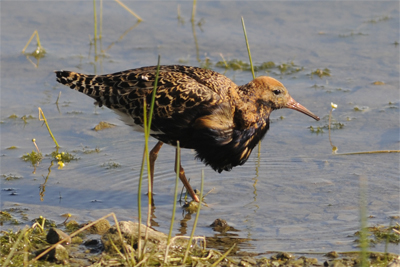
    Ruff, with a ruff, Druridge Pools, Northumberland 21/06/2010
    Sand Martin, Druridge Pools, Northumberland 21/06/2010

  • Something for the weekend

    There are times in the winter when I’m mainly office-based and what I really look forward to, during what often seem like interminably long days, is the arrival of the Spring and increasing numbers of ‘client days’.

    On Tuesday morning I headed to Newbiggin to collect John and Christine, clients from last year’s Beginners Birdwatching ‘Seabirds and Waders’, who were back in Northumberland for a birdwatching morning in Druridge Bay.  The weather was erratic to say the least, with bright warm sunshine, a bitterly cold northeasterly wind, sleet and even snow it was a morning to be wrapped up warm.  The birding was as excellent as we would expect in mid-May; the morning’s highlights included a male Ruff in full breeding plumage, eight elegant beautiful Black-tailed Godwits, a pair of Garganey and some incredibly close views of Whitethroats as they warbled their scratchy song from hedgerows, trees and telegraph poles.

    This morning brought something completely different; a Lindisfarne Safari with our first Spanish clients.  Alfredo and Nieves had managed to get across from Ibiza, despite the disruption caused by the Icelandic volcano, and were looking forward to a day birdwatching on Holy Island and the north Northumberland coast.  The weather was changeable again but, as yesterday, we stayed dry.  A flock of 80 Ringed Plover on Holy Island were very vocal as they repeatedly flew overhead, 2 Little Egrets in Budle Bay flew by calling and a Little Gull and a White Wagtail at Monk’s House Pool were both nice surprise finds.  Eventually we found ourselves bathed in warm sunshine as pairs of Arctic Terns displayed high overhead against the azure sky and, looking inland, we could still see a lingering snowfield on the Cheviot.  Alfredo and Nieves both have a broad, and quite detailed knowledge of natural history, and Alfredo is a keen, and skilful, photographer.  I only have a very limited grasp of Spanish but through a combination of Spanish, English, Latin and a shared love of natural history and photography, any language barriers were easily transcended.

    We’ve got Northumberland birdwatching tours for the rest of the week and then on Saturday it’ll be time to chill out with a glass of wine, a BBQ and our National Moth Night event at Lee Moor Farm, near Alnwick.  All are welcome, so give us a call on 01670 827465 if you would like to come along for an evening of wildlife watching fun, suitable for young or old, beginner or expert.