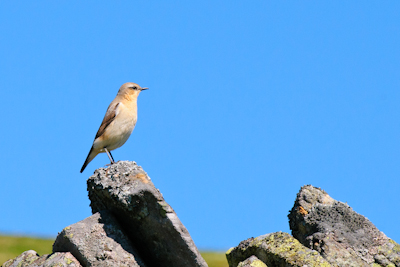
Tag: Meadow Pipit

  • Kettling; Kielder Safari 23/04/2014

    The alarm went off at 06:00 on Wednesday, and my heart sank as I looked out of the window…heavy mist, not ideal for any of our tours, but particularly not good for a day in Kielder.  I drove to Kingston Park to collect Steph and we headed west in much more promising conditions; low cloud in some valleys, but some sunshine too.  We collected Paul and Trish from Wark, and then Ivan from Tower Knowe and headed into the forest.  It was a bit cool and misty for any raptors to be up and about, but two Common Crossbill flew by and the air around us was filled with the descending silvery cadence of Willow Warblers as Woodpigeons, Stock Doves and Carrion Crows caused a brief quickening of the heart rate as they flew between plantations.

    A walk to the Bakethin reserve produced lots of Siskin, and Goldeneye, Tufted Duck, Teal, Oystercatcher, Cormorant and Common Sandpiper were around the water’s edge.  As we got back to the car park, which provided good views of Treecreepers, Paul spotted a raptor high overhead, and binoculars resolved it into the impressive shape of an Osprey.

    Over the border into Scotland we were soon encountering Common Buzzards, lots of them, and a remarkable number of Skylarks and Meadow Pipits.  We reached our picnic spot and, as soup, sandwiches and carrot cake were consumed, raptors began to appear above the skyline.  First Common Buzzards, then a female Hen Harrier, followed soon after by a skydancing grey male 🙂  Then more Common Buzzards, and more Common Buzzards At one point we had between four and six birds behind us, while higher up the valley at least ten were kettling in one thermal along with a Peregrine 🙂  Absolute heaven for any birdwatcher who enjoys raptors…and who doesn’t?  Along the stream Reed Buntings were pretending to be Dippers, but we did eventually find the genuine article, which obligingly bobbed up and down on a rock before diving into the fast flowing water, and Wheatears were perched on old stone walls.  On the hillsides high above the valley bottom, Wild Goats were grazing as we enjoyed close views of Common Buzzards both perched and flying, and Red Grouse were found as we crossed the moors back towards England.

    We finished the trip with an uncountable number of Chaffinches and a real Northumberland speciality as a Red Squirrel ran around on the ground before deciding to hang upside down on a peanut cage, and it was time to reverse the route and drop everyone off.

  • Stumbling across a twitch

    Late August/early September is an exciting time on the Northumberland coast; wader passage is still ongoing, wintering wildfowl are arriving and you just never know what could turn up…

    I collected Andy and Lia from Alnwick and we set off for a day birdwatching on the Northumberland coast from Bamburgh to Druridge BayKnot, Turnstone, Oystercatcher, Curlew, Sanderling and some very elusive Purple Sandpipers started the day for us, as Linnets fluttered around in the long grass, Meadow and Rock Pipits were around the tideline, Gannets were soaring majestically by and Eider and Common Scoter were bobbing around just beyond the surf and a mixed flock of Common and Sandwich Terns were flushed by walkers before settling back on the rocks close to the breaking surf.  Offshore a small flock of birds grabbed my attention, and through the telescope resolved into one of Northumberland’s winter specialities; seven Pale-bellied Brent Geese steadily heading north were our first of the autumn.

    Further south, waders were still the main focus of our day;  Dunlin, Redshank, Greenshank, Snipe, Whimbrel, Black-tailed Godwit, Bar-tailed Godwit and Ruff were all pottering about in the water’s edge.  When we arrived at East Chevington to look for the Spotted Crake, there were a few local birders already there.  With an astonishing amount of luck, we’d arrived just as a White-rumped Sandpiper was being watched 🙂  Not the easiest of birds to identify, but as it wandered around a flock of sleeping Teal with Dunlin and Snipe alongside for comparison it stood out quite well.

    Another cracking day’s birdwatching, with a proper rarity to add a touch of the unusual 🙂

  • Beauty in the ‘mundane’

    LBJ.  No, not the 36th President of the United States, but the acronym used by many birdwatchers to describe any relatively small, nondescript brown bird – ‘Little Brown Job’.  Over the last few years, a number of our clients have applied that term to two birds that I always think deserve closer attention…

    I collected Jo and Kirsty from Alnwick for their second consecutive day out with me and we headed straight up the coast and made our way on to Holy IslandCurlews were passing overhead as we walked around the bits of the island that weren’t full of other people, those two LBJ’s, Skylark and Meadow Pipit, were dodging in and out of long grass in the fields by the path, Kirsty started photographing Swallows and quickly progressed to using flash to freeze the action as they hovered in front of us feeding beakfuls of flies to recently fledged juveniles and Golden Plover and Oystercatcher were probing around rockpools as Grey Seals bobbed about in the gentle surf just offshore.  Edges are always a productive area; edges of fields, woodland, moorland and the shoreline – that ever shifting edge of the sea and the land.  That latter edge produced some stunning Bar-tailed Godwits, and an impressively large group of very vocal Grey Seals.

    As we continued back down the coast the mist thickened and we were eventually in the surreal position of having blazing sunshine on our backs and visibility of less than 100m in front of us.  As a loose flock of Eiders drifted close inshore and then back out again, and Swallows and House Martins hawked insects low over the beach, a dark menacing shape drifted out of the mist, passed in front of us, and then drifted back into the impenetrable white mass.  Always a bird to grab the attention on a seawatch, the Arctic Skua was only in view for a few seconds as it made it’s way south along the coast, and we headed inland into glorious weather again.

  • Scouring the moors; North Pennines birdwatching 25/06/2013

    Returning clients have become a bit of a theme for NEWT in the last couple of years, and it’s always lovely to meet up and hear what our clients have been doing, and seeing, since they were last out with us.

    Mike and Maggie were visiting Northumberland again, and their day out with me this year was to be a bespoke birdwatching and photography experience in the North Pennines.  As soon as we were on the higher ground, Curlew, Golden Plover, Lapwing and Red Grouse were all found with chicks, Redshank were calling noisily from nearby rushy fields and Skylark and Meadow Pipits were singing overhead.  More Red Grouse and Golden Plover became targets for Mike’s camera and a Ring Ouzel feeding in a grassy field flew up onto a dry stone wall, next to another ouzel, as a third flew across the road behind us.  As we dropped from the high ridge between Weardale and Upper Teesdale, an unexpected bonus bird was sitting in the middle of the road.  The unmistakeable ‘built like a breeze block’ figure of a Woodcock was just sitting there.  As we watched, it called, and two Woodcock chicks came out of the long grass to join it 🙂  Creeping along on short legs and big feet, the adult bobbed up and down, like a Jack Snipe on steroids, as it led it’s young across into the dense cover of the grass on the opposite side of the road.

    Our post-lunch walk produced Golden Plover, Ringed Plover, Grey Wagtail, Red Grouse, a single Spring Gentian and a female Ring Ouzel, gathering food by a  fast flowing stream.  The journey back towards Allendale was enlivened by the impressive wingspan and mad staring yellow eyes of a Short-eared Owl as it quartered the high moorland.  There was one species on our target list for the day that was still missing though, and we’d already checked almost all of our usual sites.  Then, as we crossed back into Northumberland, I slowed the car almost to a standstill and mentioned that the next field on the left, in between the clumps of rush closest to the road, was a regular spot for Black Grouse… 🙂

  • One Cuckoo flew over the pipit’s nest; birdwatching in the Cheviot Valleys 09/06/2013

    Sunday was another trip into the Cheviot Valleys, with two of our returning clients.  We first met Pete and Janet at the Bird Fair in 2008 and this was their third trip with us (plus a trip that they organised for their local Natural History Society in 2009).  It’s always a pleasure to meet up with them, and the prospect of a trip into the Cheviots was a mouthwatering one.  You just never know what you’ll find, or see…

    The trip started with two species that we didn’t find on our Cheviots trip on Thursday; two Brown Hares were sitting by the ‘wader puddle’ and, one of our target species for the day – two Ring Ouzels flew over us, calling, as we started the first of the days walks.  Janet soon spotted a juvenile Dipper, and we watched as an adult flew in and fed it.  Grey Wagtails were all along the valley, a Spotted Flycatcher was living up to it’s name admirably and a very obliging Tree Pipit perched close to the path.  As on Thursday’s trip we heard, but couldn’t see, a Common Redstart.

    Every so often, something happens that leaves us marveling at nature…and Sunday provided an extraordinary spectacle.  As we sat eating our lunch by a small stream, enjoying close views of Lesser Redpoll (a species we’d been hearing all morning although only seeing as small flying dots) I noticed a bird flying across the valley.  Initially it looked like a Kestrel – until I raised my binoculars and the pointy-winged, long-tailed, shape resolved into a Cuckoo.  It headed down into the heather and was immediately chased by a pair of Meadow Pipits.  They pursued it part way across the valley and it dropped out of sight behind the trees…only to reappear a minute later, chased by more pipits.  Landing in exactly the same spot in the heather it was chased away for a second time, by four pipits.  It rose higher and then began soaring, with the flap-flap-glide that is so characteristic of a Sparrowhawk.  More Meadow Pipits joined the attack, presumably revealing their nest locations, and the bird suddenly closed its wings and dropped like a stone, out of sight behind the trees.  A minute later and the Cuckoo was heading across the valley again, dropping back in the same spot as previously.  This time it was driven off by a pair of Red Grouse, that came charging down from near the summit of the hill, and it flew back and out of sight behind the trees, only to reappear a few seconds later with more Meadow Pipits in tow.  In total we watched it make ten visits to what was presumably a Meadow Pipit nest that it was targeting.  By the ninth visit it spent several seconds on the ground with angry pipits swirling around it’s head, which we could see sticking up above the heather, and the tenth visit was a prolonged one too.  After that it flew back across the valley and didn’t reappear, so perhaps it had been successful in laying an egg in the pipit nest.

    Our final walk of the day produced another example of birds defending their nesting territory, as the plaintive cries of a pair of Curlew echoed around the steep valley sides and we looked up to see them flying at a Common Buzzard.  The buzzard continued on it’s way and the Curlews dropped out of sight above the ridge, only to reappear a few seconds later as a second buzzard flew down the valley.  Excellent weather, stunning scenery and clients whose enthusiasm and knowledge adds so much to the day 🙂

  • Otter Watching 01/06/2013

    Single-species trips can be some of the most stressful experiences for NEWT, although possibly not quite so stressful for our clients 🙂  Some species that our clients want to see can be very straightforward, like Grey Seals or Puffins (at least if you come at the right time of year!), others can be more difficult, and one in particular has a certain degree of unpredictability…With large home ranges, and as happy on land as in the water, Otters aren’t always an easy animal to find.  We must spend more of our time looking for them, on days when we don’t have clients, than we spend doing anything else.  If a site is producing regular sightings that’s a bonus, but there’s always the possibility that one day they won’t be there, so we keep checking back-up sites as well.

    Arriving at Church Point, I met up with Ian and Ann, Antonia and Henry & Nigel and Mrs Hackett.  Our quarry for the afternoon was that elusive iconic predator and, having unexpectedly stumbled across four Otters a couple of weeks ago, the location for the first part of the afternoon was decided well in advance.  All seemed quiet; Black-headed Gulls were lazing in the afternoon sunshine, Swifts, Swallows and martins hawked insects and a Meadow Pipit was song-flighting…then Ann spotted an Otter!  Crossing the water towards a reedbed, the gaze of a Grey Heron and a pair of Mallards were firmly fixed on it too.  Twisting, turning, diving, feeding, it made it’s way to the edge of the reeds and continued feeding there.  Then it headed away from the edge and back towards us, before switching direction again and sliding beneath the surface.  A few minutes later it climbed out of the water and we could see it making it’s way through the grass.  Then it was back down at the water’s edge and being obligingly showy.  What came next was one of our highlights of the year so far as the Otter dived back into the water…followed by two more…and then a fourth 🙂  Then, as often happens with Otters, they simply vanished from sight…

    The afternoon continued with Sandwich Terns feeding just a few metres away from us, a pair of Marsh Harriers, two Brown Hares boxing, a Great Crested Grebe being the epitome of avian elegance, eight Little Gulls sitting on consecutive fence posts and an impressive mixed flock of hirundines as the wind direction shifted and a heavy shower passed over us from the north west, producing an intense rainbow out over Druridge Bay.

  • Birdwatching on Holy Island 29/05/2013

    After collecting Stephen for his second trip of the week, we drove north and met Susan near Holy Island, for her third trip in four days.  Our Lindisfarne safaris are always an interesting guessing game, other than in the winter when we know that we’ll find vast flocks of waders and wildfowl – although even then there’s the unknown quantity of wintering raptors.

    We started down the coast in the shadow of Bamburgh Castle; sheltering from the wind and rain, we watched Gannets soaring effortlessly, Common Scoter and Eider riding the swell like the most accomplished surfers in the world, Fulmars and Kittiwakes fighting into the stiffening breeze and a Red-throated Diver sliding beneath the waves and resurfacing out of sight.

    What would appear at first glance to be a long line of boulders, exposed at low tide, resolved through binoculars, as expected, into several thousand Grey Seals.  The ‘hook-nosed sea pigs’ (surely the most unflattering translation of the Latin name for any animal) were lazing on the exposed sand

    On Holy Island itself the weather improved dramatically and we watched a flock of Ringed Plover and Dunlin in the harbour, with a surprise find in the form of a Little StintMeadow Pipits were song-flighting, Skylarks rose higher and higher, delivering their outstandingly complex songs, and Lapwings were tumbling over nearby fields as we worked our way slowly along a hedgerow getting close views of Dunnock and House Sparrow, and listening at close range to the repetitive notes of a Song Thrush.  Surprise find of the day was a group of eight Roe Deer between Chare Ends and the Straight Lonnen.  We’ve seen them on the island before, but never so many together at once.

    After a day with two enthusiastic clients who had been excellent company on multiple trips during the week, it was time to drop Susan off and take Stephen back south.  Sometimes, I think what really makes our trips work is the clients that we have 🙂

  • Flying in for a day birdwatching in the North Pennines

    I always enjoy meeting up with our previous clients again, and Saturday morning found me at Newcastle Airport waiting to meet Jacob and Nancy as they arrived for a couple of days birdwatching in Northumberland.  They were going to be spending Sunday on the Farne Islands, but our destination on what was developing into a gloriously sunny Saturday was the North Pennines.

    Just 12 days earlier I’d been marvelling at the temperature of 1C at 10:30am but now Curlew, Lapwing and Oystercatcher were all flying around and calling noisily as we reached the higher ground southwest of Hexham, Skylarks were singing exuberantly against the azure sky, Meadow Pipits were ‘parachuting’ down at the end of their song flights and Common Snipe were calling from concealed positions in the grassland.  In the stunning light, Barn Swallows were eye-wateringly iridescent, a pair of Golden Plover flew in front of us and a pair of Red Grouse watched closely over eight chicks.  Red Grouse was a lifer for Jacob and Nancy and one male allowed a very close approach and provided a lot of photo opportunities for them.  Eyebrows, raised, eyebrows lowered, facing left, facing right, staring into the lens; he went through a veritable supermodel repertoire of poses before seemingly melting into the vegetation.

    As we travelled across a high moorland road, a Northern Wheatear posed obligingly for photographs.

    Northern Wheatear Oenanthe oenanthe,bird photography,bird photography holidays,bird photography courses,birdwatching holidays,Weardale,County Durham,North Pennines,www.northernexperienceimages.co.uk

    Skylarks and Meadow Pipits provided a memorable aural backdrop to our lunch stop, and a Golden Plover was silhouetted on top of a nearby ridge, keeping a close eye on it’s territory.  Near perfect weather, a gentle breeze, spectacular landscape and stunning birds; what more could you want from a day’s birdwatching?

  • Watching the drama unfold

    Towards the end of a day in the North Pennines with Tony and Caroline, I suggested that we should head back to a Black Grouse lek where we’d watched two Blackcock pottering about in the early afternoon…

    Everything had been performing well.  Red Grouse and Black Grouse playing hide-and-seek-and-run-away-a-bit, Curlew, Redshank, Oystercatcher, Lapwing, Golden Plover and Snipe all displaying, Skylark and Meadow Pipit singing as they ascended skywards, a Wheatear on a midstream rock doing a credible impersonation of a Dipper and the mystery bird of last week’s trip revealed to be a Starling…with a pale crescent on it’s breast!

    Now, we were overlooking a lek site that we regularly visit on our North Pennines trips.  Two hours earlier there had been just two Blackcock visible, now there were nine, or ten, or five, or two…every scan produced a different total as birds stopped feeding, sat down in the long vegetation and simply vanished.  A few minutes later they all stood up, started feeding and wandered about for a little while before repeating the process.  After another cycle of ‘feed-hide-reappear’, a minor skirmish developed in amongst the feeding birds.  Two Blackcock squared up to each other; wings spread, tails raised, leaping into the air and lashing out at each other.  All of the other birds suddenly became very alert, and then the fight stopped and they took flight to the nearby area of low vegetation where we’re used to seeing them display.  Other birds, previously unseen, arrived and soon there were 14 of them; arranged in pairs they began the dance that characterises the early mornings of the North Pennines, each bird facing one adversary, strutting around, leaping and cooing (although the wind was carrying that evocative song away from our ears).  Four pairs stopped, and adopted a much more relaxed posture, then two more pairs followed suit.  Soon only two birds were still displaying…and, bizarrely, the other 12 were standing in the exact positions where they’d been when they gave up, like an odd game of musical statues.  Finally one of the remaining combatants pulled his wings in, lowered his tail and raised his head.  The final lekking bird stopped soon after, and we assumed that he was the afternoon’s winner.  As the gladiatorial contest ended, all of the other birds came out of the trance that they appeared to be in and began feeding.  The defeated bird from the final pairing made a half-hearted attempt at resuming the battle, but soon desisted when the reigning champion headed menacingly in his direction.

    Sometimes a wildlife experience is just breathtaking, and watching the lek, from the trigger that kicked it all off to the final mystifying tableau, has crashed into my all-time Top 5 🙂

  • Black Grouse Bonanza Day 1; Nothing to grouse about

    As I drove to Peth Head Cottage on Thursday afternoon, the rain was hammering against the car windscreen.  Friday’s forecast was good though so, after a meal at The Travellers Rest in Slaley, I reminded Derek and Deirdre that we would have an early start the next morning.

    19/04/2013 05:00…the incessant ringing of the alarm pierced the depths of my sleep and I jumped out of bed, showered and opened my bedroom window.  The dawn chorus, mainly Blackbirds, Robins and Song Thrushes, was deafening, and the last remnants of rain were pattering down as we set off across the moors to a Black Grouse lek.  Roe Deer were watching us from a roadside field and a Tawny Owl flew across in front of us, no doubt heading for a secluded daytime roosting site.  First lek site, no birds, second lek site two Greyhens and a distant altercation between two Blackcock along a drystone wall as Curlew, Snipe, Oystercatcher and Lapwing displayed nearby and a Common Buzzard lumbered its way across the horizon.  A third site produced the goods though as, adjacent to a field filled with summer-plumaged Golden Plover, two Blackcock were strutting their stuff for the benefit of three Greyhens…who watched them with what appeared to be complete indifference 🙂

    After returning to Peth Head for a delicious, and very filling, breakfast (accompanied by Great Spotted Woodpeckers, Siskins, Robins, Dunnocks and a Reed Bunting on the feeders just outside the dining room window) we set out again.  By now, the sun was up, bathing the moors in sublime warm tones, and Derek spotted the tell-tale white flash of a displaying Blackcock.  This bird was strutting around next to two Greyhens, head down, tail up, pausing occasionally to stand bolt upright before jumping in the air and singing.  Just beyond the lekking lothario, a Short-eared Owl was quartering the moor.  Backwards and forwards on long narrow wings, the owl flew closer to our position, until eventually binoculars were put down when the field of view was completely filled with yellow-eyed menace as the owl flew over the bonnet of the car before veering away just inches from the windscreen.

    Deeper into the North Pennines AONB, over moorland liberally sprinkled with pairs of Red Grouse, flocks of Golden Plover flying around and giving their plaintive call, with a Dunlin easily picked out in one flock by it’s small size, and farmland with Brown Hares chasing each other, Derek’s sharp eyes picked out a bird on telegraph wires…and we had our first Ring Ouzel of the trip.  Singing it’s simple song, this could well have been the bird that I watched with Sarah in late March. A pair of Ring Ouzels followed soon after, staying just ahead of the car as we traversed a narrow road high above Weardale.  Deirdre spotted several displaying Blackcock and we passed from Weardale into Upper Teesdale.  Walking the remote moors produced close views of Red Grouse, Golden Plover, Wheatear, Skylark and Meadow Pipit before a completely unexpected find; for a second I wasn’t sure what I was watching, as a large brown and white bird drifted over the moor with deep lazy wingbeats, but as I lifted my binoculars I could barely contain my excitement as I let Derek and Deirdre know that there was an Osprey flying by!  We watched the bird as it hovered and then dived into a nearby reservoir, but it’s departure route took it out of sight so we didn’t see if it was successful in its hunt.  A pair of Goosander were feeding along the reservoir edge and, as they eventually crossed the open water, they picked up a Tufted Duck for company.

    I had a hunch that Black Grouse would be lekking late afternoon, so we returned to a site that had held just one resting Blackcock earlier in the day.  Sure enough, ‘the boys’ had gathered for a bit of a barney; 15 of them had turned up – seven obvious pairs of combatants and one bird sitting off to one side holding his wings, head and tail in the typical display posture but just standing still and watching the series of duels that were taking place in front of him.  A couple of them broke out into physical fights, and all of the birds were calling as the lek reached a crescendo before, as if someone had flicked a switch, they suddenly lowered their undertail coverts, lifted their heads, folded their wings back in and started nonchalantly pottering around the gladiatorial arena as if nothing had happened.  Just as exciting though, was what was going on above the lek.  In my field of view I could see a Curlew drop almost vertically before heading skyward again.  I raised my binoculars to follow it’s path and as it dropped again it was harassing, with the assistance of a flock of Black-headed Gulls, a male Goshawk! Open moorland may not be typical habitat for this fearsome inhabitant of our upland forests, but it isn’t the first time we’ve seen one out of context in late April.

    Back across the moors to Hexhamshire we saw more Red Grouse, more Black Grouse and, after a quick stop back at Peth Head we headed out to eat at the Dipton Mill Inn.  We followed that with a drive into Slaley Forest for Woodcock and Tawny Owls then, before retiring to bed, I stood in the dark outside the cottage and listened as at least four Tawny Owls called from close by.  A superb end to an excellent day 🙂