Tag: Guillemot

  • A Whale of a time; NEWT’s North Sea Pelagic 12/07/13 Part 2

    It was a chance I wasn’t going to miss; I was on the PV St Oswald, we were about to pass the SarahJFK in the River Tyne at North Shields, Sarah was on board with 10 of our clients and a late withdrawal had left a space free 🙂  The smoothest of  ship-to-ship transfers – accomplished by two excellent skippers who I would trust with my life – took place, and I was heading back out into the North Sea for another 4hr sailing 🙂

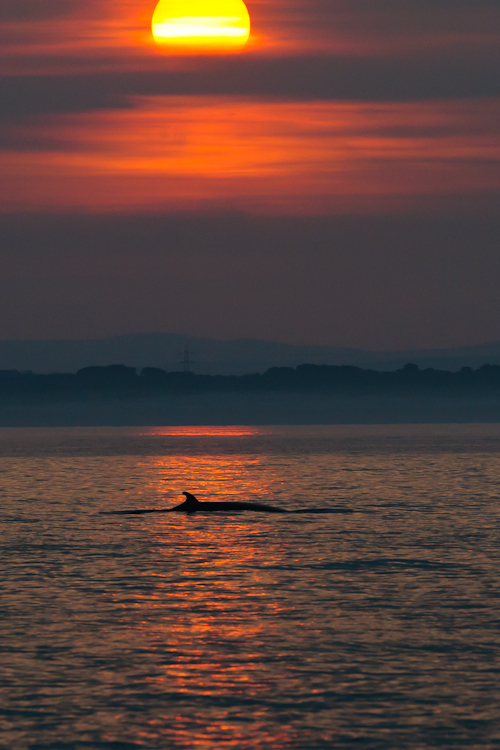
    Heading back to the location of the last White-beaked Dolphin sighting I’d had during the survey, we were on the North Sea in quite remarkable conditions.  So flat that it looked like glass, Gannets, Fulmars, Manx Shearwaters, Puffins, Guillemots and Razorbills were all reflected in the glassy surface.  A small group of dolphins surfaced, but only myself on the starboard side, and Jon on the back of the boat on the port side managed to see them as they were directly in front of us.  We continued our search as a spectacular sunset started to develop and then, as we headed back through the area where the dolphins had been, and it suddenly turned overcast, Ruth said “there’s something over there”.  That something was a Minke Whale, and soon everyone on board had excellent views as it surfaced and fed 🙂  Could it get any better?  Of course it could…then there were 2 together!  Away to the south, what was, probably, a 3rd Minke Whale surfaced and then the sort of magic that our summer evening North Sea pelagic trips seem to produce so often happened.  The sun broke through the clouds and I could see some interesting photographic opportunities developing…as long as the whale was going to be obliging 🙂

    Northern Fulmar,Fulmarus glacialis,North Sea,Northumberland,North Sea Pelagics,Whalewatching. Dolphin watching,Birdwatching

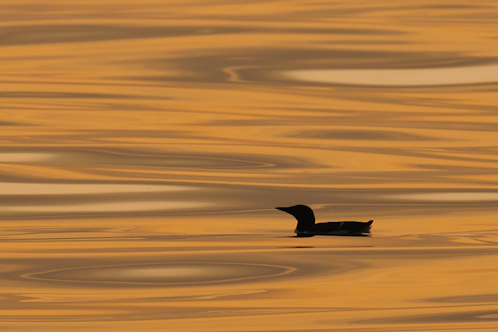
    Common Guillemot,Uria aalge,North Sea,Northumberland,North Sea Pelagics,Whalewatching,Dolphin watching,Birdwatching

    Minke Whale,Balaenoptera acutorostrata,North Sea,Northumberland,North Sea Pelagics,Whalewatching,Dolphin watching,Birdwatching

    We’ve got a few spaces remaining on some of this year’s North Sea pelagic trips so give us a call on 01670 827465 to find out what’s available and to book your place.  You’ll get to spend time on the North Sea and all of the sightings we make on our pelagic trips are contributing to a genuinely groundbreaking research project that’s the only one providing vital information about the distribution and abundance of Northumberland’s whales, dolphins and porpoises, to the ongoing Marine Conservation Zones process.
  • Mirror calm; NEWT’s North Sea Pelagic 05/07/13

    The North Sea can be a strange place.  I’ve been out there in calm, sunny conditions, heavy rain, and I’ve carried out survey work for the North East Cetacean Project in conditions – dense fog, white-out blizzard, ‘interesting’ swell – where we wouldn’t have hesitated to cancel the trip if it was part of our North Sea Pelagics programme.  Yesterday was probably the oddest conditions I’ve seen though…

    The northward stretch of our trip was in very calm sunny conditions that Mary likened to the Greek islands and Andy thought was reminiscent of a sheltered Scottish sea loch.  Gannets were soaring by, Puffins were bobbing about on the barely noticeable swell, small rafts of Guillemots weren’t doing very much at all and there didn’t seem to be a great deal of activity until we were just off Cresswell and amongst the flocks of gulls and terns.

    Then, the journey south brought conditions that were just surreal.  First the sea began to flatten, until what little swell there had been was gone, and it was mirror calm.  Then a hazy mist developed and the reflection of the sky in the water meant that it was no longer possible to see where the sea ended and the sky began; all was a monochrome canvas in front of us – no visible horizon, just a flat grey sheet liberally washed with dense flocks of gullsFulmars and Manx Shearwaters were gliding by just above their own reflections, a flock of Common Scoter flew north just after a Red-throated Diver had passed by and a Harbour Porpoise betrayed the interface between air and water as it surfaced nearby.  As the deep red orb of the sun dipped below the horizon away to the north west, the temperature dropped dramatically and we sailed back into the Tyne.

    All of our evening pelagics from North Shields are sold out (except for one place remaining on July 26th) but we still have a limited number of spaces on our Farne Deeps pelagics, our all day pelagics from Royal Quays in September and our Whale and Dolphin Cruise on August 31st.  Give us a call on 01670 827465 for more details, to check availability or to book 🙂

  • The power of the sea

    We rarely let the weather get the better of us.  Apart from our annual programme of North Sea Pelagics, where the weather really can make a difference to a trip going ahead or not, we can pretty much cope with anything the elements throw at us.

    I collected Harry and Maureen for their mini-safari on the North Northumberland coast as the first drops of rain began to speckle the windscreen of the car.  Straight down the coast and we were soon watching Eiders and Common Scoter riding up and over the surf, Guillemots, Puffins and Razorbills loafing offshore, Gannets and Fulmars soaring effortlessly over the sea, Swallows hawking insects within a few feet of us and Rooks foraging around the car park in search of discarded morsels of food.  All of this was in heavy rain, but positioning the car at just the right angle to the wind made it possible to watch all of these birds and the dark majesty of the sea as a backdrop.  Along the coast towards Holy Island a huge group of Grey Seals were basking in the improving weather and, all too soon, it was lunchtime and the end of the trip.

  • Sailing the ocean blue; Seal Safari 20/06/2013

    In any list of ‘Northumberland’s Big 5’ there will always be disagreements about the species that should be included.  One species that really epitomises the wildlife of North Northumberland is the ‘hook-nosed sea pig’…or Grey Seal to give it a less offensive handle than the translation of it’s Latin name 😉

    I collected John and Jennifer from Church Point and we drove northwards along the Northumberland coast.  Arriving in Seahouses, ready for our Seal Cruise on Glad Tidings V, conditions were near perfect; beautiful blue sky, calm sea and just the slight breeze that always seems to be present on the coast, even on calm days.  As the distance between ourselves and the mainland increased, streams of Fulmars, Kittiwakes, Puffins, Guillemots and Razorbills were heading to and from the islands, Gannets were passing by in impressive groups, Cormorants and Shags were sitting like sentinels at the gates of some mystical wildlife world and then we came across the seals.  Bathing in the sunshine, and only occasionally lifting their heads to avoid unexpected sprays of breaking surf, they allowed a close approach that had an entire boat full of camera-wielding visitors clicking away like a knitting circle.

    Back on dry land we sat and had lunch, just along the coast from the impressive bulk of Bamburgh Castle, and then continued north to look for more seals.  As high tide approached they could be seen ‘bottling’ close to Holy Island, and we made our way back down the coast.

  • Back to school

    Occasionally I still get to do the whole school teacher role…but it’s enjoyable for me and my students 🙂

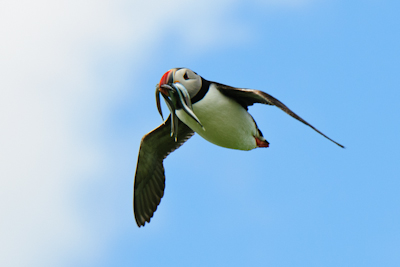
    I met up with Carol at Seahouses Harbour last Saturday for an all-day one-to-one photography session, only to learn the inevitable – conditions weren’t suitable for landing on Staple Island, so we were going to be sailing at noon, and spending 3hrs on Inner Farne.  We had a wander down the coast and worked through all of the relevant settings on Carol’s camera, so that once we were on the island and the air was filled with birds, the only thing to concentrate on would be technique; camera settings were all sorted and should take care of themselves 🙂  It was a rewarding afternoon as Carol soon worked out where to stand to get the shot she was after, how to decide which bird to follow through the lens and when to hit the shutter release.  Minor adjustments to camera settings were made as needed and the birds offered lots of opportunities.  Puffins, Razorbills, Guillemots, Fulmars, Kittiwakes and Shags all passed before the lens and Carol was delighted at her ability to capture that classic Farnes shot of a Puffin flying with beak filled with Sandeels.

    bird photography holidays,bird photography tuition,Atlantic Puffin,Fratercula arctica,Inner Farne,Farne Islands,Northumberland,www.northernexperienceimages.co.uk

    Tuesday brought another Farnes photography session, this time the latest in our Beginners Photography series.  Dave had been with us on our Dawn on the Coast session in April, and was back for something a bit warmer at a more civilised time of the day 🙂  We sailed around the islands before landing on Inner Farne.  Puffins were again flying by with substantial beakfuls of Sandeels and the cold southerly breeze was a reminder of the often harsh conditions faced by the Farne Islands birds (and Rangers!), even during the summer months.  I’ll be giving a talk about the Farne Islands at the Bird Fair at Rutland Water this year so if you’re there please do come along and find out more about this extraordinary wildlife experience.

  • Seabird Spectacular 10-13 June 2013; birdwatching on the Northumberland coast

    Arriving at The Swan on Monday evening I met up with Ronnie and Liz at the start of our Seabird Spectacular holiday.  Of all of our holidays, this is the one that concentrates on the really outstanding wildlife available on the Northumberland coast in the summer.

    Tuesday started out very nice, although cloud cover was increasing and, by lunchtime, eventually it was overcast, misty and spotting with rain.  We’d spent the morning around Druridge Bay, with one of the highlights being a very obliging male Reed Bunting who sat just a few metres away from us and sang for over 20 minutes, Wall and Green-veined White Butterflies flitted across the tracks ahead of us, Sedge and Reed Warblers played hide-and-seek in the edge of the reeds and a male Marsh Harrier quartered a reedbed, giving prolonged views at relatively close range.  As we ate lunch, overlooking the North Sea, watching Eiders, Guillemots, Kittiwakes, Fulmars and Gannets, the southeasterly breeze was starting to build a noticeable swell…

    The inevitable happened and our planned sailing around Coquet Island was cancelled on safety grounds, so we continued around Druridge Bay.  Sandwich Terns and a Grey Seal were near the weir between Amble and Warkworth and we ended up watching five Otters as they munched their way through a feast of Eels 🙂 A Great Northern Diver flew south between Coquet Island and the mainland and we could see clouds of Puffins and a few ghostly white Roseate Terns from our clifftop vantage point.  Swifts were around in good numbers – a scythe-winged menace to flying insects – and at the end of the day we returned to The Swan and were joined for dinner by Sarah.

    After Tuesday’s cancelled boat trip it was a relief to see that the wind had died down by Wednesday morning, and our all-day birdwatching trip to the Farne Islands went ahead as planned.  There were lines of Puffins, Guillemots and Razorbills streaming back towards the islands, Gannets were effortlessly heading either to or from the Bass Rock, and the sights, sounds and smells of the seabird colony were just a few minutes away when we came across two Harbour Porpoises. Cormorants and Shags perched sentinel-like  on the Scarcar rocks and landing on Staple Island we watched Guillemots, Fulmars, Kittiwakes, Puffins, Razorbills, Shags and Rock Pipits at close range before having our picnic lunch in superb weather conditions on this magical rock just a few miles offshore from the Northumberland coast.  Transferring across to Inner Farne at 13:00, via a brief detour to look at the Grey Seals lazing in the sunshine, we were greeted by Head Ranger David Steel and then enjoyed the very different experience of running the gauntlet of a succession of angry Arctic TernsCommon and Sandwich Terns were around too, and we watched Puffins skilfully avoiding the attention of Black-headed and Lesser Black-backed Gulls.  A pair of Rock Pipits nesting beneath the boardwalk were carrying beakfuls of food and I had a Farnes ‘tick’ in the shape of a Swift soaring over the lighthouse buildings.  We tried to find a Roseate Tern in amongst the roost by the Inner Farne jetty, but without success.  Back to The Swan for tea, reflection on a successful day and my Plan B…

    Today was planned to be a one-day extension to the holiday, visiting the North Pennines, but we’ve moved that to tomorrow and the ladies have an extra afternoon out with me, to take the boat trip around Coquet Island 🙂

  • Change of plan

    Snow on Monday, glorious weather on Tuesday…and torrential rain on Wednesday 🙁  When I arrived to collect David and Janet for their Prestige Tour in the Cheviot Valleys we quickly decided to head towards the Northumberland coast instead as that would offer the chance of plenty of birdwatching with the prospect of being able to shelter from the worst of the weather.

    Starting at Stag Rocks, we watched flocks of Eider and Common Scoter as they rolled up and over the substantial waves and a Grey Seal swam just beyond the breaking surf.  One thing that was immediately obvious was that there was a movement of Gannets; birds were flying over the rocks and more could be seen offshore.  Heading down the coast, the intensity of the rain increased and we had our second seawatch of the day, this time just south of Cresswell.  An almost continuous passage of Gannets was evident as they headed north, flocks of Kittiwakes and Guillemots were passing by, the occasional Fulmar arced up above the clifftops and a single Manx Shearwater easily outpaced the GannetsAvocets sat tight as the rain hammered down around them and, when the deluge finally ceased and blue sky and sunshine replaced the gloom, we watched a male Marsh Harrier as he quartered a nearby field before soaring heavenwards. A Great Crested Grebe sailed by serenely, a Whimbrel flew north, five Brown Hares were engaged in some half-hearted chasing and Swifts, Swallows, House Martins and Sand Martins all took advantage of the feast of insects that had been stirred to activity by the improvement in the weather.

    Even in poor weather, Northumberland can produce some excellent birdwatching 🙂

  • Sentinel

    It’s a rare day when a trip features a limited number of birds and other wildlife, but even the days with lots to see often have a few things that really stand out; sometimes by being scarce, sometimes it’s an intriguing behaviour, and sometimes it can be something that’s quite common but rarely seen.  An outstanding day would produce all of those…

    I collected Helen and Chris from Church Point for an afternoon of birdwatching and other wildlife around Druridge Bay and southeast Northumberland in near-perfect weather.  Before we headed up the coast though, we spent some time studying the Mediterranean Gulls on the beach and in the car park.  Cormorants were feeding just offshore and a very long-billed Dunlin was pottering about on the sand.  Working our way along the reserves that line Druridge Bay, one of NEWT’s favourite winter visitors provided some entertainment; a small herd of Whooper Swans had chosen a pool as a stop-off point – provoking a furious reaction from the resident pair of Mute Swans. Teal, Goldeneye, Wigeon, Shoveler, Mallard and Gadwall drakes were all looking good, following their exit from eclipse plumage, Long-tailed Tits flew past, one by one, a Goldcrest was flicking around in a bush nearby, a chirping Tree Sparrow allowed us to approach incredibly close and a Guillemot was hanging around at the base of the weir on the River Coquet.  Flocks of Curlew, Golden Plover and Lapwing filled the air, and a Jack Snipe provided lots of entertainment as it bobbed up and down on the edge of a reedbed, as nearby Common Snipe seemed more interested in disputing possession of feeding areas than actually feeding.

    As the end of the trip approached, much too soon with such good company, we were in a small wooded valley, searching for Badgers.  We could hear the sound of them blundering through the undergrowth, but a barking dog nearby seemed to spook them and all went quiet.  For most of the time that we were there we were under the baleful glare of a feathered sentinel, as a Tawny Owl stared at us from the fork between a branch and tree trunk.  Wildlife, watching the wildlife-watchers 🙂

  • Against the light

    In near-perfect conditions we arrived at Seahouses yesterday evening for our 3hr coastal cruise on Ocean Explorer.  As well as some of our ‘regulars’ we had Andy, Jan and Sam on board, on their final evening in Northumberland.

    Soon after heading south down the coast towards Dunstanburgh we came across a couple of Harbour Porpoises.  Typically shy, they surfaced a few times and then vanished into the depths.  Gannets featured throughout the evening, passing both north and south, and one or two were seen diving.  Puffins, Guillemots and Razorbills were bobbing about on the water and a mixed flock of Arctic and Common Terns and Kittiwakes had found something to hold their interest.  We stopped to see if anything else would come along, and were soon joined by a Fulmar, stunning in the beautiful light.

    Fulmar,bird photography tuition,Northumberland

    We gradually headed north, and approached the Farne Islands as the sun began to set.  Grey Seals poked their heads out of the water and came off the rocks to investigate our boat, Cormorants and Shags perched sentinel-like on the rocky islets, Turnstones prodded and poked their way around the edge of the mass of Seals and Sam punched the air in elation as his first Curlew flew by 🙂  The setting sun provided an opportunity to experiment with an aspect of photography that I’ve never really been able to get to grips with, and one which I’ve always been fairly ambivalent about.  Excellent light, excellent location, all the ingredients were there to convince me…

    Farne Islands,Inner Farne,Northumberland,landscape photography tuition,seascape photography


    Farne Islands,Northumberland,landscape photography tuition,wildlife photography tuition,seascape photography

  • A damp day in North Northumberland

    As I got home on Tuesday night after our evening pelagic the rain was still hammering down.  With a forecast of more rain for Wednesday, and a planned Farne Islands safari, I started thinking about a contingency plan as I dried off all of my camera equipment.

    Wednesday dawned…with more heavy rainfall.  I needed an idea of what was happening further north and a quick text to William was soon answered; the rain in Seahouses was light and sea conditions were fine so boats were sailing 🙂  I collected Louise and Martin from Warkworth and we headed north along some decidedly damp roads.  A morning birdwatching on the Northumberland coast, including Grey Seal, Roe Deer, Swallow nestlings, Shelduck, Eider, Curlew, Oystercatcher, Redshank and a very obliging Whitethroat, was followed by a lunch break just north of Bamburgh Castle, and then it was time to board Glad Tidings for the sailing across to the islands.  With a bit of swell on the sea, a chilly wind kicking spray from the bow, and another oppressive sky the islands were incredibly atmospheric.  Puffins were sitting in huge rafts just off the islands, Guillemots and Razorbills were flying back to the cliff ledges with fish, Gannets were soaring majestically by the boat, Grey Seals lazed in the surf and Kittiwakes called incessantly from their precipitous nest sites.  As we landed on Inner Farne the aerial bombardment from the Arctic Terns was much reduced from the level of recent weeks, and there were plenty of young terns trying out their wings in short flights across the boardwalk.  Sandwich Terns were carrying food back to quite large chicks and the island seemed to be awash with Puffins.  Every flat area next to the sheer cliff faces was covered in them and hundreds were flying around the island.  Louise, like many of our clients when seeing Puffins for the first time said “Aren’t they small”.  Everyone expects them to be bigger than they actually are.  Kittiwake chicks were almost too big for the nest ledges, and Razorbills and Guillemots were watched at close quarters too.  With the poor weather the number of visitors to the island was quite low, making for quite a different experience to our trips earlier this year when all of the boats were full.

    Most of our Farne Islands trips this year have been on Glad Tidings 1, and Bobby and Billy always keep their passengers entertained.  Now, as I look out of my office window while I’m typing this on a fine, dry, sunny afternoon, Bobby’s words, as he delivered us safely back to Seahouses come to mind “Aye, it’s improved.  Now it’s like a fine autumn day rather than a bad winter one”.