Tag: Curlew

  • “I am Gadwall…”

    After the heavy rain of Monday, it was good to drive to Newbiggin, to collect Bryan and Zoe & Simon, in warm sunshine and broken cloud.  Our evening Otter mini-Safari would take in the best of Druridge Bay and southeast Northumberland…

    One thing that I always enjoy is the response to bird names from clients who’ve never come across a particular species before.  Godwit is a name that always raises a chuckle, and both Bar-tailed Godwit and Black-tailed Godwit, resplendent in their breeding finery, were among the noisy flocks of Redshank and Curlew.  Turnstones were also looking particularly stunning, two juvenile Marsh Harriers were drifting over reedbeds, a particularly dark male Pheasant couldn’t make his mind up which way to run when we stopped to admire him and a Stoat poked it’s head out of the grass, then back in, then out again, before finally running across in front of us.  Gadwall and Wigeon invoked more bemusement at bird names and we added Red Admiral, Meadow Brown and Magpie Moth to the trip list.  Small groups of Starlings were heading to roost and it was time for us to head to our final site of the evening.

    As the sun dropped towards the horizon we settled to scan for any indication of Otter activity.  A Sparrowhawk passed through, causing consternation in the Swallows, Sand Martins and House Martins and a Common Snipe was illuminated by a patch of sunlight, raising it from the level of ‘brown bird with long bill that pokes it’s face in mud’ to something quite sublime.  Then, a sudden panic among the ducks.  Females with ducklings were fanning out rapidly from one edge of the pond and we intensified our scanning of the reedy margins.  Nothing, but the birds weren’t settling.  Then a pair of Mute Swans gave a call that we’ve come to associate with one thing, and it was only a matter of time…in the dark shadow of a reedbed, I saw a line of bright water appear.  Everyone’s attention turned to that edge of the pool and then the Otter popped up at the surface 🙂  For 20 minutes it made it’s way steadily across the water, including a stunning few minutes in the reflection of the sunset, before finally vanishing into the darkening gloom.

    As we headed back towards Newbiggin, the discussion turned back to bird names and led to one of my all time favourite things that any client has said “I am Gadwall, a wizard of the elven kingdom, and you are Turnstone, a Dwarf” 🙂
  • Northumberland coast birdwatching and Otter-spotting 16/07/13

    Sometimes I think that I’m lucky, sometimes I’m quite sure that I’m lucky, and sometimes I have absolutely no doubt…

    As the heat of the day began to cool, with increasing cloud cover, it was time to head out and collect the five clients for our Otter mini-Safari.  I picked Gabrielle and Michael up from Morpeth and then drove across to Church Point, where Andy had already met up with David and Rhian.

    Before we’d even got everyone in the car, there was chance for an ID session with a bird that everyone was aware of, but wasn’t quite sure how to identify; a very obliging adult Mediterranean Gull flew by, perched on a lamp post, flew by again, was joined by a 1st summer bird and then drifted off out over Newbiggin bay.

    As the evening passed we had some excellent birdwatching encounters; three Little Egrets were very welcome, Grey Herons were sitting around just about everywhere that we visited, two summer-plumaged Red Knot flew by, Little Gulls were deftly picking flies from the calm water’s surface as Sandwich and Common Terns took a slightly more forthright approach to the acquisition of food, two juvenile Marsh Harriers were testing out their wings low over a reedbed and an adult male, began quartering the sand dunes, Eiders swam close to us and Curlews, Lapwings and Oystercatchers were all roosting peacefully.

    Then, at the site that I’d thought would be the best place to complete our trip, David said the words that everyone was waiting to hear “I’m sure I’ve just seen an Otter“.  Making it’s way quickly along the edge of the pool, it took a few minutes before everyone had seen it.  Then it just got better – first we could track it’s progress by the expanding ring of Mallards, Gadwall and Tufted Ducks around it’s exact location, then by the ring of bright water each time it surfaced in the shadow of the reeds, before we suddenly had a stampede of ducks hurrying past just a few metres away from us.  Sure enough, the Otter was now making it’s way along the edge of the pool on the side where we were sitting, passing closely enough that binoculars weren’t necessary 🙂  As it overshot the ducks, the stampede reversed direction and the Otter made it’s way into the darkness of the reeds.

    With a request for Barn Owl from the back of the car, I knew which route we’d take back down the coast.  Sure enough, perched on a roadside wire, the ‘White Owl‘ might have well been waiting for us, before flying parallel to the road over the fields and into the night 🙂

  • Summer birdwatching

    As I collected Alison and David from The Swan for an afternoon and evening  around Druridge Bay, southeast Northumberland and the Northumberland coast, the weather was continuing in the glorious vein that it had struck a few days previously.

    Mid-summer can be a quiet time, other than the obvious hustle and bustle of the Farne Islands, but there’s always something to see.  At the moment wader numbers are starting to build; Lapwing, Curlew, Redshank and Oystercatcher have all come down to the coastal strip from their breeding grounds and Black-tailed Godwits are moving through.  One of the first things we came across was a group of four of these beautiful elegant waders as they rested with a flock of LapwingsLittle Gulls were flycatching and then sleeping and a male Marsh Harrier gave views that were simply breathtaking.  As we headed up the coast, a female Marsh Harrier flew low over the car, being equally as obliging as the male.  Grey Herons were stalking along pool edges, Common Spotted Orchid, Bloody Cranesbill and Harebell added colour to pathside vegetation, hirundines heading to roost formed swirling clouds of dark dots against the greying sky, a Common Frog sprang across the path in front of us and a Barn Owl hunted over rough pasture on silent wings.

    The thing that always characterises days out with clients who are passionate about wildlife, and Alison and David have a mouthwatering list of wildlife they’ve seen around the world, is that before you know it, it’s nearly dark, pipistrelles are hawking insects in the last vestiges of daylight and it’s time to head back.

  • Avoiding

    As I collected Claire and her mum from Alnwick for an afternoon around Druridge Bay and set off on an exploration of Druridge Bay and southeast Northumberland, they mentioned that they were going to watch the Wimbledon Men’s singles final on iPlayer once we finished for the day, so it was important to avoid finding out the score. I’d done something similar myself back in 2009, on the final day of the Premier League season – including extending a safari day and not switching the radio on once I’d dropped my clients off.  The outcome on that occasion was that I indirectly learned the fate of Hull City, the team I’ve supported since I was very young, when I drove through Amble and the beer garden at the Wellwood was filled with Newcastle United supporters with their heads in their hands…

    Birdwatching in the stunning weather produced two Little Egrets, a species I haven’t seen for a few months, and 24 Black-tailed Godwits – that most elegant of waders.  Canada and Greylag Geese were on edge, but whatever was agitating them remained hidden deep in the reeds.  The godwits were eventually disturbed by a complete idiot who seemed to think that flying low over a nature reserve in a paramotor is an ok thing to do.  Now, I know it can’t be easy when you’re hanging under a parachute with a desk fan strapped to your back but it’s incredibly irresponsible to disturb wildlife in a nature reserve in that way.  You may think you’re some sort of modern day James Bond, or Milk Tray man, but you aren’t – you’re like a parody of the Wacky Races.  There, I feel much better now 🙂

    As we continued down the coast we had a near miss with the tennis score.  I was getting our telescope out of the boot, and the ladies were still at the front of the car, when someone parked just behind us told his family the latest score as they walked up from the beach.  Little Gulls, Redshanks, Curlews, Lapwings and a Greenshank were all lazing in the baking heat of the mid-afternoon, and both male and female Marsh Harriers drifted menacingly over the reedbeds.

    Heading back towards Alnwick, surely we’d avoided hearing the outcome of the tennis?  As we drove through Warkworth, it was fortunate that I was the only one to notice that one of the pubs had the score written on it’s blackboard standing on the pavement 🙂

  • Wildlife in the heat of the summer; Otter Safari 06/07/13

    After an enjoyable few hours watching the British & Irish Lions demolition of Australia, I loaded up the car, collected our picnics from The Swan and headed north to collect Jacky and Marcus from their holiday accommodation at the stunning St Cuthbert’s House.  A quick drive back down the coast and we collected Alice and John and embarked on our search of Druridge Bay, southeast Northumberland and the Northumberland coast.

    I’d identified a site where Otters have been active in the late afternoon, so that was our first port of call.  With Common Terns dip-feeding just in front of us, Canada and Greylag Geese with goslings, Gadwall with ducklings and lots of Sand Martins and Swallows there was plenty of birdwatching interest as we waited in hope for the possible appearance of our target species for the trip.  Jacky’s excited comment “there’s a…yes, it’s an Otter” marked the start of nearly an hour of Otter activity.  The initial animal turned out to be two together, and then eventually we were watching four of them as they swam back and forth, feeding, clambering on poolside rocks and play-fighting 🙂

    Lapwings, Curlew and a Greenshank were all evidence of post-breeding gathering/migration, Starlings were grouping into larger flocks as daylight faded, Sand Martins were swirling in a big pre-roost flock, a Barn Owl drifted on silent wings over a reedbed and, as the falling light levels finally rendered everything as a silhouette we headed back to the car with pipistrelles hawking just over our heads.

  • “a real birding day” Birdwatching in the North Pennines 14/06/2013

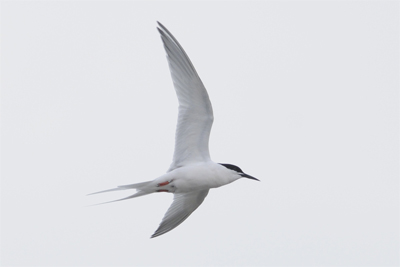
    After a successful sailing around Coquet Island last Thursday, with sightings of Roseate Terns perched and flying,

    Roseate Tern,Northumberland,Coquet Island,bird photography tuition,bird photography holidays,Northern Experience Wildlife Tours
    Britain’s rarest breeding seabird

    our re-arranged North Pennines Safari was on Friday.

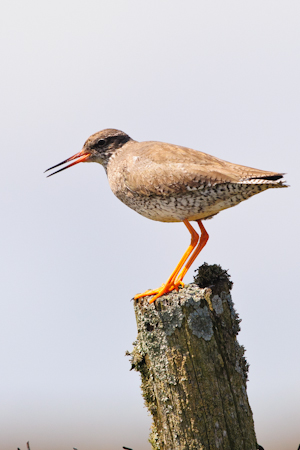
    I collected Liz and Ronnie from The Swan and we headed southwest into the hills.  Only a month earlier we had a North Pennines trip in near-zero temperatures, but now everything was much more springlike.  Curlews were gliding across the moors, their haunting cries carrying on the breeze, Lapwings were displaying in that bizarre way that has you half convinced they they’re just going to crash into the ground and there were plenty of birds with chicks; Redshank, Curlew, Lapwing, Golden Plover and Red Grouse were all mindful of their offspring as we made our way across the moors.  Common Snipe appeared unexpectedly from clumps of rush and one obliging bird perched on a fence post as we sat just a few metres away.  Pairs of noisy Redshank flew from fence post to dry stone wall and back again and, like the Snipe, one bird perched obligingly (like the one pictured here from 2011).

    Common Redshank.Tringa totanus,bird photography holidays,bird photography tuition,Northumberladn,North Pennines,ww.northernexperienceimages.co.uk

    Liz’s feedback e-mail, at the end of the holiday and our day in the North Pennines, summed it up so well – “a real birding day” 🙂

  • One Cuckoo flew over the pipit’s nest; birdwatching in the Cheviot Valleys 09/06/2013

    Sunday was another trip into the Cheviot Valleys, with two of our returning clients.  We first met Pete and Janet at the Bird Fair in 2008 and this was their third trip with us (plus a trip that they organised for their local Natural History Society in 2009).  It’s always a pleasure to meet up with them, and the prospect of a trip into the Cheviots was a mouthwatering one.  You just never know what you’ll find, or see…

    The trip started with two species that we didn’t find on our Cheviots trip on Thursday; two Brown Hares were sitting by the ‘wader puddle’ and, one of our target species for the day – two Ring Ouzels flew over us, calling, as we started the first of the days walks.  Janet soon spotted a juvenile Dipper, and we watched as an adult flew in and fed it.  Grey Wagtails were all along the valley, a Spotted Flycatcher was living up to it’s name admirably and a very obliging Tree Pipit perched close to the path.  As on Thursday’s trip we heard, but couldn’t see, a Common Redstart.

    Every so often, something happens that leaves us marveling at nature…and Sunday provided an extraordinary spectacle.  As we sat eating our lunch by a small stream, enjoying close views of Lesser Redpoll (a species we’d been hearing all morning although only seeing as small flying dots) I noticed a bird flying across the valley.  Initially it looked like a Kestrel – until I raised my binoculars and the pointy-winged, long-tailed, shape resolved into a Cuckoo.  It headed down into the heather and was immediately chased by a pair of Meadow Pipits.  They pursued it part way across the valley and it dropped out of sight behind the trees…only to reappear a minute later, chased by more pipits.  Landing in exactly the same spot in the heather it was chased away for a second time, by four pipits.  It rose higher and then began soaring, with the flap-flap-glide that is so characteristic of a Sparrowhawk.  More Meadow Pipits joined the attack, presumably revealing their nest locations, and the bird suddenly closed its wings and dropped like a stone, out of sight behind the trees.  A minute later and the Cuckoo was heading across the valley again, dropping back in the same spot as previously.  This time it was driven off by a pair of Red Grouse, that came charging down from near the summit of the hill, and it flew back and out of sight behind the trees, only to reappear a few seconds later with more Meadow Pipits in tow.  In total we watched it make ten visits to what was presumably a Meadow Pipit nest that it was targeting.  By the ninth visit it spent several seconds on the ground with angry pipits swirling around it’s head, which we could see sticking up above the heather, and the tenth visit was a prolonged one too.  After that it flew back across the valley and didn’t reappear, so perhaps it had been successful in laying an egg in the pipit nest.

    Our final walk of the day produced another example of birds defending their nesting territory, as the plaintive cries of a pair of Curlew echoed around the steep valley sides and we looked up to see them flying at a Common Buzzard.  The buzzard continued on it’s way and the Curlews dropped out of sight above the ridge, only to reappear a few seconds later as a second buzzard flew down the valley.  Excellent weather, stunning scenery and clients whose enthusiasm and knowledge adds so much to the day 🙂

  • Heading for the hills; Birdwatching in the Cheviot Valleys 06/06/2013

    Thursday brought a trip that I’d been looking forward to for some time; I first met Chris many years ago, while I was Field Trips Officer for the Northumberland and Tyneside Bird Club, so it was going to be a day out with a client who knew me several careers ago.

    We met up at Church Point and headed inland towards the Cheviot Valleys, a location that features some stunning landscapes; steep-sided valleys, towering hills, mysterious sun-dappled woodland, heather moorland and all that goes with it.  As we approached the start of the higher ground, I suggested we check a damp area of an arable field.  It’s often good for wading birds and this was no exception; two broods of Lapwing chicks, as well as Oystercatchers and Redshank, were pottering around the edge of the now small puddle.

    Perhaps the best thing about our forays into the Cheviots is the chance to stretch your legs, get some fresh air…and see hardly anyone else while you’re there 🙂  The time passes quickly and the cackling of Red Grouse, simple song of Spotted Flycatcher, silvery descending cadence of Willow Warbler, plaintive mewing of Common Buzzards and the eponymous songs of Cuckoo and Chiffchaff all accompanied parts of our walk.  Grey Wagtails, Dippers and Common Sandpipers were all occupying that particular ecological niche that they’re all so suited for, a Redstart delivered his distinctive song from a hidden perch, Curlews gave their haunting cries from high on the hillsides, Tree Pipits sang from treetops and a Kestrel was hanging in the air over the ridge at the top of a steep valley.  Away from civilisation, surrounded by wildlife, it was the relaxed enjoyable trip that I always knew it would be 🙂

  • Head for the hills

    Away to the northwest of our base in southeast Northumberland is the skyline-dominating range of the Cheviot Hills.

    I collected Susan from Cheviot View and we headed towards the Harthope Valley via the ford at Coldgate Mill.  A stop along the road produced Redshank, Oystercatcher, Lapwing and the always impressive Brown Hare.  In glorious weather we walked for nearly five hours around various parts of the valley.  Curlews sang their eerie song from the heather clad slopes above, Tree Pipits delivered their challenge to rivals, and serenade to potential partners, the descending silvery cadence of Willow Warblers shimmered in the air around us, a Whinchat flitted from rock to heather, and back again, Grey Wagtails lived up to their name – wagging their tails from rocks and fence posts along our route – and the ‘swee-wee-wee-wee-wee’ of Common Sandpipers echoed around the sides of the swiftly flowing stream in the valley bottom.  As the afternoon wore on we watched as a Kestrel patrolled the steep valley sides, a Sparrowhawk soared across the valley and a Common Buzzard hovered over a distant plantation.

    Delivering peace, solitude and some excellent wildlife-watching opportunities, the hills are a great place to enjoy your wildlife and get some exercise too 🙂

  • Flying in for a day birdwatching in the North Pennines

    I always enjoy meeting up with our previous clients again, and Saturday morning found me at Newcastle Airport waiting to meet Jacob and Nancy as they arrived for a couple of days birdwatching in Northumberland.  They were going to be spending Sunday on the Farne Islands, but our destination on what was developing into a gloriously sunny Saturday was the North Pennines.

    Just 12 days earlier I’d been marvelling at the temperature of 1C at 10:30am but now Curlew, Lapwing and Oystercatcher were all flying around and calling noisily as we reached the higher ground southwest of Hexham, Skylarks were singing exuberantly against the azure sky, Meadow Pipits were ‘parachuting’ down at the end of their song flights and Common Snipe were calling from concealed positions in the grassland.  In the stunning light, Barn Swallows were eye-wateringly iridescent, a pair of Golden Plover flew in front of us and a pair of Red Grouse watched closely over eight chicks.  Red Grouse was a lifer for Jacob and Nancy and one male allowed a very close approach and provided a lot of photo opportunities for them.  Eyebrows, raised, eyebrows lowered, facing left, facing right, staring into the lens; he went through a veritable supermodel repertoire of poses before seemingly melting into the vegetation.

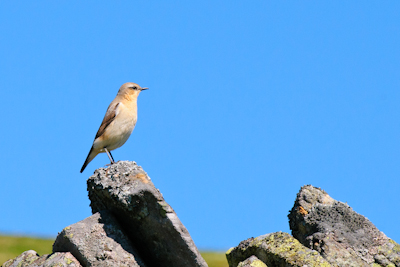
    As we travelled across a high moorland road, a Northern Wheatear posed obligingly for photographs.

    Northern Wheatear Oenanthe oenanthe,bird photography,bird photography holidays,bird photography courses,birdwatching holidays,Weardale,County Durham,North Pennines,www.northernexperienceimages.co.uk

    Skylarks and Meadow Pipits provided a memorable aural backdrop to our lunch stop, and a Golden Plover was silhouetted on top of a nearby ridge, keeping a close eye on it’s territory.  Near perfect weather, a gentle breeze, spectacular landscape and stunning birds; what more could you want from a day’s birdwatching?