Tag: Curlew

  • A Rosy outlook

    Saturday saw a change in our normal Safari routine, and an early afternoon start.  I collected Gareth and Ruth from the Red Lion at Alnmouth and we drove south.  The hot, sunny weather had brought out hundreds of people to Plessey Woods but we still found a peaceful, undisturbed glade where we could listen to the birds singing and we watched a female Great Spotted Woodpecker; at least we were able to watch her until she realised that we were!  Cresswell Pond produced a real avian soap opera as a Mute Swan defended his pond against two interlopers, racing across the pond like the Spanish Armada.  A Little Gull was as cute and dimunitive as ever, alongside Black-headed, Common and Herring Gulls.  Druridge Pools was hosting some obviously confused geese; amongst the expected flock of Greylags there were single Pink-footed and Barnacle Geese as well.  A late finish concluded with a beautiful, ghostly Barn Owl and at least 3 different species of bat along the River Coquet at dusk.

    Sunday was a day for doing whatever we felt like.  With temperatures still soaring, a day inland, doing survey work for the BTO Bird Atlas, was considered then rejected in favour of a visit to the coast.

    Sarah had the excellent idea of taking a boat trip around Coquet Island, which I was really enthusiastic about.  When myself and Tom Cadwallender from the Northumberland Coast AONB were designing the backdrop for this year’s Birdwatching Northumberland stand at the Bird Fair we chose eight species that we felt symbolised Northumberland birding; Curlew, Eider, Pale-bellied Brent Goose, Golden Plover, Black Grouse, Roseate Tern, Dipper and Puffin.  A mix of everything that’s good about birdwatching in Northumberland; inland, coastal, summer and winter.  I had images of seven of those species, but the Roseate Tern is the one that I haven’t photographed during the digital age.  Hence, my enthusiasm for a trip around Coquet Island; with 35-40 Rosies already back at their Northumberland colony I was hopeful that photo opportunities would arise.  As we sailed across to the island onboard Shokwave, there was a strengthening NNE breeze and the temperature began to decrease rapidly.  Once Dennis manouvered the boat into the jetty, we could see Roseates sitting on their nest boxes.  They were a bit distant for photography so I waited patiently until I heard the distinctive ‘choo-it’ call and a bird flew by the boat.
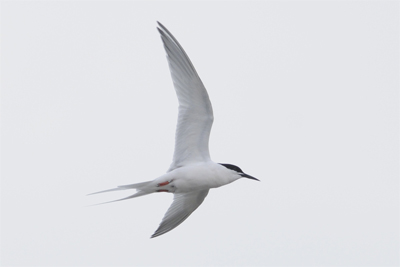
    Britain's rarest breeding seabird

    Grey Seals popped their heads above the water to look at the boat, Puffins whizzed past at breakneck speed and more Roseates were busy displaying around the boxes.
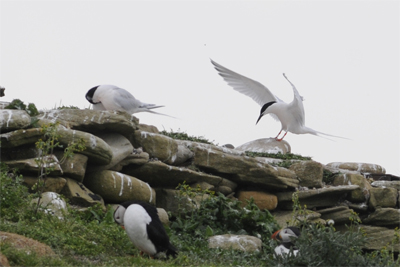
    Roseate Tern

    After a pleasant Sunday morning cruise it was time to return home. En route, we stopped off to check a Little Owl nest site and one of the adult birds sat staring at us from the roof of a derelict building.  Finalising the paperwork for a forthcoming project was followed by a wonderful evening sitting on our patio, drinking wine and working on part of our bonsai collection as Blackbirds were singing from our trees and Coal Tits collected food to take to the noisy, and hungry, nestlings that we could hear.  Now, that’s my idea of heaven 🙂

  • What does my office look like?

    Occasionally I find myself pondering that question.  On Wednesday I left home early to drive to Seahouses and collect Carolyn and Brian, two clients who we first met last year.  As we headed up the coast through Bamburgh and towards the Lindisfarne NNR for a day of birdwatching, we stopped at each promising area.  Before we reached Holy Island itself we’d already had excellent views of 4 Harbour Porpoises, good views of three Whimbrel (alongside a Curlew for comparison) and a Brown Hare as well as the growing numbers of House Martins and Swifts.  A Sedge Warbler perched helpfully on top of a stunted Hawthorn as he belted out his song, a Whitethroat was elusive before eventually showing off the bright white throat feathers that give it it’s name and a Wheatear hopped along a drystone wall.  On the island we watched a Heron as it preened whilst hidden in a reed bed, listened to another Sedge Warbler and tried to locate a calling Water Rail.  Skylarks and pipits were unobtrusive in a sheep field that also contained at least 6 Wheatears and, once we’d left the island we watched over 1000 Grey Seals as they relaxed in the bright sunshine.

    After dropping Carolyn and Brian back in Seahouses, I headed home, packed my bag and drove down the A1, out of Northumberland, to my sister’s house.  04:30 Thursday morning and I was on the road again, this time travelling to King’s Lynn.  Two days of being a student were relaxing and enjoyable, studying the acoustic signals used by cetaceans being my own personal highlight, before the north beckoned.  Finally, just before 10pm yesterday, I arrived back at home, headed to the ‘beer fridge’, sat down to a delicious Chinese meal with Sarah and then collapsed into bed.  With tomorrows “Beginners Birdwatching; Songs and Calls” being close to home we don’t have a really early start so this afternoon is a chance (something that’s going to happen less and less over the next few months) to catch up with e-mails, ‘phone calls and product planning/development.  It’s the great paradox of running your own business; many people choose that option in order to have more free time…but if your business is successful there’s a period, certainly during rapid growth/expansion, when 9 to 5 doesn’t look so bad after all.  Would I go back to that? What do you think? 😉

  • Another exclusive…or two

    Friday saw us in the Cheviot Valleys, enjoying probably the best weather so far this year, leading another Prestige Tour.  With a client fascinated by geology and botany it was an excellent day out, with the abiding memories being the chuckling of Red Grouse in the Harthope Valley and a yaffling Green Woodpecker at Alwinton, that culminated with a meal at the Angler’s Arms at Weldon Bridge.

    Yesterday we had a Kielder Prestige Tour that that had been arranged as a 70th birthday present.  Collecting our clients from Belford we headed southwest.  After a fine drive in the beautiful weather, we reached Bellingham and left the public roads behind for an hour as we journeyed through the forest.  A pair of Red Grouse on a moorland edge provided excellent views, Roe Deer crossed the track in front of us and Common Buzzards flew close by across clearfell areas.  Back in civilisation we stopped for a comfort break and found our first Common Crossbills of the day.  Small groups were flying overhead, giving their distinctive calls, and a few were perched at the top of nearby trees dismantling cones with ease.  Huge numbers of Chaffinches were around the feeding station at Leaplish and, as the day progressed we had excellent views of Siskins, Goldeneye, and an incubating Oystercatcher, as well as one of the Osprey pair that have returned to Kielder this year.

    The journey back retraced our route from the morning, with one exception.  The birthday boy suggested a short-cut to Chatton, and that proved to be very fortuitous.  Just before Chatton village, myself and Vic, who were in the front of the Landrover, noticed a large bird in a flooded field.  As we stopped…there was a White Stork!  It’s legs were hidden by the bankside vegetation, so we couldn’t see if it had the most obvious sign of captivity; colour rings on it’s legs.  As it stalked along the bank, flushing a pair of Oystercatchers, those legs were gradually revealed to be bare of any adornment.  Howard managed to take some photos, but the bird was very wary and quickly began to head away from us.  With White Storks, there’s always the taint of ‘escapee from captivity’ but this would be a good time for an overshooting bird returning from it’s wintering quarters in tropical Africa and, regardless of it’s origin, this was one stunning bird.  An unpredictably exciting end to the day out.

    White Stork, Chatton, Northumberland 17/04/2010
    White Stork, Chatton, Northumberland 17/04/2010
  • Nothing to grouse about

    Today was the first of two Prestige Tours organised as a 40th birthday surprise.  With our destination being the North Pennines, the tour where we cross the border from Northumberland into Upper Teesdale, the mist, drizzle and general murk first thing this morning didn’t look too promising.  Sometimes, though, the less promising days prove to be the really memorable ones…

    Checking one of our favourite Black Grouse sites there were no birds in the field close to the road.  However, after watching that site for the last two years I guessed that the birds were probably at a lek site away across the moor.  Sure enough, we soon found three birds sitting around, another two flew in a few seconds later and then the lek started.  The cold wind and icy rain was barely noticeable as the birds postured around the clumps of rush.  More sightings of Black Grouse followed, including birds at two sites where I hadn’t seen them before; one of them producing excellent views of a Blackcock sitting near the road, and a rather more shy and retiring Greyhen.  Across in Upper Teesdale the views of Blackcock got even better, and were accompanied by drumming Snipe and displaying Curlew.

    The walk to Cauldron Snout can seem bleak and devoid of wildlife but it is there; watching from amongst the heather were Red Grouse, some more Red Grouse, stunning Golden Plover and even more Red Grouse.  Meadow Pipits flitted back and forth, Snipe were calling, Curlew were singing their eerie song over the moorland and Lapwings demonstrated that their display flight and calls both defy belief.

    One of the best days we’ve had in two years of NEWT.

  • Not bad for mid-Feb

    Yesterday I led our first Safari Day of this week, to Lindisfarne and the North Northumberland coast.  Although I really enjoy trips where the main quarry is Red Squirrel/Badger/Otter/Fox/Roe Deer my lifelong love affair has been with birdwatching.  Northumberland is a top-quality destination for a winter birdwatching trip; just ask any of the writers/photographers who we’ve taken to the wilds of our home county during the cold(er) bits of the year.

    Yesterday was one of those days where you couldn’t wish for better conditions; clear blue sky, warm sunshine (although with sub-zero air temperatures for much of the day), no rain and only a very gentle breeze.  I collected Phil and Barbara from their holiday cottage near Guyzance and we followed the coast all the way to Lindisfarne.  Small groups of Pale-bellied Brent Geese beside the causeway were a novelty for birdwatchers from the southeast, who are used to seeing Dark-bellied Brents during the winter, and they commented immediately about just how black-and-white the Svalbard birds look.  Scanning the fields on the island we located a flock of ~800 Pale-bellied Brents, with a few Dark-bellied mixed in, allowing a direct comparison of the two.  The field was also shared by 200+ Curlew and smaller numbers of Redshank, Lapwing and Golden Plover.  Panic among a group of Starlings was traced to a 1st-Winter Merlin that helpfully perched on a post at the back of the Rocket Field.  It’s amazing how quickly time passes and after 2 hours we headed back towards the mainland among the general exodus that occurs as the end of safe-crossing approaches.  Another Merlin beside the causeway allowed even closer views so we stopped for a few more minutes of appreciation of this small predator.

    Our picnic spot, overlooking the mudflats between Holy Island and the mainland, provided excellent views of flocks of Lapwing and Golden Plover in the air as well as lots of Shelduck, Eider, Pintail and more PB Brents.  We enjoyed all of these in the company of Tom Cadwallender, Natural and Cultural Heritage Officer for the Northumberland Coast AONB, who was supposed to be meeting a camera crew from Inside Out.  When we left Tom, they were already 20mins late…

    Continuing down the coast, a very obliging Common Buzzard pranced around a field, presumably looking for worms.  The Skate Road held well over 1000 Common Scoter, 90+ Purple Sandpipers were huddled on the rocks as the incoming tide washed against their feet and a careful scan produced a few pairs of Long-tailed Ducks (Barbara’s 2nd lifer in a matter of minutes).  Red-throated and Great Northern Divers were, well diving mainly, and Slavonian Grebes were bobbing about just beyond the surf.

    Our final destination for the day was Newton, and the decision to detour from the coast route down the dead-end road to Low Newton proved to be an inspired one.  As dusk approached the assembled ducks on the pool (Teal, Goldeneye, Mallard, Gadwall) all provided entertainment as they called to each other.  Then, just a few feet in front of us, a Long-eared Owl silently hunting.  We all held our breath as it approached and then it veered away as silently as it had arrived.  The walk back to the Landy was to provide probably the best bird of the day, and one of those Northumberland birdwatching moments that was quite simply sublime; against an increasingly starry sky and crescent moon, with an impressive amount of Earthshine, a Bittern flew low over our heads and out over the bay.