Tag: Common Scoter

  • Heading north…

    Living in southeast Northumberland, we’re spoiled by having easy access to some outstanding birdwatching areas.  Holy Island, which we still think is at its best during the winter, is just an hour north up the A1…

    I collected Keith and Mary on Saturday morning and we crossed the causeway onto the island for a day of birdwatching around the Northumberland Coast AONB.  Although we encountered wintering Pale-bellied Brent Geese, Bar-tailed and Black-tailed Godwits and other waders and wildfowl, there was a definite spring feel to the day.  The weather was glorious (although a little breezy), and Skylarks could be heard high overhead.  Curlews were in full voice, Grey Herons were stalking through poolside vegetation, Grey Seals were hauled out at low tide and a steady stream of Gannets passed by offshore.  Early afternoon we headed back to the mainland and more waders and wildfowl, as well as a mixed flock of Yellowhammers, Reed Buntings, Linnets and Tree Sparrows (with the male Yellowhammers looking particularly stunning) before finishing in the shadow of Bamburgh Castle with roosting Oystercatchers, Redshanks and Purple Sandpipers, Eiders bobbing about in the surf and a mixed raft of Common Scoters and Slavonian Grebes diving repeatedly in the swell and really testing powers of concentration.

  • Raptors, raptors everywhere

    Standing on the Heugh on Holy Island with Jill and Steve, we’re all scanning towards Guile Point.  Cormorants, Shags, Red-breasted Mergansers and Eider are all bobbing about on the water, Pale-bellied and Dark-bellied Brent Geese, Bar-tailed Godwits, Grey Plover, Curlew and Oystercatchers are flying by, Common and Grey Seals are splashing in the surf as the tide falls…and I’m focused on the sea with one species in mind.  Then 2 distant white dots, gradually narrowing the gap toward us, and I know I’ve achieved that primary target.  Soon, I’ve got 2 very happy clients watching an immaculate drake Long-tailed Duck.  Outrageously attractive, he waved that eponymous tail in the air before taking off and vanishing out of sight around the headland.

    At the other end of the day we watched a flock of 20 Slavonian Grebes and a similar number of Common Scoter, another 6 Long-tailed Ducks, an elusive Black-throated Diver and 3 equally elusive Red-throated Divers and 2 Harbour Porpoises as the light faded to the point where even the impressive assembly of optical equipment wasn’t offering an advantage any more.

    Sandwiched in between though, was a veritable feast of raptors;  we’d already had a couple of Common Buzzards (and I’d had 2 on the drive to Hauxley before collecting Jill and Steve), 2 Sparrowhawks and several Kestrels by lunchtime, but the best was yet to come.  First a Merlin perched on a post in front of us for 10 minutes, then we found 2 Peregrines sitting on boulders at low tide.  Soon a wave of panic spread through the assembled waders, and the Barnacle, Greylag, Pink-footed and White-fronted Geese, as the 2 Peregrines swooped back and forth.  Then, our second Merlin of the day began harrassing one of the Peregrines. As chaos raged across the mudflats, one of the Peregrines made a kill; an unfortunate Redshank.  It took it’s prize to a rock and began plucking it…and 2 more Peregrines arrived!  All 3 tussled over the spoils of the hunt, before 2 of them conceded and sat a little distance away.  A dry, cold wintry day and spectacular drama played out by some excellent wildlife.  The Northumberland coast in the winter – there’s nothing better 🙂

  • Dodging the showers

    Things weren’t looking too promising as I headed up the A697 to collect Ian and Barbara from their holiday accommodation at The Coach House; rain, mist and fog were all conspiring to reduce visibility.  Once we were on our way towards Holy Island things improved though, and our walk on the island was in reasonable weather.  Plenty of Curlew and Bar-tailed Godwits were along the water’s edge and little parties of Guillemot and Red-breasted Merganser were spotted on the relatively calm sea.  Back on the mainland, things took a turn for the worse and the rain hammered down, making the mudflats seem to be boiling.  The numbers of Curlew grew and grew, all demonstrating just how vigorous their feeding technique is.  As everything began to disappear into the rain, the eerie calls of Grey Seals came echoing across the mud.  Eider, Common Scoter, Puffin, Shag, Cormorant, Guillemot and Razorbill  were all on the sea in the shadow of Bamburgh Castle, Turnstones were doing just what their name suggests, 2 Little Egrets were in Budle Bay and 3 Common Buzzards were soaring around as the sun finally began to beat down on the northern edge of the Cheviots as we returned to Crookham at the end of a day of changeable weather, and good birdwatching.

  • White night

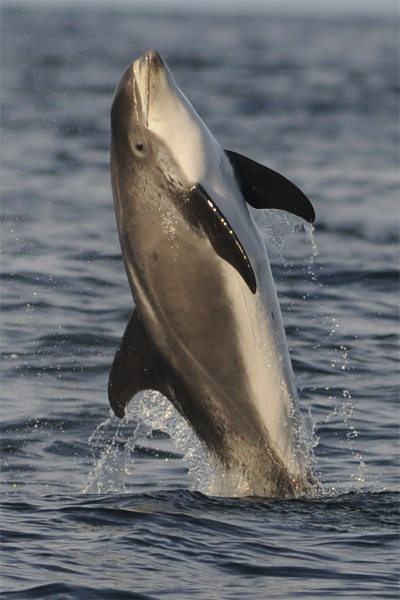
    After a couple of poor-weather weekends, the elements relented and we headed out from Royal Quays on the SarahJFK for a 4hr evening pelagic in the North Sea off southeast Northumberland.  Pomarine Skua, Manx Shearwater, Common Scoters and a summer-plumaged Red-throated Diver were the birdwatching highlights, but were eclipsed by what Stephen described as “the greatest wildlife experience of my life”.  We’ve got a busy programme of offshore wildlife trips over the coming months, and here a few images that show why they’re so popular;

    White-beaked Dolphin,dolphin watching trips,whale watching trips,Northern Experience Wildlife Tours

    White-beaked Dolphin,dolphin watching trips,whale watching trips,Northern Experience Wildlife Tours

    White-beaked Dolphin,dolphin watching trips,whale watching trips,Northern Experience Wildlife Tours

  • The icing on the cake

    As the rain hammered down while I packed the car ready for Sunday’s Otter Safari I was filled with optimism; the weather forecast (really, I should stop believing these…) suggested that the afternoon and evening would be dry and bright.

    When I arrived at Church Point Marc and Marika were already there, and we were joined by Becky and Jim soon after.  The trip was a present for one of each couple, and we set off for an afternoon of birdwatching combined with searching for Otters.  First stop was one of our Little Owl sites, and Becky’s sharp eyes picked out a juvenile bird that was doing a very passable impression of a stone.  Our next stop, beside the River Coquet, produced Common Terns fishing, flyby Curlews (and a discussion of separation from Whimbrel), 4 Common Sandpipers and some impressive thunderstorms away to the north and west of us.

    A heavy shower as we reached the NWT reserve at East Chevington kept us in the car for a few minutes, during which time we were entertained by a family party of Stonechats.  As the rain eased we walked to the hide overlooking the north pool.  Amongst the throng of Common, Sandwich and Arctic Terns and Lapwings were 3 adult Knot, still in breeding plumage.  Suddenly the entire roosting flock lifted, and the unmistakeable figure of a Spoonbill flew across our field of vision.  It seemed intent on landing, but the constant harrassment from the terns meant that we were treated to several flypasts, including one where it was just 20m away from us.  As if this wasn’t spectacular enough, 2 Little Egrets appeared, while the Spoonbill was still circling, and were subjected to the same treatment.  Eventually a semblance of calm returned and we watched a juvenile Marsh Harrier as it pranced comically in the wet grass, presumably eating worms that had been brought to the surface by the rain, and a second juvenile harrier harrassed by crows.  Another creature to benefit from the rain was a very young Hedgehog busily eating worms and, in a real ‘aahh’ moment, pausing briefly to sniff the air.

    Our picnic stop, overlooking the southern end of Druridge Bay, produced rafts of Eiders and Common Scoters, the piping calls baby Guillemots rising from the waves below, Gannets and Sandwich Terns plunging into the sea, at least 3 Arctic Skuas and the majestic lumbering menace of a Pomarine Skua passing south just offshore.

    Changeable, showery weather often produces good sunsets, and this was no exception; as a band of steel grey cloud drifted along the horizon, sunlight shone through a narrow gap, fading from gold to orange to red to pink.  And there, in the reflection of the dramatic sky, was the main event – an Otter, twisting and turning, creating panic among the waterfowl, perched imperiously on a boulder and then vanishing into the deepening shadows of the water’s edge.  Clouds of Noctule Bats and Common Pipistrelles swirled overhead, occasionally passing within a few feet of us, a female Tawny Owl called from the nearby trees, and the scene faded to darkness…

  • Hot, hot Holy Island

    I collected Alan, Carole and Mitzi from Seahouses for their Holy Island mini-safari in the sweltering heat.  Through the haze over the mudfalts, we could hear the eerie calls of Curlew and then a flock flew by.  Amongst them we could hear the tittering whistle of a Whimbrel, and picked the bird out amongst it’s larger cousins.  Golden Plover were back on the coast already as well; the moorland breeding season is a short one.  After a tour of the sites along the North Northumberland coast, we had our final stop, at Harkess Rocks.  As we scanned the raft of Eider and Common Scoter in the shadow of Bamburgh Castle one bird stood out from all the rest;  the Black Scoter, first found in April, and still lingering off our coast.  What I wouldn’t give for a nice Surf Scoter or King Eider as well:-)

  • 2 days on Lindisfarne

    Well, a day and a half really…

    On Sunday I collected Helen from her parent’s house in Swarland and we crossed the causeway onto Holy Island.  A good walk around the island provided excellent views of Wheatears, displaying Lapwings, a cacophony of Grey Seals and a very inquisitive Stoat.  Helen spotted it and, once it ducked out of sight, I enticed it back out by pishing.  Thrift and Bladder Campion were both in bloom and, once we were back on the mainland, we enjoyed a Whitethroat as it song-flighted from tree to tree.

    Our final port of call was Stag Rocks.  A scan seemed to reveal little other than a raft of Eiders but there, amongst the black-and-white ‘Cuddy Ducks’ was a smaller dark bird; the vagrant Black Scoter, still there and still applying his transatlantic affections to a female Common Scoter.

    Tuesday’s wildlife walk was slightly different.  I met up with Jude and her parents at the Beal Road end car park and we drove across the causeway.  48 hours after our previous Lindisfarne trip, and the Wheatears had moved on.  A recent arrival though, was a Sedge WarblerSkylarks provided a continuous backdrop to our walk and a pair of Roe Deer were bounding through the fields, leaping fences and apparently keeping an eye on us.  4 hours passed quickly and it was time to head home…and get ready for Wednesday’s Kielder Safari.

  • Winter birdwatching around the Farnes

    After postponing our Seal and Seaduck Special last Saturday (sea conditions were ideal, but it would have been really irresponsible to encourage anyone to drive on Northumberland’s roads at the time) we arrived at Seahouses Harbour yesterday morning ready for our final boat trip of the year.

    Everyone was well wrapped-up and we were soon boarding Glad Tidings VI.  As we sailed out of the harbour a veritable battery of long lenses was produced in readiness for the anticipated wildlife.  With a skipper and crewman with excellent eyesight and wildlife-spotting skills, 2 NEWT guides, and clients with sharp eyes as well, the boat was soon being manouvered to offer the best possible opportunities to view or photograph the wildlife.  After 13 years of organising offshore wildlife trips we know the importance of the skipper to the success (or otherwise…) of the trip and, with Craig and William, we were in excellent hands.

    The first half of the trip concentrated on the Farne Islands themselves.  A lot of the Grey Seals had well-grown pups, quite a few of the adults were moulting and there were a couple of cow seals still heavily pregnant.

    Grey Seal, Offshore wildlife photography, Northumberland, 11/12/2010
    Grey Seal
    Grey Seal, offshore wildlife photography, Northumberland 11/12/2010
    Grey Seal and the Longstone Lighthouse
    Grey Seal, offshore wildlife photography, Northumberland 11/12/2010
    Grey Seals

    Grey Seal, offshore wildlife photography, Northumberland 11/12/2010
    Grey Seals

    Shags were sitting around on the islands, Little Auks were bobbing about like corks in the increasing swell, and we had a brief view of a Black Guillemot as it flew from Gun Rock towards Inner Farne.  Heading north we enjoyed the sunny (but cold) weather and scoured the sea just south of Holy Island.  Plenty of Eider were sitting around, along with a pair of Scaup and several Red-breasted Mergansers but a Slavonian Grebe near Guile Point proved elusive.  Red-throated and Great Northern Divers were seen but in much smaller numbers than we would normally expect.  The journey back down the coast featured one of our favourite birds; Long-tailed Ducks were sitting around in groups of 10-15 and offering some excellent photo opportunities.

    Long-tailed Ducks on an offshore birdwatching trip, Northumberland 11/12/2010
    Long-tailed Ducks
    30 or 40 Common Scoters proved a bit more skittish and didn’t come near the boat.  2 Gannets were a bit of a surprise before we returned to the harbour.

    Although the wildlife was very obliging perhaps the best thing about the day was the truly beautiful lighting conditions, a real bonus for wildlife photography and something that all of the photographers on board commented on.  We can’t control the light, or the weather, but we keep taking clients to the right places at the right time…

  • On the beach

    Our monthly WeBS count should have been done a couple of weeks ago although, with weekends from mid-March through to mid-September fairly well occupied, this morning was the first chance I’d had to do the count.  With today’s tide times, and a mid-morning meeting with a potential sponsor for NEWT, I left the house just after 6am and drove to Cresswell.  Our usual method of covering the 3.75 miles of our survey section is to take 2 cars, leave one at East Chevington and then drive to Cresswell in the other, leaving us with a walk north along Druridge Bay.  As a solo survey it’s a 7.5 mile round journey, and good exercise on the sand.  As I headed north on a deserted beach, the southwesterly wind brought icy, stinging rain.  Nearly 100 Common Eiders were just offshore, 5 Common Scoter were just beyond them and a summer-plumaged Red-throated Diver brought a splash of colour.  A Sand eel had managed to become stranded almost 20m above the receding tideline so I did my good deed for the day and returned it to the sea, although it initially resisted my efforts to pick it up 🙂  Sandwich Terns were flying backwards and forwards along the shore, giving their creaky, rasping call, and a summer-plumaged Sanderling was feeding alongside 2 Ringed Plovers.

    With legs stretched and lungs filled with clean sea air I finished my walk and headed home.  All the while I was thinking about my early birdwatching days when I would get up before dawn and cycle to what I’d identified as promising local birdwatching spots.  Sometimes they produced the goods, sometimes they didn’t…but there was always that sense of having the world to yourself.  Sometimes, birdwatching in Northumberland can feel like that in the middle of the day 🙂

  • Not bad for mid-Feb

    Yesterday I led our first Safari Day of this week, to Lindisfarne and the North Northumberland coast.  Although I really enjoy trips where the main quarry is Red Squirrel/Badger/Otter/Fox/Roe Deer my lifelong love affair has been with birdwatching.  Northumberland is a top-quality destination for a winter birdwatching trip; just ask any of the writers/photographers who we’ve taken to the wilds of our home county during the cold(er) bits of the year.

    Yesterday was one of those days where you couldn’t wish for better conditions; clear blue sky, warm sunshine (although with sub-zero air temperatures for much of the day), no rain and only a very gentle breeze.  I collected Phil and Barbara from their holiday cottage near Guyzance and we followed the coast all the way to Lindisfarne.  Small groups of Pale-bellied Brent Geese beside the causeway were a novelty for birdwatchers from the southeast, who are used to seeing Dark-bellied Brents during the winter, and they commented immediately about just how black-and-white the Svalbard birds look.  Scanning the fields on the island we located a flock of ~800 Pale-bellied Brents, with a few Dark-bellied mixed in, allowing a direct comparison of the two.  The field was also shared by 200+ Curlew and smaller numbers of Redshank, Lapwing and Golden Plover.  Panic among a group of Starlings was traced to a 1st-Winter Merlin that helpfully perched on a post at the back of the Rocket Field.  It’s amazing how quickly time passes and after 2 hours we headed back towards the mainland among the general exodus that occurs as the end of safe-crossing approaches.  Another Merlin beside the causeway allowed even closer views so we stopped for a few more minutes of appreciation of this small predator.

    Our picnic spot, overlooking the mudflats between Holy Island and the mainland, provided excellent views of flocks of Lapwing and Golden Plover in the air as well as lots of Shelduck, Eider, Pintail and more PB Brents.  We enjoyed all of these in the company of Tom Cadwallender, Natural and Cultural Heritage Officer for the Northumberland Coast AONB, who was supposed to be meeting a camera crew from Inside Out.  When we left Tom, they were already 20mins late…

    Continuing down the coast, a very obliging Common Buzzard pranced around a field, presumably looking for worms.  The Skate Road held well over 1000 Common Scoter, 90+ Purple Sandpipers were huddled on the rocks as the incoming tide washed against their feet and a careful scan produced a few pairs of Long-tailed Ducks (Barbara’s 2nd lifer in a matter of minutes).  Red-throated and Great Northern Divers were, well diving mainly, and Slavonian Grebes were bobbing about just beyond the surf.

    Our final destination for the day was Newton, and the decision to detour from the coast route down the dead-end road to Low Newton proved to be an inspired one.  As dusk approached the assembled ducks on the pool (Teal, Goldeneye, Mallard, Gadwall) all provided entertainment as they called to each other.  Then, just a few feet in front of us, a Long-eared Owl silently hunting.  We all held our breath as it approached and then it veered away as silently as it had arrived.  The walk back to the Landy was to provide probably the best bird of the day, and one of those Northumberland birdwatching moments that was quite simply sublime; against an increasingly starry sky and crescent moon, with an impressive amount of Earthshine, a Bittern flew low over our heads and out over the bay.