Blog

  • “a real birding day” Birdwatching in the North Pennines 14/06/2013

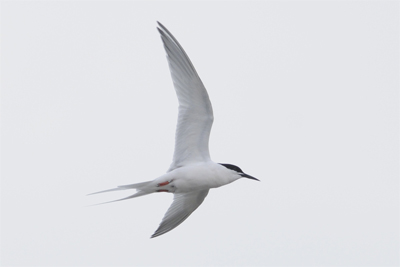
    After a successful sailing around Coquet Island last Thursday, with sightings of Roseate Terns perched and flying,

    Roseate Tern,Northumberland,Coquet Island,bird photography tuition,bird photography holidays,Northern Experience Wildlife Tours
    Britain’s rarest breeding seabird

    our re-arranged North Pennines Safari was on Friday.

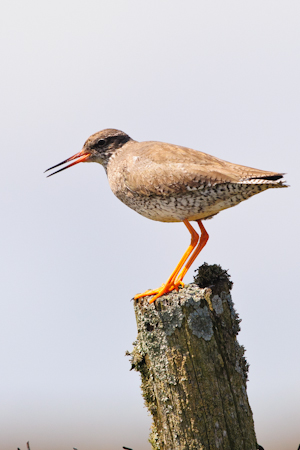
    I collected Liz and Ronnie from The Swan and we headed southwest into the hills.  Only a month earlier we had a North Pennines trip in near-zero temperatures, but now everything was much more springlike.  Curlews were gliding across the moors, their haunting cries carrying on the breeze, Lapwings were displaying in that bizarre way that has you half convinced they they’re just going to crash into the ground and there were plenty of birds with chicks; Redshank, Curlew, Lapwing, Golden Plover and Red Grouse were all mindful of their offspring as we made our way across the moors.  Common Snipe appeared unexpectedly from clumps of rush and one obliging bird perched on a fence post as we sat just a few metres away.  Pairs of noisy Redshank flew from fence post to dry stone wall and back again and, like the Snipe, one bird perched obligingly (like the one pictured here from 2011).

    Common Redshank.Tringa totanus,bird photography holidays,bird photography tuition,Northumberladn,North Pennines,ww.northernexperienceimages.co.uk

    Liz’s feedback e-mail, at the end of the holiday and our day in the North Pennines, summed it up so well – “a real birding day” 🙂

  • Seabird Spectacular 10-13 June 2013; birdwatching on the Northumberland coast

    Arriving at The Swan on Monday evening I met up with Ronnie and Liz at the start of our Seabird Spectacular holiday.  Of all of our holidays, this is the one that concentrates on the really outstanding wildlife available on the Northumberland coast in the summer.

    Tuesday started out very nice, although cloud cover was increasing and, by lunchtime, eventually it was overcast, misty and spotting with rain.  We’d spent the morning around Druridge Bay, with one of the highlights being a very obliging male Reed Bunting who sat just a few metres away from us and sang for over 20 minutes, Wall and Green-veined White Butterflies flitted across the tracks ahead of us, Sedge and Reed Warblers played hide-and-seek in the edge of the reeds and a male Marsh Harrier quartered a reedbed, giving prolonged views at relatively close range.  As we ate lunch, overlooking the North Sea, watching Eiders, Guillemots, Kittiwakes, Fulmars and Gannets, the southeasterly breeze was starting to build a noticeable swell…

    The inevitable happened and our planned sailing around Coquet Island was cancelled on safety grounds, so we continued around Druridge Bay.  Sandwich Terns and a Grey Seal were near the weir between Amble and Warkworth and we ended up watching five Otters as they munched their way through a feast of Eels 🙂 A Great Northern Diver flew south between Coquet Island and the mainland and we could see clouds of Puffins and a few ghostly white Roseate Terns from our clifftop vantage point.  Swifts were around in good numbers – a scythe-winged menace to flying insects – and at the end of the day we returned to The Swan and were joined for dinner by Sarah.

    After Tuesday’s cancelled boat trip it was a relief to see that the wind had died down by Wednesday morning, and our all-day birdwatching trip to the Farne Islands went ahead as planned.  There were lines of Puffins, Guillemots and Razorbills streaming back towards the islands, Gannets were effortlessly heading either to or from the Bass Rock, and the sights, sounds and smells of the seabird colony were just a few minutes away when we came across two Harbour Porpoises. Cormorants and Shags perched sentinel-like  on the Scarcar rocks and landing on Staple Island we watched Guillemots, Fulmars, Kittiwakes, Puffins, Razorbills, Shags and Rock Pipits at close range before having our picnic lunch in superb weather conditions on this magical rock just a few miles offshore from the Northumberland coast.  Transferring across to Inner Farne at 13:00, via a brief detour to look at the Grey Seals lazing in the sunshine, we were greeted by Head Ranger David Steel and then enjoyed the very different experience of running the gauntlet of a succession of angry Arctic Terns.  Common and Sandwich Terns were around too, and we watched Puffins skilfully avoiding the attention of Black-headed and Lesser Black-backed Gulls.  A pair of Rock Pipits nesting beneath the boardwalk were carrying beakfuls of food and I had a Farnes ‘tick’ in the shape of a Swift soaring over the lighthouse buildings.  We tried to find a Roseate Tern in amongst the roost by the Inner Farne jetty, but without success.  Back to The Swan for tea, reflection on a successful day and my Plan B…

    Today was planned to be a one-day extension to the holiday, visiting the North Pennines, but we’ve moved that to tomorrow and the ladies have an extra afternoon out with me, to take the boat trip around Coquet Island 🙂
  • One Cuckoo flew over the pipit’s nest; birdwatching in the Cheviot Valleys 09/06/2013

    Sunday was another trip into the Cheviot Valleys, with two of our returning clients.  We first met Pete and Janet at the Bird Fair in 2008 and this was their third trip with us (plus a trip that they organised for their local Natural History Society in 2009).  It’s always a pleasure to meet up with them, and the prospect of a trip into the Cheviots was a mouthwatering one.  You just never know what you’ll find, or see…

    The trip started with two species that we didn’t find on our Cheviots trip on Thursday; two Brown Hares were sitting by the ‘wader puddle’ and, one of our target species for the day – two Ring Ouzels flew over us, calling, as we started the first of the days walks.  Janet soon spotted a juvenile Dipper, and we watched as an adult flew in and fed it.  Grey Wagtails were all along the valley, a Spotted Flycatcher was living up to it’s name admirably and a very obliging Tree Pipit perched close to the path.  As on Thursday’s trip we heard, but couldn’t see, a Common Redstart.

    Every so often, something happens that leaves us marveling at nature…and Sunday provided an extraordinary spectacle.  As we sat eating our lunch by a small stream, enjoying close views of Lesser Redpoll (a species we’d been hearing all morning although only seeing as small flying dots) I noticed a bird flying across the valley.  Initially it looked like a Kestrel – until I raised my binoculars and the pointy-winged, long-tailed, shape resolved into a Cuckoo.  It headed down into the heather and was immediately chased by a pair of Meadow Pipits.  They pursued it part way across the valley and it dropped out of sight behind the trees…only to reappear a minute later, chased by more pipits.  Landing in exactly the same spot in the heather it was chased away for a second time, by four pipits.  It rose higher and then began soaring, with the flap-flap-glide that is so characteristic of a Sparrowhawk.  More Meadow Pipits joined the attack, presumably revealing their nest locations, and the bird suddenly closed its wings and dropped like a stone, out of sight behind the trees.  A minute later and the Cuckoo was heading across the valley again, dropping back in the same spot as previously.  This time it was driven off by a pair of Red Grouse, that came charging down from near the summit of the hill, and it flew back and out of sight behind the trees, only to reappear a few seconds later with more Meadow Pipits in tow.  In total we watched it make ten visits to what was presumably a Meadow Pipit nest that it was targeting.  By the ninth visit it spent several seconds on the ground with angry pipits swirling around it’s head, which we could see sticking up above the heather, and the tenth visit was a prolonged one too.  After that it flew back across the valley and didn’t reappear, so perhaps it had been successful in laying an egg in the pipit nest.

    Our final walk of the day produced another example of birds defending their nesting territory, as the plaintive cries of a pair of Curlew echoed around the steep valley sides and we looked up to see them flying at a Common Buzzard.  The buzzard continued on it’s way and the Curlews dropped out of sight above the ridge, only to reappear a few seconds later as a second buzzard flew down the valley.  Excellent weather, stunning scenery and clients whose enthusiasm and knowledge adds so much to the day 🙂

  • Heading for the hills; Birdwatching in the Cheviot Valleys 06/06/2013

    Thursday brought a trip that I’d been looking forward to for some time; I first met Chris many years ago, while I was Field Trips Officer for the Northumberland and Tyneside Bird Club, so it was going to be a day out with a client who knew me several careers ago.

    We met up at Church Point and headed inland towards the Cheviot Valleys, a location that features some stunning landscapes; steep-sided valleys, towering hills, mysterious sun-dappled woodland, heather moorland and all that goes with it.  As we approached the start of the higher ground, I suggested we check a damp area of an arable field.  It’s often good for wading birds and this was no exception; two broods of Lapwing chicks, as well as Oystercatchers and Redshank, were pottering around the edge of the now small puddle.

    Perhaps the best thing about our forays into the Cheviots is the chance to stretch your legs, get some fresh air…and see hardly anyone else while you’re there 🙂  The time passes quickly and the cackling of Red Grouse, simple song of Spotted Flycatcher, silvery descending cadence of Willow Warbler, plaintive mewing of Common Buzzards and the eponymous songs of Cuckoo and Chiffchaff all accompanied parts of our walk.  Grey Wagtails, Dippers and Common Sandpipers were all occupying that particular ecological niche that they’re all so suited for, a Redstart delivered his distinctive song from a hidden perch, Curlews gave their haunting cries from high on the hillsides, Tree Pipits sang from treetops and a Kestrel was hanging in the air over the ridge at the top of a steep valley.  Away from civilisation, surrounded by wildlife, it was the relaxed enjoyable trip that I always knew it would be 🙂

  • Otter Watching 02/06/13 – Patience pays off

    Just a couple of days before the end of 2008, I led an Otter Safari that produced prolonged sightings of our target species…just 5 seconds after arriving at the first site I’d planned to visit that day!  That produced a complication all of it’s own – how do you keep a family with a young child entertained for over 7 1/2 hours?  In that case the answer was rockpooling; not the most enjoyable of experiences as I plunged my arm into the icy cold water to turn over a series of rocks chosen by a very excited four year-old.  Usually though, wildlife requires a bit more of a patient approach…

    I collected John and Kelly from Morpeth railway station on Sunday afternoon, in glorious sunshine, and we set off to search Druridge Bay and southeast Northumberland.In the warm afternoon, with a myriad of insects buzzing around, Black-headed and Little Gulls, Swallows, Swifts and House and Sand Martins were all giving incredibly close views as they sallied back and forth in their pursuit of the tiny morsels of protein.  Grey Herons were standing by the water’s edge, Little Grebes dived, re-surfaced, dived, re-surfaced repeatedly and Mallard, Gadwall and Tufted Duck seemed to be in two minds whether to simply laze around or engage in some half-hearted courtship.  After 3 hours of peace and tranquility, and no Otters, I was wondering if we should move to another location.  Instead I decided that staying put would be the better option…

    A pair of Mallards came out of a gap in the reeds, no hurry, no panic but taking a direct line out to open water.  I focused my attention on where they’d just appeared from and then a dark, menacing, sinuous shape twisted and turned in amongst the reeds and we had our Otter.  Sometimes, you just need a little patience 🙂

  • Otter Watching 01/06/2013

    Single-species trips can be some of the most stressful experiences for NEWT, although possibly not quite so stressful for our clients 🙂  Some species that our clients want to see can be very straightforward, like Grey Seals or Puffins (at least if you come at the right time of year!), others can be more difficult, and one in particular has a certain degree of unpredictability…With large home ranges, and as happy on land as in the water, Otters aren’t always an easy animal to find.  We must spend more of our time looking for them, on days when we don’t have clients, than we spend doing anything else.  If a site is producing regular sightings that’s a bonus, but there’s always the possibility that one day they won’t be there, so we keep checking back-up sites as well.

    Arriving at Church Point, I met up with Ian and Ann, Antonia and Henry & Nigel and Mrs Hackett.  Our quarry for the afternoon was that elusive iconic predator and, having unexpectedly stumbled across four Otters a couple of weeks ago, the location for the first part of the afternoon was decided well in advance.  All seemed quiet; Black-headed Gulls were lazing in the afternoon sunshine, Swifts, Swallows and martins hawked insects and a Meadow Pipit was song-flighting…then Ann spotted an Otter!  Crossing the water towards a reedbed, the gaze of a Grey Heron and a pair of Mallards were firmly fixed on it too.  Twisting, turning, diving, feeding, it made it’s way to the edge of the reeds and continued feeding there.  Then it headed away from the edge and back towards us, before switching direction again and sliding beneath the surface.  A few minutes later it climbed out of the water and we could see it making it’s way through the grass.  Then it was back down at the water’s edge and being obligingly showy.  What came next was one of our highlights of the year so far as the Otter dived back into the water…followed by two more…and then a fourth 🙂  Then, as often happens with Otters, they simply vanished from sight…

    The afternoon continued with Sandwich Terns feeding just a few metres away from us, a pair of Marsh Harriers, two Brown Hares boxing, a Great Crested Grebe being the epitome of avian elegance, eight Little Gulls sitting on consecutive fence posts and an impressive mixed flock of hirundines as the wind direction shifted and a heavy shower passed over us from the north west, producing an intense rainbow out over Druridge Bay.

  • Birdwatching on Holy Island 29/05/2013

    After collecting Stephen for his second trip of the week, we drove north and met Susan near Holy Island, for her third trip in four days.  Our Lindisfarne safaris are always an interesting guessing game, other than in the winter when we know that we’ll find vast flocks of waders and wildfowl – although even then there’s the unknown quantity of wintering raptors.

    We started down the coast in the shadow of Bamburgh Castle; sheltering from the wind and rain, we watched Gannets soaring effortlessly, Common Scoter and Eider riding the swell like the most accomplished surfers in the world, Fulmars and Kittiwakes fighting into the stiffening breeze and a Red-throated Diver sliding beneath the waves and resurfacing out of sight.

    What would appear at first glance to be a long line of boulders, exposed at low tide, resolved through binoculars, as expected, into several thousand Grey Seals.  The ‘hook-nosed sea pigs’ (surely the most unflattering translation of the Latin name for any animal) were lazing on the exposed sand

    On Holy Island itself the weather improved dramatically and we watched a flock of Ringed Plover and Dunlin in the harbour, with a surprise find in the form of a Little Stint.  Meadow Pipits were song-flighting, Skylarks rose higher and higher, delivering their outstandingly complex songs, and Lapwings were tumbling over nearby fields as we worked our way slowly along a hedgerow getting close views of Dunnock and House Sparrow, and listening at close range to the repetitive notes of a Song Thrush.  Surprise find of the day was a group of eight Roe Deer between Chare Ends and the Straight Lonnen.  We’ve seen them on the island before, but never so many together at once.

    After a day with two enthusiastic clients who had been excellent company on multiple trips during the week, it was time to drop Susan off and take Stephen back south.  Sometimes, I think what really makes our trips work is the clients that we have 🙂

  • Performer

    There are times when we’re out with clients and encounter a species that’s really unexpected, other times a bird or animal will do something really impressive and sometimes, just sometimes, it’s the often overlooked ‘little brown jobs’ that are the stars of the show.

    I collected Stephen from home in North Shields and headed north to collect Gordon and Mandy, and Susan for her second day out with me.  In weather that didn’t seem sure what it was going to do, we were soon watching a stunning Yellow Wagtail.  As House Martins, Sand Martins, Swallows and Swifts hawked insects just over our heads a singing Sedge Warbler was located at the top of a dead tree, and one of his near neighbours was busy answering the challenge laid down.  For over an hour everything we watched was accompanied by the frenetic warbling of this little bundle of energy; first he perched half way up a reedbed, then hopped higher to take a position on reeds that were so thin they swayed under his weight before beginning a series of song-flights, culminating in a dive into deep cover…then he started the whole process again.  Often we see Sedge Warblers as they flit from one reedbed to another, but this bird was going flat out – either trying to attract a mate, or warning his neighbours that the reedbed and its immediate surroundings was his domain.  Little Grebes, Coots, Moorhens, Mallards, Tufted Ducks and Greylag Geese were all staring nervously at one edge of the reeds, but the cause of their concern didn’t reveal itself.

    Down the coast in Druridge Bay there was a good assortment of Little Gulls, deftly dip-feeding and taking insects from the water’s surface, a Great Crested Grebe sailed serenely by, Tree Sparrows were picking insects from the shoreline vegetation and Fulmars were soaring effortlessly along the cliff edges.

    Just an excellent day birdwatching with lovely clients for company 🙂

  • Three stars

    I collected Zoe, Richard, Ella, Luke and Charlie from Alnmouth and we started our evening mini-safari around the Northumberland coast and Druridge Bay. It wasn’t too long before we were watching one of the birds that never fails to grab the attention of our clients; a beautiful, ghostly pale, Barn Owl was quartering the vegetation close to the water’s edge before plunging into a reedbed in pursuit of prey.  A Roe Deer played hide-and-seek with us, as it persistently walked out of sight behind a bush before reappearing, first to one side of the bush then the other and Sand Martins, House Martins, Swallows and Swifts were all hawking insects, allowing a detailed observation and discussion of these species that less-experienced birdwatchers often find confusing.  Black-headed Gulls and Little Gulls were watched at close quarters, with the Black-headed Gulls squabbling with each other like a group of children 🙂  Little Grebes were, well, just as cute as ever and two large Bats flew over, not echolocating, not feeding, just heading somewhere on a mission.

    Heading north, our 2nd Barn Owl of the evening was flying just ahead of us, and perched briefly in the lower branches of a roadside tree, Rabbits were scampering around on grassy banks and our 3rd Barn Owl was silhouetted in a bare tree like a sentinel guarding the road back to Alnmouth.

  • Head for the hills

    Away to the northwest of our base in southeast Northumberland is the skyline-dominating range of the Cheviot Hills.

    I collected Susan from Cheviot View and we headed towards the Harthope Valley via the ford at Coldgate Mill.  A stop along the road produced Redshank, Oystercatcher, Lapwing and the always impressive Brown Hare.  In glorious weather we walked for nearly five hours around various parts of the valley.  Curlews sang their eerie song from the heather clad slopes above, Tree Pipits delivered their challenge to rivals, and serenade to potential partners, the descending silvery cadence of Willow Warblers shimmered in the air around us, a Whinchat flitted from rock to heather, and back again, Grey Wagtails lived up to their name – wagging their tails from rocks and fence posts along our route – and the ‘swee-wee-wee-wee-wee’ of Common Sandpipers echoed around the sides of the swiftly flowing stream in the valley bottom.  As the afternoon wore on we watched as a Kestrel patrolled the steep valley sides, a Sparrowhawk soared across the valley and a Common Buzzard hovered over a distant plantation.

    Delivering peace, solitude and some excellent wildlife-watching opportunities, the hills are a great place to enjoy your wildlife and get some exercise too 🙂