Blog

  • Summer birdwatching

    As I collected Alison and David from The Swan for an afternoon and evening  around Druridge Bay, southeast Northumberland and the Northumberland coast, the weather was continuing in the glorious vein that it had struck a few days previously.

    Mid-summer can be a quiet time, other than the obvious hustle and bustle of the Farne Islands, but there’s always something to see.  At the moment wader numbers are starting to build; Lapwing, Curlew, Redshank and Oystercatcher have all come down to the coastal strip from their breeding grounds and Black-tailed Godwits are moving through.  One of the first things we came across was a group of four of these beautiful elegant waders as they rested with a flock of LapwingsLittle Gulls were flycatching and then sleeping and a male Marsh Harrier gave views that were simply breathtaking.  As we headed up the coast, a female Marsh Harrier flew low over the car, being equally as obliging as the male.  Grey Herons were stalking along pool edges, Common Spotted Orchid, Bloody Cranesbill and Harebell added colour to pathside vegetation, hirundines heading to roost formed swirling clouds of dark dots against the greying sky, a Common Frog sprang across the path in front of us and a Barn Owl hunted over rough pasture on silent wings.

    The thing that always characterises days out with clients who are passionate about wildlife, and Alison and David have a mouthwatering list of wildlife they’ve seen around the world, is that before you know it, it’s nearly dark, pipistrelles are hawking insects in the last vestiges of daylight and it’s time to head back.

  • Avoiding

    As I collected Claire and her mum from Alnwick for an afternoon around Druridge Bay and set off on an exploration of Druridge Bay and southeast Northumberland, they mentioned that they were going to watch the Wimbledon Men’s singles final on iPlayer once we finished for the day, so it was important to avoid finding out the score. I’d done something similar myself back in 2009, on the final day of the Premier League season – including extending a safari day and not switching the radio on once I’d dropped my clients off.  The outcome on that occasion was that I indirectly learned the fate of Hull City, the team I’ve supported since I was very young, when I drove through Amble and the beer garden at the Wellwood was filled with Newcastle United supporters with their heads in their hands…

    Birdwatching in the stunning weather produced two Little Egrets, a species I haven’t seen for a few months, and 24 Black-tailed Godwits – that most elegant of waders.  Canada and Greylag Geese were on edge, but whatever was agitating them remained hidden deep in the reeds.  The godwits were eventually disturbed by a complete idiot who seemed to think that flying low over a nature reserve in a paramotor is an ok thing to do.  Now, I know it can’t be easy when you’re hanging under a parachute with a desk fan strapped to your back but it’s incredibly irresponsible to disturb wildlife in a nature reserve in that way.  You may think you’re some sort of modern day James Bond, or Milk Tray man, but you aren’t – you’re like a parody of the Wacky Races.  There, I feel much better now 🙂

    As we continued down the coast we had a near miss with the tennis score.  I was getting our telescope out of the boot, and the ladies were still at the front of the car, when someone parked just behind us told his family the latest score as they walked up from the beach.  Little Gulls, Redshanks, Curlews, Lapwings and a Greenshank were all lazing in the baking heat of the mid-afternoon, and both male and female Marsh Harriers drifted menacingly over the reedbeds.

    Heading back towards Alnwick, surely we’d avoided hearing the outcome of the tennis?  As we drove through Warkworth, it was fortunate that I was the only one to notice that one of the pubs had the score written on it’s blackboard standing on the pavement 🙂

  • Wildlife in the heat of the summer; Otter Safari 06/07/13

    After an enjoyable few hours watching the British & Irish Lions demolition of Australia, I loaded up the car, collected our picnics from The Swan and headed north to collect Jacky and Marcus from their holiday accommodation at the stunning St Cuthbert’s House.  A quick drive back down the coast and we collected Alice and John and embarked on our search of Druridge Bay, southeast Northumberland and the Northumberland coast.

    I’d identified a site where Otters have been active in the late afternoon, so that was our first port of call.  With Common Terns dip-feeding just in front of us, Canada and Greylag Geese with goslings, Gadwall with ducklings and lots of Sand Martins and Swallows there was plenty of birdwatching interest as we waited in hope for the possible appearance of our target species for the trip.  Jacky’s excited comment “there’s a…yes, it’s an Otter” marked the start of nearly an hour of Otter activity.  The initial animal turned out to be two together, and then eventually we were watching four of them as they swam back and forth, feeding, clambering on poolside rocks and play-fighting 🙂

    Lapwings, Curlew and a Greenshank were all evidence of post-breeding gathering/migration, Starlings were grouping into larger flocks as daylight faded, Sand Martins were swirling in a big pre-roost flock, a Barn Owl drifted on silent wings over a reedbed and, as the falling light levels finally rendered everything as a silhouette we headed back to the car with pipistrelles hawking just over our heads.

  • Mirror calm; NEWT’s North Sea Pelagic 05/07/13

    The North Sea can be a strange place.  I’ve been out there in calm, sunny conditions, heavy rain, and I’ve carried out survey work for the North East Cetacean Project in conditions – dense fog, white-out blizzard, ‘interesting’ swell – where we wouldn’t have hesitated to cancel the trip if it was part of our North Sea Pelagics programme.  Yesterday was probably the oddest conditions I’ve seen though…

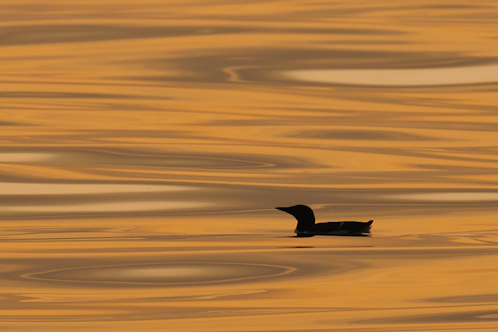
    The northward stretch of our trip was in very calm sunny conditions that Mary likened to the Greek islands and Andy thought was reminiscent of a sheltered Scottish sea loch.  Gannets were soaring by, Puffins were bobbing about on the barely noticeable swell, small rafts of Guillemots weren’t doing very much at all and there didn’t seem to be a great deal of activity until we were just off Cresswell and amongst the flocks of gulls and terns.

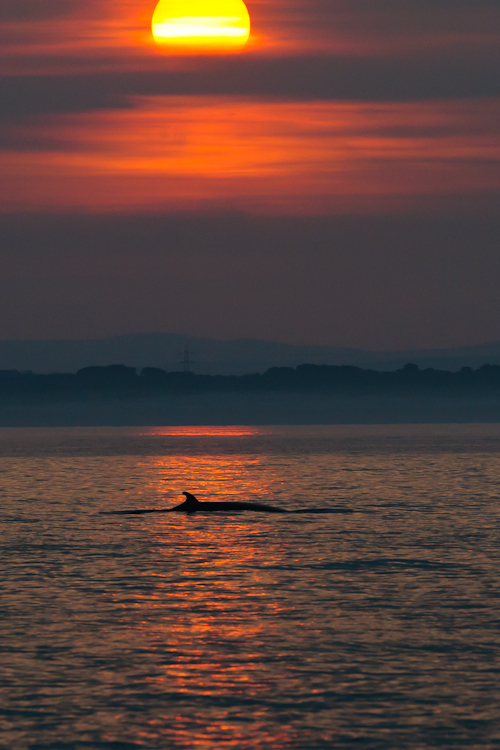
    Then, the journey south brought conditions that were just surreal.  First the sea began to flatten, until what little swell there had been was gone, and it was mirror calm.  Then a hazy mist developed and the reflection of the sky in the water meant that it was no longer possible to see where the sea ended and the sky began; all was a monochrome canvas in front of us – no visible horizon, just a flat grey sheet liberally washed with dense flocks of gullsFulmars and Manx Shearwaters were gliding by just above their own reflections, a flock of Common Scoter flew north just after a Red-throated Diver had passed by and a Harbour Porpoise betrayed the interface between air and water as it surfaced nearby.  As the deep red orb of the sun dipped below the horizon away to the north west, the temperature dropped dramatically and we sailed back into the Tyne.

    All of our evening pelagics from North Shields are sold out (except for one place remaining on July 26th) but we still have a limited number of spaces on our Farne Deeps pelagics, our all day pelagics from Royal Quays in September and our Whale and Dolphin Cruise on August 31st.  Give us a call on 01670 827465 for more details, to check availability or to book 🙂

  • Sunset spectacular; NEWT’s North Sea Pelagic 28/06/13

    We’ve seen some fantastic wildlife during the 16 years that I’ve been running pelagics in the North Sea off Northumberland; Wilson’s Petrel, Great Shearwater, Grey and Red-necked Phalaropes, Sabine’s Gull, Ocean Sunfish, Minke Whale and White-beaked Dolphin are just a few of the highlights.  One thing that so many clients mention though, is just what an experience it is to be offshore approaching sunset and to see the Northumberland coast in a different light (no pun intended!).

    Last Friday brought a reasonable amount of swell, the ‘usual suspects’ – Gannet, Fulmar, Kittiwake, Guillemot, Puffin, Razorbill, Manx Shearwater – and a dense feeding flock of terns and gulls just off Cresswell.  The other thing the trip brought though was probably the best sunset I’ve ever seen on a pelagic.  As the sun dropped out of sight and we were approaching the Tyne piers, the sky away to the northwest was a stunning pinky-orange.  Some things really do take your breath away 🙂

  • The power of the sea

    We rarely let the weather get the better of us.  Apart from our annual programme of North Sea Pelagics, where the weather really can make a difference to a trip going ahead or not, we can pretty much cope with anything the elements throw at us.

    I collected Harry and Maureen for their mini-safari on the North Northumberland coast as the first drops of rain began to speckle the windscreen of the car.  Straight down the coast and we were soon watching Eiders and Common Scoter riding up and over the surf, Guillemots, Puffins and Razorbills loafing offshore, Gannets and Fulmars soaring effortlessly over the sea, Swallows hawking insects within a few feet of us and Rooks foraging around the car park in search of discarded morsels of food.  All of this was in heavy rain, but positioning the car at just the right angle to the wind made it possible to watch all of these birds and the dark majesty of the sea as a backdrop.  Along the coast towards Holy Island a huge group of Grey Seals were basking in the improving weather and, all too soon, it was lunchtime and the end of the trip.

  • Wildlife watching wildlife

    It’s one of the fundamentals of wildlife-watching that the behaviour of whatever you’re watching is a good indication of what other wildlife close by is doing.

    I collected Darren and Karen from West Acre in Alnwick and we set out on a Prestige Otter Safari, covering Druridge Bay/southeast Northumberland and other stretches of the Northumberland coast.

    When you see geese, ducks and swans getting away from one spot as fast as they can, then you know that in all likelihood there’s a predator around that’s serious enough to concern all of them.  That usually means an Otter, but the one causing the first major panic we witnessed remained hidden.  Arriving at our final site for the day the first thing that was obvious was that every duck we could see was alert.  Within a few seconds I’d spotted the cause of their concern as an Otter made it’s way quickly along the edge of the pool towards a reedbed.  It vanished into the reeds – just as a pair of Mute Swans were heading that way with their cygnets

    One of the swans held back slightly and the other positioned itself between the cygnets and the reedbed.  The advance guard of concerned swan made it’s way right to the edge of the reeds and then stuck it’s head into the reeds, first looking towards the end where the Otter had entered, then looking straight ahead, before finally looking left and then right as it presumably lost track of it’s sinuous nemesis. Throughout this prolonged episode the ducks were alert, then calm, then alert, then calm..presumably as they caught sight of the Otter, then forgot about it as soon as it was hidden in the reeds again.  Eventually, as so often happens on our Otter Safaris, the light faded towards black and we headed back to Alnwick.

  • Unbridled Passion

    I love a lot of things; seabirds, cetaceans, Northumberland, photography and, of course, Sarah 🙂

    When news broke yesterday that a Bridled Tern had been discovered roosting near the jetty on Inner Farne I immediately began wondering whether it would hang around until today and, if it did, how could I fit a visit to Inner Farne into my schedule, between office work this morning and a meeting with the Northumberland Wildlife Trust this afternoon?  After getting a few of my admin tasks out of the way first thing, a quick ‘phone call to Billy Shiel’s booking office secured my place on a sailing at 10:00.  The drive north on the A1 was plagued by the ever-present worry that accompanies a twitch – would the bird still be there?

    Arriving at Seahouses harbour in good time for the sailing I was chatting to William Shiel when he mentioned that he was about to send a boat across to the islands to collect one of his crew…and would I like to go across on that one?  So, I had the extraordinary experience of being the only passenger on Glad Tidings IV and was soon watching the tern, although it was quite distant.  The 10:00 boat arrived and the birders on it had a view of the bird for about five seconds before it flew off.  At about 11:00 I heard the bird calling, but it couldn’t be located anywhere in the roost.  Then, half an hour later, Phil found it roosting on the rocks just below a group of Puffins.  As boats arrived and collected their passengers, I was eventually left on the island with two other birders and a few of the National Trust Rangers.

    We could see our boat heading across Staple Sound from the outer islands then, the stuff of dreams; the roosting terns lifted and the Bridled Tern flew past us, then back, then past us, then towards us…then settled on the rocks no more than 30′ away 🙂

    Bridled Tern,Onychoprion anaethetus,Farne Islands,Northumberland,bird photography, bird photography tuition,bird photography holidays,Northern Experience Images

    Bridled Tern,Onychoprion anaethetus,Farne Islands,Northumberland,bird photography, bird photography tuition,bird photography holidays,Northern Experience Images

    Bridled Tern,Onychoprion anaethetus,Farne Islands,Northumberland,bird photography, bird photography tuition,bird photography holidays,Northern Experience Images

    Bridled Tern,Onychoprion anaethetus,Farne Islands,Northumberland,bird photography, bird photography tuition,bird photography holidays,Northern Experience Images

    Bridled Tern,Onychoprion anaethetus,Farne Islands,Northumberland,bird photography, bird photography tuition,bird photography holidays,Northern Experience Images

    With excellent help from William and his skippers, the very accommodating Farne Islands rangers who were ‘enjoying’ the unusual experience of visitors on Inner Farne in a morning, and the remarkably obliging Bridled Tern posing in front of my camera, I headed back down the A1 for my meeting full of enthusiasm…not that I’m ever anything other than enthusiastic when meeting with NWT of course 😉

  • Scouring the moors; North Pennines birdwatching 25/06/2013

    Returning clients have become a bit of a theme for NEWT in the last couple of years, and it’s always lovely to meet up and hear what our clients have been doing, and seeing, since they were last out with us.

    Mike and Maggie were visiting Northumberland again, and their day out with me this year was to be a bespoke birdwatching and photography experience in the North Pennines.  As soon as we were on the higher ground, Curlew, Golden Plover, Lapwing and Red Grouse were all found with chicks, Redshank were calling noisily from nearby rushy fields and Skylark and Meadow Pipits were singing overhead.  More Red Grouse and Golden Plover became targets for Mike’s camera and a Ring Ouzel feeding in a grassy field flew up onto a dry stone wall, next to another ouzel, as a third flew across the road behind us.  As we dropped from the high ridge between Weardale and Upper Teesdale, an unexpected bonus bird was sitting in the middle of the road.  The unmistakeable ‘built like a breeze block’ figure of a Woodcock was just sitting there.  As we watched, it called, and two Woodcock chicks came out of the long grass to join it 🙂  Creeping along on short legs and big feet, the adult bobbed up and down, like a Jack Snipe on steroids, as it led it’s young across into the dense cover of the grass on the opposite side of the road.

    Our post-lunch walk produced Golden Plover, Ringed Plover, Grey Wagtail, Red Grouse, a single Spring Gentian and a female Ring Ouzel, gathering food by a  fast flowing stream.  The journey back towards Allendale was enlivened by the impressive wingspan and mad staring yellow eyes of a Short-eared Owl as it quartered the high moorland.  There was one species on our target list for the day that was still missing though, and we’d already checked almost all of our usual sites.  Then, as we crossed back into Northumberland, I slowed the car almost to a standstill and mentioned that the next field on the left, in between the clumps of rush closest to the road, was a regular spot for Black Grouse… 🙂

  • Watching the wildlife; Otter Safari 24/06/2013

    Sunday morning, and the weather forecast of impending doom brought the not unexpected ‘phone call that saw clients transferring from Sunday’s to Monday’s Otter Safari.  Monday afternoon, and the weather looked reasonable as I collected Ken and Rosemary from The Swan and then we drove to the coast and collected Paul, and Lisa and Steve, from Church Point.

    I’d seen at least ten Otters in the last month, so I was fairly confident that an afternoon and evening around Druridge Bay, southeast Northumberland and the Northumberland coast would have a higher-than-average chance of successfully locating our target species for the trip.  What we found raising interest in the local Mallards and Tufted Ducks in the mid-afternoon sunshine wasn’t an Otter, but the birds’ behaviour of slowly swimming along a reedbed, just a few metres from the shore, was a good indication of the predator they had spotted and we watched as a Red Fox slowly made it’s way along the edge of the pond followed by an ever-expanding entourage of ducks 🙂  At least eight Little Gulls provided some undeniably cute birdwatching interest and we continued our search.  The next mammal to join the day list was Rabbit, under-rated and attractive, but still not an Otter.  Flocks of geese and ducks seemed to be responding to some hidden menace;  getting out of the water, cackling as if startled, getting back in the water, getting out of the water…but still no sign of an Otter.

    As dusk approached, and a Roe Deer walked slowly along the edge of the pond, there was a change in the mood of the assembled ducks; suddenly alert, feeding stopped and heads were raised as high as their outstretched necks would allow.  A pair of Greylag Geese were doing the same and Paul soon spotted the cause of their consternation as the head, then the sinuous body, and finally the tail, of an Otter broke the surface 🙂  Heading into a small bay in the reeds it soon slipped out of sight, only to reappear a few minutes later; twisting and turning as it fed close to the reeds.  Common Pipistrelle, as we walked back to the car, and Brown Hare, as we drove back towards Newbiggin, were mammals #5 and #6 for the day and the trip was rounded off with a Barn Owl, flying from a fence post as we passed by.