Category: Photography

  • Contrast and compare

    Sunday and Monday illustrated the range of things that NEWT do on a regular basis.

    Sunday saw me leaving the office at 03:30 and driving to Alnwick.  Highlight of the drive was a Barn Owl, hunting alongside the A1 near Eshott.  After collecting Helen and Steve, two of our returning clients, we headed to Bamburgh, and a rendezvous with the sunrise.  Landscape photography tuition was first on the menu, followed by some macro photography around the rock pools at low tide.  All the while, the crowds were building further along the beach in the shadow of Bamburgh Castle, enjoying views of the Black Scoter just offshore.  Once the sun was well above the horizon, and the shadows were getting too harsh, it was time to drive back to Alnwick.

    A walk around Choppington Woods in the afternoon produced plenty of butterflies, Small White, Large White, Small Tortoiseshell, Peacock and Comma, and the unexpected patch tick of Hooded Crow.  We weren’t finished yet though, and  an evening excursion in southeast Northumberland produced excellent views of 2 of our favourites; Tawny Owl and Badger.

    Yesterday morning, the day dawned overcast and calm; ideal for our latest Northeast Cetacean Project Transect Survey.  I met up with Maeve, Claire, Rachael and Steve at Royal Quays and we set out on just about the flattest sea I’ve ever seen.  Even 4 miles offshore it was glassy calm.  Cetacean sightings were down compared to the February/March surveys, with a pod of 4 Harbour Porpoises being the only sighting of the day.  Avian highlights were our first Manx Shearwater  and Pomarine Skua for the year, and lots of Puffins throughout the day.

    Now it’s Tuesday morning and I’m getting ready for 9 tours with clients in the next 11 days.  Hopefully I’ll find time to blog…

  • The hills are alive…

    …with the sound of Meadow Pipits.

    Yesterday morning I decided to set out from home nice and early, so that I could spend a few hours in the North Pennines before exhibiting at the Tourism Fair in Hexham.

    Birdwatching in Northumberland’s southwestern reaches is (almost always) about quality rather than quantity.  Although it may seem sacrilegous, I prefer the dawn chorus on the moors to the one in our woodlands and gardens.  Meadow Pipits (in almost overwhelming numbers after the dearth of sightings during the winter), Skylarks, Curlew, Lapwing, ‘drumming’ Snipe and the beautiful haunting calls of Golden Plover all contribute to a near sensory overload.

    Raven and Merlin were both top-quality birds for the morning (both, frustratingly, between my position and the Sun, so only allowing record shots).  Two species that always bring a particular quality to birdwatching, and photography, in the North Pennines are the two perpetually controversial/contentious species; Red Grouse and Black Grouse.  We’ve been taking clients to see and photograph these two species since we first started NEWT, and the opportunity to wander the moors with my camera yesterday, enveloped by birdsong, was the sort of experience that our clients appreciate so much.  Our North Pennines Safari Days rarely fail to encounter both grouse species, and we organise bespoke photography packages and holidays in the area as well, so give us a call and join us on one of our tours to this remarkable area of southwest Northumberland.

    Red Grouse, bird photography, wildlife photography tuition, wildlife photography holidays, wildlife photography courses

    Red Grouse, bird photography, wildlife photography tuition, wildlife photography holidays, wildlife photography courses

    Black Grouse, bird photography, wildlife photography tuition, wildlife photography holidays, wildlife photography courses

    Black Grouse, bird photography, wildlife photography tuition, wildlife photography holidays, wildlife photography courses

    Black Grouse, bird photography, wildlife photography tuition, wildlife photography holidays, wildlife photography courses

  • Pressing the right buttons

    Saturday evening saw me in the far southwest of Northumberland, with a potentially tricky assignment…’in 2 hours, show a visiting journalist, and her husband, the best birdwatching in the North Pennines‘.

    So, we stealthily approached four of our favourite Black Grouse sites, enjoying unbelievably close views of 9 Blackcocks,  travelled across bleak, exposed, moorland roads, marvelling at the luminosity of the red eyebrows of an almost endless succession of Red Grouse, watched Curlew, Oystercatcher  and Lapwing displaying and gazed, awestruck, at the incredible beauty of breeding-plumaged Golden Plover.  The 2 grouse species were so close that Jo-anne was able to practice her wildlife photography using a small compact camera with a quite limited zoom.  The big open landscapes, and birds perched on tussocks in the heather, lend themselves well to an ‘un-British’ style of wildlife photography; one that I’m planning to work on whenever the time, and opportunity, arises this year.

    I’d planned the route to take in a Short-eared Owl breeding site at sunset.  They’ve been a bit thin on the ground (and in the air) at some of their traditional Northumberland wintering sites so it was a long-shot, and meant going beyond the 2 hour time limit although, unsurprisingly, this went down quite well with our guests 🙂  Fortune favours the brave and, after 2 hours of guided birdwatching that, I’m assured, delivered what I’d been asked to, the ghostly shape crossing the moors in the twilight, and the cryptic plumage and staring yellow eyes as the bird perched obligingly on a fence post just metres away from us, was rightly described as  “the icing on the cake”.

  • I wish I could remember…

    …the clever title I’d thought of for this blog post 😉

    Just at the moment the pace of life and work is starting to really accelerate.  Last week I had a day of meetings, a day in the office, a day distributing leaflets (and getting the graphics applied to our new vehicle), a day in the North Pennines AONB, and a day out with my camera close to the office.

    The North Pennines day was interesting; giving a talk, and a guided walk, as part of the Know Your North Pennines training programme.  Birdwatching in hail, snow and howling wind all featured during the day.  The bit in the snow came while I was still on my journey to the training session; leaving home in plenty of time had given me the opportunity to check out some potential sites for Black Grouse photography.  I really wish I’d had my camera with me as I found a field with 6 adult Blackcocks in it.  We’ll be checking the site over the next few weeks, but it has the potential to produce even better photo opportunities than the sites where I photographed the birds pictured in this blog post from last year.

    The morning spent close to home in southeast Northumberland had one focus; get a photograph of a Treecreeper.  Not any photograph though; the one I was picturing in my mind was with the bird vertical on a tree trunk, with a dark background.  I even knew exactly where I was going to get the shot – we’ve been baiting an area in some local woodland for quite a while now, and the effort we’ve put into choosing the location and baiting it regularly is starting to pay off.  With some exciting wildlife and landscape photography holidays coming up later this year, our clients can benefit from the work we’re doing year-round as well.

    Red Squirrels were visiting our feeding station;

    Red Squirrel, mammal photography, photography tuition, photogarphy courses, photography holidays

    Nuthatches are always entertaining, active and vocal;

    Nuthatch, bird photography, photography tuition, photography courses, photography holidays

    and the target for the morning put in an appearance 🙂  For whatever reason, it’s a species that I’ve struggled to capture to my satisfaction previously.  I’m fairly happy with this shot…but the shadows could have been lessened using a reflector.  At least that gives me an excuse to spend another morning at the feeding station 🙂

    Treecreeper, bird photography, photography tuition, photography courses, photography holidays

  • Getting ready

    We just had an all too infrequent ocurrence; both of us at home and able to go out and about together for a whole weekend 🙂

    On Saturday we decided to concentrate on our local area.  Southeast Northumberland offers some excellent wildlife and birdwatching opportunities and, with bookings for the rest of this year coming thick and fast, we’re checking over our Safari Day routes whenever we get the chance so that we hit the ground running once the season gets properly underway.

    If our morning excursion is the shape of things to come then it’s going to be an excellent Spring 🙂  Little Owl, Roe Deer (including a handsome buck with velvet antlers, who watched us between the trees as we trained our binoculars on him), Red Squirrel, point-blank views of Treecreeper, Nuthatch and Great Spotted Woodpecker and lots of fresh Otter spraint all combined into a memorable morning.

    As dusk approached we were out and about again.  We monitor a few Badger setts regularly and the activity around the sett we checked on Saturday evening was exactly what we’d expect in early March.  Another successful outing 🙂

    Yesterday we were doing something completely different (although birdwatching featured again, of course).  We set out for the southwestern border of Northumberland, and beyond, as we pre-walked the route that Martin will be leading for the North Pennines AONB ‘Know Your North Pennines’ course on Wednesday.  Journeying to Upper Teesdale gave us the chance to check out some of our favourite Black Grouse sites en route (you’ll be pleased to know that the species hasn’t vanished from Northern England!) and enjoy the sight of Lapwings displaying and flocks of Golden Plover  in the fields.  Our photography holiday in late October ‘Autumn Colours’ is based in the North Pennines and we finished the day with a visit to one of the area’s gems.

    North Pennines,Photography Holidays,Northumberland,Photography Tuition
    Low Force
  • Findings

    On our photography tours I carry my camera with me, particularly when delivering photography tuition, but on our other trips I don’t; our clients deserve, and receive, my full attention.  When I’m out on my own I don’t always carry a camera either – sometimes it would just be inconvenient (scrambling up trees, crags and dunes isn’t always compatible with having a heavy camera bag on your back).  Occasionally, though, there are times when a camera would come in quite handy.  These are nearly always stunning sunsets, and a quick shot with my Blackberry records the scene…and is then forgotten about 😉  I was downloading the images from the Outdoor Leisure Show yesterday when I realised that there were a few sunset shots sitting on the memory card;

    First at the end of a stunning day birdwatching on the Northumberland coast in February ’10

    Landscape photography, photography courses, photography tuition, Northumberland

    And then a couple of images from May last year, after our clients had been safely returned to their b&b, showing how light (or the camera’s perception of it) changes so quickly; these two images were taken only a minute apart.

    landscape photography, photography tuition, photography courses, Northumberland

    landscape photography, photography tuition, photography courses

  • Images of the future

    Yesterday evening we attended the Northumberland Wildlife Trust Photography Competition Awards event, as sponsors of the two junior categories in the competition.

    The standard of entries throughout all of the categories was very high.  The winning entry in the over 18 category was Peter Tapsell’s stunning shot of 3 Long-tailed Tits, and any regular reader of our blog will know the affection that we have for that species.  Jack Bucknall, winner of the 13-18 category, had displayed the patience that is the hallmark of all good wildlife photographers to capture exactly the image of Barn Swallows that he’d envisaged, and Jonathan Farooqi, winner, and 3rd place as well, in the under 13 category, captured in his images Ragwort, a burnet moth and Marsh Helleborines; all examples of colour and beauty that could easily be overlooked without a photographer’s eye for detail.

    It was a real pleasure to talk with Jack and Jonathan after the ceremony, and we’re sure that the day out we’re planning for them (and their dads, or mums – there was some debate about this!) will be one of the highlights of our year.

    We’d like to congratulate all of the winners, and all of the other entrants as well, who showcased not only their own talents but the diversity and beauty of the wildlife of our county.

  • Familiarity breeds content

    During the winter, when I’m busy with admin and business development, I do most of my birdwatching close to home.  Studying Jackdaw and Starling roosts involves a short walk, but with a constant level of activity around the feeding station (conveniently placed to be visible from the office window) I can enjoy the hobby that has been with me since early childhood throughout most of the day.

    For the last couple of weeks, I’ve had my camera and tripod set up in the kitchen.  Any newcomers to bird photography could do worse than concentrate on the birds in their own garden.  I blogged about our feeding station recently, but I make no apologies for adding a few more images to the blog now 🙂

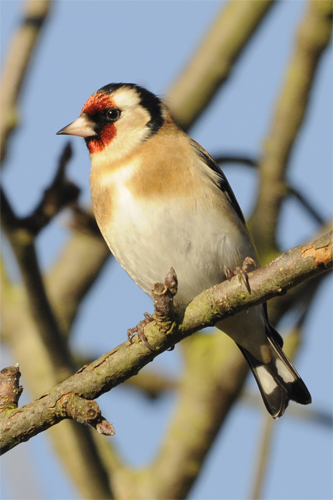
    Brambling, bird photography, Northumberland
    Brambling

    Goldfinch, bird photography, Northumberland
    Goldfinch
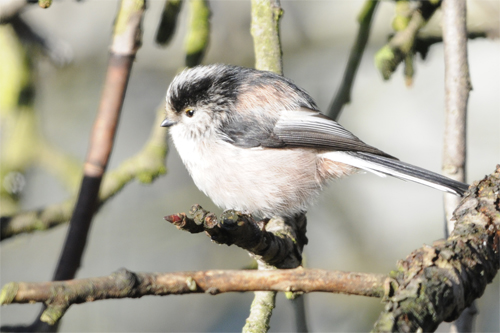
     One species I finally managed to get some good images of is a bird that captivated me when I first saw a flock of them, nearly 40 years ago, in my neighbour’s Pear tree.  With their almost non-stop movement, persistent vocalisations and, let’s face it, looks that are so cute it should be illegal Long-tailed Tits are enchanting.  In previous years they’ve been infrequent visitors to our garden but this winter they are here pretty much all day every day.  A lot of our clients have made similar observations and wondered why this change of behaviour has happened.  Long-tailed Titsare insectivorous and it seems that likely that the hard winter weather, coming so early in the winter has had a devastating impact on their natural food source and made them increasingly reliant on artificially provided food.

    Long-tailed Tit, bird photography, Northumberland
    Long-tailed Tit
  • Feeding time

    I’ve never been good at sitting in the office and concentrating on one task for any length of time.  Having an office window that looks out over the 76ha of mixed woodland of Choppington Woods LNR is a real blessing, allowing me to mix work and birdwatching.  When I need to stretch my legs, a quick trip downstairs lets me open the patio door and turns the kitchen into a very comfortable and convenient bird photography hide.

    Our garden is currently hosting at least 8 Bramblings, along with Greenfinches, Goldfinches, Chaffinches, Bullfinches, Blue, Great, Coal and Long-tailed Tits, occasional visits from Siskin, Redpoll and Treecreeper and regular fly-throughs by our local Sparrowhawks.

    It’s a wonder I ever get any work done 🙂

    European Goldfinch, bird photography, wildlife photography
    Goldfinch
    Chaffinch, bird photography, wildlife photography
    Chaffinch
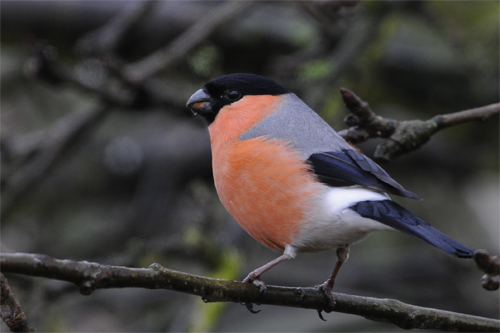
    Bullfinch, bird photography, wildlife photography
    Bullfinch
    Brambling, bird photography, wildlife photography
    Brambling
    Brambling, bird photography, wildlife photography
    Brambling

  • Fantastic foxes

    Despised by many, loved by many, a source of great controversy, a tame garden visitor for some and a wild, wary, predator of the countryside for others.  The Red Fox is all of these, and much more.  One of my projects for this year is to photograph our local foxes, but recently an unexpected opportunity came along.

    I was walking along the edge of some heather moorland when I heard the barking of a fox from a conifer plantation a few hundred metres away.  Although the light was poor, and fading fast as dusk approached, I set my camera on it’s tripod and started squeaking.  Being a predator can’t be an easy life, so it’s no surprise that the possibility of an easy meal (a prey species that’s clearly already distressed) is an attractive one.  Within a few seconds, a head popped up at the top edge of the moor.

    Red Fox, wildlife photography, nature photography, wildlife photography tuition, wildlife photography training, wildlife photography courses, Northumberland
    Where's that squeaking coming from?
    My main concern now was whether the fox would quickly identify the source of the noise.  Foxes are always exciting to see on our evening wildlife watching tours, but they can be a bit of a nuisance as they have very sharp eyesight and often raise the alarm, even if you’re as well hidden as you can be and you avoid making any sudden movements.

    On this occasion though, the lure of a ‘distressed rodent’ was so great that the fox made it’s way down the hillside, crossing the moor from side to side as it tried to home in on the sound.

    Red Fox, wildlife photography, nature photography, wildlife photography tuition, wildlife photography training, wildlife photography courses, Northumberland
    Is it over this way?
    Finally the fox found the source of the squeaking, and gave me a good hard stare for 30 seconds before trotting back up the hill and chasing another fox in and out of the plantation.

    Red Fox, wildlife photography, nature photography, wildlife photography tuition, wildlife photography training, wildlife photography courses, Northumberland
    Hmmm, that could keep me going for days