Category: Photography

  • Landscape photography and birdwatching on the Northumberland coast

    This has been one of our busiest weeks since we started NEWT, and I’ve only just got around to finding the time to sit in our office and blog about the last few days.

    Tuesday saw Mike, one of our returning clients, coming for his second day out with NEWT, including some photography tuition in the Northumberland Coast AONB and a birdwatching trip across to the Farne Islands.

    After a session on exposure theory, covering topics such as exposure values, ND filters and average metering (the bane of photographers everywhere) and a bit of practice with slow shutter speeds to creatively blur the rising tide it was time to head across to Inner Farne.

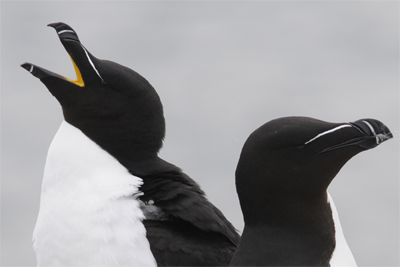
    No matter how many times I visit the Farne Islands, I’m always awestruck by just how good the experience is;  Grey Seals, Common, Sandwich and Arctic Terns, Eiders, Kittiwakes, Fulmars, Guillemots, Puffins and Razorbills all offer excellent photo opportunities so plenty of memory cards are a must.
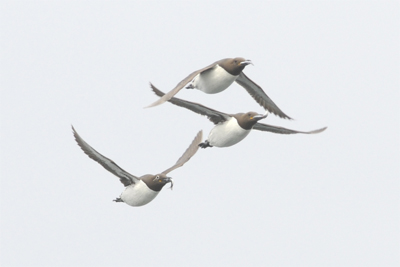
    Common Guillemots (including a 'bridled' Guillemot) after a successful fishing trip
    Razorbills
  • Nothing to grouse about

    Today was the first of two Prestige Tours organised as a 40th birthday surprise.  With our destination being the North Pennines, the tour where we cross the border from Northumberland into Upper Teesdale, the mist, drizzle and general murk first thing this morning didn’t look too promising.  Sometimes, though, the less promising days prove to be the really memorable ones…

    Checking one of our favourite Black Grouse sites there were no birds in the field close to the road.  However, after watching that site for the last two years I guessed that the birds were probably at a lek site away across the moor.  Sure enough, we soon found three birds sitting around, another two flew in a few seconds later and then the lek started.  The cold wind and icy rain was barely noticeable as the birds postured around the clumps of rush.  More sightings of Black Grouse followed, including birds at two sites where I hadn’t seen them before; one of them producing excellent views of a Blackcock sitting near the road, and a rather more shy and retiring Greyhen.  Across in Upper Teesdale the views of Blackcock got even better, and were accompanied by drumming Snipe and displaying Curlew.

    The walk to Cauldron Snout can seem bleak and devoid of wildlife but it is there; watching from amongst the heather were Red Grouse, some more Red Grouse, stunning Golden Plover and even more Red Grouse.  Meadow Pipits flitted back and forth, Snipe were calling, Curlew were singing their eerie song over the moorland and Lapwings demonstrated that their display flight and calls both defy belief.

    One of the best days we’ve had in two years of NEWT.

  • The madness of mid-March

    Between the slow times of the winter (filled this year by the Northeast Cetacean Project) and the start of our busy season comes a week that is exhausting but enjoyable.

    Sarah was away on Sunday so I took myself off for a walk in Harwood.  Lots of Siskins and Crossbills were calling throughout the entire 10 miles, and I managed to capture some images.  The howling wind made my other intention, recording their calls, a bit trickier.  A couple of Common Buzzards were braving the breeze, and a female Goshawk appeared and disappeared before I could get the camera on to her.  I’m not sure whether carrying a dSLR, 500mm lens and heavy tripod around 10 miles of, partially snow-covered, forest tracks is an indication of dedication or insanity.  Whichever, it was certainly good exercise.

    Tuesday was an extraordinary day;  first the Hadrian’s Wall Trade Fair and Tynedale Tourism Day, then I drove to Matfen Hall for an Outdoor Show training session and from there up to the Gun Inn at Ridsdale for a pre-breeding season Hen Harrier volunteer meeting.  Wednesday was the tourism fair in Berwick, organised by the NNTA, and yesterday I attended the Sustainable Tourism Conference at the Rivergreen Centre in Durham.

    Now, at the end of the week, it’s the Alnwick Tourism Fair, followed by a SENTA member event at The Old Ship in Newbiggin.

  • A swell weekend for a survey or two…or three

    Saturday was planned as the next survey day for NEWT/Marinelife…and then in the early hours of Saturday morning the sea began to turn ‘a bit lumpy’ (c)Allan Skinner.  With over 3m of swell smashing it’s way through the harbour mouth at Amble there was no chance of getting the boat out.

    With all three NEWT guides having the day together we headed inland to finish our BTO Winter Atlas timed tetrad visits in Harwood.  Ironically, given the wintry weather on the coast, there was less snow than on our last visit.  Birds were few and far between and, after what turned out to be a strenuous 4 miles over rough ground, as we headed back towards home the late afternoon light looked just about perfect for a visit to Nursery Park to photograph the Waxwings.  The light was as good as we could have wished for and the 20 or so birds that were still present were much more obliging than they had been in previous days.

    Waxwings stacked on top of each other
    Waxwings stacked on top of each other
    Do you think I can swallow this in one?
    Do you think I can swallow this in one?
    Bohemian Waxwing, Ashington, Northumberland 20/02/2010
    Bohemian Waxwing, Ashington, Northumberland 20/02/2010
    Bohemian Waxwing, Ashington, Northumberland 20/02/2010
    Bohemian Waxwing, Ashington, Northumberland 20/02/2010

    On Sunday we separated out to do different surveys; Sarah covered the WeBS count stretch from Cresswell-East Chevington and back (taking her total distance walked over the weekend to nearly 12 miles) and Martin and Andy set out from Amble along with Tim Sexton, on calmer seas, to start surveying the Farne Deeps.  Remarkably, all three surveyors on this trip used to live within 100m of each other in the late 90’s, on Percy Park in Tynemouth.  Tim was on the famous Wilson’s Petrel pelagic back in 2002, and Andy only missed that one as he was delayed while heading back from Mull.  The journey out to the deeps was unremarkable, other than for the number of Gannets that we found, and a lone Common Seal was an interesting find.  Fulmar and Guillemot were also seen throughout most of the survey, and a small number of Puffins were around as well.  As we headed east on the first transect we could see some very dark clouds massing to the south.  By the time we’d completed the 13 mile run and turned to follow the next transect west the clouds had caught up with us.  Sea state 5 in a near white-out was one hell of an experience, but we continued to keep our attention on the sea, still surveying in the hope that the weather would soon pass by.  It did, and we completed that transect before heading north and then east along the next survey line.  Ten miles along the transect we were hit by another winter storm, this time coming from the east.  With the turning tide making our skipper’s task increasingly difficult, we made a note of the position we’d reached and headed back to the warmth and comfort of the shore.  Two days, three NEWT guides, four surveyors.

    Now I’ve got a couple of days of office stuff to catch up on; press trip proposals to write, images to process for articles I’ve written and we’re already well into planning for the Birdwatching Northumberland stand at the British Bird Fair.  I reckon I’ll be able to fit in some time for photography though 🙂

  • (Black)game on

    With Spring drawing ever closer, and our North Pennines Safaris starting in just over a month, we decided to spend Sunday checking all of our regular Black Grouse sites.  Although the winter may have been expected to do some real damage to the population, we managed to find 24 Blackcocks and 9 Greyhens, split between 4 sites.  Birdwatching in the North Pennines, whether in Northumberland, County Durham or Cumbria, is always a pleasure and accompanied by a sense of wilderness.

    A Common Buzzard perched by the roadside allowed just a second to capture this image before it was off and away over the trees.

    Common Buzzard, Allendale, Northumberland 14/02/10
    Common Buzzard, Allendale, Northumberland 14/02/10

    On the way to Upper Teesdale we found a ‘new’ site for Black Grouse, one which should, with patience, produce some excellent photo opportunities.  Across at a traditional lek site, one enthusiastic male was letting fly all on his own, while 7 Greyhens watched him, presumably with a mixture of boredom and pity.

    Do you come here often?
    Do you come here often?
    Does persistence pay off?
    I told you already, I'm not interested.

    As the weather deteriorated and visibility decreased, we stopped to check another site which has held 3 or 4 birds in the last couple of years.  As we drove along the road a Blackcock flew across in front of us and vanished behind a drystone wall.  We approached slowly, and incredibly there were no less than 8 2nd year Blackcocks, all feeding quietly within a few metres of us.  The lack of sunlight detracts from the image, but it’s an addition to our Blackgame photography locations.

    Blackcock, Allendale, Northumberland 14/02/10
    Blackcock, Allendale, Northumberland 14/02/10

     As the rain intensified, we spotted a pair of Roe Deer in a field near Cramlington.  Venturing into the realms of ISO 3200 allowed a record shot before we returned home.

    Roe Doe and Roebuck, Cramlington, Northumberland, 14/02/10
    Roe Doe and Roebuck, Cramlington, Northumberland, 14/02/10
  • A cold walk and a varied week

    I’ve had another week of meetings (and late-cancellations of meetings as well) with a wide enough range of topics to keep me on my toes.  I’ve enrolled on the Natural History Society of Northumbria ‘Lichens and Bryophytes’ course and the first session was on Monday; my use of dichotomous keys as an aid to identification has been sporadic previously, but now I’ve got to learn.  A one-to-one clinic on Wednesday, discussing the new Northumberland brand and ways to enhance our own marketing, gave me lots of new ideas.  Most valuable of all though was a meeting later that afternoon with one of Northumberland’s major land owners, discussing species conservation, land management, nature tourism and access to the prime natural history areas of his estate.  New NEWT products are on the way…

    As I sat in the office yesterday afternoon, staring at the cold gloom outside, I had a call from my good friend, and bird race team-mate, Iain.  He was complaining about being stuck in his office on such a lovely sunny afternoon.  His office is only 20 miles up the road from ours, but was blessed with much better weather.

    One thing that unpromising weather does give me time for is processing a few images from the last month.  With the launch of our new website Northern Experience Images I needed to do a reasonable amount of uploading.  Here a just a few from last Saturday, when the temperature was somewhat lower than it is now and myself, Sarah and Andy had a walk along the coast from Embleton towards Dunstanburgh Castle.

    Dunstanburgh Castle from Embleton
    Dunstanburgh Castle from Embleton
    Dunstanburgh Castle from Embleton
    Dunstanburgh Castle from Embleton
    Dunstanburgh Castle and boulder beach
    Dunstanburgh Castle and boulder beach
    Boulders at dusk
    Boulders at dusk

    It was cold, really cold.  As we walked back through the dunes in the dark, there was a bitter northerly wind and it felt like a real wilderness.  Winter, my favourite time of the year (until the green shoots of spring begin to appear anyway…).

  • The (h)edge of reason

    We’re well into warm(er) weather now, although there was a fresh covering of snow this morning and as Martin sat through a 2hr meeting at Matfen Hall yesterday morning there was steady snowfall throughout.

    As well as the flocks of birds that are visiting gardens so that they can find enough food to survive we’ve been finding reasonable flocks of farmland birds.  One flock we’ve been watching has lots of Linnets, Reed Buntings and Yellowhammers and at least 12 Bramblings.  They’ve found a wheat field that hadn’t been harvested so there was a substantial food source above the snowline even at the weekend when there was still a lot of snow on the ground.

    Patience was the key to watching them.  Standing motionless meant that they were willing to approach to within the minimum focusing distance of our 500mm lens.  Well worth the discomfort of standing in one place in sub-zero temperatures 🙂

    Mixed flock in a hedge, a warming winter birdwatching sight
    Mixed flock in a hedge, a warming winter birdwatching sight
    Brambling and Reed Buntings
    Brambling and Reed Buntings
    5 of the Bramblings
    5 of the Bramblings
    Linnet
    Linnet
    Reed Bunting
    Reed Bunting
    Reed Bunting
    Reed Bunting
    Yellowhammer
    Yellowhammer
    Yellowhammer
    Yellowhammer

    Of course, with so many birds concentrated in one small area it was inevitable that ours weren’t the only eyes watching them.  Through the camera lens there was a rush of wings as everything took off, a blur across the viewfinder and then an opportunity for a morbid portrait.

    Who ended up on the menu?
    Who ended up on the menu?
  • Breaking the ice

    With Sarah back at work, we finally had some time to go out together on Saturday morning.  Watching a procession of cars skidding and sliding along the road outside our house, we decided to leave the Landy on the drive and go for a walk around Choppington Woods.  First though, there was an icicle that had been developing steadily over the last two weeks and should have made a good image.  Unfortunately it was above our bedroom window so required an uncomfortable, and potentially risky, manouvre.

    Rack of icicles above our window
    Rack of icicles above our window

    The start of the interesting icicle can be seen along the branch on the right of the image.  In total it was over 2 feet long, and dangling above Sarah’s car…

    Apparently, in some countries it's illegal to let icicles develop on your property
    Apparently, in some countries it's illegal to let icicles develop on your property

    The first golden light of the day began to selectively illuminate some of the trees around our garden, so I took a quick shot before we went to see if we could find the same light in the woods.

    Our patio, golden light and eleven bird feeders
    Our patio, golden light and eleven bird feeders

    Sarah has, for some time now, been the guinea-pig for the ‘how to take your camera off auto’ approach that we’re employing on our beginners photography courses this year.  It’s a good job we’re both so relaxed about things, as a teacher-student relationship between husband and wife has so many potential pitfalls 🙂

    We found that golden light that we were searching for and, as photographically beautiful light often does, it offered just a few seconds of opportunity.

    A fleeting chance
    A fleeting chance

    As we continued our walk, finding tracks of Red Fox, Roe Deer and Otter, Sarah decided to turn her hand to portraiture.  Now, I’m much happier behind the lens (and I’ve photographed quite a few weddings, and more baby portraits than I care to remember) but this wasn’t too bad an experience.

    As happy as a Polar Bear in snow...
    As happy as a Polar Bear in snow…
  • Snowy Sunday

    Yesterday we took advantage of the bright sunny weather to visit Druridge Bay and check out a couple of sites in preparation for an otter/badger Safari on Tuesday.  We had been out on Saturday with the same intention, but the 35mph+ northeasterly winds, and treacherous road conditions led to an early return home…

    As we drove past Cresswell, Sarah spotted a family of Whooper Swans in a roadside field.  As they seemed fairly settled, Sarah decided to capture an image of them in the snow.  Luckliy we did this there and then, as there was no sign of them when we passed by there an hour later.

    Whooper Swans near Bell's Farm
    Whooper Swans near Bell's Farm

    Checking all of the unfrozen water that we could find in southeast Northumberland did eventually produce a brief sighting of an Otter.

    Druridge Pools was remarkably photogenic; a handy dog-walker added to the photo opportunities and Teasels are really attractive covered in snow or frost.  There was a noticeable movement of Skylarks along the coast as well; 200+ as we walked from the Oddie Hide back to the car.

    Druridge in the snow
    Druridge in the snow
    More attractive than when they're in flower?
    More attractive than when they're in flower?

    Once we were back at home, Sarah was watching the comings and goings at the feeding station when she called through to the living room “Brambling!”.  I ran to the window just in time to see it fly over our neighbour’s garden and out of sight.  I set the camera up ready and eventually it appeared at the end of our garden with a flock of Chaffinches.  Then it vanished again…and appeared in our neighbour’s garden.  Another disappearing act and, after what seemed like an eternity, it flew in from the churchyard on the opposite side of our house.  That wasn’t the end of the story though, as it hid in the thickest tangles of our apple tree for over an hour before offering up a reasonable shot.

    A cracking winter garden visitor
    A cracking winter garden visitor

    Now I’m back at the desk in my office, collating survey data, preparing newsletters and catching up on e-mails…but I can still see the birds at our feeding station, and a rather optimistic Sparrowhawk displaying over Choppington Woods.  A New Year but some old friends; Birdwatching, Northumberland and a dSLR.

  • All is quiet

    The world around us was cloaked in white as we walked home from The Swan early this morning.  A Tawny Owl was calling from the woods, but there was little other sound – muffled as it was by the snow.  By the time we woke up, there was a lot more snow than there had been when we finally fell into bed.  To shake off the lingering after-effects of Old Year’s Night we decided to take a walk around Choppington Woods, wrapped up warm and armed with a camera.  Photography, rather than birdwatching was our main aim, and that was fortunate as there were a lot more birds in our garden than we encountered on the walk; Great, Blue, Coal and Willow Tits, Greenfinch, Chaffinch and Bullfinch, Robin, Wren, Dunnock and Blackbird were around the feeders and, bird of the day, a Common Buzzard flying north over our allotment.  Snow can make a relatively mundane landscape into a photogenic delight, but exposure calculations can be tricky and we spent a lot of time checking compositions and looking for obvious ‘lead-in’ lines.  As we made our way back towards home 350 Pink-footed Geese flew south overhead.  Moving ahead of more wintry weather maybe?

    The view from our patio 01/01/2010
    The view from our patio 01/01/2010
    Willowburn Pasture and a frozen flood
    Willowburn Pasture and a frozen flood
    Following in a Moorhen's footsteps
    Following in a Moorhen's footsteps
    Choppington Woods pond from the new boardwalk
    Choppington Woods pond from the new boardwalk
    Sarah scanning the trees
    Sarah scanning the trees
    Footpath and fence along the Willow Water
    Footpath and fence along the Willow Water