Category: Photography

  • Winter Wonderland Day Two 05/12/2013

    04:30, and I wake to what sounds like a train crashing through our garden.  It isn’t though, instead it’s the howling gales that had been forecast.  Meeting up with David for breakfast at The Swan, I’m glad that we switched our day in Druridge Bay and Southeast Northumberland to today.  Lindisfarne in howling gales and torrential rain would be close to unbearable, Druridge Bay would be much closer to manageable…

    Starting with a seawatch as the rain lashed against the rear window of the car, Eider and a single Common Scoter were just offshore as Sanderling scurried around the piles of seaweed on the shore, a ghostly white adult Mediterranean Gull struggled past against the wind and two Dark-bellied Brent Geese flew north low over the waves.  Then the weather cleared and we were suddenly in beautiful sunshine and blue skies with a light breeze…before the wind strengthened again, the sky turned black and a squally shower had the entire surface of the pool at Hauxley looking like it was boiling.  Goldeneye, Long-tailed Duck, Tufted Duck, Scaup and Little Grebe

    Little Grebe,Tachybaptus ruficollis,Druridge Bay,Northumberland,birdwatching holidays,photography holidays,northern experience wildlife tours

    all faced the elements…then it turned nice again and a Peregrine flew through, scattering Wigeon and Teal but paying them no heed 🙂  A line of Black-headed Gulls dip-feeding into the breeze at East Chevington contained a surprise in the dainty form of a Little Gull, then it started to rain again.  Sitting by the River Coquet eating lunch, we watched Eider and Red-breasted Merganser, as well as Lapwing, Turnstone, Curlew and Redshank…as the first of the afternoon’s hailstorms began.  Another break in the weather brought David an excellent photo opportunity with a flock of Eider

    Common Eider,Somateria mollissima,Druridge Bay,Northumberland,birdwatching holidays,photography holidays,northern experience wildife tours

    before hailstones the size of peas led to a hasty retreat back to the shelter of the car 🙂 Soon the hail was replaced by snow, before another break in the weather brought some simply sublime late afternoon light.

    Druridge Bay,Northumberland,birdwatching holidays,photography holidays,northern experience wildlife tours

    and a flock of Lapwings were tossed about in the air like pieces of black and white paper.

    Northern Lapwing,Vanellus vanellus,Druridge Bay,Northumberland,birdwatching holidays,photography holidays,northern experience wildlife tours

    With the howling northwesterly winds, the water at Cresswell was being driven towards the channel under the road and between the dunes.  A Black-necked Grebe swam by and then, subtly, and with the inevitability of the tide, water started flowing the other way and a boundary between wind-driven pond and incoming tidal surge developed in front of us.  After a Starling murmuration just up the coast,

    European Starling,Sturnus vulgaris,Druridge Bay,Northumberland,birdwatching holidays,photography holidays,northern experience wildlife tours

    we followed the road back down through Druridge and discovered the tide had overwhelmed the culvert and was still coming in, but now straight over the road in front of us.  Watching the car in front safely traverse the water, we made our way across and headed back to The Swan at the end of an extraordinary day.  David was a pleasure to guide on this holiday, and he kindly sent us the images that illustrate the two blog posts 🙂

    We’re taking bookings now for our 2014 holidays, so please get in touch for more details or to book.  We’ve got a range of holidays, each designed to showcase the best of Northumberland, the North Pennines and the Scottish Borders at the best times of the year.

  • Eye to eye with the predator; Bespoke Photography 21/10/2013

    The chilly morning air was biting as I arrived in Seahouses to collect Peter, Caroline and Aidan.  With camera gear loaded into the back of the car we headed down the Northumberland coast with two species in particular on our target list for the day – one relatively easy, one slightly less so…

    I’d planned the morning to take in a couple of sites for Red Squirrel, and the early afternoon to stake out a regular Otter spot.  So, Red Squirrel is the relatively easy species out of those two…but the first rule of wildlife photography should be ‘wildlife doesn’t perform to order’ and both sites we visited, which have healthy populations of Red Squirrel, didn’t produce any sightings.  That’s often the case though when it’s damp, cool and breezy, so we headed on in search of our second target for the day.  After a brief stake out of a handsome male Stonechat we made our way to the edge of a pond, and were told by another birdwatcher who was there that he’d seen an Otter just 15mins earlier, and it had headed across the pond.  I looked across in the direction he thought it had gone…and the entire bank was lined with ducks and geese.  A good sign; the Otter had obviously spooked them out of the water but it must be still somewhere in the pond, as all of the birds were staring intently.  I couldn’t see any disturbance in the water in that direction though and I was just remarking that I thought the Otter could still be nearby, when it surfaced in front of us 🙂  For the next couple of hours we were treated to regular feeding sorties as the sinuous mustelid caught fish after fish, including at least one large FlounderCormorants and Grey Herons were fishing too, a Water Rail put in a couple of typically fleeting appearances, Common Snipe were prodding, probing and miraculously vanishing in short vegetation, Lapwing, Curlew and Redshank were roosting, calling and occasionally flushing, Mallard and Teal kept standing to attention every time the Otter was close by, a murmuration of Starlings away to the north disbanded into smaller flocks that flew straight over our heads and seven Little Gulls danced their dainty flight back and forth over the pond.  Perhaps the moment of the day though, was when the Otter appeared around the edge of a reedbed and started straight into Aidan’s camera lens.  The second rule of wildlife photography should be ‘…and sometimes it does’ 🙂

  • A walk in the woods; Beginners Photography 12/10/2013

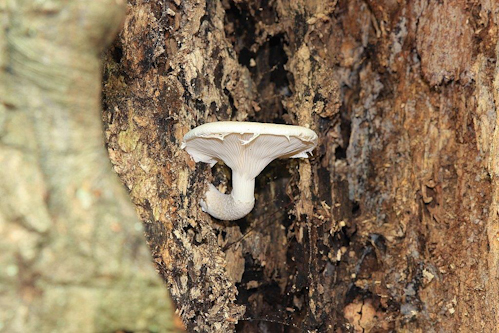
    Our October photography workshop subject was Fungi.  The morning was damp and drizzly, but I’d packed several versatile waterproof camera covers – you can pick them up from your local supermarket, usually free with your shopping 🙂 Dave was on his third day with us this year, and kindly emailed some of his images from the day to post in our blog.  We’ve just added our 2014 dates and topics to our Beginners Photography page.  You could come along yourself or, if you’ve got a friend or relative who’s trying to get to grips with their camera, our Gift Vouchers make ideal Christmas presents 🙂

    fungi,macro photography,photography workshops, photography tuition,Northumberland

    fungi,macro photography,photography workshops, photography tuition,Northumberland

    fungi,macro photography,photography workshops, photography tuition,Northumberland

    fungi,macro photography,photography workshops, photography tuition,Northumberland

  • Shining in the gloom;Druridge Bay 02/10/2013

    I always look forward to trips with returning clients, and Louise was booked in for her third bespoke photography day.  A client who’s a professional photographer is a real treat as there’s a lot to chat about; equipment, photo libraries, how to deal with your images being used without permission, wildlife photography workshops, other photographers… What I’m not so keen on though, is weather forecasts that promise rain for the Northumberland coast 🙁

    With occasional heavy showers, the day around Druridge Bay brought a mixed bag of photographic opportunities for Louise.  Too quick, and in rain that was just too heavy, a Peregrine entertained us during our lunch break as it targeted a flock of Starlings. First it appeared just few metres in front of us, coming from below our feet and shooting up above a clifftop.  A few minutes later it was heading at breakneck speed in the opposite direction, straight through the StarlingsCurlews, Dunlin and Little Grebes all appeared in front of the camera and, as a female Eider drifted by, Louise mentioned that drake Eider was something that had so far evaded her camera.  A few minutes later, after a quick change of location, a flock of drake and duck Eiders were particularly obliging, cooing contentedly as Louise focused on them from just a few metres away.  Turnstones posed helpfully on fishing nets laid out on the sides of trawlers in Amble harbour and, as the light worsened, we had a surprise in the shape of an Arctic Tern, roosting next to a 1st winter Mediterranean Gull.

    Even in poor weather there are lots of possibilities for excellent wildlife experiences.  Having a client who’s excellent company helps too 🙂

  • Unbridled Passion

    I love a lot of things; seabirds, cetaceans, Northumberland, photography and, of course, Sarah 🙂

    When news broke yesterday that a Bridled Tern had been discovered roosting near the jetty on Inner Farne I immediately began wondering whether it would hang around until today and, if it did, how could I fit a visit to Inner Farne into my schedule, between office work this morning and a meeting with the Northumberland Wildlife Trust this afternoon?  After getting a few of my admin tasks out of the way first thing, a quick ‘phone call to Billy Shiel’s booking office secured my place on a sailing at 10:00.  The drive north on the A1 was plagued by the ever-present worry that accompanies a twitch – would the bird still be there?

    Arriving at Seahouses harbour in good time for the sailing I was chatting to William Shiel when he mentioned that he was about to send a boat across to the islands to collect one of his crew…and would I like to go across on that one?  So, I had the extraordinary experience of being the only passenger on Glad Tidings IV and was soon watching the tern, although it was quite distant.  The 10:00 boat arrived and the birders on it had a view of the bird for about five seconds before it flew off.  At about 11:00 I heard the bird calling, but it couldn’t be located anywhere in the roost.  Then, half an hour later, Phil found it roosting on the rocks just below a group of Puffins.  As boats arrived and collected their passengers, I was eventually left on the island with two other birders and a few of the National Trust Rangers.

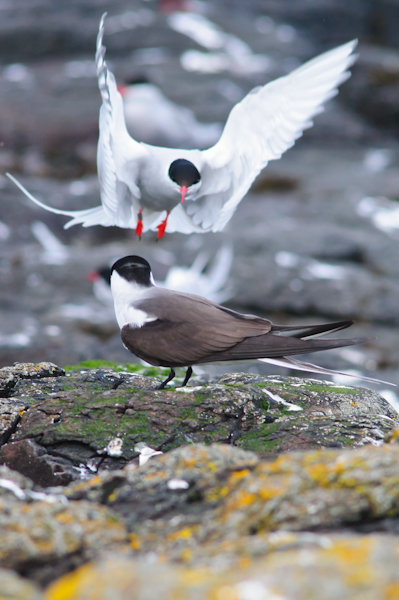
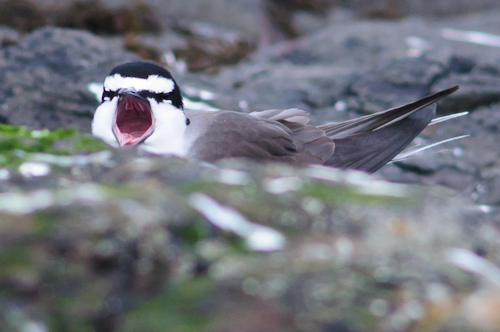
    We could see our boat heading across Staple Sound from the outer islands then, the stuff of dreams; the roosting terns lifted and the Bridled Tern flew past us, then back, then past us, then towards us…then settled on the rocks no more than 30′ away 🙂

    Bridled Tern,Onychoprion anaethetus,Farne Islands,Northumberland,bird photography, bird photography tuition,bird photography holidays,Northern Experience Images

    Bridled Tern,Onychoprion anaethetus,Farne Islands,Northumberland,bird photography, bird photography tuition,bird photography holidays,Northern Experience Images

    Bridled Tern,Onychoprion anaethetus,Farne Islands,Northumberland,bird photography, bird photography tuition,bird photography holidays,Northern Experience Images

    Bridled Tern,Onychoprion anaethetus,Farne Islands,Northumberland,bird photography, bird photography tuition,bird photography holidays,Northern Experience Images

    Bridled Tern,Onychoprion anaethetus,Farne Islands,Northumberland,bird photography, bird photography tuition,bird photography holidays,Northern Experience Images

    With excellent help from William and his skippers, the very accommodating Farne Islands rangers who were ‘enjoying’ the unusual experience of visitors on Inner Farne in a morning, and the remarkably obliging Bridled Tern posing in front of my camera, I headed back down the A1 for my meeting full of enthusiasm…not that I’m ever anything other than enthusiastic when meeting with NWT of course 😉

  • Back to school

    Occasionally I still get to do the whole school teacher role…but it’s enjoyable for me and my students 🙂

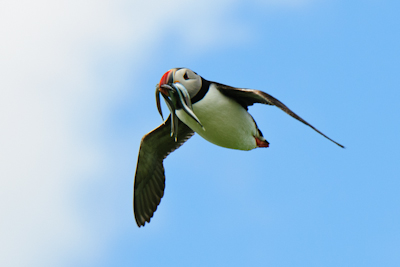
    I met up with Carol at Seahouses Harbour last Saturday for an all-day one-to-one photography session, only to learn the inevitable – conditions weren’t suitable for landing on Staple Island, so we were going to be sailing at noon, and spending 3hrs on Inner Farne.  We had a wander down the coast and worked through all of the relevant settings on Carol’s camera, so that once we were on the island and the air was filled with birds, the only thing to concentrate on would be technique; camera settings were all sorted and should take care of themselves 🙂  It was a rewarding afternoon as Carol soon worked out where to stand to get the shot she was after, how to decide which bird to follow through the lens and when to hit the shutter release.  Minor adjustments to camera settings were made as needed and the birds offered lots of opportunities.  Puffins, Razorbills, Guillemots, Fulmars, Kittiwakes and Shags all passed before the lens and Carol was delighted at her ability to capture that classic Farnes shot of a Puffin flying with beak filled with Sandeels.

    bird photography holidays,bird photography tuition,Atlantic Puffin,Fratercula arctica,Inner Farne,Farne Islands,Northumberland,www.northernexperienceimages.co.uk

    Tuesday brought another Farnes photography session, this time the latest in our Beginners Photography series.  Dave had been with us on our Dawn on the Coast session in April, and was back for something a bit warmer at a more civilised time of the day 🙂  We sailed around the islands before landing on Inner Farne.  Puffins were again flying by with substantial beakfuls of Sandeels and the cold southerly breeze was a reminder of the often harsh conditions faced by the Farne Islands birds (and Rangers!), even during the summer months.  I’ll be giving a talk about the Farne Islands at the Bird Fair at Rutland Water this year so if you’re there please do come along and find out more about this extraordinary wildlife experience.

  • Looking for an angle

    Landscape photography is a bit of an oddity; unlike wildlife, landscapes tend to not move while you’re trying to photograph them (and if the landscape did start to move, I don’t think having to use a faster shutter speed would the greatest of your worries…).  Composition and light are the two factors that I always emphasise to clients on our landscape photography workshops and bespoke tuition sessions, and Tuesday afternoon gave me the opportunity to do that in one of Northumberland’s most iconic settings – the Holy Island of Lindisfarne.

    I met up with Pat mid-afternoon and we headed towards the harbour.  Perhaps a cliched location but with so many boats, so many viewpoints and the ever-changing sky and lighting conditions, there was plenty of scope for playing with exposure, composition and shooting angle.  As Pat took a series of images using her own lens and a couple of mine too (12-24mm f4 and 105mm f2.8) I scouted out different compositions and shooting angles for her to experiment with.

    Northumberland has so many iconic locations for landscape photography that you could visit a different location every day and never get bored or take the same image twice.  If you’re a relative beginner and want to learn how to use your camera equipment to the best of it’s ability, or a more experienced photographer and would like to explore Northumberland’s rich opportunities with a local guide, give us a call on 01670 827465 to see what we can do for you 🙂

    Lindisfarne Castle,Holy Island,Northumberland,landscape photography courses,landscape photography holidays,www.northernexperienceimages.co.uk

    Lindisfarne Castle,Holy Island,Northumberland,landscape photography courses,landscape photography holidays,www.northernexperienceimages.co.uk

    Lindisfarne Castle,Holy Island,Northumberland,landscape photography courses,landscape photography holidays,www.northernexperienceimages.co.uk

  • Waiting for the light

    In an ideal world, a bespoke photography day with a client involves arriving at our chosen location, discussing techniques that will be required to achieve the desired image and then waiting for the perfect light to fall on the subject…

    I arrived at Church Point on Sunday afternoon to collect Gareth for his bespoke photography trip.  My task was to deliver locations that would provide the opportunities for landscape or wildlife photography, and give advice on technique when needed.  In advance I’d planned a route through Druridge Bay, southeast Northumberland and the Northumberland coast that would provide a series of landscape opportunities.  So, discovering that visibility on the coast was poor was a bit of a spanner in the works 🙂  My backup plan was some nice close, obliging wildlife…swifts, swallows and martins were the ideal subject for the afternoon.  Difficult enough to test the abilities of most photographers, but usually obligingly consistent in their feeding, bathing and drinking behaviour.

    As Gareth honed his ‘birds in flight’ skills we had an unexpected bonus in the shape of four Otters!  A writhing sinuous mass of muscle and menace, they twisted and turned in the water before climbing onto the bank and one of them munched contentedly on the fruits of it’s labour – a large Eel.

    Displaying Redshank, typically unobliging Little Grebes and a ghostly Barn Owl drifting across a reedbed as dusk approached all added to the wildlife experience as Gareth shot lots of images of Swallows as they twisted, turned and stalled just a few feet away from us.  I managed a few shots myself, as we compared the effect of different camera settings, focal lengths etc.

    Common Redshank,Northumberland,photography courses,bird photography holidays,www.northernexperienceimages.co.uk

    Barn Swallow,Hirundo rustica,bird photography,Northumberland,bird photography courses,bird photography tuition,www.northernexperienceimages.co.uk

    Barn Swallow,Hirundo rustica,bird photography,Northumberland,bird photography courses,bird photography tuition,www.northernexperienceimages.co.uk

    Barn Swallow,Hirundo rustica,bird photography,Northumberland,bird photography courses,bird photography tuition,www.northernexperienceimages.co.uk

    Barn Swallow,Hirundo rustica,bird photography,Northumberland,bird photography courses,bird photography tuition,www.northernexperienceimages.co.uk

  • Early rise

    Saturday 03:30 and the alarm clock starts ringing.  After eight long days out of the office, things were going to be topped off nicely with an early start for our ‘Dawn on the Coast’ Beginners Photography session.  I arrived just ahead of Dave, and met up with Steve who had arrived early.  In the shadow of Bamburgh Castle, with the North Sea washing close to our feet, we worked our way through the holy trinity of photography (shutter speed, aperture and ISO) and various compositional techniques as the approaching dawn illuminated the landscape around us.  Snow, driven by a strong northerly breeze, passed by almost horizontally and the broken cloud to the east produced intermittently good lighting conditions.  Red-breasted Mergansers and Fulmars flew by, Common Scoters and Eider were riding on the swell, Purple Sandpipers crept around the base of the rocks and we finished our session as less amenable weather approached from the east.

  • Focusing on the coast

    Having lived on, or near, the Northumberland coast for 15 years (apart from my 6 month sojourn to Texas and Arizona) it’s a location I return to time and again with my camera/binoculars/telescope/camcorder/sound recording gear (delete as applicable depending on my mood and/or aim for the day).  The coast is my favorite location for one-to-one photography tuition with clients too (although the North Pennines AONB runs it pretty close!).

    I drove down to Wallsend to collect Mac for his day of photography tuition, and we set off along the coast of southeast Northumberland and Druridge Bay.  I’ve always seen dilapidated farm buildings as ideal locations for Little Owl and Barn Owl, but one group of buildings made an ideal location to explore the reciprocal relationship between shutter speed and aperture, before we headed north and Mac added immeasurably to my knowledge of the opencast mining operations of the area.  Next stop was on the top of the dunes overlooking the north of Druridge Bay and, as well as the impressive scene looking across the rolling surf out to sea, a high-tide wader roost was building up on the rocks below us.  Redshank, Turnstone, Oystercatcher and Curlew were all arriving as the surf lapped at their feet.  Then they all scattered.  Sadly this didn’t herald the arrival of a Peregrine or other predator…but, instead, a jogger.  As luck would have it, I was due at a meeting with a Lead Adviser from Natural England a few days later, to discuss coastal activities and wildlife disturbance.  The conclusion of  a brief discussion at that meeting was that jogging through a high-tide wader roost in a SSSI is mindless stupidity, sheer ignorance and possibly an offence.  People really should know better.

    Boats at Boulmer and Holy Island came under the focus of Mac’s camera before we arrived at our final location for the day.  Breaking surf, rock pools and the Northumberland coast’s stunning edifice of Bamburgh Castle provided our last shoot before the sun dipped behind the dunes and out of sight, and we headed back south.  The light wasn’t the best, although it was a good day to experiment with exposure settings, so here’s a shot of Bamburgh Castle in the sort of conditions that I really enjoy.

    Bamburgh Castle,Northumberland,landscape photography tuition,landscape photography courses Northumberland,one to one photography tuition