![2018 started with some very obliging photogenic Common Eiders [Somateria mollissima] along the River Coquet. Common Eider, Somateria mollissima, Northumberland, bird photography, bird photography courses, wildlife photography, wildlife photography courses, wildlife photography tuition, bird photography tuition](https://www.northernexperiencewildlifetours.co.uk/blog/wp-content/uploads/2018/01/20180101-DSC_5656-1024x683.jpg)
Category: Photography
-
Stoatally different; Beginners Photography Workshop 19/04/2015
Sunday afternoon was, thankfully, sunny and (reasonably…) warm for our NWT Beginners Photography Workshop.
Once I’d found everyone near the entrance to the Druridge Bay visitor centre, we walked through to the feeding station hide at East Chevington. Reed Buntings, Goldfinches, Blue Tits and Great Tits were around the feeders, some remarkably shy Pheasants were quite stunning in the sunlight and we covered the usual beginners workshop topics of shutter speed, aperture settings, ISO, histograms, exposure compensation, and how to attract wildlife close enough to your camera. Then an opportunity that really doesn’t come along every day as Joan spotted a Stoat. I started pishing and it popped back up briefly, sitting on a rock for just long enough to allow a few frames to be fired off 🙂 Colin’s shot of the Stoat was a great one to demonstrate how cropping can improve the composition of an image. A Great Spotted Woodpecker was sitting high above the feeding station, frustratingly not coming down low enough to be in front of the array of cameras (Nikon, Canon, Fuji and Sony). Then, one of the perpetual drawbacks of wildlife photography on a public nature reserve…the Pheasants scattered, all of the small birds left the feeders and a Black Labrador ran through the edge of the reeds 🙁 All it needed was a few minutes after the dog had gone though, and all returned to normal 🙂
-
Feeding time; Beginners Photography Workshop 28/02/2015
Saturday was the first of three ‘Beginners Wildlife Photography’ workshops that I’m leading for the Northumberland Wildlife Trust, and the morning had started grey and gloomy, progressed to sunny with beautiful blue skies by 09:00 and then was back at grey, gloomy and threatening to rain by the time the workshop started. After waiting a while for everyone who had had booked to turn up, we set off for East Chevington, and the relative comfort of a hide and feeding station. Chaffinch, Robin, Goldfinch, Blue Tit, Coal Tit, Great Tit and Reed Bunting all performed well in front of Karin’s, Jean’s and Terry’s cameras, offering ample opportunity to explore aperture, shutter speed, ISO settings and composition, but a real highlight of the afternoon was the arrival of, and several encores by, a flock of Long-tailed Tits. These subtly beautiful birds are one of my personal favourites, and a species that I’ve always found tricky to photograph – talking to other local wildlife photographers revealed that it isn’t just me who finds them difficult though. Here’s a Long-tailed Tit, photographed at one of my feeding stations a few years ago.
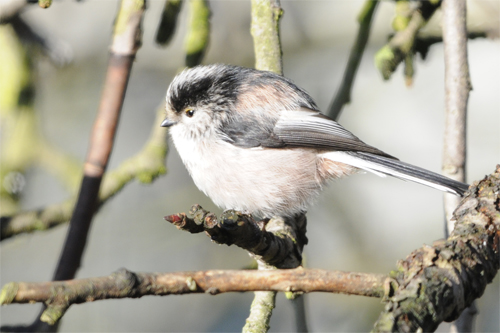
Long-tailed Tit With everyone enchanted by the birds, the conversation turned to whether or not there’s a collective noun for Long-tailed Tits and none of us could bring one to mind. Apparently the collective noun is ‘volery’, but I think I’ll go with Jean’s suggestion… a ‘cuddle’ of Long-tailed Tits 🙂
-
Bone-chilling; Beginners Photography 13/02/2015
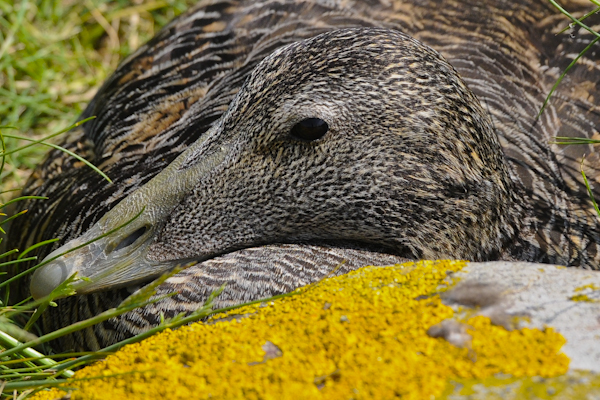
I pulled into the car park at the mainland end of the Holy Island causeway, and Heather was already there for our Beginners Photography ‘Winter Wildfowl’ workshop. The first thing that struck me as I go out of the car was just how cold it was. With a bitingly cold cold wind racing across the exposed mudflats, it felt like the middle of the harshest winter. So, we started with a session in the car, checking camera settings and delving deep into the recesses of the camera menu. Then it was time to venture back out into the cold. Curlew, Redshank, Bar-tailed Godwit and Turnstone were eking out an existence in the wind-blasted landscape, a Little Egret still looked supremely elegant, with barely a feather ruffled out of place, and Heather’s attention was on a flock of Common Eider in the channel under the causeway. Our county bird is quite stunning, and makes a excellent photographic subject, so Heather was soon engrossed in capturing them whenever they turned their heads towards us and the slightly trickier task of catching one in the act of stretching and flapping it’s wings. Here’s one of my images of a drake Eider, from a warmer and less windy session a few years ago, showing just how beautiful they are.

Our Beginner’s Photography Workshops are ideal if you’re just getting used to your camera, or want to improve a particular skill or technique, so give us a call on 01670 827465 to reserve your place.
-
Coastal Dusk; Beginners Photography Workshop 18/10/2014
I always enjoy our Beginner’s Photography Workshops, whether we’re on the Farne Islands at the height of the breeding season, chilled to the bone at dawn in the late winter or exploring the hidden world of autumn woodland everyone learns something, including me 🙂 I met up with Sian for a session photographing the coastal landscape at dusk and quickly learned that she was already very familiar with various compositional approaches to photography. That made the structure of the rest of the session a straightforward one and we concentrated on exposure – exposing for highlights, exposing for shadow areas, exposing for a ‘balanced’ scene, exposure compensation and using the histogram as an exposure guide. All too soon, the light faded, contrast fell and it was time to finish. Our next workshop is Autumn Colours on Saturday 8th November. Give us a call on 01670 827465 if you’d like to learn how to get more from your camera 🙂

-
Farne Islands; Beginners Photography Workshop 28/06/2014
Saturday afternoon was our Farne Islands Beginners Photography workshop. I picked Peter up from Eshott as I headed north, and we met up with Doug at Seahouses harbour. This was Peter’s fourth trip this week (on his birthday, following his North Pennines trip on Friday – his wedding anniversary!). Doug had been out with me before too, on our Coastal Dawn photography workshop in March, although the weather was a bit more amenable this time round 🙂 Settings for wildlife and action photography are very different to the settings for extracting a landscape image from the gloom of an early spring morning, so I ran through the settings on Doug’s camera with my recommendations for how to improve his chances of catching ‘the moment’.
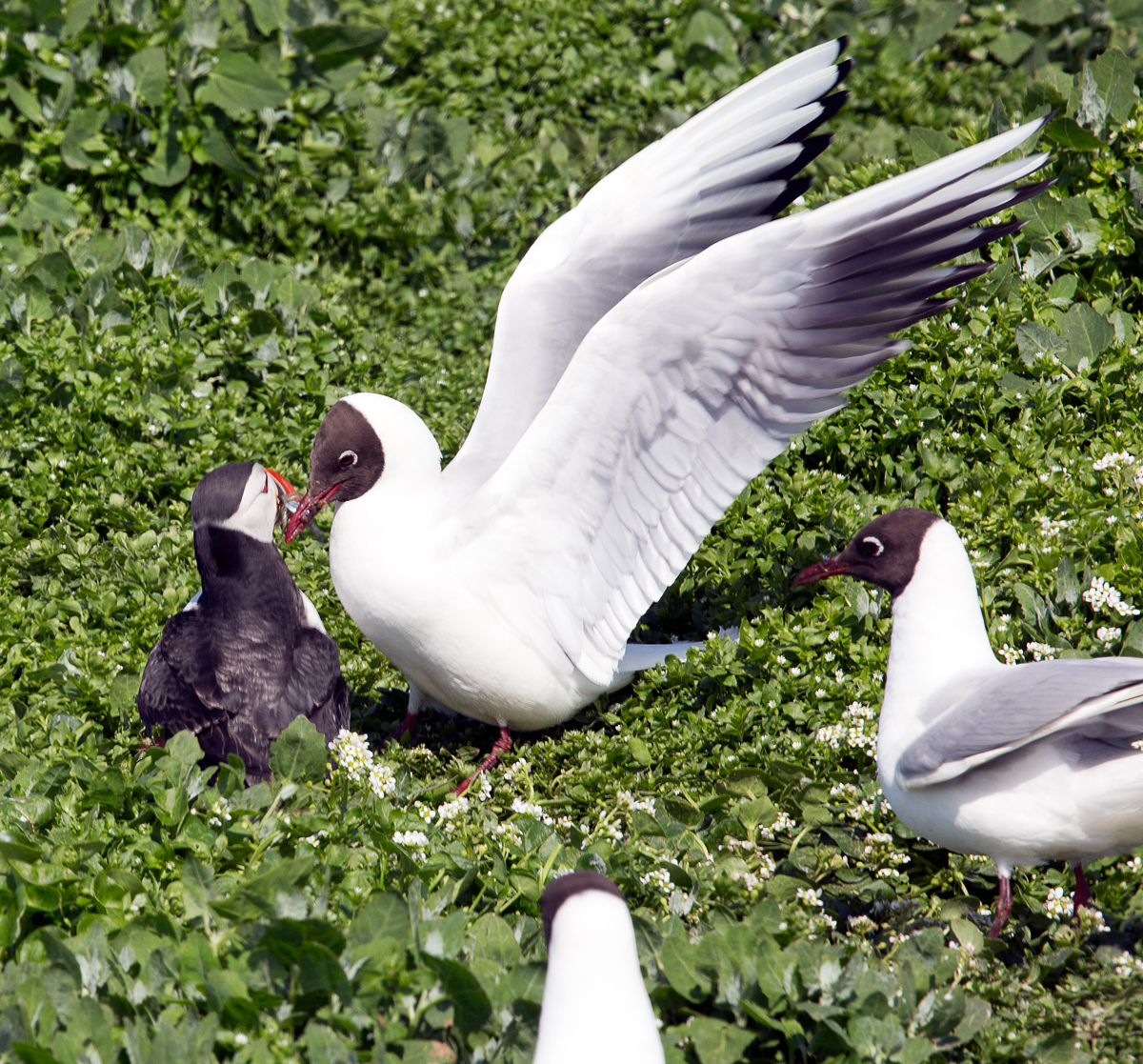
Perhaps the greatest skill a photographer needs on Inner Farne is the ability to tune out the chaos that surrounds them. Common and Arctic Terns form an angry buzzing cloud around the heads of visitors to the island, the harsh calls of Sandwich Terns cut through you as they fly to and from their colony, Puffins shoot by with beakfuls of sandeels, so close that you can feel the rush of air from their wingbeats and the clifftops are covered in Shags, Kittiwakes, Razorbills and Guillemots as Fulmars soar by on stiff outstretched wings. Around the Puffin burrows, groups of Black-headed Gulls sit and wait for the return of what should, on the face of it, be an easy meal. It doesn’t always work out that way though, and the melee provides excellent photo opportunities. That chaos is the Farne Islands strength as a location for our photography workshops though. The wildlife is approachable and obliging, so it’s a great place to concentrate on learning, and practicing, new photography techniques.


We’ve still got a few spaces available for our Farne Islands photography workshop this Saturday (July 5th), so give us a call on 01670 827465 if you’d like to come along 🙂
-
Choosing your battles; Farne Islands bespoke photography trip 31/05/2014
Last Thursday should have been a bespoke photography trip to the Farne Islands, but a discussion with William on Wednesday evening confirmed what the forecast had been suggesting for a few days – heavy easterly swell would make it impractical to sail. I was out and about in the drizzle so Sarah got in touch with John, David and Sheila and we rearranged the trip for Saturday instead.
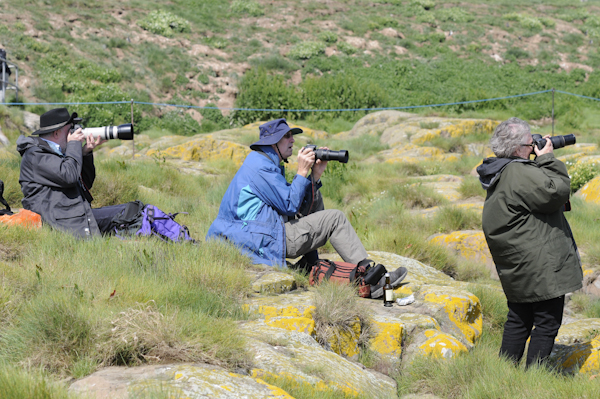
That turned out to be an excellent decision, with Saturday dawning dry, bright, sunny and with only a hint of a breeze. We arrived in Seahouses just after 09:00 and were soon onboard Glad Tidings II, with William at the helm, on our way to Staple Island, passing groups of Grey Seals lazing in the sunshine. Staple can be a difficult island to land passengers on, but it’s always worth the effort. Puffins with beakfuls of sandeels were next to the landing and many photographers from our boat didn’t make it any further on to the island for quite some time. Fulmars, Kittiwakes, Shags, Guillemots and Razorbills are all good photographic subjects, Puffins are the real stars of the island but there were some very accessible female Eiders incubating too. A frequent mantra that I try to instill into our photography clients is to choose their battles carefully – whatever focal length lens you have, there’s always the opportunity to take stunning images. Don’t frustrate yourself by trying to over-reach the performance of your equipment. I had a camera with a 70-200mm lens in my rucksack – not a long focal length, but enough when you’ve got a subject quite close. We explored bits of the island looking for a spot that offered Puffins in flight at reasonable distance, and the best bit of the morning on Staple came during our lunch break, when Puffins were flying so close overhead that you could hear the whirring of their wings, and everyone sat back, relaxed and tried to second-guess which direction each Puffin was going to fly 🙂 With a lovely group of clients, the day was a real pleasure, and we were soon on Glad Tidings IV, transferring to Inner Farne for the afternoon. Inner Farne offers similar to Staple, but with the addition of Common, Arctic and Sandwich Terns and we explored the island in search of photographic subjects. The first three images below are my own. Puffinin flight, Black-headed Gull tussling with Puffin, Arctic Tern and Common Tern images are all (c) J. Spence. Many thanks to John for letting us use his stunning images in this blog post 🙂
Beautiful weather, great clients and the ‘Galapagos of the North’ – what a great end to the month, although for NEWT the month wasn’t quite over yet…


-
Drumming and lekking; North Pennines 05/04/2014
A pre-dawn start heralded a long anticipated day out with Sam and Brian, part of Sam’s prize from last years Natural History Society of Northumbria Photography competition. Sam is part of a generation of young photographer/naturalists in Northumberland, and it was a pleasure to have a day discussing photography, wildlife and ethics with himself and Brian.
As we headed west, the first tendrils of daylight began creeping over the eastern horizon in the rear view mirror and a Tawny Owl perched on a fence post and another flew over as we stopped to have a look at it. The plan for the day was to visit the Black Grouse lek at Langdon Beck first, and then begin slowly exploring back through the North Pennines into Allendale. I’ve had some stunning days with clients in the North Pennines, including a remarkable grouse and raptor day, but this one was breathtaking. Visually, Black Grouse are spectacular, and the strutting and posturing of a group of lekking blackcock is one of those wildlife experiences that everyone should experience at least once, but the sound when you’ve got 30+ of these birds all kicking off at the same time is indescribable.
As the lek disassembled, we prowled the moors in search of subjects for Sam’s and Brian’s cameras. Common Snipe and Lapwing were very close to the road, and when Sam mentioned that he’d always wanted to get close shots of Common Snipe, I thought I knew just the place. Sure enough, the sky was filled with Snipe drumming, and several of them were taking a break, obligingly perched on fence posts 🙂 Throughout the day we encountered lots of those birds that are common on the coast in winter, but much more thinly spread on the moors in the Spring; Oystercatcher, Redshank, Golden Plover, Curlew. An unexpected addtion to my Cow Green list presented itself in the form of a flock of 22 Whooper Swans. That moorland speciality, Red Grouse, was seen in good numbers offering photogenic views in mist, rain, sunshine and everything else the elements could muster. A heart-stopping moment at the end of the day produced an all too fleeting glimpse of the striking black-and white tail of what could only be a Rough-legged Buzzard, which sadly drifted behind nearby trees without lingering long enough to be captured on camera.
Now, all I’ve got to do is work out how to get the bubbling cooing sounds of the lek out of my head 😉
-
More shades of grey
Our Beginners Photography workshop on Saturday had got me thinking about an aspect of photography that I’ve neglected in recent years, but one which dominated much of my photography in the late ’80s and early ’90s – black & white. Back then I spent much of my time composing, exposing, developing and printing landscapes and portraits in monochrome, but in the digital age I haven’t really given it much thought. It isn’t unusual to see discussions about the relevance of b&w in this age of intensely saturated HDR images, but it makes challenging demands of the photographer. Stripped of colour, the image relies on something else – dynamic, graphic, dramatic – to grab the attention.
So, on Monday, I drove north on the A1 in heavy fog, which thankfully thinned a bit towards the coast. After 4 hours of scrambling around Stag Rocks I composed the image that I’d pre-visualised, applied ND grad and ND filters to balance the exposure and slow the shutter speed right down and then waited for the tide 🙂

-
Shades of Grey; Beginner’s Photography 29/03/2014
Early starts aren’t for everyone – I was once approached by a photography tuition company who wanted me to lead some landscape workshops for them, and the conversation was odd, to say the least
“Yeah, no problem. If it’s in March we’ll start at 05:00, other times of the year will vary depending on sunrise time”
“05:00?”
“Yes, the best light of the day is around sunrise and sunset. Early starts or sunset finishes, whatever works best for you”
“Why would anyone want to get up that early?”
“Because that’s the best time for landscape photography”
“I’m not sure our clients would like that”
“Okay. How about December? Later sunrise, so later start”
“That’s the middle of the winter. I don’t think our clients would like that either”
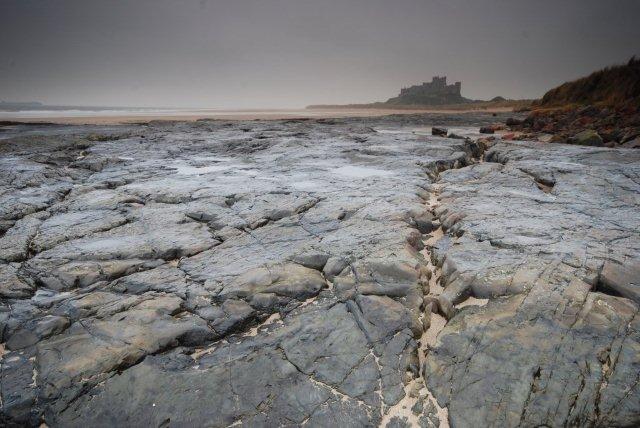
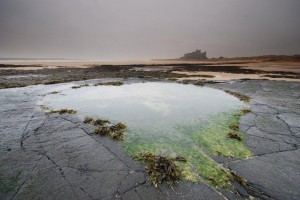
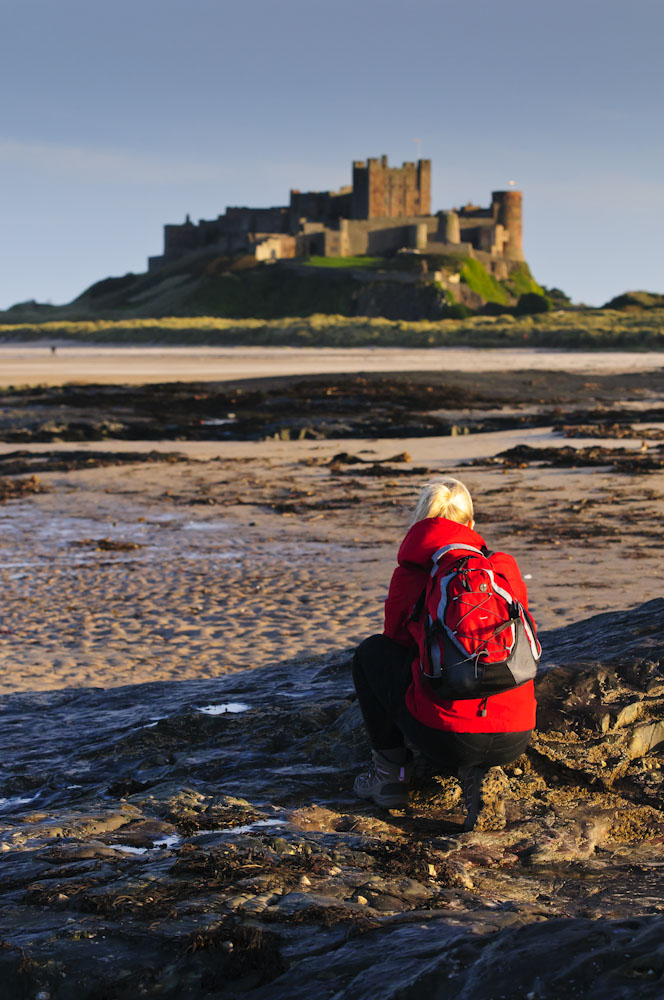
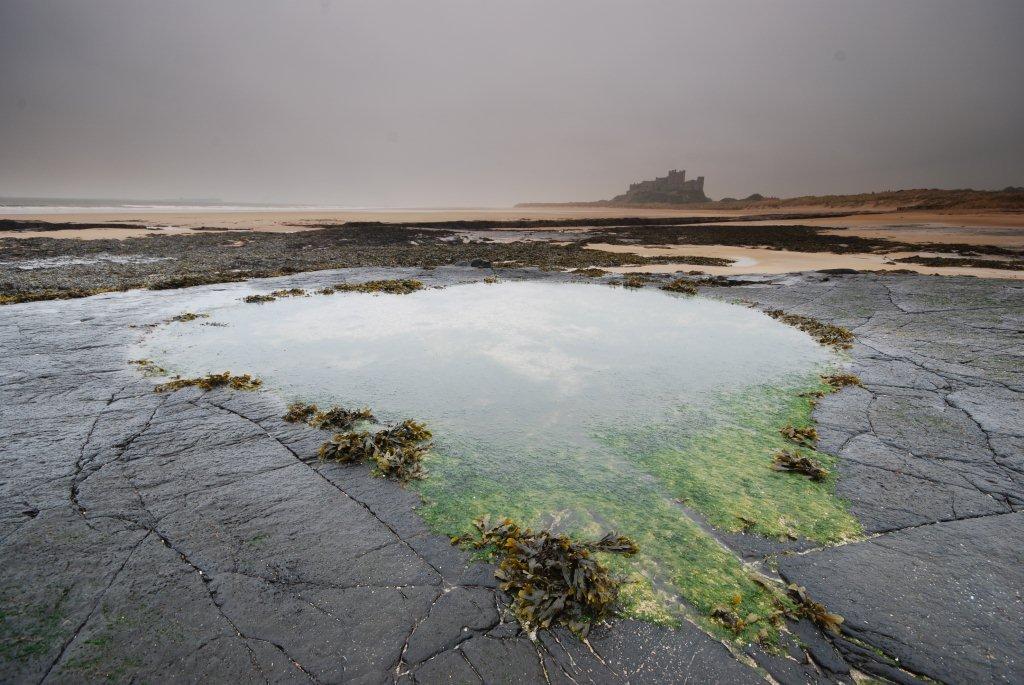
Fortunately there are photographers who appreciate the ‘golden hour’ so, at 04:50 on Saturday, I met up with Doug at Bamburgh in the murk and gloom of what appeared to be pretty uninspiring light. Things can usually be rescued though, and we looked at camera settings while it was still quite dark then, as soon as there was some light, we set about exploring composition and exposure metering. With a bright cloudy sky it was time for a bit of creativity; first exposure compensation, always a useful technique when a very dark, or a very bright, area is dominating the scene. Then, the technique that comes into it’s own when there’s a wide range of exposure values between the sky and the foreground – Doug’s wide-angle lens has the same diameter filter thread as my mine and I got my set of ND graduated filters out of the car so he could reduce the brightness of the sky/increase the brightness of the foreground. Dull and uninspiring was transformed into something much more dramatic, and the hours had flown by. I’m really looking forward to seeing Doug’s images from the day, and I’ll be meeting up with him again on our Farne Islands photography workshop on 28th June. We’ve got a couple of places available on that one, so give us a call on 01670 827465 if you’d like to come along and learn how to get more from your camera.
Doug has very kindly provided us with two of his images from the day, which we think are superb 🙂 You can click the images to see full-size versions.