Category: Northumberland

  • Causing a commotion; Otter mini-safari 15/05/2014

    “If you usually travel through Northumberland to get to Scotland, what is it about Northumberland that made you choose to stay here on this holiday?”  I asked the question as a bit of market research; after all, knowing why people visit Northumberland helps with developing a better experience for them.  The answer was slightly unexpected though “This otter safari”…

    I arrived at Church Point shortly before Philip and Pauline, who were back for their second trip with NEWT following a Druridge Bay safari in 2012.  We quickly met up with Albert and Elisabeth and began our search for Otters in the pools of Druridge Bay.  With no obvious panic amongst the assembled wildfowl, I decided that we should try elsewhere.  Initially all seemed calm and, as an entertaining discussion about mustelids developed (with all four participants on the trip having previously seen one species that is still very high on my wish list…), I kept checking the ducks and geese along the water’s edge.  Then, a change; two pairs of Canada Geese were suddenly very alert.  Necks held straight up, all staring intently along the river bank.  That was a good sign.  Then a better one, as a brood of Mallard ducklings scattered in a semi-circle from the bankside vegetation.  Something had spooked them, but what was it?  For the next five minutes I kept my binoculars trained on the spot that the Mallards had scattered from.  First there was no indication of what had scared them, but it had to be something…then persistence paid off.  What appeared to be a log floating on the water hadn’t been there the last time I looked, and it rolled at the surface, dived and popped back up 🙂  Using the shapes of the trees on the bank as landmarks, everyone was soon watching the Otter as it dived repeatedly in the same spot.  It was so fixated on feeding in a very small area that I was able to train the telescope on it and everyone managed to watch it through ‘scope as well as binoculars.  It vanished for a few minutes, before the geese alerted us to it’s presence a little way downstream.  As daylight faded the surface of the river became a featureless, unwelcoming darkness as bats flitted back and forth around the tree canopy and we headed back.

  • Eye of the storm; Druridge Bay 13/05/2014

    The deep ominous rumble of thunder was all around us now.  There was a light at the end of the tunnel though, but could we make the most of it?

    I’d collected Stephen from home in North Shields and we headed up the coast for an afternoon and evening birdwatching around Druridge Bay.  The early part of the trip was in fine weather and we watched Whitethroats and Sedge Warblers singing from the bushes, Wheatears flitting from ground to fencepost and back and House Martins andSwallows twisting and turning in pursuit of the bountiful harvest brought about by warm damp conditions.  Part way through the afternoon things began to change; away to the north the sky was darkening and we could hear the deep rumble of distant thunder.  Another storm was looming to the southwest, and gradually we were encircled by a menacing gloom.  The rain began hammering against the car, but there was one ray of hope.  At the centre of the storm was a break in the clouds; blue sky and sunshine of sorts.  I could see which way it was heading and knew that we had one excellent option.

    Down the coast to a Barn Owl breeding site, with the rain relentlessly challenging the efficiency of the windscreen wipers on the car, we positioned ourselves so the owl’s regular hunting area was in view.  I was fairly sure that the break in the weather would be over us in about ten minutes, and that we’d have a window of opportunity for about another ten minutes prior to the next downpour.  As the rain eased to just a few drops, we concentrated our attention on the dunes and, within a couple of minutes of the rain stopping, the Barn Owl appeared.  Quartering , hovering, diving out of sight into the grass before lifting again, carrying a vole back to the nest then resuming the hunt only to abandon as the next edge of the storm hit with a vengeance and we headed off with flashes of lightning illuminating the darkened landscape.

  • Hunters and hunted; Druridge Bay mini-safari 07/05/2014

    So many of our experiences with clients revolve around the day-to-day life and/or death activites of the wildlife that we watch.

    I collected Philip and Wendy from Amble and we headed south along Druridge Bay.  Two birds in particular had us all transfixed during the evening.  First was a Grey Heron, elegant, statuesque, patient and focused, it stalked steadily along the edge of the pond, frequently pausing, contorting its neck and body into apparently unfeasible orientations before making a lightning-fast stab into the murky water, emerging more often than not with a small fish as reward.  We can only imagine how many little fish it must take to provide the nutritional requirements for such a large bird.  As the waders and wildfowl settled to roost, it was the turn of another old favourite to take centre stage.  Quartering over reedbeds and rough grassland, the Barn Owl seemed to glow in the darkening gloom.  Back and forth, perching on fence posts, returning to the nest with a hapless rodent before resuming the relentless hunt, ghostly pale as it hovered like an avenging angel over the increasingly featureless (to our eyes, at least…) landscape, it vanished behind bushes and dunes before reappearing well away from where it had gone out of sight.  Eventually our diurnal eyes were beaten by the heavy cloak of dusk and we headed back 🙂

  • On silent wings; Northumberland coast 26/04/2014

    There are some species that are favourites with particular clients, there are others that may be fairly common but still have good wildlife experience appeal, and then there are a select few that have everybody watching their every move…

    I arrived at Church Point and quickly located Carol, Dave, Megan and Emily.  Our carload was soon complete with the arrival of Mr and Mrs Robertson and we headed north along the Northumberland coast.  Our aim for the afternoon was to visit several Otter sites, in the hope of catching sight of the elusive sinuous predator.  Cold and windy isn’t an ideal weather condition for the search and it turned out that the closest we came (probably) was a sudden panic and ducks heading purposefully away from a reedbed, and an unseen menace.  Throughout the afternoon and evening there was plenty of avian interest; male Ruff, part way to breeding plumage, Grey Herons, stalking menacingly along the waters edge, Little Grebes, diving before surfacing with tiny fish, the cartoon-like Goosanders and Red-breasted Mergansers, noisy Greylag and Canada Geese and delicate, dainty Avocets, suddenly transformed into a furious vision of Hell when a female Marsh Harrier drifted foolishly over their pond.  As dark descended, Moorhens were making their way along the river side and Emily demonstrated remarkable hearing, picking out the squeaking of a shrew in the bankside vegetation. Eerie mammalian screeching from the woodland on the other side of the river was probably an altercation between Red Foxes as the last remnants of daylight gave way to the dark.

    The moment that had everyone’s attention focused came at sunset, in beautiful light.  We were almost back at the car when I spotted a familiar shape hovering above the dunes.  It dipped out of sight, before lifting from the grasses and heading towards us.  It dipped again, then perched on a fencepost before resuming the hunt.  Subtly coloured with mesmerising black eyes that are quite unforgettable the ‘Ghost Owl’, ‘Death Owl’, ‘Hushwing’ or simply Barn Owl has a rich folklore and really is one of those select few species that you’ll never tire of watching 🙂

  • Kettling; Kielder Safari 23/04/2014

    The alarm went off at 06:00 on Wednesday, and my heart sank as I looked out of the window…heavy mist, not ideal for any of our tours, but particularly not good for a day in Kielder.  I drove to Kingston Park to collect Steph and we headed west in much more promising conditions; low cloud in some valleys, but some sunshine too.  We collected Paul and Trish from Wark, and then Ivan from Tower Knowe and headed into the forest.  It was a bit cool and misty for any raptors to be up and about, but two Common Crossbill flew by and the air around us was filled with the descending silvery cadence of Willow Warblers as Woodpigeons, Stock Doves and Carrion Crows caused a brief quickening of the heart rate as they flew between plantations.

    A walk to the Bakethin reserve produced lots of Siskin, and Goldeneye, Tufted Duck, Teal, Oystercatcher, Cormorant and Common Sandpiper were around the water’s edge.  As we got back to the car park, which provided good views of Treecreepers, Paul spotted a raptor high overhead, and binoculars resolved it into the impressive shape of an Osprey.

    Over the border into Scotland we were soon encountering Common Buzzards, lots of them, and a remarkable number of Skylarks and Meadow Pipits.  We reached our picnic spot and, as soup, sandwiches and carrot cake were consumed, raptors began to appear above the skyline.  First Common Buzzards, then a female Hen Harrier, followed soon after by a skydancing grey male 🙂  Then more Common Buzzards, and more Common Buzzards.  At one point we had between four and six birds behind us, while higher up the valley at least ten were kettling in one thermal along with a Peregrine 🙂  Absolute heaven for any birdwatcher who enjoys raptors…and who doesn’t?  Along the stream Reed Buntings were pretending to be Dippers, but we did eventually find the genuine article, which obligingly bobbed up and down on a rock before diving into the fast flowing water, and Wheatears were perched on old stone walls.  On the hillsides high above the valley bottom, Wild Goats were grazing as we enjoyed close views of Common Buzzards both perched and flying, and Red Grouse were found as we crossed the moors back towards England.

    We finished the trip with an uncountable number of Chaffinches and a real Northumberland speciality as a Red Squirrel ran around on the ground before deciding to hang upside down on a peanut cage, and it was time to reverse the route and drop everyone off.

  • A sting in the tale; Druridge Bay 10/04/2014

    With a holiday for a family wedding in Scotland looming, my last day out with clients for a couple of weeks was a mini-safari around Druridge Bay.  The unpredictable weather of recent weeks had been replaced by something much better as we headed north along the coast.

    The remnants of winter birdwatching, in the shape of Wigeon, Goldeneye, Pintail and Red-breasted Merganser, were intermingled with the early spring in the elegant form of at least three Avocets, and a lone Whooper Swan, in the midst of a herd of Mute Swans, probably hasn’t made it’s mind up what it’s doing for the summer yet.  Towards the end of the afternoon a yapping flock of Pink-footed Geese flew north, quickly gaining altitude as if heading off towards Iceland…before encountering the stiff northwesterly wind and looping back round again…and again…and again, before they eventually gave it up as a bad job and settled on the water with the discordant sounds of Canada and Greylag Geese around them.  The comings and goings at a feeding station held the attention for some time, with Great Tits, Coal Tits, Blue Tits, Tree Sparrows and Chaffinches all clustering around the feeders.

    Trips including young children can be a bit fraught but 3-year old Sylvie demonstrated a sharp eye for finding spiders, and 5-year old Felix, with some help from his little sister, wove a remarkable tale of a superhero Otter with a poisonous sting in it’s tail that I could have listened to for the rest of the day – a great way to finish work before NEWT’s first ‘proper’ holiday for a long time 🙂

  • Drumming and lekking; North Pennines 05/04/2014

    A pre-dawn start heralded a long anticipated day out with Sam and Brian, part of Sam’s prize from last years Natural History Society of Northumbria Photography competition.  Sam is part of a generation of young photographer/naturalists in Northumberland, and it was a pleasure to have a day discussing photography, wildlife and ethics with himself and Brian.

    As we headed west, the first tendrils of daylight began creeping over the eastern horizon in the rear view mirror and a Tawny Owl perched on a fence post and another flew over as we stopped to have a look at it. The plan for the day was to visit the Black Grouse lek at Langdon Beck first, and then begin slowly exploring back through the North Pennines into Allendale.  I’ve had some stunning days with clients in the North Pennines, including a remarkable grouse and raptor day, but this one was breathtaking.  Visually, Black Grouse are spectacular, and the strutting and posturing of a group of lekking blackcock is one of those wildlife experiences that everyone should experience at least once, but the sound when you’ve got 30+ of these birds all kicking off at the same time is indescribable.

    As the lek disassembled, we prowled the moors in search of subjects for Sam’s and Brian’s cameras.  Common Snipe and Lapwing were very close to the road, and when Sam mentioned that he’d always wanted to get close shots of Common Snipe, I thought I knew just the place.  Sure enough, the sky was filled with Snipe drumming, and several of them were taking a break, obligingly perched on fence posts 🙂  Throughout the day we encountered lots of those birds that are common on the coast in winter, but much more thinly spread on the moors in the Spring; Oystercatcher, Redshank, Golden Plover, Curlew.  An unexpected addtion to my Cow Green list presented itself in the form of a flock of 22 Whooper Swans.  That moorland speciality, Red Grouse, was seen in good numbers offering photogenic views in mist, rain, sunshine and everything else the elements could muster.  A heart-stopping moment at the end of the day produced an all too fleeting glimpse of the striking black-and white tail of what could only be a Rough-legged Buzzard, which sadly drifted behind nearby trees without lingering long enough to be captured on camera.

    Now, all I’ve got to do is work out how to get the bubbling cooing sounds of the lek out of my head 😉

  • A trip with extra added bite; Otter Safari 02/04/2014

    After a remarkably mild winter, Wednesday brought some weather with a bit of bite, the sort of day where you really need the wildlife to be performing at it’s best to take your mind off the conditions…

    I collected Katherine and Brenda from Church Point for an afternoon/evening Otter Safari, and we headed north up the coast through Druridge Bay.  Our first stop was looking very promising; Goosanders, Grey Herons, Avocets, Wigeon, Teal, Pintail, Mallard, Curlew, Lapwing, Dunlin, Bar-tailed Godwit, Redshank, Common Snipe, Turnstone…and a noticeable lack of birds in one corner of the pond 🙂 Always the first sign we look for when searching for Otters, so I was confident that there was one moving around close by.  It was looking so promising that I thought we should stay put and have lunch where we were.  I went back to the car to fetch our soup and sandwiches and when I got back to the hide, less than 5mins later, I was greeted with “You’re not going to believe it, but there’s an Otter just over there.”  Sure enough, Brenda’s directions had me looking in exactly the spot where it next surfaced 🙂  After a few minutes it went out of sight, before reappearing 30mins later, spreading panic amongst the ducks that were roosting at the water’s edge.  Then, as mysteriously as it first appeared, it dived and didn’t resurface where it could be seen.

    We headed on up the coast in conditions that were becoming less entertaining, with a brutal southeasterly wind that seemed to drive the cold and damp through every layer of clothing that could be mustered.  Noisy Black-headed Gulls were dive-bombing Canada Geese, Little Grebes were just being their cute selves, Sand Martins swirled back and forth over the River Aln, Coot and Moorhen busied themselves around the reedbeds and Greenfinch, Chaffinch, Blackbird, Mistle Thrush, Woodpigeon, Collared Dove and Wren were all singing.

    Probably a more wintry day than any day out we had during the winter, enriched by the sleek, sinuous menace of the Otter 🙂

  • More shades of grey

    Our Beginners Photography workshop on Saturday had got me thinking about an aspect of photography that I’ve neglected in recent years, but one which dominated much of my photography in the late ’80s and early ’90s – black & white.  Back then I spent much of my time composing, exposing, developing and printing landscapes and portraits in monochrome, but in the digital age I haven’t really given it much thought.  It isn’t unusual to see discussions about the relevance of b&w in this age of intensely saturated HDR images, but it makes challenging demands of the photographer.  Stripped of colour, the image relies on something else – dynamic, graphic, dramatic – to grab the attention.

    So, on Monday, I drove north on the A1 in heavy fog, which thankfully thinned a bit towards the coast.  After 4 hours of scrambling around Stag Rocks I composed the image that I’d pre-visualised, applied ND grad and ND filters to balance the exposure and slow the shutter speed right down and then waited for the tide 🙂

    Bamburgh Castle,Northumberland,landscape photography,landscape photography tuition,landscape photography workshops

  • Shades of Grey; Beginner’s Photography 29/03/2014

    Early starts aren’t for everyone – I was once approached by a photography tuition company who wanted me to lead some landscape workshops for them, and the conversation was odd, to say the least

    “Yeah, no problem.  If it’s in March we’ll start at 05:00, other times of the year will vary depending on sunrise time”

    “05:00?”

    “Yes, the best light of the day is around sunrise and sunset.  Early starts or sunset finishes, whatever works best for you”

    “Why would anyone want to get up that early?”

    “Because that’s the best time for landscape photography”

    “I’m not sure our clients would like that”

    “Okay.  How about December?  Later sunrise, so later start”

    “That’s the middle of the winter.  I don’t think our clients would like that either”

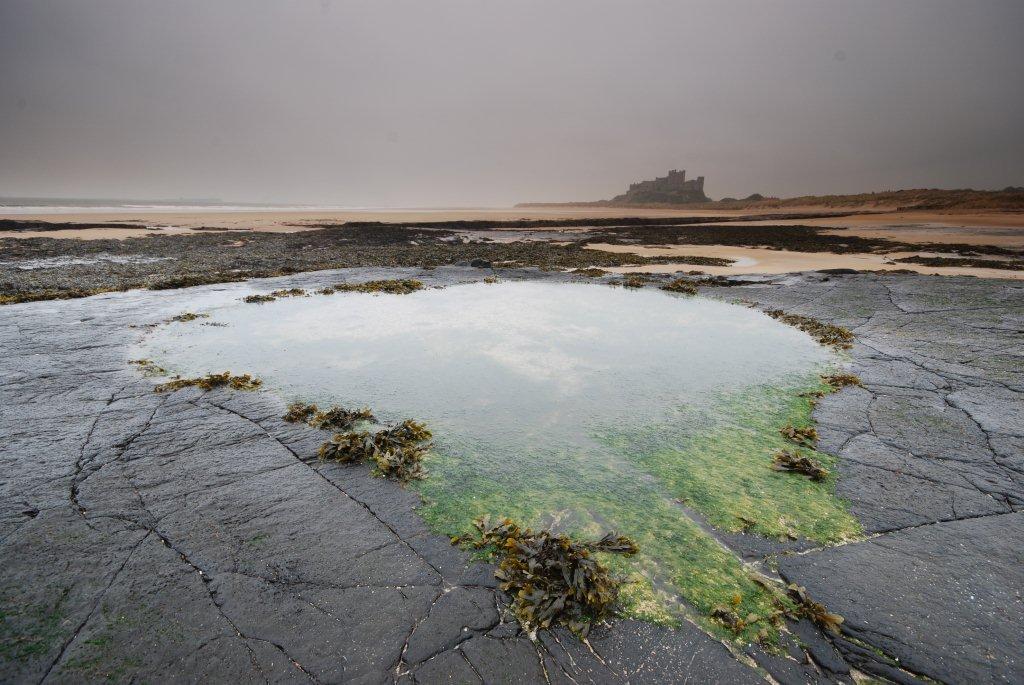
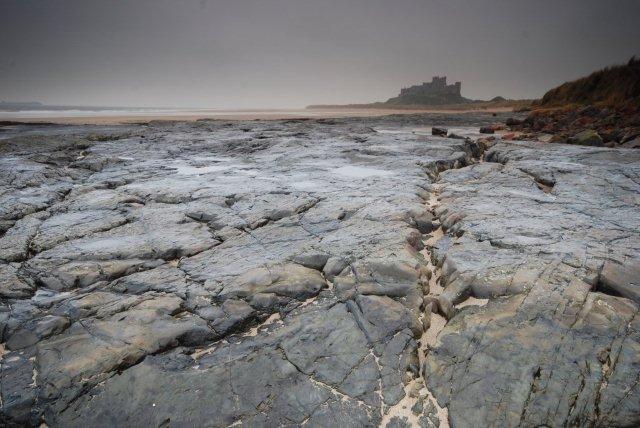
    Fortunately there are photographers who appreciate the ‘golden hour’ so, at 04:50 on Saturday, I met up with Doug at Bamburgh in the murk and gloom of what appeared to be pretty uninspiring light.  Things can usually be rescued though, and we looked at camera settings while it was still quite dark then, as soon as there was some light, we set about exploring  composition and exposure metering.  With a bright cloudy sky it was time for a bit of creativity; first exposure compensation, always a useful technique when a very dark, or a very bright, area is dominating the scene.  Then, the technique that comes into it’s own when there’s a wide range of exposure values between the sky and the foreground – Doug’s wide-angle lens has the same diameter filter thread as my mine and I got my set of ND graduated filters out of the car so he could reduce the brightness of the sky/increase the brightness of the foreground.  Dull and uninspiring was transformed into something much more dramatic, and the hours had flown by.  I’m really looking forward to seeing Doug’s images from the day, and I’ll be meeting up with him again on our Farne Islands photography workshop on 28th June.  We’ve got a couple of places available on that one, so give us a call on 01670 827465 if you’d like to come along and learn how to get more from your camera.

    Doug has very kindly provided us with two of his images from the day, which we think are superb 🙂 You can click the images to see full-size versions.

    Bamburgh Castle,beginners photography workshops,landscape photography workshops,landscape photography holidays Northumberland

    Bamburgh Castle,beginners photography workshops,landscape photography workshops,landscape photography holidays Northumberland