Category: Northumberland Coast

  • More shades of grey

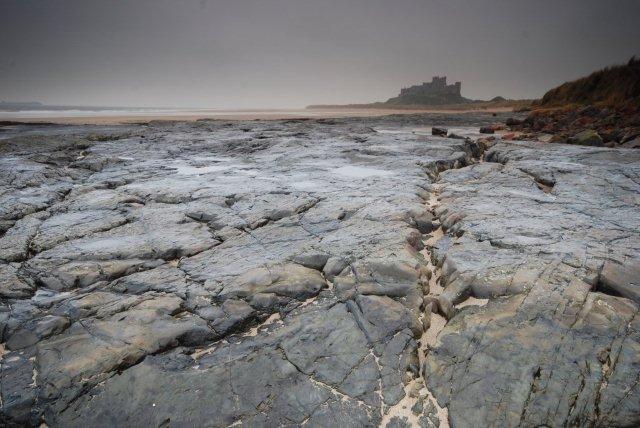
    Our Beginners Photography workshop on Saturday had got me thinking about an aspect of photography that I’ve neglected in recent years, but one which dominated much of my photography in the late ’80s and early ’90s – black & white.  Back then I spent much of my time composing, exposing, developing and printing landscapes and portraits in monochrome, but in the digital age I haven’t really given it much thought.  It isn’t unusual to see discussions about the relevance of b&w in this age of intensely saturated HDR images, but it makes challenging demands of the photographer.  Stripped of colour, the image relies on something else – dynamic, graphic, dramatic – to grab the attention.

    So, on Monday, I drove north on the A1 in heavy fog, which thankfully thinned a bit towards the coast.  After 4 hours of scrambling around Stag Rocks I composed the image that I’d pre-visualised, applied ND grad and ND filters to balance the exposure and slow the shutter speed right down and then waited for the tide 🙂

    Bamburgh Castle,Northumberland,landscape photography,landscape photography tuition,landscape photography workshops

  • Shades of Grey; Beginner’s Photography 29/03/2014

    Early starts aren’t for everyone – I was once approached by a photography tuition company who wanted me to lead some landscape workshops for them, and the conversation was odd, to say the least

    “Yeah, no problem.  If it’s in March we’ll start at 05:00, other times of the year will vary depending on sunrise time”

    “05:00?”

    “Yes, the best light of the day is around sunrise and sunset.  Early starts or sunset finishes, whatever works best for you”

    “Why would anyone want to get up that early?”

    “Because that’s the best time for landscape photography”

    “I’m not sure our clients would like that”

    “Okay.  How about December?  Later sunrise, so later start”

    “That’s the middle of the winter.  I don’t think our clients would like that either”

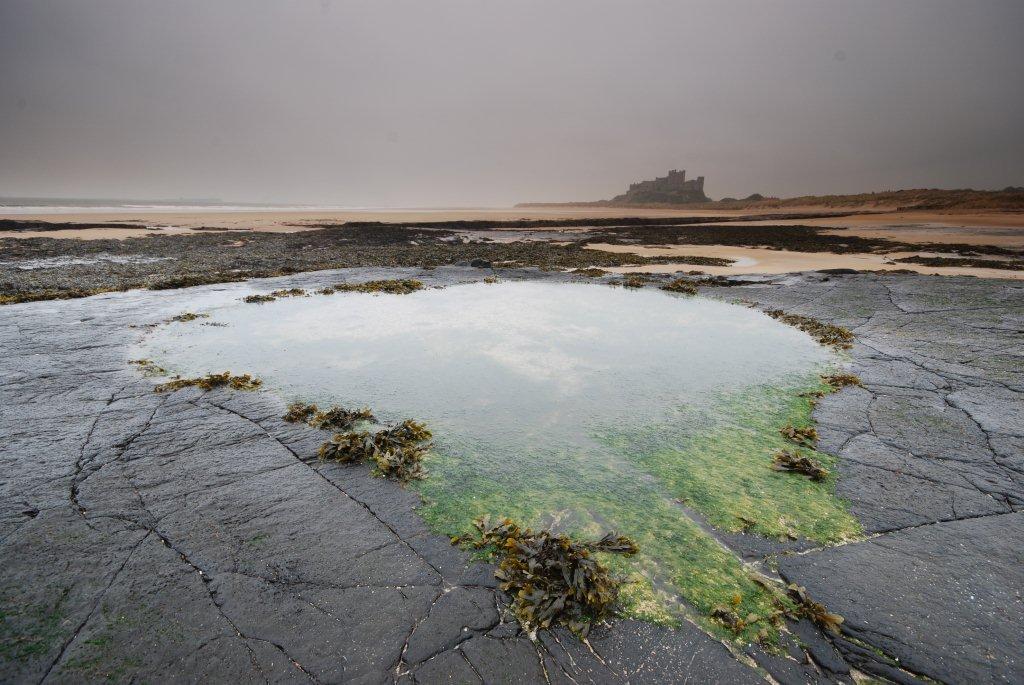
    Fortunately there are photographers who appreciate the ‘golden hour’ so, at 04:50 on Saturday, I met up with Doug at Bamburgh in the murk and gloom of what appeared to be pretty uninspiring light.  Things can usually be rescued though, and we looked at camera settings while it was still quite dark then, as soon as there was some light, we set about exploring  composition and exposure metering.  With a bright cloudy sky it was time for a bit of creativity; first exposure compensation, always a useful technique when a very dark, or a very bright, area is dominating the scene.  Then, the technique that comes into it’s own when there’s a wide range of exposure values between the sky and the foreground – Doug’s wide-angle lens has the same diameter filter thread as my mine and I got my set of ND graduated filters out of the car so he could reduce the brightness of the sky/increase the brightness of the foreground.  Dull and uninspiring was transformed into something much more dramatic, and the hours had flown by.  I’m really looking forward to seeing Doug’s images from the day, and I’ll be meeting up with him again on our Farne Islands photography workshop on 28th June.  We’ve got a couple of places available on that one, so give us a call on 01670 827465 if you’d like to come along and learn how to get more from your camera.

    Doug has very kindly provided us with two of his images from the day, which we think are superb 🙂 You can click the images to see full-size versions.

    Bamburgh Castle,beginners photography workshops,landscape photography workshops,landscape photography holidays Northumberland

    Bamburgh Castle,beginners photography workshops,landscape photography workshops,landscape photography holidays Northumberland

  • Look who’s stalking; bespoke photography 24/03/2014

    Monday was a day with the potential to go either way, and I was nervous.  I first met John when himself and Helen were on a North Sea pelagic in June last year and we found this little beauty.  This trip was something altogether different though – Helen had arranged a one-to-one photography day.  Our one-to-one days focus on whatever our clients would like to work on – sometimes techniques (exposure/composition/fieldcraft etc.), sometimes species (Black Grouse, Otter and Red Squirrel are just some of the ones we’ve helped clients to photograph) – and John’s request was to develop his techniques for getting good images of shorebirds.  Now, using fieldcraft developed over 40yrs is one thing when I’m in the field on my own…teaching it, with our subject right where it can see us, is slightly more challenging 😉

    I collected John from home in Morpeth and we headed north until we were in the impressive shadow of Bamburgh Castle.  Purple Sandpiper, Oystercatcher, Turnstone and Eider were all approached with stealth and patience before we made our way down the Northumberland coast to Druridge Bay, stopping off and stalking Bar-tailed Godwit, Curlew, Sanderling, Redshank, Grey Plover, Ringed Plover and Dunlin and finishing the day’s photography with the slightly easier proposition of Reed Bunting, Blue Tit and Lesser Redpoll at a feeding station before admiring the Red-necked Grebe that I first found back in mid-February – now in a much more attractive plumage than it was five weeks ago.

    John very kindly supplied some of his images from the day, for which we’re very grateful, so here they are 🙂  You can click on them to see the full size images, and please do get in touch with us if you’d like to get more from your camera equipment.

    Common Eider, Somateria mollissima, Northumberland, photography tuition, bird photography, one to one photography, bird photography holidays
    Common Eider
    Turnstone, Arenaria interpres, Purple Sandpiper, Calidris maritima, Northumberland, photography tuition, bird photography, one to one photography, bird photography holidays
    Purple Sandpiper and Turnstone
    Oystercatcher, Haematopus ostralegus, Northumberland, photography tuition, bird photography, one to one photography, bird photography holidays
    Oystercatcher
    Common Redshank, Tringa totanus, Northumberland, photography tuition, bird photography, one to one photography, bird photography holidays
    Common Redshank
    Sanderling, Calidris alba, Northumberland, photography tuition, bird photography, one to one photography, bird photography holidays
    Sanderling

  • Now you see them, now you don’t; mini-safari 22/03/2014

    To many people, the natural world around them is a bit of a mystery.  I’ve lost count of the number of times I’ve been in a hide, people have come in, gazed quizzically out of the shutters, very quietly said “there’s nothing here” and left…oblivious to all of the wildlife that was actually there 🙂  Sometimes though, there’s a lot of wildlife that even we haven’t noticed…

    I arrived at Church Point and collected Jillian and Clive & Lucie and Anna, and we set off on an exploration of the Northumberland Coast from Druridge Bay to Alnmouth.  A stiff breeze was ruffling the water’s surface as Cormorants roosted, with that look of prehistoric menace that they do so well, Little Grebes dived and Wigeon grazed.  Curlew flew by and, as several noisy pairs of Canada Geese and Greylag Geese honked in alarm at an unseen danger, I was wondering where the bigger goose flocks were.  We hadn’t heard them, there hadn’t been any distant skeins breaking the skyline, nothing in fact to suggest there were any other geese around.  Then, we had help from the heavens above…as the RAF Sea King helicopter flew over from the south.  Suddenly, the sky was filled with nearly one thousand agitated, yapping, Pink-footed Geese.  They’d presumably been feeding just out of view behind a hedge, quietly getting on with the serious business of feeding up ready for the journey back north that they’ll soon be undertaking.  As the helicopter disappeared to the north the geese settled back down, and again they were very unobtrusive.

    Our dusk destination was a little stretch of river that we’ve visited regularly in recent weeks.  Moorhens were patrolling the reed edges, a Grey Heron flew across the river and perched in a tree, before  flying westwards towards the sunset behind another heron, Sea Trout were swirling, leaping, and sipping hapless insects from the surface and the only thing missing from the idyllic setting was our favourite predator…

  • More five star birdwatching; Northumberland coast 24/02/14

    Yesterday continued to lay to rest the myth that February is a quiet month…

    Starting in the north of the county, overlooking the iconic landscape of Holy Island, brought the expected waders and wildfowl, and three lifers for Paul and Katie, who were back for another day out with us, following a trip in 2009; Common Scoter, Long-tailed Duck and Twite. A Peregrine muscled its way menacingly through the air above a flock of Dunlin, Grey Seals were ‘bottling’ at high tide and Bar-tailed Godwits, Redshank and Curlew were probing the soft exposed mud as the tide began to drop.  Eider, Shelduck, Red-throated Divers, Wigeon and Teal were all at or near the water’s edge and the songs of Skylark and Yellowhammer reverberated in the warm sunshine.  Perhaps the highlight of the morning was a bird that is always breathtaking; sailing elegantly into the stiff breeze, a male Hen Harrier was tracking along a hedgerow heading inland 🙂

    The afternoon brought Paul and Katie’s fourth lifer of the day, a Red-necked Grebe, with Little, Great Crested and Slavonian Grebes all close by for comparison.  Two Avocets were rather unseasonal, a pair of Pintail exuded elegance, drake Goldeneye looked very smart in their contrasty breeding plumage, Red-breasted Mergansers looked quite, well, comical as they always do and two Brown Hares were sitting motionless in a nearby field.  With 30 minutes until sunset a small flock of Starlings flying in from the north led to me suggesting that we go and see where they’d gone, and to check if there was going to a significant murmuration…

    What followed was, quite simply, one of the most remarkable things I’ve ever witnessed.  Initially the Starlings were about a mile south of where I expected them to roost, and there were a lot of them.  Soon two other large flocks merged with them and they moved slowly north, eventually passing directly overhead with the sound of wingbeats like a gentle breeze rustling through a forest.  The murmuration drifted away to the south again, then back north.  Almost an hour had passed when the activity levels within the flock were ramped up.  Twisting and turning with more urgency, the density of birds in different parts of our view coalesced to form writhing shapes from the previously uniform oval.  With light levels fading, the birds vanished from sight, only to betray their presence in a series of shapes that resembled a slug, then a snail, then a car.  We soon lost them in the gloom again, only for the finale to the evenings proceedings to take us all by surprise as the flock compacted over the reedbed where they were going to roost, forming a dense arrowhead as they funneled into the reeds.  With the first birds down in the reedbed, the rest of the flock wheeled slightly higher, then repeated the maneuver, a second arrowhead driving into the reeds.  A third, then a fourth, cohort entered the roost and all was quiet.  Fade to black…

  • Five star birdwatching; Northumberland Coast 20/02/14

    Our fourth trip this week was a day birdwatching with Simon, who was back again after previous trips including a stunning Farne Deeps pelagic in 2012.  We’d spoken in advance of the trip and Simon was keen to add a few of Northumberland’s wintering birds to his life list; divers, grebes, Purple Sandpiper and Brambling were all mentioned as desirable.

    When I arrived to collect him on Thursday morning, I was still wrestling with the challenge of heading inland for Brambling, yet leaving plenty of time to explore the Northumberland coast.  That worry was quickly taken away, as putting a feeder up outside the holiday cottage meant that Simon had found one of the species on his wish list himself 🙂  Covering most of the coast from north to south produced five lifers;  Red-throated Divers just beyond the surf, Long-tailed Ducks including a breathtakingly beautiful drake, Purple Sandpipers unobtrusively poking around in rock pools, displaying Goldeneye rivaling the attractiveness of the Long-tailed Ducks and, as the afternoon light faded and the rain finally arrived, a very obliging Water Rail.  Twite, Stonechat, Yellowhammer, Reed Bunting, Skylark, Marsh Harrier, Slavonian, Little and Red-necked Grebes, Shelduck, Bar-tailed Godwit, Dunlin, Grey and Golden Plover, Lapwing, Gannet, Curlew, Teal, Mallard and Wigeon may have been reduced to a supporting role for the day, but all combined to produce an excellent day’s birdwatching on the Northumberland coast 🙂

  • A trio of Grebes and a splash in the gloom

    Tuesday and Wednesday were mini-safaris for one family, but different participants each day; Sue, Phil, Sandra and Inez on Tuesday and Sue (again), Jacqui, Paul and Hannah on Wednesday.

    Both days featured lots of waders and wildfowl; Redshank, Common Snipe, Curlew, Lapwing, Dunlin, Bar-tailed Godwit, Goldeneye, Pintail, Tufted Duck, Gadwall, Mallard, Teal, Wigeon and Red-breasted Merganser were all very obliging, with the ducks particularly stunning, and the Goldeneye engaging in their quite captivating display.  Moorhens picking scraps off a skeleton at the edge of Cresswell Pond were described as ‘totally gross’ by Inez, and it isn’t easy to argue with that summation 🙂

    Although the two days were similar, there were some notable differences; Tuesday produced Slavonian and Red-necked Grebes, alongside the Little Grebes that we saw on both days, and Wednesday featured Water Rail and Roe Deer.  Wednesday also produced a very brief Otter encounter, as a dark shape rolled at the surface in the deepening gloom, crossed the river and rolled again as the local Mallards stared in terror into the darkness.

  • Winter Wonderland Day One 04/12/2013

    As I met up with David for breakfast at The Swan on Wednesday morning, ahead of two days on the Northumberland coast, we’d already switched our itinerary round.  The plan to visit Holy Island on Thursday looked as though it might be slightly impacted by the weather, so we switched Druridge Bay to that day instead.

    The drive north on the A1 was in glorious weather, with Common Buzzards soaring low over plantations in the chill of the early morning and we were soon on Holy Island in a stiffening breeze, carefully stalking towards a flock of Dark-bellied Brent Geese that posed for David’s camera.  Bar-tailed Godwits, and a lone Black-tailed Godwit were probing the exposed mud of the harbour at low tide and Wigeon and Teal were on the Rocket Pool.  A Common Kestrel was hovering nearby and, as the tide turned, we headed to the causeway to see what would be pushed towards us by the advancing water.  Redshank, Curlew, Dunlin, Bar-tailed Godwit, Shelduck and a Little Egret all fed along the swelling channels

    Eurasian Curlew,Numenius arquata,Northumberland,birdwatching holidays,photography holidays,Holy Island,Lindisfarne

    and then a mass of Pale-bellied Brent Geese flew in from the south.  As the water began to lap at the edge of the causeway we drove back on to the mainland, and headed to a quiet stretch of shoreline where I knew David could use the cover of a hedgerow to approach a flock of Pale-bellied Brents whilst avoiding detection.

    Pale-bellied Brent Geese,Branta bernicla hrota,Holy Island,Lindisfarne,Northumberland,photography holidays,birdwatching holidays

    Using the car as a photographic hide (something of a theme  for the holiday!) we got very close views of a flock of Wigeon,

    Eurasian Wigeon,Anas penelope,Holy Island,Lindisfarne,Northumberland,birdwatchinf holidays,photography holidays,northern experience wildlife tours

    and then we settled in the iconic shadow of Bamburgh Castle and scanned the sea in temperatures that were now bone-chilling 🙂  Purple Sandpipers, Turnstones, Oystercatchers and Redshank were roosting just above the water line and beyond the rafts of Eider were flocks of Common Scoter, with one large group of females looking stunningly orange in the beautiful late afternoon sunlight.  Long-tailed Ducks played hide and seek, utilising their propensity for diving, and the developing swell, to keep me on my toes as I located a group with the ‘scope so that David could see them.  Scanning the scoter flocks paid dividends as a female Velvet Scoter rose up and over one advancing wave crest, Red-throated Divers cruised along in their eternal search for fish and a last scan before we headed back down the coast produced a Slavonian Grebe.  As it turned dark, the clear sky afforded excellent ‘scope views of the crescent Venus, and the thinnest sliver of crescent Moon.  So soon after New Moon would be a spring tide, and the one forecast for the following day was predicted to be a big one…

  • Waders and wildfowl; Northumberland Coast 30/11/2013

    Did you hear the one about the Leeds fan, the Liverpool fan and the Hull City fan who had a day out birding in Northumberland?…

    I collected Andy and Sue from their hotel in Bamburgh and we headed south for a day around Druridge Bay and the southeast Northumberland coast. In glorious early morning sunlight, a very obliging Common Buzzard was perched on a hedge by the road and we were soon admiring the first of several species of duck that we were to encounter during the day with two pairs of Eider on the River Coquet. Sue spotted two Roe Deer as Redshank and Curlew were pottering along the water’s edge, Turnstone were engaged in using their heads to turn over large heaps of seaweed and a Little Egret flew upstream.  Sanderling were skittering back and forth along the gently breaking surf and Bar-tailed Godwits and Ringed Plover were on the beach as ghostly white Mediterranean Gulls soared overhead.

    Ducks proved to be a theme for the day, as did large numbers of Curlew, with Gadwall, Mallard, Red-breasted Merganser, Tufted Duck, Scaup, Teal, Wigeon and, probably the most stunning of all, two Long-tailed Ducks at Druridge Pools.  A Black-necked Grebe was a picture of elegance in black and white, and small skeins of Pink-footed Geese were heading south.  Starlings were massing as dusk approached and we headed back towards Bamburgh as darkness decended.


  • Eye to eye with the predator; Bespoke Photography 21/10/2013

    The chilly morning air was biting as I arrived in Seahouses to collect Peter, Caroline and Aidan.  With camera gear loaded into the back of the car we headed down the Northumberland coast with two species in particular on our target list for the day – one relatively easy, one slightly less so…

    I’d planned the morning to take in a couple of sites for Red Squirrel, and the early afternoon to stake out a regular Otter spot.  So, Red Squirrel is the relatively easy species out of those two…but the first rule of wildlife photography should be ‘wildlife doesn’t perform to order’ and both sites we visited, which have healthy populations of Red Squirrel, didn’t produce any sightings.  That’s often the case though when it’s damp, cool and breezy, so we headed on in search of our second target for the day.  After a brief stake out of a handsome male Stonechat we made our way to the edge of a pond, and were told by another birdwatcher who was there that he’d seen an Otter just 15mins earlier, and it had headed across the pond.  I looked across in the direction he thought it had gone…and the entire bank was lined with ducks and geese.  A good sign; the Otter had obviously spooked them out of the water but it must be still somewhere in the pond, as all of the birds were staring intently.  I couldn’t see any disturbance in the water in that direction though and I was just remarking that I thought the Otter could still be nearby, when it surfaced in front of us 🙂  For the next couple of hours we were treated to regular feeding sorties as the sinuous mustelid caught fish after fish, including at least one large Flounder.  Cormorants and Grey Herons were fishing too, a Water Rail put in a couple of typically fleeting appearances, Common Snipe were prodding, probing and miraculously vanishing in short vegetation, Lapwing, Curlew and Redshank were roosting, calling and occasionally flushing, Mallard and Teal kept standing to attention every time the Otter was close by, a murmuration of Starlings away to the north disbanded into smaller flocks that flew straight over our heads and seven Little Gulls danced their dainty flight back and forth over the pond.  Perhaps the moment of the day though, was when the Otter appeared around the edge of a reedbed and started straight into Aidan’s camera lens.  The second rule of wildlife photography should be ‘…and sometimes it does’ 🙂