Tag: Kittiwake

  • Back to school

    Occasionally I still get to do the whole school teacher role…but it’s enjoyable for me and my students 🙂

    I met up with Carol at Seahouses Harbour last Saturday for an all-day one-to-one photography session, only to learn the inevitable – conditions weren’t suitable for landing on Staple Island, so we were going to be sailing at noon, and spending 3hrs on Inner Farne.  We had a wander down the coast and worked through all of the relevant settings on Carol’s camera, so that once we were on the island and the air was filled with birds, the only thing to concentrate on would be technique; camera settings were all sorted and should take care of themselves 🙂  It was a rewarding afternoon as Carol soon worked out where to stand to get the shot she was after, how to decide which bird to follow through the lens and when to hit the shutter release.  Minor adjustments to camera settings were made as needed and the birds offered lots of opportunities.  Puffins, Razorbills, Guillemots, Fulmars, Kittiwakes and Shags all passed before the lens and Carol was delighted at her ability to capture that classic Farnes shot of a Puffin flying with beak filled with Sandeels.
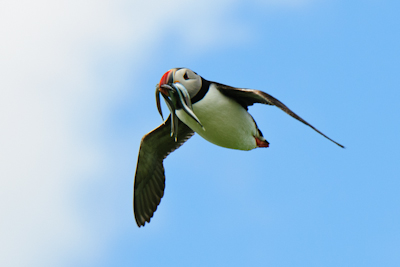
    bird photography holidays,bird photography tuition,Atlantic Puffin,Fratercula arctica,Inner Farne,Farne Islands,Northumberland,www.northernexperienceimages.co.uk

    Tuesday brought another Farnes photography session, this time the latest in our Beginners Photography series.  Dave had been with us on our Dawn on the Coast session in April, and was back for something a bit warmer at a more civilised time of the day 🙂  We sailed around the islands before landing on Inner Farne.  Puffins were again flying by with substantial beakfuls of Sandeels and the cold southerly breeze was a reminder of the often harsh conditions faced by the Farne Islands birds (and Rangers!), even during the summer months.  I’ll be giving a talk about the Farne Islands at the Bird Fair at Rutland Water this year so if you’re there please do come along and find out more about this extraordinary wildlife experience.

  • Seabird Spectacular 10-13 June 2013; birdwatching on the Northumberland coast

    Arriving at The Swan on Monday evening I met up with Ronnie and Liz at the start of our Seabird Spectacular holiday.  Of all of our holidays, this is the one that concentrates on the really outstanding wildlife available on the Northumberland coast in the summer.

    Tuesday started out very nice, although cloud cover was increasing and, by lunchtime, eventually it was overcast, misty and spotting with rain.  We’d spent the morning around Druridge Bay, with one of the highlights being a very obliging male Reed Bunting who sat just a few metres away from us and sang for over 20 minutes, Wall and Green-veined White Butterflies flitted across the tracks ahead of us, Sedge and Reed Warblers played hide-and-seek in the edge of the reeds and a male Marsh Harrier quartered a reedbed, giving prolonged views at relatively close range.  As we ate lunch, overlooking the North Sea, watching Eiders, Guillemots, Kittiwakes, Fulmars and Gannets, the southeasterly breeze was starting to build a noticeable swell…

    The inevitable happened and our planned sailing around Coquet Island was cancelled on safety grounds, so we continued around Druridge Bay.  Sandwich Terns and a Grey Seal were near the weir between Amble and Warkworth and we ended up watching five Otters as they munched their way through a feast of Eels 🙂 A Great Northern Diver flew south between Coquet Island and the mainland and we could see clouds of Puffins and a few ghostly white Roseate Terns from our clifftop vantage point.  Swifts were around in good numbers – a scythe-winged menace to flying insects – and at the end of the day we returned to The Swan and were joined for dinner by Sarah.

    After Tuesday’s cancelled boat trip it was a relief to see that the wind had died down by Wednesday morning, and our all-day birdwatching trip to the Farne Islands went ahead as planned.  There were lines of Puffins, Guillemots and Razorbills streaming back towards the islands, Gannets were effortlessly heading either to or from the Bass Rock, and the sights, sounds and smells of the seabird colony were just a few minutes away when we came across two Harbour Porpoises. Cormorants and Shags perched sentinel-like  on the Scarcar rocks and landing on Staple Island we watched Guillemots, Fulmars, Kittiwakes, Puffins, Razorbills, Shags and Rock Pipits at close range before having our picnic lunch in superb weather conditions on this magical rock just a few miles offshore from the Northumberland coast.  Transferring across to Inner Farne at 13:00, via a brief detour to look at the Grey Seals lazing in the sunshine, we were greeted by Head Ranger David Steel and then enjoyed the very different experience of running the gauntlet of a succession of angry Arctic TernsCommon and Sandwich Terns were around too, and we watched Puffins skilfully avoiding the attention of Black-headed and Lesser Black-backed Gulls.  A pair of Rock Pipits nesting beneath the boardwalk were carrying beakfuls of food and I had a Farnes ‘tick’ in the shape of a Swift soaring over the lighthouse buildings.  We tried to find a Roseate Tern in amongst the roost by the Inner Farne jetty, but without success.  Back to The Swan for tea, reflection on a successful day and my Plan B…

    Today was planned to be a one-day extension to the holiday, visiting the North Pennines, but we’ve moved that to tomorrow and the ladies have an extra afternoon out with me, to take the boat trip around Coquet Island 🙂

  • Birdwatching on Holy Island 29/05/2013

    After collecting Stephen for his second trip of the week, we drove north and met Susan near Holy Island, for her third trip in four days.  Our Lindisfarne safaris are always an interesting guessing game, other than in the winter when we know that we’ll find vast flocks of waders and wildfowl – although even then there’s the unknown quantity of wintering raptors.

    We started down the coast in the shadow of Bamburgh Castle; sheltering from the wind and rain, we watched Gannets soaring effortlessly, Common Scoter and Eider riding the swell like the most accomplished surfers in the world, Fulmars and Kittiwakes fighting into the stiffening breeze and a Red-throated Diver sliding beneath the waves and resurfacing out of sight.

    What would appear at first glance to be a long line of boulders, exposed at low tide, resolved through binoculars, as expected, into several thousand Grey Seals.  The ‘hook-nosed sea pigs’ (surely the most unflattering translation of the Latin name for any animal) were lazing on the exposed sand

    On Holy Island itself the weather improved dramatically and we watched a flock of Ringed Plover and Dunlin in the harbour, with a surprise find in the form of a Little StintMeadow Pipits were song-flighting, Skylarks rose higher and higher, delivering their outstandingly complex songs, and Lapwings were tumbling over nearby fields as we worked our way slowly along a hedgerow getting close views of Dunnock and House Sparrow, and listening at close range to the repetitive notes of a Song Thrush.  Surprise find of the day was a group of eight Roe Deer between Chare Ends and the Straight Lonnen.  We’ve seen them on the island before, but never so many together at once.

    After a day with two enthusiastic clients who had been excellent company on multiple trips during the week, it was time to drop Susan off and take Stephen back south.  Sometimes, I think what really makes our trips work is the clients that we have 🙂

  • Every cloud has a silver(y) grey lining

    Our final full-day pelagic for 2012 was on Saturday and, although I was really looking forward to it, it’s always a shame when we reach the end of our offshore season.

    With strong winds on Thursday, and charter boats cancelling trips on Friday, I still felt that we’d be able to sail.  We gathered at Royal Quays just before 09:00 and boarded the SarahJFK.  Brian spotted a Great Spotted Woodpecker just after we set sail, and as we headed downstream we could see a little bit of swell and a few whitecaps offshore.  A skein of Pink-footed Geese high overhead were heading south, and we weren’t too far out of the river when we had our first skua of the day; and it was one of those ‘is it, isn’t it?’ moments as what was probably a dark Pomarine Skua flew north low over the waves.  Three Great Skuas were heading the same way, and another one later caused a ‘dread’ amongst the birds gathered round a fishing boat.  Fulmars and Kittiwakes were with us throughout most of the day and Gannets were soaring by on the breeze.  Our first Sooty Shearwater was in a raft of gulls behind a trawler, and we had at least five more during the day.

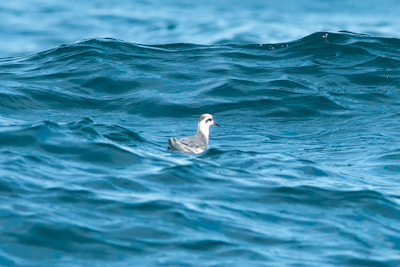
    As the swell began to ease slightly we were 8 miles off Cresswell, heading north west, when I saw two small waders flying up and over a wave crest.  As they dropped onto the sea I shouted “Grey Phalaropes!” and called to Allan to stop the boat.  Eventually we all had excellent views of these two tiny birds as they bobbed about in the swell.  They were the 2nd and 3rd that I’ve seen on pelagics I’ve organised, following the 1st out in the Farne Deeps in 2010.

    Grey Phalarope,Northumberland,bird photography,pelagic birdwatching trips,pelagic wildlife trips

    Grey Phalarope,Northumberland,bird photography,pelagic birdwatching trips,pelagic wildlife trips

    Grey Phalarope,Northumberland,bird photography,pelagic birdwatching trips,pelagic wildlife trips

    We headed towards the coast, and turned to make our way back towards Royal Quays.  Our only Manx Shearwater of the trip was followed soon after by a Pomarine Skua, found by Cain, six Red-throated Divers (including four flying south together), 42 Pale-bellied Brent Geese heading north, 20 Wigeon and 30 Common Scoter.  With only one Manx Shearwater, and no Arctic Skuas at all, this was quite an unusual pelagic but, if you like waders, and you like seabirds, then phalaropes are a dream bird 🙂

  • A Whale of a time on a millpond

    Our ‘Whale and Dolphin Cruise’ has become an integral part of the Northern Experience Pelagics annual itinerary, and with an excellent weather forecast for yesterday’s sailing (and some detailed discussions between Martin and our skipper, John) optimism was running high.

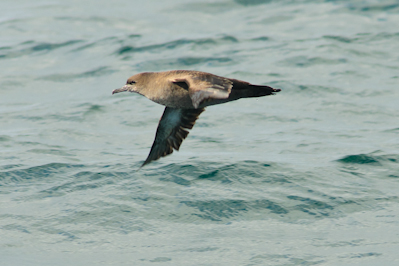
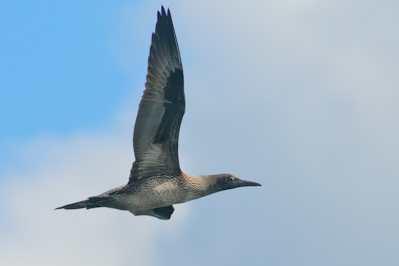
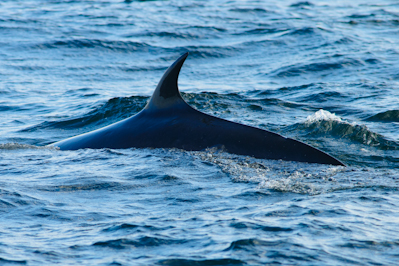
    As we boarded Glad Tidings 5 with 50 clients, there was a really sociable atmosphere.  Plenty of returning clients, and lots of new faces, were soon scanning the sea all around the boat.  Martin started in the wheelhouse with John and they soon spotted a distant whale surfacing.  The quite young animal surfaced again as we passed, another could be seen away to the north near the Farne Islands, and we headed in the direction of a feeding frenzy of Gannets.  Another whale appeared, then another, and another.  All told, in 4 hours we had 5 or 6 different Minke Whales 🙂  Gannets provided a spectacular wildlife experience as vast flocks plunged into the sea in search of Herring, 3 Sooty Shearwaters soared effortlessly past the boat, a single Great Skua carved a path through the circling mass of Gannets, Fulmars glided by on stiff outstretched wings, a small flock of Kittiwakes lifted from the water as the boat approached, and one of the largest cheers of the day came when a small pod of Harbour Porpoises surfaced just ahead of us.  Martin was kept busy, answering lots of questions from our very enthusiastic clients about whales and dolphins in the North Sea, and managed to grab a few images as well 🙂

    Sooty Shearwater,Northumberland,North Sea,pelagics,bird photography
    Sooty Shearwater
    Northern Gannet,pelagics,North Sea,Northumberland,bird photography
    Northern Gannet
    Northern Gannet,North Sea,Northumberland,pelagics,bird photography
    Northern Gannet
    Minke Whale,whale watching,dolphin watching,North Sea,Northumberland,pelagic,wildlife photography tuition
    Minke Whale
    Minke Whale,whale watching,dolphin watching,North Sea,Northumberland,wildlife photography tuition
    Minke Whale
    Minke Whale,whale watching,dolphin watching,North Sea,Northumberland,wildlife photography tuition
    Minke Whale
    Minke Whale,whale watching,dolphin watching,North Sea,Northumberland,wildlife photography tuition
    Minke Whale

  • Against the light

    In near-perfect conditions we arrived at Seahouses yesterday evening for our 3hr coastal cruise on Ocean Explorer.  As well as some of our ‘regulars’ we had Andy, Jan and Sam on board, on their final evening in Northumberland.

    Soon after heading south down the coast towards Dunstanburgh we came across a couple of Harbour Porpoises.  Typically shy, they surfaced a few times and then vanished into the depths.  Gannets featured throughout the evening, passing both north and south, and one or two were seen diving.  Puffins, Guillemots and Razorbills were bobbing about on the water and a mixed flock of Arctic and Common Terns and Kittiwakes had found something to hold their interest.  We stopped to see if anything else would come along, and were soon joined by a Fulmar, stunning in the beautiful light.

    Fulmar,bird photography tuition,Northumberland

    We gradually headed north, and approached the Farne Islands as the sun began to set.  Grey Seals poked their heads out of the water and came off the rocks to investigate our boat, Cormorants and Shags perched sentinel-like on the rocky islets, Turnstones prodded and poked their way around the edge of the mass of Seals and Sam punched the air in elation as his first Curlew flew by 🙂  The setting sun provided an opportunity to experiment with an aspect of photography that I’ve never really been able to get to grips with, and one which I’ve always been fairly ambivalent about.  Excellent light, excellent location, all the ingredients were there to convince me…

    Farne Islands,Inner Farne,Northumberland,landscape photography tuition,seascape photography


    Farne Islands,Northumberland,landscape photography tuition,wildlife photography tuition,seascape photography

  • A damp day in North Northumberland

    As I got home on Tuesday night after our evening pelagic the rain was still hammering down.  With a forecast of more rain for Wednesday, and a planned Farne Islands safari, I started thinking about a contingency plan as I dried off all of my camera equipment.

    Wednesday dawned…with more heavy rainfall.  I needed an idea of what was happening further north and a quick text to William was soon answered; the rain in Seahouses was light and sea conditions were fine so boats were sailing 🙂  I collected Louise and Martin from Warkworth and we headed north along some decidedly damp roads.  A morning birdwatching on the Northumberland coast, including Grey Seal, Roe Deer, Swallow nestlings, Shelduck, Eider, Curlew, Oystercatcher, Redshank and a very obliging Whitethroat, was followed by a lunch break just north of Bamburgh Castle, and then it was time to board Glad Tidings for the sailing across to the islands.  With a bit of swell on the sea, a chilly wind kicking spray from the bow, and another oppressive sky the islands were incredibly atmospheric.  Puffins were sitting in huge rafts just off the islands, Guillemots and Razorbills were flying back to the cliff ledges with fish, Gannets were soaring majestically by the boat, Grey Seals lazed in the surf and Kittiwakes called incessantly from their precipitous nest sites.  As we landed on Inner Farne the aerial bombardment from the Arctic Terns was much reduced from the level of recent weeks, and there were plenty of young terns trying out their wings in short flights across the boardwalk.  Sandwich Terns were carrying food back to quite large chicks and the island seemed to be awash with Puffins.  Every flat area next to the sheer cliff faces was covered in them and hundreds were flying around the island.  Louise, like many of our clients when seeing Puffins for the first time said “Aren’t they small”.  Everyone expects them to be bigger than they actually are.  Kittiwake chicks were almost too big for the nest ledges, and Razorbills and Guillemots were watched at close quarters too.  With the poor weather the number of visitors to the island was quite low, making for quite a different experience to our trips earlier this year when all of the boats were full.

    Most of our Farne Islands trips this year have been on Glad Tidings 1, and Bobby and Billy always keep their passengers entertained.  Now, as I look out of my office window while I’m typing this on a fine, dry, sunny afternoon, Bobby’s words, as he delivered us safely back to Seahouses come to mind “Aye, it’s improved.  Now it’s like a fine autumn day rather than a bad winter one”.

  • Some Hobby

    Wednesday was a trip that I’d been looking forward to for some time.  Syd is a regular client, and always very entertaining, and this time around his son Gavin was booked with him as well, for a Farne Islands safari.

    With plenty of comments on Twitter in the weeks leading up to the trip, we were all praying for good sea conditions for the day.  The forecast suggested that the afternoon could be a bit wet so I thought about visiting Staple Island instead of Inner Farne, before satisfying myself that it would stay dry for us in the afternoon and sticking with my original plan of walking along the dunes at Newton in the morning, and catching the 1pm boat to Inner Farne.  The morning walk produced lots of Skylarks and Meadow Pipits as well as Common Blue Butterflies and Northern Marsh, Pyramidal and Bee Orchids. The tern colony was a hive of activity, with the Arctic Terns bringing food to their chicks and some  Little Terns engaging in some late season breeding activity.  While we were there, the terns kept lifting from the dunes in a ‘dread’ but the source of their concern wasn’t immediately obvious.  Myself and the wardens commented that it was what we would expect if a Peregrine was passing over, but scanning the sky overhead didn’t produce the menacing shape of that particular predator.  Eventually we did spot a raptor, although not an expected one, as a Marsh Harrier flew south along the fields inland from the terns.  After having our lunch stop in the shadow of Bamburgh Castle, we took the short drive to Seahouses.  Approaching Monk’s House Pool, Syd and Gavin had the bird of the day as a Hobby flew north over the roadside fields.

    We boarded Glad Tidings IV for the journey across to the islands and sat next to local birder TC, who had watched all of the hirundines in Seahouses start alarming…just a few minutes before the Hobby was between Seahouses and Bamburgh.  After the sailing around the islands, with their Grey Seals, Guillemots, Razorbills, Puffins, Kittiwakes, Fulmars, Shags and Common, Sandwich and Arctic Terns, we landed on Inner Farne and Gavin concentrated on photographing Puffins.  We were ‘treated’ (if that’s the right word…) to an example of just how cruel nature can be as a Kittiwake chick wandered away from it’s nest and towards the edge of the ledge.  It turned back from the edge, made it’s way unsteadily back to the nest, and was promptly tossed over the edge of the cliff by the adult!  As it landed on the next ledge down, it was attacked and killed by 2 juvenile Shags in front of a group of horrified onlookers.

    After nearly 2 hours on Inner Farne, we boarded Glad Tidings for the journey back to the mainland…and the first few drops of rain fell as we reached the top of the steps on the harbour 🙂

  • Farne Islands 11/06/2012

    Monday was an all-day Farne Islands Safari with Mike and Maggie, who I was really happy to meet up with again after their two trips with us last October.

    All-day trips to the islands always face one particular hurdle – landing on Staple Island.  Big tides and any appreciable swell make getting on to the island an interesting proposition and, after our boatman had looked at the swell and decided it wasn’t safe, we had a tour around the outer islands before returning to Staple as the tide fell.  This time all were able to disembark safely, although a number of passengers were struggling to follow the very clear instructions they had been given by Billy and Bobby about how to get off the boat and on to the island!

    Staple is always a popular island with our clients.  You can get on with your photography without the constant aerial bombardment from the Arctic Terns that make Inner Farne such an exciting place to visit 😉  Mike has the same camera that I use so we went through the custom settings to make photographing birds in flight a (slightly) easier proposition, and I settled to spotting approaching photo opportunities while Mike concentrated on the scene through his viewfinder, with Puffins, Guillemots, Razorbills, Kittiwakes, Shags and Fulmars all performing well.  Inner Farne in the afternoon was a different proposition altogether; early June is the time when the Arctic Terns are at their most defensive and aggressive – pity the visitors who turned up without hats 🙂  Judging wind speed and direction, and the position of the Sun, led us to the right spot to photograph Puffins as they arrived back from their fishing expeditions and Mike was able to put his newly learned techniques into practice.  After a day,which seemed much too short, we were on our way back to the mainland, and discussing Mike and Maggie’s next trip north and what we’d do next time.  When the company of our clients is as enjoyable as the wildlife, it’s always a good day 🙂

  • North East Marine Wildlife Festival Pelagic 10/06/2012

    Our Marine Wildlife Festival pelagic trip should have taken place on Saturday, but the poor weather led to several ‘phone calls and e-mails, and a re-scheduling to Sunday instead.

    We lost a few participants who couldn’t make the rearranged date, but we gathered a few extras on Saturday/Sunday too, and arrived at Seahouses Harbour full of enthusiasm for our first pelagic trip this year.  In the extremely capable hands of John, onboard Glad Tidings V, we headed across to the Farne Islands and the Guillemots, Razorbills, Puffins, Shags, terns, Kittiwakes, Fulmars and Grey Seals.  After a journey through the islands we sailed south and then east before heading back north along the coast.   Harbour Porpoises provided the cetacean interest, lots of Gannets were soaring majestically by and three Manx Shearwaters flew north.  The number of positive comments by text, e-mail and ‘phone, since Sunday evening has been great and it’s always good to see how much people appreciate the marine environment of the North Sea, even if it sometimes seems impenetrable.

    Bird of the day though, was the one that was only seen by a couple of very lucky participants.  We were a couple of miles south of the islands when someone asked the question “Martin, which Storm-petrel is it likely to be that we saw back there?”…