Tag: Golden Plover

  • Bittern by the birdwatching bug; Druridge Bay 01/10/2013

    The cold wind that had developed during Monday was still whipping across the Northumberland coast as I collected Sara from Church Point for an afternoon birdwatching around Druridge Bay.  Newbiggin Bay was an impressive mass of rolling swell and white water as we headed along the coast.

    Damp, cold and misty were the conditions for the afternoon, but there were plenty of birds to hold our attention.  with Ruff, Black-tailed Godwit, Curlew, Dunlin, Lapwing, Curlew Sandpiper and Golden Plover still around from the day before it was good to find another wader species; a small flock of Dunlin flying by caught my eye, not so much because they were Dunlin, but because there were two smaller birds flying with them.  Small enough to only be stints of some description, they resolved through the telescope into Little Stints and, as Sara watched them through the ‘scope, I sent a text to Ipin, so that he could get them on his patch list for the year…and he repaid me by describing me as Scotland Gate’s second best wildlife tour leader 🙂

    In the increasing murk we headed to East Chevington and had two Bramblings flying overhead and calling.  A reported Corncrake didn’t show itself, but there was an odd call, that I’ve never heard before, coming from a patch of rank grass just a few metres away from us…

    Probably the bird of the afternoon was an unexpected surprise; as Sara watched the assembled waders through the ‘scope, and skeins of Pink-footed Geese lifted from nearby fields with calls rising to a crescendo as they approached the pool, I was scanning around the water’s edge…and a Bittern walked out of the reeds and into full view 🙂  For a few minutes we were treated to excellent views of this strange skulking heron.  It seemed to be confused as to where it was in relation to the reeds as it suddenly stood upright and stretched it’s head and neck skyward in the classic ‘bitterning’ pose.  When it finally took flight, it was mobbed by a flock of Lapwings before dropping out of sight into a reedbed…where it was soon joined by the members of a Starling murmuration 🙂
  • Birdwatching in an iconic landscape; Lindisfarne 23/09/2013

    After two long hard days offshore (8hr pelagic on Saturday – blog post coming soon! – and 14hr offshore on Sunday for a North East Cetacean Project transect survey) today brought some light relief from the rolling swell of the North Sea as I headed north to Seahouses to collect Phil and Ann (who had won a morning out with NEWT in a competition on Visit Northumberland) and Rachael and Alex, who by happy coincidence were all staying at St Cuthbert’s House.

    In weather that was glorious, even by the high standards set during this year, we headed north towards Holy Island.  In the north of Northumberland, with a falling tide, it was looking like a good waders and wildfowl morning.  Mudflats were dotted with a mosaic of Mallard, Shelduck, Curlew, Dunlin, Lapwing, Redshank, Oystercatcher and Pink-footed Geese and, as we drove along the coastal road towards Holy Island, we had the treat of watching a Sparrowhawk as it flew just ahead of us, only inches above the road.  Ringed Plover and more Dunlin, Curlew and Redshank were feeding in the mud of Holy Island harbour, Pied Wagtails were, well, wagging their tails along the pebbly edge of the harbour, a flock of House Sparrows was engaged in stripping the seeds from grasses just above the tideline and House Martins and Swallows were sallying back and forth in search of insects in the warm autumn sunshine.  Flocks of waders in flight are a spectacle to rival any other and as we watched, and listened to, a group of Grey Seals that were hauled out on the sandbanks between the island and the mainland, the amorphous twisting turning shapes in the air high overhead resolved into flocks of Golden Plover and Bar-tailed Godwit.

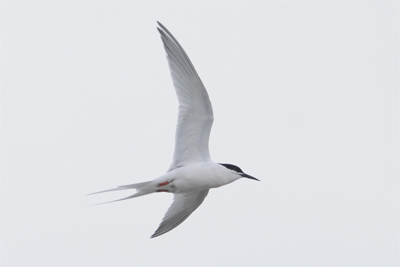
    The final part of the plan for the morning was a short session of seawatching.  Sandwich and Common Terns were diving close to the shore, Gannets were a bit further out and the sea was dotted with the dark shapes of Eiders.  Turnstones were perched on the top of rocky outcrops, a Harbour Porpoise proved elusive as it surfaced to breathe and an Arctic Skua raced south before everyone could get on to it.  Obligingly it came back north, settled on the sea for a little while and then continued steadily north before breaking off into a aerobatic attack on a Sandwich Tern with another skua joining in as the tern twisted and turned in an attempt to evade the pirates of the sea as they attempted to rob it of it’s recent catch.

    Lots of birds, lots of interesting wildlife behaviour to watch, and four clients who were all great fun to spend the morning with – if I ever suggest that I’m going to return to teaching, just point me in the direction of this blog post 🙂

  • Wild Geese and small predators; Druridge Bay 20/09/2013

    After a damp morning around Druridge Bay on Thursday, Friday looked much more promising.  I collected Simeon and Kathy from their holiday accommodation in Warkworth and we set off down the coast for an afternoon around Druridge Bay and southeast Northumberland.  Late summer/early autumn trips often feature plenty of waders and wildfowl and this was no exception.  Common Snipe were playing ‘hard-to-spot’ as they slept in sparse clumps of reed, Dunlin, Ruff, Ringed Plover, Black-tailed Godwit, Lapwing and Golden Plover were all either roosting or sticking their beaks into the mud and a lone Greenshank was sitting on the periphery of a big flock of Lapwing.  On slow deep wingbeats a Sparrowhawk flew low across the water towards us, pulling sharply up and over us at the last minute.  Over a coastal reedbed a juvenile Marsh Harrier drifted lazily along, swooping down towards the water and scattering the Mallard and Teal that had been dozing contentedly there.

    Mid-afternoon we were treated to the spectacle of the sky filled with skein after skein of geese; mainly Pink-footed, but with small groups of Greylag and Canada interspersed amongst the yapping flocks of one our favourite Icelandic winter visitors.  Our next magic moment came courtesy of a mustelid.  Not the Otter that we were searching for, but instead the beautiful little predator that has featured on so many of our trips in the last few weeks.  For several minutes we watched as a Stoat ran backward and forwards along the water’s edge, perched on rocks, had a good look at a Moorhen and finally bounded away through the poolside vegetation.  Another small predator provided the next wildlife experience.  Lapwing, Golden Plover, Ruff, Black-tailed Godwits, Dunlin, Teal, Mallard, Gadwall and Starling all took to the air; had they spotted an Otter lurking in the reeds?  maybe a Fox?  No, what was coming was the Grim Reaper on tiny pointed wings.  A Merlin was suddenly amongst the scattered birds in the air.  Twisting and turning, the tiny falcon had singled out a Dunlin from the multitude of possible targets in front of it.  The chase was on and could be easily followed by watching the path carved through the tightly bunched Lapwings that had taken to the air in alarm.  As the Dunlin made a final bid for freedom, the Merlin gave up the chase and settled, out of sight, in a hawthorn bush in the dunes.  It didn’t have long to catch it’s breath before it was disturbed by a dog walker and flew into a dune slack away from disturbance.  Simeon’s comment after this life and death chase echoed those of many of our clients previously “it’s gripping, but I was really willing the Dunlin to get away”.

    As the evening progressed and the Sun dropped below the western horizon, geese began arriving to roost, bats were flitting back and forth across our field of view and, as the light finally faded to black and we headed back to Warkworth, a Barn Owl flew low over the car.

  • Beauty in the ‘mundane’

    LBJ.  No, not the 36th President of the United States, but the acronym used by many birdwatchers to describe any relatively small, nondescript brown bird – ‘Little Brown Job’.  Over the last few years, a number of our clients have applied that term to two birds that I always think deserve closer attention…

    I collected Jo and Kirsty from Alnwick for their second consecutive day out with me and we headed straight up the coast and made our way on to Holy Island.  Curlews were passing overhead as we walked around the bits of the island that weren’t full of other people, those two LBJ’s, Skylark and Meadow Pipit, were dodging in and out of long grass in the fields by the path, Kirsty started photographing Swallows and quickly progressed to using flash to freeze the action as they hovered in front of us feeding beakfuls of flies to recently fledged juveniles and Golden Plover and Oystercatcher were probing around rockpools as Grey Seals bobbed about in the gentle surf just offshore.  Edges are always a productive area; edges of fields, woodland, moorland and the shoreline – that ever shifting edge of the sea and the land.  That latter edge produced some stunning Bar-tailed Godwits, and an impressively large group of very vocal Grey Seals.

    As we continued back down the coast the mist thickened and we were eventually in the surreal position of having blazing sunshine on our backs and visibility of less than 100m in front of us.  As a loose flock of Eiders drifted close inshore and then back out again, and Swallows and House Martins hawked insects low over the beach, a dark menacing shape drifted out of the mist, passed in front of us, and then drifted back into the impenetrable white mass.  Always a bird to grab the attention on a seawatch, the Arctic Skua was only in view for a few seconds as it made it’s way south along the coast, and we headed inland into glorious weather again.

  • A mixed bag of wildlife; Lindisfarne Safari 12/08/2013

    As I collected Jaap, Nancy, Maartje and Laura for their Lindisfarne Safari it was good to see that we’d made the right decision in postponing from the previous Monday (which would have been an unpleasant day to be out and about on Holy Island).

    Lindisfarne is an excellent birdwatching location in the winter months, and can be spectacular during spring and autumn migration, but the summer brings a real variety of things to look at.  As we walked around the island Starlings were swirling, Grey Seals and Eiders were bobbing just beyond the breaking surf and Swallows were feeding hungry nestlings.  There was plenty on the ground too; Cinnabar Moth caterpillars were munching on Ragwort, Viper’s Bugloss was by the side of the paths and Maartje spotted, and identified, a Dark Green Fritillary.  With exposed sandbars at low tide there were lots of Grey Seals just lazing about and the shoreline was bustling with bird activity; Bar-tailed Godwits, Curlews, Dunlin, Ringed Plover, Grey Plover and Turnstone were around the island’s edge and in the gooey mud of the harbour.  Golden Plover were swirling over the island in impressive flocks before settling in the fields, an adult Mediterranean Gull was perched obligingly close as we headed back to the village, and all too soon it was time to leave the island as the rising tide approached the causeway.  Landscape photography stops at Bamburgh and Newton on the way south were followed by distant views of lightning and then an impressively dark sky out over the North Sea.  With so much wildlife in one day it would be hard to choose one highlight…but my own personal favourite was the brightest pink binoculars that I’ve ever seen 🙂

  • Wading through bird identification

    Along with my passion for seabirds and raptors, there’s another group of birds that always set my pulse racing.  With an endearing habit of poking their faces into gooey mud in search of food, waders are always exciting 🙂  Large flocks of Knot, Dunlin and Golden Plover are a spectacular sight during the winter months, rivalling the huge murmurations of Starlings that attract so much attention, but there’s one time of year when I think waders are particularly good…

    I collected Jamie and Louise from Alnwick and we headed southeast towards Druridge Bay.  Marsh Harriers, Little Egrets and a steady northward flow of Gannets were all good, but a mixed flock of waders was the sort of spectacle that late July can produce.  ~200 Knot, 150 Dunlin, 12 Turnstone and a Sanderling would be a good mixed flock at any time of the year, particularly at a fairly short distance.  This isn’t just any time of the year though, this is the time when adult waders, still in breeding plumage, are heading down our coastline on migration; Red Knot being properly red, with a stunning silvery wash to their upperparts, Dunlin with solidly black bellies, Turnstone with rich mahogany upperparts, white heads and striking face patterns and a lone Sanderling – not the stark black-and-white of the birds we see dodging the onrushing tideline during the winter, but with the brick red/orange face and throat that can make you look twice before you’re sure what you’re looking at.  Who said that July can be a dull month…

  • Scouring the moors; North Pennines birdwatching 25/06/2013

    Returning clients have become a bit of a theme for NEWT in the last couple of years, and it’s always lovely to meet up and hear what our clients have been doing, and seeing, since they were last out with us.

    Mike and Maggie were visiting Northumberland again, and their day out with me this year was to be a bespoke birdwatching and photography experience in the North Pennines.  As soon as we were on the higher ground, Curlew, Golden Plover, Lapwing and Red Grouse were all found with chicks, Redshank were calling noisily from nearby rushy fields and Skylark and Meadow Pipits were singing overhead.  More Red Grouse and Golden Plover became targets for Mike’s camera and a Ring Ouzel feeding in a grassy field flew up onto a dry stone wall, next to another ouzel, as a third flew across the road behind us.  As we dropped from the high ridge between Weardale and Upper Teesdale, an unexpected bonus bird was sitting in the middle of the road.  The unmistakeable ‘built like a breeze block’ figure of a Woodcock was just sitting there.  As we watched, it called, and two Woodcock chicks came out of the long grass to join it 🙂  Creeping along on short legs and big feet, the adult bobbed up and down, like a Jack Snipe on steroids, as it led it’s young across into the dense cover of the grass on the opposite side of the road.

    Our post-lunch walk produced Golden Plover, Ringed Plover, Grey Wagtail, Red Grouse, a single Spring Gentian and a female Ring Ouzel, gathering food by a  fast flowing stream.  The journey back towards Allendale was enlivened by the impressive wingspan and mad staring yellow eyes of a Short-eared Owl as it quartered the high moorland.  There was one species on our target list for the day that was still missing though, and we’d already checked almost all of our usual sites.  Then, as we crossed back into Northumberland, I slowed the car almost to a standstill and mentioned that the next field on the left, in between the clumps of rush closest to the road, was a regular spot for Black Grouse… 🙂

  • “a real birding day” Birdwatching in the North Pennines 14/06/2013

    After a successful sailing around Coquet Island last Thursday, with sightings of Roseate Terns perched and flying,

    Roseate Tern,Northumberland,Coquet Island,bird photography tuition,bird photography holidays,Northern Experience Wildlife Tours
    Britain’s rarest breeding seabird

    our re-arranged North Pennines Safari was on Friday.

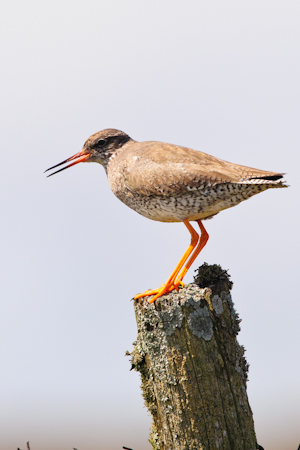
    I collected Liz and Ronnie from The Swan and we headed southwest into the hills.  Only a month earlier we had a North Pennines trip in near-zero temperatures, but now everything was much more springlike.  Curlews were gliding across the moors, their haunting cries carrying on the breeze, Lapwings were displaying in that bizarre way that has you half convinced they they’re just going to crash into the ground and there were plenty of birds with chicks; Redshank, Curlew, Lapwing, Golden Plover and Red Grouse were all mindful of their offspring as we made our way across the moors.  Common Snipe appeared unexpectedly from clumps of rush and one obliging bird perched on a fence post as we sat just a few metres away.  Pairs of noisy Redshank flew from fence post to dry stone wall and back again and, like the Snipe, one bird perched obligingly (like the one pictured here from 2011).

    Common Redshank.Tringa totanus,bird photography holidays,bird photography tuition,Northumberladn,North Pennines,ww.northernexperienceimages.co.uk

    Liz’s feedback e-mail, at the end of the holiday and our day in the North Pennines, summed it up so well – “a real birding day” 🙂

  • Flying in for a day birdwatching in the North Pennines

    I always enjoy meeting up with our previous clients again, and Saturday morning found me at Newcastle Airport waiting to meet Jacob and Nancy as they arrived for a couple of days birdwatching in Northumberland.  They were going to be spending Sunday on the Farne Islands, but our destination on what was developing into a gloriously sunny Saturday was the North Pennines.

    Just 12 days earlier I’d been marvelling at the temperature of 1C at 10:30am but now Curlew, Lapwing and Oystercatcher were all flying around and calling noisily as we reached the higher ground southwest of Hexham, Skylarks were singing exuberantly against the azure sky, Meadow Pipits were ‘parachuting’ down at the end of their song flights and Common Snipe were calling from concealed positions in the grassland.  In the stunning light, Barn Swallows were eye-wateringly iridescent, a pair of Golden Plover flew in front of us and a pair of Red Grouse watched closely over eight chicks.  Red Grouse was a lifer for Jacob and Nancy and one male allowed a very close approach and provided a lot of photo opportunities for them.  Eyebrows, raised, eyebrows lowered, facing left, facing right, staring into the lens; he went through a veritable supermodel repertoire of poses before seemingly melting into the vegetation.

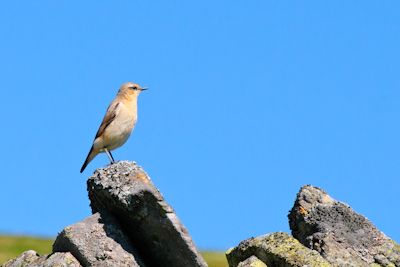
    As we travelled across a high moorland road, a Northern Wheatear posed obligingly for photographs.

    Northern Wheatear Oenanthe oenanthe,bird photography,bird photography holidays,bird photography courses,birdwatching holidays,Weardale,County Durham,North Pennines,www.northernexperienceimages.co.uk

    Skylarks and Meadow Pipits provided a memorable aural backdrop to our lunch stop, and a Golden Plover was silhouetted on top of a nearby ridge, keeping a close eye on it’s territory.  Near perfect weather, a gentle breeze, spectacular landscape and stunning birds; what more could you want from a day’s birdwatching?

  • Spring (Gentian) time in the hills

    The ‘quality over quantity’ birdwatching in the North Pennines has been the predominant feature of our days out with clients in the last two months, and a ‘phone enquiry on Tuesday saw me collecting David and Margaret on Wednesday morning for a day birdwatching in the hills.

    Red Grouse was the first of the upland specialities we encountered and, after a few single birds scattered across the moors we came across a pair with a brood of 10 chicks.  The adults watched us carefully as their offspring wandered about, completely unconcerned by our presence.  Lapwing and Curlew seemed to be everywhere and one Lapwing provided our only sighting of Snipe for the day, as it chased one over the road in front of us.  Oystercatcher, Redshank and Golden Plover were noisily displaying, Kestrels were stationary in the strong breeze and our first three Black Grouse were all seen distantly.  I was sure that we’d get much closer views of Blackcock and, sure enough, at the same spot where I photographed a displaying bird earlier this month, we came across what were probably the same two birds from that trip.

    A walk at Cow Green reservoir brought a non-avian highlight as Spring Gentians were in bloom.  If you’ve never seen one, this is what they look like 🙂

    Spring Gentian,Gentiana verna,Upper Teesdale,macro photography tuition,flower photography tuition,www.northernexperienceimages.co.uk

    Spring Gentian,Gentiana verna,macro photography tuition,flower photography tuition,Upper Teesdale,www.northernexperienceimages.co.uk

    After our walk we watched a small group of Blackcock as they engaged in their, slightly comical, lekking behaviour before heading back north east after another excellent day in the hills.