Tag: Eider

  • Weasily identifiable; Lindisfarne Safari 20/04/2015

    April is when we start to spend more time visiting our inland areas, but the coast can still deliver real quality, and quantity, at this time of the year too.

    I collected Sue and Colin from Beadnell and we headed north to Holy Island.  Crossing the causeway we paused to watch Eider and Red-breasted Merganser in the channel under the road.  The mudflats produced Redshank, Oystercatcher, Curlew, Grey Plover and Bar-tailed Godwit, as well as a lot, and it really was a lot, of Grey Seals.  Close to 2000 were hauled out and soon began their eerie moaning.  Black-tailed Godwit and Teal were sleeping by the edge of the Rocket Pool, a lone Brent Goose was kept company by a herd of sheep, Meadow Pipits, Goldfinches and Skylarks were hurrying back and forth, a Redwing was foraging on the ground close to the field edge, a Sedge Warbler was singing it’s repetitive song from the reeds by the Lough as a Common Snipe put in a typically brief appearance and 12 Roe Deer were grazing near the Straight Lonnen.  Then we struck gold…walking slowly along the Hawthorns, a bird flushed from beside us.  The views were only brief but the white breast band, and silvery wing flashes, identified the bird as a male Ring Ouzel.  We continued walking slowly along the lonnen, and the bird kept a few metres ahead of us.  Then we lost track of it but stopped to watch two Blackbirds grubbing about in the undergrowth…and the ouzel called from a tree we’d already passed.  We turned as it flew out of hiding…followed by another, then another, and another and finally, a fifth male Ring Ouzel 🙂

    Over on the mainland we had our picnic lunch as the eerie calls of Curlew floated through the heat haze across the mudflats and Sue spotted a Weasel.  It was running in and out of the vegetation so I started pishing…and it popped up and began running in our direction, sitting up on its hindlegs and staring straight at us 🙂  Eventually it got back on with whatever it was doing, and it put in repeat appearances for a few minutes.  A Brown Hare gave tantalising close views before vanishing into the crops and we finished in the shadow of Bamburgh Castle with Sand Martins hawking insects over the beach, Eiders bobbing in the gentle swell, a pair of Common Scoter slightly further from the shore, more Grey Seals, plunge-diving Sandwich Terns and lines of Gannets heading, mainly, north.  Not a bad range of wildlife for seven hours in mid-April 🙂
  • “I really love otters”; Bespoke Otter Safari 10-11/04/2015

    Friday and Saturday saw a two day bespoke safari for Fran and Georgia, arranged by their mum back in early December.

    I collected the girls from The Swan and we headed towards Druridge Bay.  We weren’t too far along the road when Georgia asked if we’d seen any Otters recently.  I told them about Thursday’s sightings, and there was an obvious raising of excitement levels in the car…and, with typical wildlife unpredictability, we managed to get right through Friday without an Otter sighting 🙁  Dippers zipping back and forth along the River Blyth were entertaining, a drake Garganey on the Wansbeck was stunning, Little Egrets and Avocets were elegant, but of the sinuous stealthy predator there was no sign.  We returned to The Swan and I started revising our plans for Saturday…

    Saturday 05:00 and I stumble sleepily to the bathroom.  There’s one thing I really don’t want to hear, and that’s a howling gale.  This wasn’t looking promising; our plan for the day was a Seal Cruise around the Farne Islands, and then more time searching for Otters, and neither of those would be helped by the hoolie that I could hear whistling through the trees in our garden.  We arrived in Seahouses for our sailing on Glad Tidings V, and the sea was looking ever so slightly lumpy.  We did manage to sail though, and were rewarded with Cormorant, Shag, Guillemot, Eider, Kittiwake and the two stars of the morning – Puffin and Grey Seal.  Back on dry land we resumed the search for Otters, and the wind strengthened so that we could hear an eerie whistling around trees, bridges and us!  With a wind chill factor taking temperatures down to bone-chilling, and a hail storm pinging ice off our heads, we were having to suffer for our wildlife…and still no Otters.  Sarah was out and about checking other locations and sending regular texts to let me know where she’d checked.  Our final backup plan was an 06:00 start on Sunday, but I don’t think anyone was really too keen on that idea.

    18:30 and the wind shifted from west to southwest and weakened slightly, the sun came out and I started to feel more optimistic.  I had one decision left to make though, and that was which of our two options for sunset to go for…

  • New Year, quality wildlife; Otter Safari 22/01/2015

    During quiet periods of the year, we keep going out and checking excellent wildlife sites all around Northumberland.  Although we can never predict exactly what we’ll see, and where, those days out on our own are the basis of successful days out with clients…

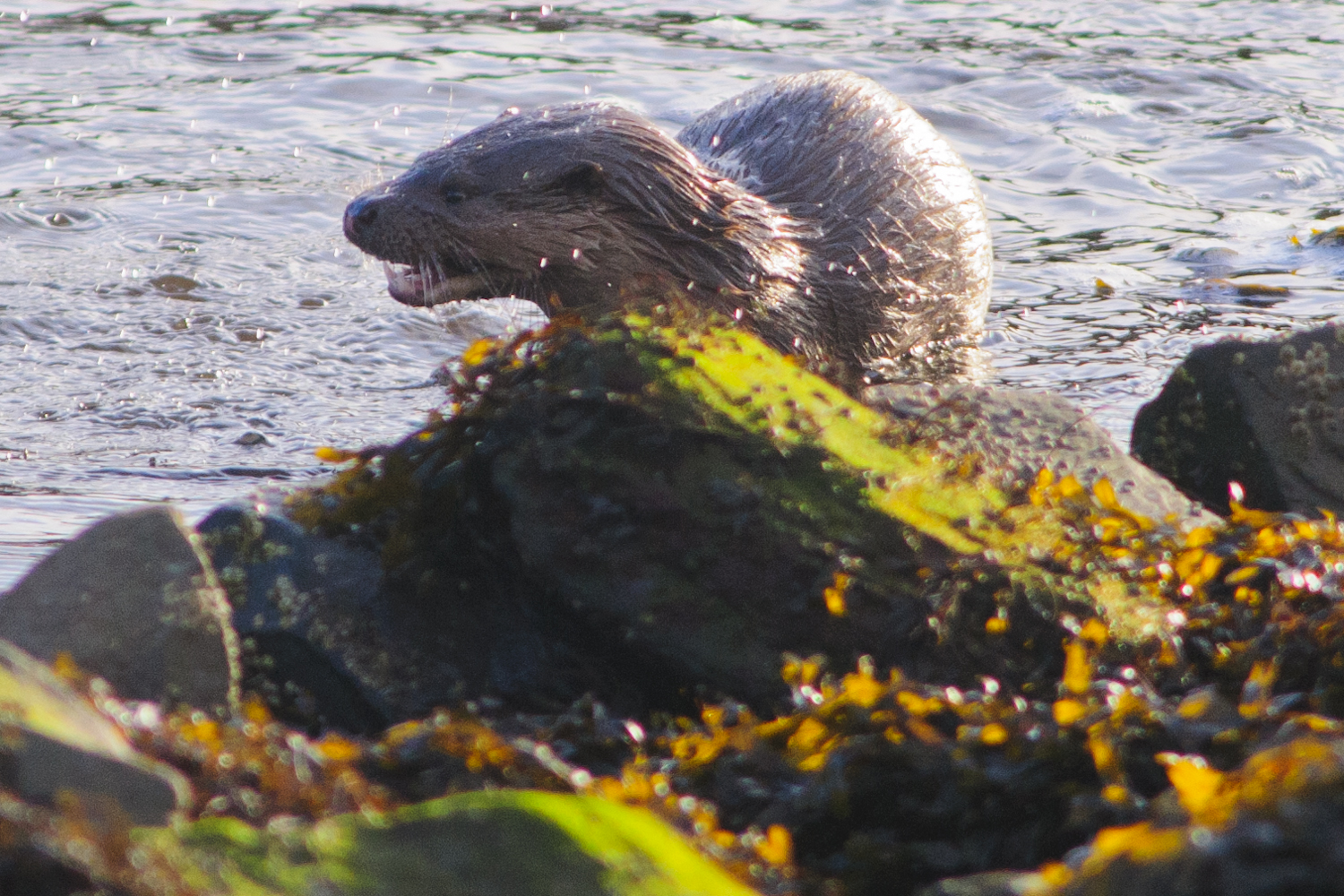
    I arrived at Church Point to collect Gordon and Michelle and we set off in search of Otters.  I love the pressure of a client being obsessed with Otters but never having seen one in the wild, it keeps me focused 🙂  Soon we were watching a distant Otter as it fed in mirror calm water!  A slow, steady approach took us much closer and then another two Otters appeared, eventually coming so close that we could hear a splash, each time they dived in search of fish, and the crunching, munching sound of them devouring their catch 🙂  We’ve been watching this group of Otters since mid-December, so we’ve got a few images of them…

    Eurasian Otter,Lutra lutra,Northumberland,otter watching,otter safari,otter photography

    Eurasian Otter,Lutra lutra,Northumberland,otter watching,otter safari,otter photography workshops

    Eurasian Otter,Lutra lutra,otter watching.otter safari,otter photography workshops

    After 90 minutes they’d moved on and so did we.  Our next wildlife star of the day was another one that we’ve been watching and photographing over the last few weeks – a Little Owl.

    Liite Owl,Athene noctua,Northumberland,birdwatching Northumberland,wildlife sfaris UK,wildlife tours UK,wildlife photography,wildlife photography workshops,

    As the afternoon passed, and the cold damp air held us in it’s icy grip, more stunning wildlife put on a show that demonstrated just how good Northumberland is during the winter.  An array of wildfowl in breeding finery is a highlight of the winter months; Teal, Wigeon, Gadwall, Mallard, Goldeneye, Tufted Duck, Red-breasted Merganser, Eider and a Long-tailed Duck.  A Barn Owl, ghostly white, bringing death on silent wings to unsuspecting mice and voles is always a crowd pleaser while Kestrels, Buzzards and a brief view of a Hen Harrier were the reward for a session of raptor watching as dusk approached.  Another ghostly white winter speciality put in a typically fleeting appearance – a Stoat in ermine 🙂  Possibly my favourite land mammal, here’s an image of one from last winter.

    Stoat,Mustela erminea,Northumberland,wildlife sfaris UK,wildlife tours UK,

    Finally, as the light faded to the point where it was getting difficult to see anything and flocks of Pink-Footed and Greylag Geese peppered the sky, one of our most elusive birds wandered out into the open and entertained us.  Probing and prodding at the marshy ground between two reedbeds, the Water Rail gave obligingly prolonged views.  Surprisingly small, remarkably beautiful, and a great way to end the day with clients who’ve persuaded me (almost…) that there are destinations so spectacular that I really need to get on a ‘plane at some point next year…

  • Mud, glorious mud; Lindisfarne Safari 28/11/2014

    The Northumberland coast in the late autumn is a birdwatching destination that I’ll never tire of.  Even in weather that could best be described as inclement, there’s a wealth of wildlife to enjoy.

    I collected Mike and Janet from the Dunstanburgh Castle Hotel and we headed north for a day birdwatching around Lindisfarne and the North Northumberland coast.  Starting with a walk around Holy Island village, a harsh chuckling call betrayed the presence of a Fieldfare in a small tree. Two others joined it, before they all departed noisily.  Then more chuckling Fieldfare, and the high seee calls of Redwing, carried through the air from high overhead and we could make out, in the mist, a mixed flock of these thrushes arriving high from the north east and bypassing the island on their way across to the mainland.  A Sparrowhawk raced by, hedge-hopping and swerving out of sight behind The Heugh, as thousands of Pale-bellied Brent Geese flew out onto the exposed mud of the wildfowl refuge area and Shag, Eider and Red-breasted Merganser dived just offshore.  A couple of very obliging Rock Pipits showed the subtle, dusky beauty that can only be appreciated with close views and Bar-tailed Godwit, Curlew, Redshank, Oystercatcher and Grey Plover were reaping the rich bounty of the mud, as Dark-bellied Brent Geese settled in the newly exposed mud of the harbour, and the high whistling calls of drake Teal carried across to us from the Rocket Field, a Little Auk flew along the main street through the village.  Crossing back to the mainland, a Little Egret was stalking through the shallows along the roadside and Curlew and Oystercatcher were so close we could have almost reached out of the car and touched them.  As the falling tide exposed sandbars, Grey Seals were moaning eerily and splashing about in shallow water.  Suddenly, there were thousands of Wigeon and Golden Plover in the air.  They settled but then flushed again so I started a methodical check of every rock that I could see on the mud.  Then I found what I was looking for – a rock that was just too vertical…and the view through our ‘scope revealed the impressive muscular menace of a female Peregrine 🙂  She shuffled around and took off, only to settle on another rock closer to us.  Our attention was drawn to a charm of Goldfinches feeding nearby, and the Peregrine departed while we weren’t looking.

    As the weather moved through in waves of varying grot, we watched a group of three Roe Deer grazing in a roadside field, and then headed a bit further down the coast.  Dusk was approaching rapidly as we watched more waders feeding busily as the tide rose, Lapwings flew over like giant bats and thousands of Black-headed and Common Gulls arrived to roost.  Wave after wave of mist and drizzle, wave after wave of birds, wave after wave of  waves 🙂

  • Charming; Bespoke Birdwatching 10/11/2014

    Even after 40+ years birdwatching, there are times when I’m not sure whether the thing that excites me the most is a lone rarity, a life or death interaction involving one of the predators we encounter, or an impressive flock of something common…

    I collected David and Dot from Gosforth and we made our way across to the coast for a day of mid-November birdwatching.  This proved to be a day of flocks; Pink-footed Geese rose then dropped in nearby fields, peppering the sky and cutting through the autumn air with their yapping calls.  Mini-murmurations of  Starlings twisted, turned, bunched and swirled, demonstrating that they don’t just reserve that spectacle for the fading light of evening.  Common Snipe were sitting in the vegetation close to the water’s edge, extraordinarily well camouflaged when asleep and only really betraying their presence once they woke up and started probing in the soft mud of the shallows.  Oystercatcher, Turnstone, Redshank, Curlew and Eider are almost a given on the coast in the winter, a lone Sanderling hurried back and forth in a flock of Ringed Plover and Teal, Wigeon and Goldeneye are eyecatching whether in flocks or alone.  Elegant Pintail glided by and Stonechats flicked their tails nervously perched in the tops of bushes in the dunes along the coast.  One isolated tree brought a memorable spectacle, with a charm of Goldfinches, and a lone Greenfinch.  For a couple of years now, a lot of our clients have reported increasing numbers of Goldfinch, and a tremendous decrease in Greenfinch.  No matter how numerous Goldfinch become, it’s hard to imagine that we could ever become blase about them; strikingly patterned, with their red face, black and white head and yellow wing flashes, and with liquid, twittering songs and calls, they really are quite charming 🙂

  • The Island; Lindisfarne Safari 12/10/2014

    After a break from work and blogging, and our first proper holiday in quite a while, I got back into the swing of things on Sunday with a visit to probably my favourite mid-October location…

    Crossing the causeway to Holy Island is always accompanied by a sense of anticipation, and when I collected Graham and Joan from the Manor House they mentioned that Yellow-browed Warblers had been seen the day before.  Checking the bushes and trees in the Vicar’s Garden didn’t produce any sight or sound of the Siberian speciality, but everywhere was heaving with Robins – presumably recent arrivals from the continent – and Grey Plover, Pale-bellied Brent Goose, Bar-tailed Godwit and Grey Seal could be seen, and heard, by turning through 90 degrees from the trees.  After checking other suitable spots around the village, and finding a couple of Goldcrest, we crossed to the mainland and down to Bamburgh.  Oystercatcher, Turnstone, Curlew, Purple Sandpiper and Knot were around the rocks as Eider and Guillemot rose and fell with the gentle swell of the sea and Gannet and Sandwich Tern plunged into shoals of fish offshore in conditions that wouldn’t have been out of place in mid-June.  We made our way slowly back up the coast, taking in vast flocks of Wigeon over the mudflats and a Weasel that responded obligingly to my imitation of a dying mouse (the sound, rather than a visual imitation!).  Little Egrets and Shelduck were exploiting the food supply on the exposed mud and we crossed back on to the island…only to learn that a White-tailed Eagle had been soaring high inland of us while we were watching the Weasel 🙁  We headed down to the causeway, to see if the eagle would make a reappearance, as flocks of Sanderling, Dunlin, Knot, Bar-tailed Godwit, Pale-bellied Brent Goose and Golden Plover concentrated on the rapidly diminishing areas of mud above the rising tide and a Peregrine powered across our field of view before it was time for me to cross back to the mainland and head south.

  • Sealed; Bespoke North Northumberland Coast Safari 22/08/2014

    After some poor sea conditions recently, things looked more promising for Friday’s trip; a seal cruise around the Farne Islands, followed by a few hours of birdwatching along the North Northumberland coast.  A change is as good as a rest, and the North Northumberland coast is quite a change from the sand dunes and coastal pools of Druridge Bay 🙂

    I collected Anne-Marie, Dave, Melanie and Mike from the Queen’s Head in Berwick and we drove to Seahouses for our sailing on Glad Tidings V, which thankfully was fairly smooth, and featured plenty of wildlife.  Gannets were soaring by, Kittiwakes were still on their cliff-edge nest sites in good numbers as Fulmars arced over them, Grey Seals were hauled out on rocks and bobbing around in the water, two Common Guillemots were still sitting on the rocks, Cormorants and Shags were drying their wings in the stiff breeze, Sandwich Terns called as they flew back to the islands and, unexpectedly, five Puffins were seen with beakfuls of fish.  Photographing Puffins in flight can be a challenge on land, with lots of birds to choose from, and a bird appearing unexpectedly at sea is an even harder proposition but Anne-Marie and Melanie responded with lightning fast reflexes to capture these late breeding birds.

    Back on dry land we had our lunch in the impressive shadow of Bamburgh Castle, as Eiders bobbed around just beyond the breaking surf, and then we explored the coast as the tide fell.  Little Egrets have become a frequent feature of our coastal trips, and two birds flew by at quite close range.  Dozens of Grey Seals could be seen ‘bottling’ at high tide and then, as the water receded, exposing patches of mud, we started encountering waders.  Redshank, Ringed Plover, Curlew, Lapwing, Dunlin  and Oystercatcher were joined by Knot, Ruff and Greenshank as more Little Egrets, and a flock of Teal, flew by.

    Heading back to Berwick we could see poor weather to the north and to the east, and I got caught in some heavy rain as I drove south on the way home, but we’d had a day where the only water that landed on us was the spray from the bow of the boat 🙂

  • Wading through coastal flocks; Druridge Bay mini-Safari 21/08/2014

    Changeable, that’s the thing I love about Northumberland’s weather.  Thursday’s mini-Safari in managed to feature bright sunshine, strong winds and torrential rain – all in just a few hours.

    I collected Diana and Aveen from Alnmouth and we headed down the coast towards Druridge Bay.  Starting with a brief seawatch, we found Eider and Common Scoter on the sea, and Redshank, Oystercatcher and Turnstone on the rocks just above the crashing waves.  Curlew, Avocet, Dunlin, Knot, Ruff, Lapwing and Redshank were roosting at Cresswell, and flushing frequently although we couldn’t see the cause of their concern.  A Little Egret added a touch of grace and elegance, Little Grebes swam amongst Tufted Ducks and Mallard and at one point we had no less than five Kestrels in the air at the same time.  Two lovely clients, and the Northumberland coast delivering the sort of birdwatching experiences that it does so well 🙂

  • Choosing your battles; Farne Islands bespoke photography trip 31/05/2014

    Last Thursday should have been a bespoke photography trip to the Farne Islands, but a discussion with William on Wednesday evening confirmed what the forecast had been suggesting for a few days – heavy easterly swell would make it impractical to sail.  I was out and about in the drizzle so Sarah got in touch with John, David and Sheila and we rearranged the trip for Saturday instead.

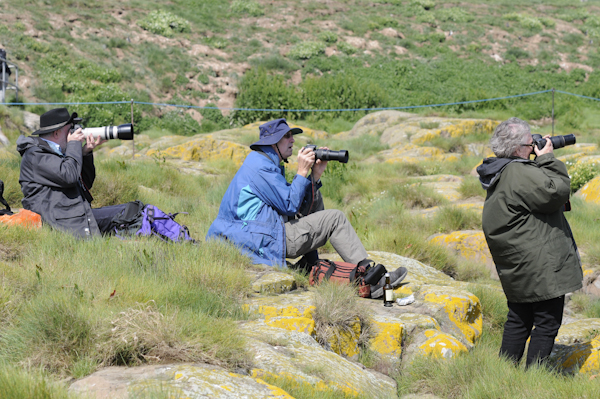
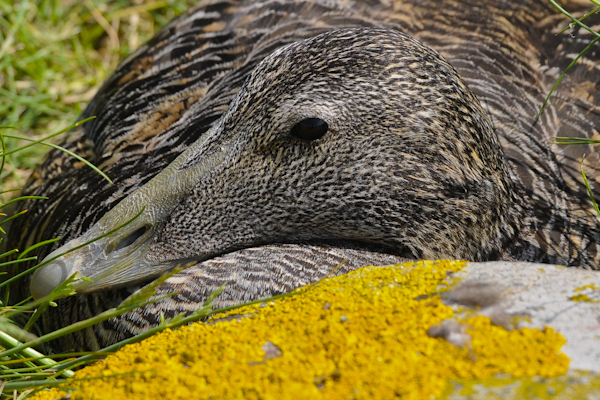
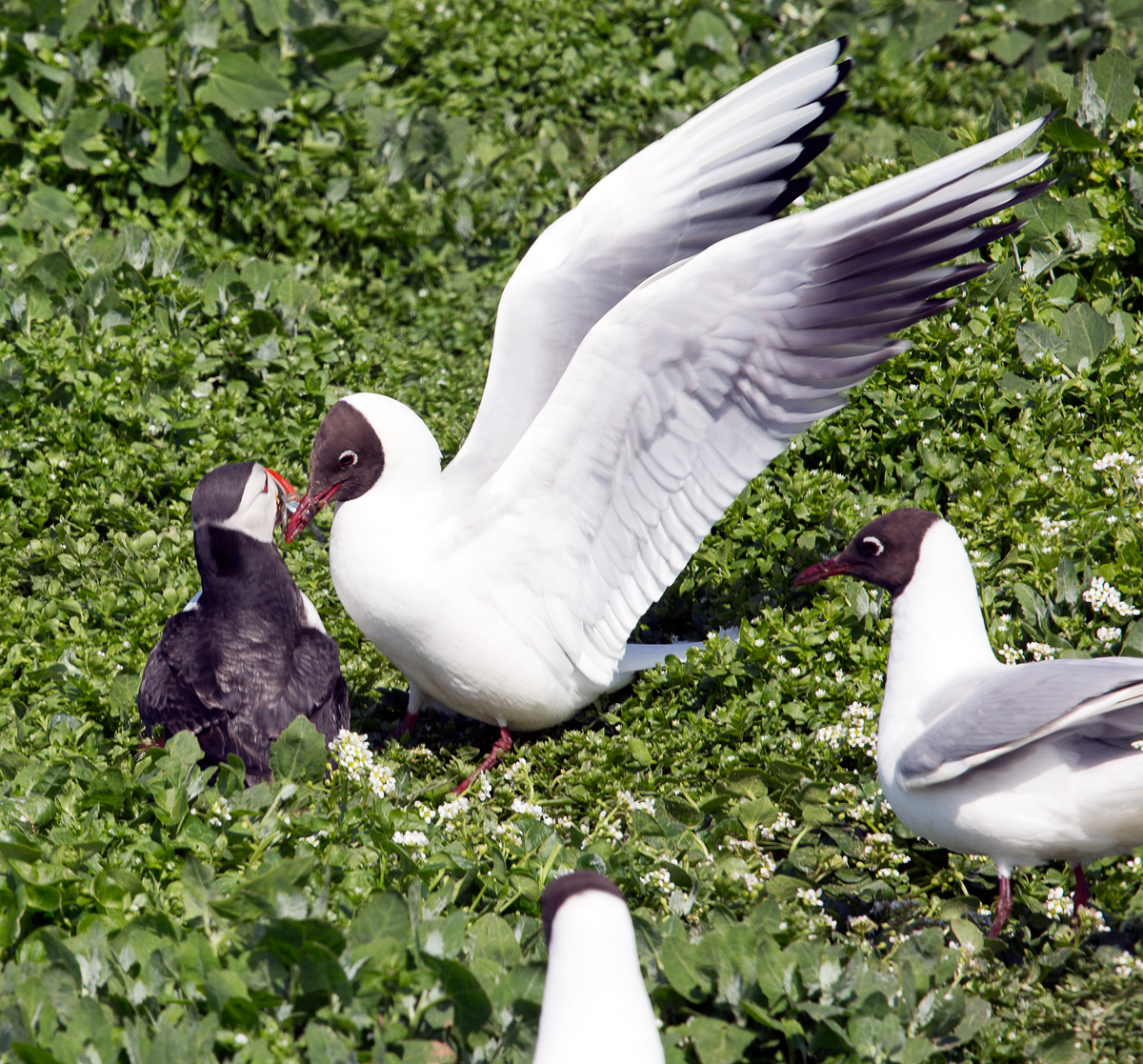
    That turned out to be an excellent decision, with  Saturday dawning dry, bright, sunny and with only a hint of a breeze.  We arrived in Seahouses just after 09:00 and were soon onboard Glad Tidings II, with William at the helm, on our way to Staple Island, passing groups of Grey Seals lazing in the sunshine.  Staple can be a difficult island to land passengers on, but it’s always worth the effort.  Puffins with beakfuls of sandeels were next to the landing and many photographers from our boat didn’t make it any further on to the island for quite some time.  Fulmars, Kittiwakes, Shags, Guillemots and Razorbills are all good photographic subjects, Puffins are the real stars of the island but there were some very accessible female Eiders incubating too. A frequent mantra that I try to instill into our photography clients is to choose their battles carefully – whatever focal length lens you have, there’s always the opportunity to take stunning images.  Don’t frustrate yourself by trying to over-reach the performance of your equipment.  I had a camera with a 70-200mm lens in my rucksack – not a long focal length, but enough when you’ve got a subject quite close.  We explored bits of the island looking for a spot that offered Puffins in flight at reasonable distance, and the best bit of the morning on Staple came during our lunch break, when  Puffins were flying so close overhead that you could hear the whirring of their wings, and everyone sat back, relaxed and tried to second-guess which direction each Puffin was going to fly 🙂  With a lovely group of clients, the day was a real pleasure, and we were soon on Glad Tidings IV, transferring to Inner Farne for the afternoon.  Inner Farne offers similar to Staple, but with the addition of Common, Arctic and Sandwich Terns and we explored the island in search of photographic subjects.  The first three images below are my own.  Puffinin flight, Black-headed Gull tussling with Puffin, Arctic Tern and Common Tern images are all (c) J. Spence.  Many thanks to John for letting us use his stunning images in this blog post 🙂

    Beautiful weather, great clients and the ‘Galapagos of the North’ – what a great end to the month, although for NEWT the month wasn’t quite over yet…

    Photography tuition Northumberland,photography courses Northumberland,bespoke photography Northumberland,Farne Islands,Northumberland

    Common Eider,Somateria mollissimma,Staple Island,Farne Islands,Northumberland,phtography courses Northumberland,photography tuition Northumberland,photography holidays Northumberland,

    Atlantic Puffin,Fratercula arctica,Staple Island,Farne Islands,Northumberland,photogarhy courses Northumberland,photography tuition Northumberland,photogarphy holidays Northumberland

    Atlantic Puffin,Fratercula arctica,Farne Islands,Northumberland,photography tuition Northumberland,bird photography Northumberland,photography courses Northumberland,photography Farne Islands

    Atlantic Puffin,Fratercula arctica,Black-headed Gull,Chroicocephalus ridibundus,Farne Islands,Northumberland,photography tuition Northumberland,bird photography Northumberland,photography courses Northumberland,photography Farne Islands

    Common Tern,Sterna hirundo,Farne Islands,Northumberland,photography tuition Northumberland,bird photography Northumberland,photography courses Northumberland,photography Farne Islands

    Arctic Tern,Sterna paradisaea,Farne Islands,Northumberland,photography tuition Northumberland,bird photography Northumberland,photography courses Northumberland,photography Farne Islands


  • Variety is the spice of life; Coastal safari 26/05/2014

    A brilliantly sunny Bank Holiday Monday is the only time you’re likely to encounter anything even remotely approaching crowds of people in Northumberland, but it does happen occasionally.

    I collected Marcus, Alison, Norman (Grandad) and Isobel from their holiday cottage in the shadow of the Wandylaw wind farm, and we set off for a day wildlife-watching.  With it being such a sunny morning, I thought it would be worth starting with one of our trickier animals; if it’s too cold they won’t be out and about, if it’s too warm they’ll already have slithered off somewhere cooler, and if they feel the ground vibrate as you approach they’ll beat a hasty retreat.  We know just the spot to see them when everything falls into place though; a warm, bare, stony patch of earth surrounded by tall grass.  At first we couldn’t see any sign, but I crept through the vegetation for a closer look.  Two Adders weren’t keen on this, and quickly slithered away into the long grass.  The third one was much more obliging though, and I motioned for Isobel to come a bit closer.  Incredibly, the snake remained coiled, and settled, for a few minutes.  It eventually lifted it’s head to fix us with a baleful reptilian glare for another minute before following it’s companions into the vegetation and out of sight.

    In the bright sunshine Kestrels hovered over roadside fields, Willow Warblers sang their silvery descending cadence, Chiffchaffs endlessly repeated their name, Chaffinches were proclaiming their territories (and Isobel had done a very impressive colouring of a Chaffinch picture), the scratchy rattle of Whitethroat song buzzed through the warm air, flotillas of goslings patrolled the water with their parents in close attendance and darting damselflies added a streak of azure to the lush green of the grass.  Down on the coast, dainty Avocets swept the water edge for morsels, Grey Plovers (probably my favourite wader, certainly when they’re in their summer finery) chased back and forth, Common andSandwich Terns roosted together, Fulmars rode the updraft of the warm breeze along the clifftops, Eiders were resplendent in the sunshine, and ‘wooly bear‘ caterpillars and cuckoo spitwere just the thing for a six year old to enjoy 🙂

    Most entertaining though, judging by the giggling, was a Rook that was rummaging through a bag of rubbish and found what it seemed to consider a suitable food item.  That item was a (full) dog-poo bag…  So disgusting that I almost titled the blog after it 🙂