Tag: Common Snipe

  • Marshland magic; Druridge Bay 04/07/2014

    I love all of the different locations that we visit on our tours, but a day around NEWT’s local patch of Druridge Bay and southeast Northumberland is always special.  Maybe because it’s so close to home, maybe because of the incredible industrial heritage that has gradually been transformed into fantastic wildlife habitat or maybe just because it’s really, really good 🙂

    I collected Sue from Church Point and we headed north up the coast.  A brood of Goosanders were perched on mid-stream rocks as Grey Wagtails flitted back and forth across our field of view, tails wagging vigorously each time they settled before flycatching again just above the water.  An insistent squawking made us turn our heads – and there was a brood of Blackbird fledglings, just a few metres away, watching us with curiosity as their parents brought food.  Great Crested Grebes, Gadwall and Tufted Duck all had young in attendance too and, as is often the case once we reach July, a lot of our attention was taken by wading birds.  30+ Black-tailed Godwits were sleeping as a Common Sandpiper bobbed around their feet, a group of unusually obliging Common Snipe fed out in the open water, black-bellied Dunlin searched purposefully around the godwits, Redshank stalked along the pool edge and into the longer vegetation and three Wood Sandpipers added a touch of ‘scarce’ to the afternoon.  Two Spoonbills spent most of the time, as Spoonbills do, sleeping until a helicopter passing over roused them from their slumber and they did a fly-around before settling back to their previous spot and immediately returning to sleep close to a Little Egret.  Juvenile Marsh Harriers were making short flights over reedbeds, Reed Buntings were still singing their simple song with enthusiasm and a pair of Avocets with four chicks launched repeated furious assaults on any other birds that came too close; Shelduck, Little Ringed Plover, Sandwich Tern, Black-headed Gull and even the ‘so cute they surely couldn’t do any harm’ Little Gulls all came in for a hard time as the young Avocets pottered about in the shallows.

    A great day with a lovely client (we don’t have any other type!) and even the added bonus of bumping into my favourite double act, Gavin and Syd 🙂
  • Midsummer moorland meanderings, another alliteration; North Pennines 27/06/2014

    I collected Peter for his third day out with NEWT and we headed southwest towards the big hills of the North Pennines.

    Midsummer on the moors is a very different prospect to the spring and early summer.  Common Snipe, Curlew, Redshank, Lapwing, Oystercatcher and Golden Plover are all still there, but occasional calls are the norm, rather than the all-enveloping soundscape of March and April.  Black Grouse have, in the main, finished displaying but can still be found furtively creeping between clumps of rush, and the condensed growing season for plants in the often brutal environment of exposed areas so high above sea level means that some of the most sought-after species aren’t in flower by the time we reach the end of June.

    What midsummer does bring though is chicks, and photo opportunities 🙂  Young Curlew, fluffy, short-billed replicas of their parents, were pottering about, and apparently intent on not letting Peter get his camera focused on them, Red Grouse with their large broods, including one pair with chicks picking grit from the roadside, seemingly oblivious to our presence, and Golden Plover, watching us from raised tussocks in the heather as their young prodded and poked around the vegetation nearby.  A Blackcock, now showing signs of moult and no longer the strutting dandy of the lekking season, wandered across a rushy field and, after a day in the hills, probably my own favourite moment of the day came as a Common Snipe perched on the apex of a dead tree and Peter patiently waited for it to turn its head to one side so that he could capture the extraordinary length of the bill.  The bird obliged, of course 🙂

  • Drumming and lekking; North Pennines 05/04/2014

    A pre-dawn start heralded a long anticipated day out with Sam and Brian, part of Sam’s prize from last years Natural History Society of Northumbria Photography competition.  Sam is part of a generation of young photographer/naturalists in Northumberland, and it was a pleasure to have a day discussing photography, wildlife and ethics with himself and Brian.

    As we headed west, the first tendrils of daylight began creeping over the eastern horizon in the rear view mirror and a Tawny Owl perched on a fence post and another flew over as we stopped to have a look at it. The plan for the day was to visit the Black Grouse lek at Langdon Beck first, and then begin slowly exploring back through the North Pennines into Allendale.  I’ve had some stunning days with clients in the North Pennines, including a remarkable grouse and raptor day, but this one was breathtaking.  Visually, Black Grouse are spectacular, and the strutting and posturing of a group of lekking blackcock is one of those wildlife experiences that everyone should experience at least once, but the sound when you’ve got 30+ of these birds all kicking off at the same time is indescribable.

    As the lek disassembled, we prowled the moors in search of subjects for Sam’s and Brian’s cameras.  Common Snipe and Lapwing were very close to the road, and when Sam mentioned that he’d always wanted to get close shots of Common Snipe, I thought I knew just the place.  Sure enough, the sky was filled with Snipe drumming, and several of them were taking a break, obligingly perched on fence posts 🙂  Throughout the day we encountered lots of those birds that are common on the coast in winter, but much more thinly spread on the moors in the Spring; Oystercatcher, Redshank, Golden Plover, Curlew.  An unexpected addtion to my Cow Green list presented itself in the form of a flock of 22 Whooper Swans.  That moorland speciality, Red Grouse, was seen in good numbers offering photogenic views in mist, rain, sunshine and everything else the elements could muster.  A heart-stopping moment at the end of the day produced an all too fleeting glimpse of the striking black-and white tail of what could only be a Rough-legged Buzzard, which sadly drifted behind nearby trees without lingering long enough to be captured on camera.

    Now, all I’ve got to do is work out how to get the bubbling cooing sounds of the lek out of my head 😉

  • A trip with extra added bite; Otter Safari 02/04/2014

    After a remarkably mild winter, Wednesday brought some weather with a bit of bite, the sort of day where you really need the wildlife to be performing at it’s best to take your mind off the conditions…

    I collected Katherine and Brenda from Church Point for an afternoon/evening Otter Safari, and we headed north up the coast through Druridge Bay.  Our first stop was looking very promising; Goosanders, Grey Herons, Avocets, Wigeon, Teal, Pintail, Mallard, Curlew, Lapwing, Dunlin, Bar-tailed Godwit, Redshank, Common Snipe, Turnstone…and a noticeable lack of birds in one corner of the pond 🙂 Always the first sign we look for when searching for Otters, so I was confident that there was one moving around close by.  It was looking so promising that I thought we should stay put and have lunch where we were.  I went back to the car to fetch our soup and sandwiches and when I got back to the hide, less than 5mins later, I was greeted with “You’re not going to believe it, but there’s an Otter just over there.”  Sure enough, Brenda’s directions had me looking in exactly the spot where it next surfaced 🙂  After a few minutes it went out of sight, before reappearing 30mins later, spreading panic amongst the ducks that were roosting at the water’s edge.  Then, as mysteriously as it first appeared, it dived and didn’t resurface where it could be seen.

    We headed on up the coast in conditions that were becoming less entertaining, with a brutal southeasterly wind that seemed to drive the cold and damp through every layer of clothing that could be mustered.  Noisy Black-headed Gulls were dive-bombing Canada Geese, Little Grebes were just being their cute selves, Sand Martins swirled back and forth over the River Aln, Coot and Moorhen busied themselves around the reedbeds and Greenfinch, Chaffinch, Blackbird, Mistle Thrush, Woodpigeon, Collared Dove and Wren were all singing.

    Probably a more wintry day than any day out we had during the winter, enriched by the sleek, sinuous menace of the Otter 🙂

  • Rain song in beautiful light; Northumberland Birdwatching 12/03/2014

    Last Wednesday was a trip I’d been looking forward to for some time.  Janice and David have visited Northumberland annually for many years and it was David’s 50th birthday so Janice had arranged an afternoon out for him 🙂

    Arriving at Cresswell, I was impressed by the naked-eye view of a Red-throated Diver from the window of the cottage, and we were soon on our way up the coast, for an afternoon’s birdwatching concentrating on locations where there is a better than average chance of seeing an Otter.  David is a keen reader of some of our local birdwatching blogs and it wasn’t long before we bumped into a familiar name as we enjoyed East Chevington’s quartet of grebes Little, Great Crested, Slavonian and Red-necked – in the company of Alan Gilbertson, who showed us an image he’d taken of Bean Geese at HauxleyGoldeneye, Red-breasted Merganser, Long-tailed Duck, Tufted Duck, Teal, Wigeon, Mallard and Gadwall were all stunning in the beautiful afternoon light and we continued on our way.  The closure of one of the footpaths at Hauxley was going to make viewing the geese slightly tricky, as we’d have to be looking into the sun.  We managed to find one spot that gave us a good view of the birds and, after we’d sifted through plenty of Greylag, Canada and Pink-footed Geese, which were obligingly on the pool rather than on a distant field, I spotted the brown wings and orange legs of a Tundra Bean Goose, which was asleep but woke to allow excellent comparison with the Pinkfeet.

    On to a delightful spot that we’ve been checking recently for Otter, and the songs of Wren, Greenfinch and Goldfinch filled the air, as well as the persistent ‘rain song’ of a male Chaffinch, a Dipper came along the river, calling, and secreted itself away from view under the bridge we were standing on, a Grey Wagtail flew over calling, a Common Buzzard glided low over the trees and a flock of Curlew rose noisily from nearby fields.  The Chaffinch and his mate were busy helping themselves to flies that were trapped in spider webs, and a pair of Red-breasted Mergansers really looked at their best in the sublime low sunlight.

    Our final port of call was Cresswell Pond, which was bathed in warm orange sunlight with the tops of the reeds appearing to be aflame as the sun sank closer and closer to the horizon.  Common Snipe were roosting at the water’s edge and a Starling murmuration twisted and turned above the skyline to the north as the light faded and I returned David back to the cottage.  Incredibly, five hours had quite simply flown past as we enjoyed an afternoon birdwatching and chatting about wind farms, raptor persecution, marine conservation and Scottish independence.  Do you know, you can easily tie all of those topics together 🙂

  • A trio of Grebes and a splash in the gloom

    Tuesday and Wednesday were mini-safaris for one family, but different participants each day; Sue, Phil, Sandra and Inez on Tuesday and Sue (again), Jacqui, Paul and Hannah on Wednesday.

    Both days featured lots of waders and wildfowl; Redshank, Common Snipe, Curlew, Lapwing, Dunlin, Bar-tailed Godwit, Goldeneye, Pintail, Tufted Duck, Gadwall, Mallard, Teal, Wigeon and Red-breasted Merganser were all very obliging, with the ducks particularly stunning, and the Goldeneye engaging in their quite captivating display.  Moorhens picking scraps off a skeleton at the edge of Cresswell Pond were described as ‘totally gross’ by Inez, and it isn’t easy to argue with that summation 🙂

    Although the two days were similar, there were some notable differences; Tuesday produced Slavonian and Red-necked Grebes, alongside the Little Grebes that we saw on both days, and Wednesday featured Water Rail and Roe Deer.  Wednesday also produced a very brief Otter encounter, as a dark shape rolled at the surface in the deepening gloom, crossed the river and rolled again as the local Mallards stared in terror into the darkness.

  • Eye to eye with the predator; Bespoke Photography 21/10/2013

    The chilly morning air was biting as I arrived in Seahouses to collect Peter, Caroline and Aidan.  With camera gear loaded into the back of the car we headed down the Northumberland coast with two species in particular on our target list for the day – one relatively easy, one slightly less so…

    I’d planned the morning to take in a couple of sites for Red Squirrel, and the early afternoon to stake out a regular Otter spot.  So, Red Squirrel is the relatively easy species out of those two…but the first rule of wildlife photography should be ‘wildlife doesn’t perform to order’ and both sites we visited, which have healthy populations of Red Squirrel, didn’t produce any sightings.  That’s often the case though when it’s damp, cool and breezy, so we headed on in search of our second target for the day.  After a brief stake out of a handsome male Stonechat we made our way to the edge of a pond, and were told by another birdwatcher who was there that he’d seen an Otter just 15mins earlier, and it had headed across the pond.  I looked across in the direction he thought it had gone…and the entire bank was lined with ducks and geese.  A good sign; the Otter had obviously spooked them out of the water but it must be still somewhere in the pond, as all of the birds were staring intently.  I couldn’t see any disturbance in the water in that direction though and I was just remarking that I thought the Otter could still be nearby, when it surfaced in front of us 🙂  For the next couple of hours we were treated to regular feeding sorties as the sinuous mustelid caught fish after fish, including at least one large FlounderCormorants and Grey Herons were fishing too, a Water Rail put in a couple of typically fleeting appearances, Common Snipe were prodding, probing and miraculously vanishing in short vegetation, Lapwing, Curlew and Redshank were roosting, calling and occasionally flushing, Mallard and Teal kept standing to attention every time the Otter was close by, a murmuration of Starlings away to the north disbanded into smaller flocks that flew straight over our heads and seven Little Gulls danced their dainty flight back and forth over the pond.  Perhaps the moment of the day though, was when the Otter appeared around the edge of a reedbed and started straight into Aidan’s camera lens.  The second rule of wildlife photography should be ‘…and sometimes it does’ 🙂

  • Stoatally different and otterly captivating; Druridge Bay mini-Safari 11/09/2013

    I collected Tim and Elizabeth from Church Point and we set out for an evening mini-safari around Druridge Bay and southeast Northumberland.  What now seems to have been several weeks of passage Black-tailed Godwits and Ruff was still evident, Common Snipe were being uncharacteristically obliging and Teal, Mallard, Wigeon and Gadwall were all dabbling around in good numbers.  Two sinuous predators were the stars of the afternoon though…

    First, as I was scanning the water around a group of roosting Cormorants, was the big one; the elusive, enigmatic terror of the water.  The familiar twisting sinuous shape of an broke the surface just beyond the birds.  Diving, swimming, pausing at the surface to consume it’s catch, the Otter made it’s way across the pond before vanishing into a reed-lined bay.

    Then came what is rapidly becoming my favourite mustelid; bouncing around like a jack-in-the-box, twisting, turning, executing somersaults worthy of an Olympic gymnast until it seemed to be just a blur, the Stoat was entrancing.  The more I see of these little predators, the more I like.  Stunningly beautiful (particularly in white winter ermine), inquisitive and possessing apparently boundless energy, any view of a Stoat for more than a split second is captivating 🙂

  • “a real birding day” Birdwatching in the North Pennines 14/06/2013

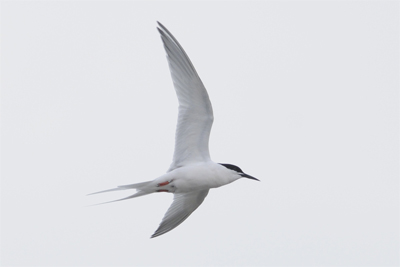
    After a successful sailing around Coquet Island last Thursday, with sightings of Roseate Terns perched and flying,

    Roseate Tern,Northumberland,Coquet Island,bird photography tuition,bird photography holidays,Northern Experience Wildlife Tours
    Britain’s rarest breeding seabird

    our re-arranged North Pennines Safari was on Friday.

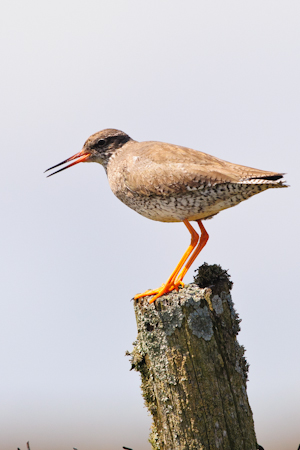
    I collected Liz and Ronnie from The Swan and we headed southwest into the hills.  Only a month earlier we had a North Pennines trip in near-zero temperatures, but now everything was much more springlike.  Curlews were gliding across the moors, their haunting cries carrying on the breeze, Lapwings were displaying in that bizarre way that has you half convinced they they’re just going to crash into the ground and there were plenty of birds with chicks; Redshank, Curlew, Lapwing, Golden Plover and Red Grouse were all mindful of their offspring as we made our way across the moors.  Common Snipe appeared unexpectedly from clumps of rush and one obliging bird perched on a fence post as we sat just a few metres away.  Pairs of noisy Redshank flew from fence post to dry stone wall and back again and, like the Snipe, one bird perched obligingly (like the one pictured here from 2011).

    Common Redshank.Tringa totanus,bird photography holidays,bird photography tuition,Northumberladn,North Pennines,ww.northernexperienceimages.co.uk

    Liz’s feedback e-mail, at the end of the holiday and our day in the North Pennines, summed it up so well – “a real birding day” 🙂

  • Flying in for a day birdwatching in the North Pennines

    I always enjoy meeting up with our previous clients again, and Saturday morning found me at Newcastle Airport waiting to meet Jacob and Nancy as they arrived for a couple of days birdwatching in Northumberland.  They were going to be spending Sunday on the Farne Islands, but our destination on what was developing into a gloriously sunny Saturday was the North Pennines.

    Just 12 days earlier I’d been marvelling at the temperature of 1C at 10:30am but now Curlew, Lapwing and Oystercatcher were all flying around and calling noisily as we reached the higher ground southwest of Hexham, Skylarks were singing exuberantly against the azure sky, Meadow Pipits were ‘parachuting’ down at the end of their song flights and Common Snipe were calling from concealed positions in the grassland.  In the stunning light, Barn Swallows were eye-wateringly iridescent, a pair of Golden Plover flew in front of us and a pair of Red Grouse watched closely over eight chicks.  Red Grouse was a lifer for Jacob and Nancy and one male allowed a very close approach and provided a lot of photo opportunities for them.  Eyebrows, raised, eyebrows lowered, facing left, facing right, staring into the lens; he went through a veritable supermodel repertoire of poses before seemingly melting into the vegetation.

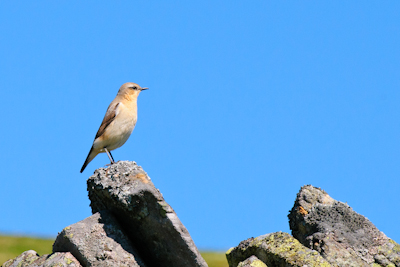
    As we travelled across a high moorland road, a Northern Wheatear posed obligingly for photographs.

    Northern Wheatear Oenanthe oenanthe,bird photography,bird photography holidays,bird photography courses,birdwatching holidays,Weardale,County Durham,North Pennines,www.northernexperienceimages.co.uk

    Skylarks and Meadow Pipits provided a memorable aural backdrop to our lunch stop, and a Golden Plover was silhouetted on top of a nearby ridge, keeping a close eye on it’s territory.  Near perfect weather, a gentle breeze, spectacular landscape and stunning birds; what more could you want from a day’s birdwatching?