Category: Northumberland

  • Creatures of the night

    As darkness descends it seems like a whole different world appears, and in the remnants of the daylight you need to be alert as the creatures that frequent the shadowy hours make an appearance.

    With Lawrie and Linda, Mike and Mary & Pat and Janice all safely in the car, we set off for an afternoon and evening around Druridge Bay and south east Northumberland on an Otter Safari.  One of the best things, about any wildlife that we go looking for, is that it’s in a series of superb wildlife-filled locations so there’s always something to look at.  At this time of the year, that’s often passage waders like Dunlin and Ruff, large roosting and feeding flocks of Lapwing, Golden Plover and Curlew and gatherings of Linnets and Goldfinches in newly harvested fields.

    Invariably, the part of the trip that I get really excited about is that bit that takes place in the half-light.  As we walked along a riverbank, a Water Vole put in a very brief appearance and a Grey Heron, stalking through the shallows, took flight in alarm as Mallards hurried nervously away from the vegetation at the water’s edge.  Something was unsettling them, and Lawrie soon picked up the menacing figure of an Otter as it crossed the river.  Two more brief sightings, as Daubenton’s Bats skimmed the water surface below us, and then it was too dark to make out any detail and we headed back, under a clear sky.

  • Not so Ruff

    Wading birds seem to hold a fascination for so many birdwatchers, from beginners all the way to birders with decades of experience, and Druridge Bay and southeast Northumberland at this time of year is often very productive.

    I collected Reg and Val (for their second trip within a week) and Nick from Church Point and we started with one of our favourite birds, and one that always impresses, Mediterranean Gull.  With the strong breeze driving sand across our field of vision, there was a real wild feel to the experience of watching the birds as they withstood the elements.

    Heading north along the coast we witnessed one of the oddest pieces of fieldcraft that I’ve seen with clients.  Checking out a small subsidence pond, we were enjoying the sight of Dunlin, Ringed Plovers, Common Redshank and a juvenile Curlew Sandpiper all probing and prodding through the mud at the water’s edge.  Another birdwatcher made his way stealthily to the wall along the roadside, and settled to watch the birds from a crouched position.  Good fieldcraft, the birds continued feeding appearing completely unconcerned by his presence.  Then, when he was ready to leave, he popped up like a jack-in-the-box flushing all of the birds!  As the flock eventually settled back down, there was no sign of the Curlew Sandpiper.  It’s an important lesson that fieldcraft skills should always be applied when retreating from your position as well as when approaching it 🙂

    Cresswell Pond continued the wader theme, with some very obliging Common Snipe, Dunlin, Ruff and both Bar-tailed and Black-tailed Godwits (standing alongside one another and allowing excellent comparison of the differences between these species).

    At East Chevington, Reg spotted a distant bird perched on a fence post and commented that it didn’t look quite right for a Crow.  Tucked down against the wind, the view through our telescope soon revealed that the bird was a juvenile Marsh Harrier.  It remained perched for several minutes, regularly turning it’s head to reveal a lovely orange/cream crown contrasting with the uniform dark-brown of the rest of it’s plumage.  Hundreds of Lapwings and Starlings were flying back and forth, twisting and turning against the very stiff breeze, Cormorants sat motionless and we headed back to Newbiggin at the end of our day.

  • A Whale of a time on a millpond

    Our ‘Whale and Dolphin Cruise’ has become an integral part of the Northern Experience Pelagics annual itinerary, and with an excellent weather forecast for yesterday’s sailing (and some detailed discussions between Martin and our skipper, John) optimism was running high.

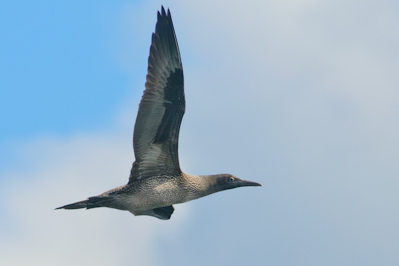
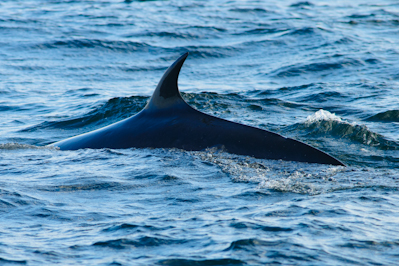
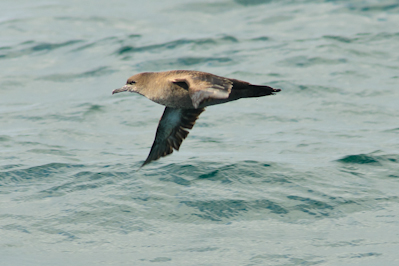
    As we boarded Glad Tidings 5 with 50 clients, there was a really sociable atmosphere.  Plenty of returning clients, and lots of new faces, were soon scanning the sea all around the boat.  Martin started in the wheelhouse with John and they soon spotted a distant whale surfacing.  The quite young animal surfaced again as we passed, another could be seen away to the north near the Farne Islands, and we headed in the direction of a feeding frenzy of Gannets.  Another whale appeared, then another, and another.  All told, in 4 hours we had 5 or 6 different Minke Whales 🙂  Gannets provided a spectacular wildlife experience as vast flocks plunged into the sea in search of Herring, 3 Sooty Shearwaters soared effortlessly past the boat, a single Great Skua carved a path through the circling mass of Gannets, Fulmars glided by on stiff outstretched wings, a small flock of Kittiwakes lifted from the water as the boat approached, and one of the largest cheers of the day came when a small pod of Harbour Porpoises surfaced just ahead of us.  Martin was kept busy, answering lots of questions from our very enthusiastic clients about whales and dolphins in the North Sea, and managed to grab a few images as well 🙂

    Sooty Shearwater,Northumberland,North Sea,pelagics,bird photography
    Sooty Shearwater
    Northern Gannet,pelagics,North Sea,Northumberland,bird photography
    Northern Gannet
    Northern Gannet,North Sea,Northumberland,pelagics,bird photography
    Northern Gannet
    Minke Whale,whale watching,dolphin watching,North Sea,Northumberland,pelagic,wildlife photography tuition
    Minke Whale
    Minke Whale,whale watching,dolphin watching,North Sea,Northumberland,wildlife photography tuition
    Minke Whale
    Minke Whale,whale watching,dolphin watching,North Sea,Northumberland,wildlife photography tuition
    Minke Whale
    Minke Whale,whale watching,dolphin watching,North Sea,Northumberland,wildlife photography tuition
    Minke Whale

  • Mud, Murmurations, Med Gulls and Marsh Harriers

    Sometimes, just one animal or bird can make a trip a special experience for our clients.  Other times it’s the scenery.  Maybe a combination of the weather, Northumberland’s stunning skies and the ‘atmosphere’.  Occasionally, it’s a little bit of each.

    I collected Keith and Anne from their home in the Tyne valley, and headed east towards Druridge Bay and southeast Northumberland.  As we scoured the woods for Red Squirrels, the high winds made it impossible to pick out any movement that might have been our quarry.  Dragonflies hawked around the edges of the trees and some rather late tadpoles were wriggling around in shallow ponds.  A quick stop at Church Point, produced the hoped-for Mediterranean Gulls; beautiful ghostly pale adults hanging in the breeze over our heads.

    Then we were on our way up the coast in search of mud, glorious mud.  Dunlin, Ringed Plover, Redshank, (Grey) Red Knot and an immaculate Curlew Sandpiper were all found at very close range and then noisy skeins of Greylag and Canada Geese filled the air around us.  Alarmed by the sudden appearance of a juvenile Marsh Harrier, the geese lifted from where they were feeding and headed straight for the nearest pool…where they encountered an adult Marsh Harrier, hanging almost motionless above a reed bed, held in position by the wind.  Small groups of Starlings started to appear, tossed around like leaves on the breeze, merging to form a murmuration.  The late evening light made the haystacks in nearby fields seem to glow, the sky was quite breathtaking and, as dusk rapidly advanced and the wind strengthened, flocks of Golden Plover and Curlew arrived to roost as we headed west again.

  • North Pennines 04/09/12

    One of my favourite locations, at a time of year when it isn’t often visited, and returning clients (always a pleasure!) made for an excellent day’s birdwatching in southwest Northumberland and north west County Durham yesterday.

    I collected Reg and Val from their home in Newcastle and, as we headed west along the Tyne valley, the clear blue sky promised a good day.  Starting with a walk along the River Allen, we soon encountered a mixed flock that included Nuthatch, Coal Tit, Great Tit, Blackbird and Robin.  The river produced some stunning Grey Wagtails and a brood of Goosanders, shepherded by mum as they scoured the river, heads held below the surface as the current carried them along.  Common Buzzards were calling from high against the azure sky and we could have been forgiven for thinking it was a nice Spring day – other than that the only birds singing were Robins.

    Once we were out on the moors. we started to encounter Red Grouse.  Always a stunning bird, whether you’re looking at the handsome males or the intricately patterned females, the sunlight really brought out the best in this moorland specialist.  Black Grouse proved slightly more difficult, unsurprising as there was a ‘stiff’ breeze racing across the fells of the North Pennines AONB 🙂  After a lot of effort, we did find three young Blackcocks sheltering between clumps of rush, and they were very obliging for Reg’s camera.  As we crossed one (very) minor road, we came across my own personal highlight of the day.  Two Ravens appeared over a nearby ridge and headed towards a plantation at the top of the ridge ahead of us.  As they soared higher, a third Raven came into view and began tumbling.  The two closer birds responded with a breathtaking display of aerobatics and, as they plunged towards the ground before swooping up again, their deep croaking calls carried on the breeze to where we were sitting.  A special bird in a special place, and simply awe-inspiring 🙂

    birdwatching,northumberland,north pennines aonb,Goosander

    birdwatching,northumberland,north pennines aonb,Red Grouse

    birdwatching,northumberland,north pennines aonb,Black Grouse

  • Feels autumnal

    As I drove through the rolling hills of rural Northumberland to the west of Morpeth, the weather was looking superb; blue sky, sunshine, a nice breeze.  I collected Mark and Nicola and we headed back towards the coastal plain, for an afternoon of birdwatching around Druridge Bay and southeast Northumberland.

    The conditions looked good for raptors, and it wasn’t too long before we had our first Common Buzzards of the afternoon.  Then another raptor appeared, soaring just overhead.  With long, thin wings, and a long narrow tail, it didn’t look like another buzzard, but it had the sun behind it so was a difficult to view silhouette.  Eventually it moved away to the north and, as it engaged in some mid-air sparring with one of the buzzards, its identity was revealed; juvenile Marsh Harrier.  As the two protagonists drifted further north, the orange crown of the harrier flashed in the sunlight as the bird soared in circles, contrasting with the rich dark chocolate brown of the rest of its plumage.

    Reaching the coast, we stopped off at Newbiggin to look for Mediterranean Gulls and it didn’t take too long before we spotted our first as it flew across from the southern end of the bay and landed on the beach right in front of us.  More followed, including a juvenile bird, and Nicola soon commented that, regardless of any plumage differences, the structure of the birds was noticeably different to the nearby Black-headed Gulls.  Leaving the Meds behind we began our journey along the coastal road through Druridge Bay.  A quick check of the Bewick Drift Flash produced 9 Ruff, 10 Dunlin and a Curlew Sandpiper and we spent a little while comparing the differences between the two sandpipers as well as having a very close view of just how different male and female Ruff are in terms of size.

    Our picnic stop, overlooking the North Sea, produced a beach filled with Ringed Plovers, and a lone Sanderling, as well as soaring Fulmars and rafts of Eiders, bobbing in the gentle swell far below us.  It was starting to turn colder, breezier, and the first drops of rain started to fall.  Cresswell Pond was very productive, as it has been for a few weeks now, but a few species really stood out;  a Spoonbill, which had been at East Chevington during the afternoon, flew in and made its way right round the edge of the pond, sweeping that extraordinary bill from side to side in search of food, Yellow Wagtails arrived to roost and sat along the base of the reeds, where they provoked a very aggressive response from the Common Snipe that were feeding there and a Barn Owl came out following a heavy shower and caught a vole in the dunes away to the north before carrying it within a few metres of where we were sitting.

    The finale to the trip came beside a fast flowing river, downstream was dark, inky blackness, but upstream the water was lit by the eerie glow from a nearby town.  Daubenton’s Bats were trawling the water surface, their presence betrayed by the expanding circles where they’d gaffed prey at the surface.  Then, a ripple too big to be from a bat; and an Otter surfaced for a few moments before disappearing into the dark.
  • Wading through August

    August is always a stressful month for NEWT.  As well as leading our regular safari days, it’s British Birdwatching Fair month, and the week leading up to the Bird Fair is always frantic; checking that we’ve got everything for the stand, mounting a new series of limited edition prints for sale, liaising with all of the other Birdwatching Northumberland partners to make sure that everybody knows exactly which aspects of the project they’re  responsible for, and making sure that we’ve got a supply of local beer for the 4pm ‘free bar’ on our stand 🙂

    Then, after a busy three days, it’s all over and we head north…this year to the thankfully cooler temperatures of Northumberland.  From leaving Rutland at 6pm on Sunday to arriving back in Northumberland just after 10pm, the temperature drop was an impressive 14C.

    Yesterday was our first post-BirdFair trip, a day of birdwatching around Druridge Bay and southeast Northumberland.  I collected Alex from Church Point, and we started with a good scan of the beach. 4 Mediterranean Gulls were close by and a small group of waders contained Oystercatcher, Common Redshank, Sanderling and Ringed Plover. Waders proved to be a theme for the day and we added Common Sandpiper, Spotted Redshank, Lapwing, Ruff, Dunlin, Knot, Curlew Sandpiper, Curlew, Greenshank, Black-tailed Godwit, Turnstone, Wood Sandpiper, Common Snipe, Golden Plover and Avocet to the day list as we made our way around NEWT’s local area.  With an impressive supporting cast that included Water Rail, 3 Little Egrets and a Spoonbill it was a great day to be watching the edges of our local ponds, and a real education in just how much inward and outward movement of birds there is from the feeding and roosting wader flocks that grace southeast Northumberland at this time of the year.  It was a great day too, to appreciate just how friendly and helpful local birdwatchers are in Northumberland – many thanks to Len and Gill for pointing us in the direction of the Wood Sandpiper, and Gill’s sharp eyes picked out the Spotted Redshank which then vanished without trace soon after being found and appreciated 🙂

  • Druridge Bay 08/08/12

    In very summery weather I arrived at Newton to collect Yvonne, Mark and Marie.  Sunglasses and sun cream were the order of the day and we headed down to Druridge Bay and southeast Northumberland.  Family trips are always a bit of an unknown, but having a sharp-eyed 10 year old on her first visit to Northumberland really helped 🙂

    I’ve pondered a great deal over the last few years on what it is about wildlife that can really grip the imagination and attention of the younger generations and I’m still not certain that I really have the answer.  In fact, there probably isn’t one simple answer.  I’ve been involved with mini-beasting sessions with our local First School and seen children get really enthused about slugs (not my own personal favourite…), I’ve seen teenagers get excited about bats, owls, Otters and beetles but, one thing is almost always true…and that’s that ‘cute’ is good 🙂  I’m in my mid-40s, I could be cynical and jaded, but ‘cute’ still works for me too.  And cute was 3 Avocet chicks, paddling in shallow water and swinging their heads from side-to-side in the way that their parents do when feeding.  A Barn Owl gave repeated fly-bys in the sublime evening light, flushing 27 Common Snipe at one point, and we headed back to Newton, where the Stilt Sandpiper (the rarest bird we’ve seen with clients) was still present, and wading between Black-headed Gulls.  In the twilight, bats passed low over our heads and a froglet hopped across the path in front of us.  Even the sometimes apparently ‘wildlife-poor’ days of the summer can produce incredible experiences, and the contribution our clients make to that experience is vital.

  • The darkening gloom

    Despite protestations from Sarah, I still think that you really can’t beat the evening when it comes to wildlife experiences.

    As the rain poured (and I really do mean poured) down on Sunday afternoon, I ‘phoned Peter to check that he was managing to make his way to Northumberland successfully for our evening mini-safari around Druridge Bay and southeast Northumberland.  As I collected him at 6pm, the weather was improving and we headed to the coast.  Our regular Little Owl was perched at the entrance to its nest hole, soaking up the warm rays of the evening sunshine, lazily turning its head to peer at us from above.  An adult Mediterranean Gull was a surprise find just south of Cresswell village and, as Gannets soared offshore on those remarkably long thin wings, we headed to Cresswell Pond.  All of the assembled Lapwings, Curlew, Golden Plover, Dunlin, Oystercatcher and Avocets lifted in alarm as a Barn Owl passed by on its way to the dunes in search of voles.  Willow Warblers were flycatching, Linnets were looking shockingly red in the low sunlight and we continued on our way up the coast.  Three more Barn Owls gave an impressive tally for an evening’s birdwatching and a female Marsh Harrier perched very obligingly on a fence post.  The light was deteriorating and as we stood by a river, swollen by the heavy rain, a leap, a small splash and the top of its head racing across from one bank to the opposite was the one Otter of the evening.  A ferocious predator making its way into the darkening gloom.

  • Against the light

    In near-perfect conditions we arrived at Seahouses yesterday evening for our 3hr coastal cruise on Ocean Explorer.  As well as some of our ‘regulars’ we had Andy, Jan and Sam on board, on their final evening in Northumberland.

    Soon after heading south down the coast towards Dunstanburgh we came across a couple of Harbour Porpoises.  Typically shy, they surfaced a few times and then vanished into the depths.  Gannets featured throughout the evening, passing both north and south, and one or two were seen diving.  Puffins, Guillemots and Razorbills were bobbing about on the water and a mixed flock of Arctic and Common Terns and Kittiwakes had found something to hold their interest.  We stopped to see if anything else would come along, and were soon joined by a Fulmar, stunning in the beautiful light.

    Fulmar,bird photography tuition,Northumberland

    We gradually headed north, and approached the Farne Islands as the sun began to set.  Grey Seals poked their heads out of the water and came off the rocks to investigate our boat, Cormorants and Shags perched sentinel-like on the rocky islets, Turnstones prodded and poked their way around the edge of the mass of Seals and Sam punched the air in elation as his first Curlew flew by 🙂  The setting sun provided an opportunity to experiment with an aspect of photography that I’ve never really been able to get to grips with, and one which I’ve always been fairly ambivalent about.  Excellent light, excellent location, all the ingredients were there to convince me…

    Farne Islands,Inner Farne,Northumberland,landscape photography tuition,seascape photography


    Farne Islands,Northumberland,landscape photography tuition,wildlife photography tuition,seascape photography