Tag: Siskin

  • Feeding time

    I’ve never been good at sitting in the office and concentrating on one task for any length of time.  Having an office window that looks out over the 76ha of mixed woodland of Choppington Woods LNR is a real blessing, allowing me to mix work and birdwatching.  When I need to stretch my legs, a quick trip downstairs lets me open the patio door and turns the kitchen into a very comfortable and convenient bird photography hide.

    Our garden is currently hosting at least 8 Bramblings, along with Greenfinches, Goldfinches, Chaffinches, Bullfinches, Blue, Great, Coal and Long-tailed Tits, occasional visits from Siskin, Redpoll and Treecreeper and regular fly-throughs by our local Sparrowhawks.

    It’s a wonder I ever get any work done 🙂

    European Goldfinch, bird photography, wildlife photography
    Goldfinch
    Chaffinch, bird photography, wildlife photography
    Chaffinch
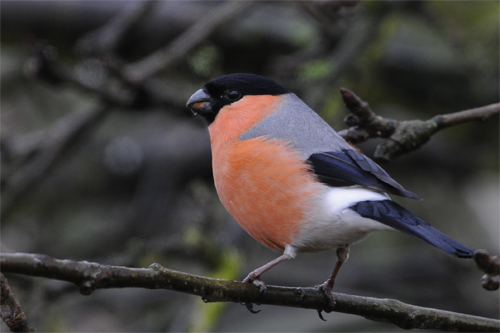
    Bullfinch, bird photography, wildlife photography
    Bullfinch
    Brambling, bird photography, wildlife photography
    Brambling
    Brambling, bird photography, wildlife photography
    Brambling

  • Early morning – Choppington Woods

    Early morning, and the ground underfoot varies from frozen crunchy to treacherously boggy.  The sky overhead is a deep blue, the first rays of sunlight yet to bathe the fields, hedgerows and woodland in that magical golden glow. Clattering wings herald the departure of nearly 1000 Woodpigeons from their overnight roost, and a Blackbird rustles through the vegetation in the hedge bottom.  A menacing shape carves through the air just above the treetops; the menacing flap-flap-glide of our local male Sparrowhawk, beating the bounds of his territory in search of the wintering flocks of Siskins, Redpolls, Crossbills, Chaffinches and Bramblings.  The pungent scent of a Red Fox marks an area that I’ll want to stake out with my camera on another day, and as I head back towards home a Roe Deer springs across the path just a few metres ahead of me and disappears into the plantation just behind our house.  An excellent way to prepare for the day ahead 🙂

  • Valley of tranquility

    Although our Cheviot Valleys and North Pennines safaris are concentrated in the springtime, we run a few trips to those inland areas in the late summer and early autumn.  The final day of August was a trip to the Cheviots, and it could hardly have been better; the weather was wonderful, there were hardly any other people to be seen anywhere and the wildlife was, well, as good and varied as we would expect.

    After collecting Hamish and Vanessa we drove past Morpeth then up the A697 and through the ford at Coldgate Mill.  The Happy Valley was deserted and peaceful; a Slow Worm was basking in the dappled light between gorse bushes, Small Copper butterflies (a personal favourite) were feeding and sunning themselves and there were even a few Silver Y moths.  We get these migrants in our trap occasionally, and I’ve seen them in profusion on the coast, but these were well inland.  

    Camera-shy Silver Y
    Goldcrests were calling, and eventually spotted, Spotted Flycatchers, Treecreepers and Long-tailed Tits were all found in one tree, Robins seemed to be everywhere we went and the first of the day’s Common Buzzards, rising rapidly in a thermal, suggested that searching skywards could be productive for birdwatching.

    After lunch we walked along the far end of the valley.  Red Grouse were cackling hysterically on one side of the valley, at the same time as we could hear a shooting party on the other.  Siskins and Lesser Redpolls were feeding around the treetops, although they did pause briefly so we had a chance to look at them.  The warm sunshine and excellent visibility mean that it did turn out to be a raptor day; as well as Common Buzzards there were regular Common Kestrels and a Sparrowhawk then, as we walked back to the car park, a Peregrine  soared majestically and menacingly against the blue sky overhead.  Sadly our only Adder of the day was roadkill, although it had gathered an interesting collection of flies and beetles.

    One thing that our safaris have proved to be is a break from the hustle and bustle of everyday life.  If you need to get away from it all then give us a call, or if you know somebody who would benefit from a day of chilled out wildlife watching then our gift vouchers could be just the thing they need 🙂

    Hamish kindly provided some images from the day (including the Silver Y that really didn’t want to be photographed) and my own favourites are here;

    Mother Nature ages trees better than any bonsai artist can!


    Northumberland heather in bloom
  • Birdwatching; Northumberland in the rain

    I’ve always maintained that, whatever the weather (with the possible exception of a howling gale), it’s always possible to have a really good day birdwatching in Northumberland.  Yesterday’s forecast didn’t promise too much in the way of good weather though and, as it turned out, we had to contend with drizzly rain for the whole day.

    I collected Reg and Val from Newcastle and we set off towards the Harthope Valley.  This is one of NEWT’s favourite locations; spectacular scenery, excellent birdwatching and the all important absence of crowds.  A holiday group from another birdwatching company were in the valley as well, though.  Just before we reached the turning for Langleeford, a Brown Hare was sitting in a roadside field.  As we’re in June, and all of the trees are in leaf, a lot of our birding was done by ear.  Grasshopper Warbler was a nice find, Oystercatchers were chasing each other up and down the valley, a Cuckoo flew past, pursued by Meadow Pipits, the shivering trill of a Wood Warbler could be heard over the running water and Grey Wagtail, Common Sandpiper  and Dipper were all along the water’s edge.  Willow Warblers were singing from all around, Siskin and Redpoll were picked up on call and then eventually gave excellent views, Snipe were displaying over a recently planted area on the opposite side of the valley, Curlews were singing their haunting song (so much more appropriate on windswept, remote moorland than on the coast) and then I heard it; a call that is familiar in the winter, but not in the Cheviot valleys in June.  I was still trying to convince myself that I’d misheard the call, when the bird appeared in front of us – unmistakeable really, there was a Twite. I looked, looked away, looked again;  no, I wasn’t imagining it.  It’s a species that’s suspected to breed in tiny numbers in Northumberland, although there seems to be a lack of confirmed records for the breeding season.  Perhaps it was passing through, or maybe, just maybe, there is a breeding site in the Cheviots.

    After the excitement of such an unexpected find, we had one major target species left for the day.  Ring Ouzel is another bird that you may find on coastal headlands in the autumn, and there are sporadic wintering records as well, but the place to see them is surely the remote upland valleys where they breed.  As we made our way up a steep-sided valley we had excellent views of a recently fledged Dipper, and I could hear an ouzel singing.  We continued and then the bird appeared overhead, flying from one side of the valley to the other, singing as it crossed.  It dropped out of sight, still singing, before retracing it’s route over the valley again.  This time we knew where it had landed so we crept along a track towards it.  Patience and persistence paid off (as they so often do) and we enjoyed prolonged views of the bird as it sang from a clump of heather on the skyline.  The rain was becoming colder and more persistent so we headed back to the car and then down the A697 back to civilisation.

  • Another exclusive…or two

    Friday saw us in the Cheviot Valleys, enjoying probably the best weather so far this year, leading another Prestige Tour.  With a client fascinated by geology and botany it was an excellent day out, with the abiding memories being the chuckling of Red Grouse in the Harthope Valley and a yaffling Green Woodpecker at Alwinton, that culminated with a meal at the Angler’s Arms at Weldon Bridge.

    Yesterday we had a Kielder Prestige Tour that that had been arranged as a 70th birthday present.  Collecting our clients from Belford we headed southwest.  After a fine drive in the beautiful weather, we reached Bellingham and left the public roads behind for an hour as we journeyed through the forest.  A pair of Red Grouse on a moorland edge provided excellent views, Roe Deer crossed the track in front of us and Common Buzzards flew close by across clearfell areas.  Back in civilisation we stopped for a comfort break and found our first Common Crossbills of the day.  Small groups were flying overhead, giving their distinctive calls, and a few were perched at the top of nearby trees dismantling cones with ease.  Huge numbers of Chaffinches were around the feeding station at Leaplish and, as the day progressed we had excellent views of Siskins, Goldeneye, and an incubating Oystercatcher, as well as one of the Osprey pair that have returned to Kielder this year.

    The journey back retraced our route from the morning, with one exception.  The birthday boy suggested a short-cut to Chatton, and that proved to be very fortuitous.  Just before Chatton village, myself and Vic, who were in the front of the Landrover, noticed a large bird in a flooded field.  As we stopped…there was a White Stork!  It’s legs were hidden by the bankside vegetation, so we couldn’t see if it had the most obvious sign of captivity; colour rings on it’s legs.  As it stalked along the bank, flushing a pair of Oystercatchers, those legs were gradually revealed to be bare of any adornment.  Howard managed to take some photos, but the bird was very wary and quickly began to head away from us.  With White Storks, there’s always the taint of ‘escapee from captivity’ but this would be a good time for an overshooting bird returning from it’s wintering quarters in tropical Africa and, regardless of it’s origin, this was one stunning bird.  An unpredictably exciting end to the day out.

    White Stork, Chatton, Northumberland 17/04/2010
    White Stork, Chatton, Northumberland 17/04/2010
  • A forest foray

    After a Druridge mini-safari on Tuesday, which included a visit to the Common Crane near Eshott, yesterday was something completely different with a Kielder Safari.

    After collecting Ruth and Diana from Stannington we took the scenic route up through Knowesgate to Bellingham, in the wilds of west Northumberland.  That’s the point where we deviate from the public roads and follow a track that’s off-limits to the public.  Along the way we saw a few Buzzards, but a superb male Goshawk, and an incredibly skittish Red Fox, were the highlights of the drive through the forest.  Around the reservoir there were Crossbills and Siskins everywhere.  Lunch just over the border in Scotland was followed by more birdwatching and the spectacle of a Common Buzzard catching, dismembering and consuming a vole.  With lots of other buzzards up in the air whenever the sun came out, there was plenty to see.  A stunning drake Mandarin brought a splash of garish colour to the afternoon and a long-distance ‘scope view of last year’s Osprey nest revealed a small white blob – probably the head of one of the pair that have returned to the site.  As we headed back towards civilisation a large flock of Fieldfares and Redwings near Bellingham was a reminder that the winter is only just behind us.

  • Big Garden Birdwatch

    We had a leisurely hour of birdwatching yesterday morning.  With all of the feeders stocked with top class bird food from Poltross, and a bacon and egg butty and a mug of coffee in hand, we settled down into our respective positions on either side of the kitchen.  With commentary on the dismantling of Andy Murray in the background, binoculars were trained on the feeders, the ground, the shrubbery and the Ash tree.  After a slow start, things began to gather pace and we finished with 76 birds of 20 species;

    Collared Dove 4

    Wood Pigeon 2

    Jackdaw 1

    Carrion Crow 1

    House Sparrow 1

    Starling 7

    Blue Tit 2

    Great Tit 3

    Coal Tit 7

    Willow Tit 2

    Long-tailed Tit 3

    Chaffinch 14

    Greenfinch 5

    Goldfinch 2

    Bullfinch 4

    Goldcrest 1

    Robin 6

    Dunnock 2

    Blackbird 5

    Redwing 4

    There were a few absentees as well, all seen regularly in the days leading up to the Big Garden Birdwatch;

    Jay

    Great Spotted Woodpecker

    Sparrowhawk

    Siskin

    Maybe 25 species in 1hr is a target to aim for in our garden next year.

  • A bit of this…

    The last few days have been fairly quiet, although quite varied.  On Thursday I was at the North Northumberland Tourism Association AGM at Paxton House.  On arrival the car park was close to full, with just a couple of spaces not occupied.  I reversed my Mondeo into one of them, thinking that the snow sounded very crunchy, and went into the meeting.  For me the highlight of the event was a talk by Laurie Campbell, covering things that he’s photographed in and around North Northumberland.  Returning to my car and the inevitable…it wouldn’t move anywhere with the wheels spinning on the snow.  Luckily Chris Calvert from Bamburgh Castle was leaving at the same time and, along with Verity from the Grace Darling Museum, he helped to push the car clear of the snow.  I wouldn’t have had that problem in the Landrover…

    On Friday I chaired a committee meeting of the Southeast Northumberland Tourism Association.  As a new project, all of the committee are putting in a lot of effort and our AGM will be in February, the website should be up and running soon and we’re designing a leaflet to highlight the tourist attractions in our area.

    On Sunday we carried out our WeBS count (a week late but the Birdwatching Northumberland Press Trip coincided with the scheduled count date).  Northeasterly winds at the start of the month have deposited huge volumes of sand a long way up the beach (and along the footpath in Cresswell village) almost to the height of the dunes in some places.  The highlight was a loose group of divers on the sea, 15 Red-throated, 2 Great Northern and 1 Black-throated.  As we approached the Chibburn mouth, the end of our survey section, Sarah commented on the sheer walls of sand next to the Chibburn as it wound it’s way down the beach.  Not surprisingly, Sarah took the sensible approach and walked well away from the edge…at least I earned some brownie points by removing Sarah’s ‘scope and tripod from my shoulder and throwing it clear as the sand gave way beneath my feet.

    Now I’ve got a day in the office and it’s gloomy and overcast.  Two Jays and a Great Spotted Woodpecker are in the apple tree and Siskins have started visiting the feeders (after merely flirting with the boundary of our garden earlier in the winter).  Lesser Redpolls are still around the edge of Choppington Woods.  Can we set a new high total for our garden when it’s the Big Garden Birdwatch next weekend?

  • Snowbound

    OK, not quite, but since December 31st we’ve had about a foot of snow in total.  I cancelled our Otter Safari on Tuesday for safety reasons.  That decision proved to be the right one as we had heavy snowfall on Tuesday afternoon, making the roads even more hazardous than they already were.  I drove to Wallsend to collect Sarah from work, and the 13 miles took 80 minutes – and that was mainly on 3 of Northumberland’s major roads (A1068, A19 and A1058).  Cars were sliding from one lane to the next and I’m amazed that I didn’t witness any collisions.  We’ve been using the Landrover for the last couple of weeks so when Sarah wanted her car to drive to work yesterday we had to dig it out of the snow.  I can’t recall having to do that in the 17 years that we’ve lived up here.

    For the last day and a bit I’ve had a throat infection so I’ve stayed in the house.  That hasn’t been a huge burden though as it’s allowed me to spend a lot of time watching (and filming) the birds around our feeding station.  For as long as I can remember, birdwatching has been something that’s always been an option when I’m unwell.  The Brambling that Sarah found on Sunday is still around, Long-tailed Tits are visiting much more frequently than they ever have before, the Blackbird count has risen to 9, at least 5 Robins are trying to hold dominion over the patio and flocks of Siskin and Lesser Redpoll are patrolling the edge of Choppington Woods and the bottom of our allotment.  Yesterday even a Goldcrest joined the chirping masses around the apple tree.  With niger seed, peanuts, fat balls, mixed seed and windfall apples our garden is like an all-you-can-eat buffet.  The one notable absentee from our usual list of visitors is Great Spotted Woodpecker, although we did see one in the woods on New Year’s Day.  Has one of our neighbours set up a more attractive feeding station?  We’d better raise our game, just in case.

  • Natural therapy

    This morning dawned clear and bright and my original plan had been to take the camera and head up the coast to shoot some of our stunning landscapes at sunrise and then use the available light and switch to a 500mm lens for some wildlife shots.  As it was I reluctantly decided against that option, mainly because I’ve got 6 stitches in my back and I’m going out as photographer on a survey boat tomorrow so didn’t want to put that in jeopardy (although let’s be honest – it’s a pelagic trip, so it would take a lot to keep me on dry land).  A couple more days will see the wound healing nicely and the forecast wintry weather should bring more photo opportunities next week.  I’m giving a lecture on December 27th so I’ve set myself the task of shooting at least 50% of the images for that in the next two weeks.  Hopefully starting with White-beaked Dolphin tomorrow.

    This afternoon I left the office and went for a walk around Choppington Woods, describing the reserve, it’s management and our plans for the future with the man who has the unenviable task of trying to do something similar with a somewhat less attractive bit of woodland elsewhere in southeast Northumberland.  As we stood on the boardwalk a Moorhen swam by and a flock of Siskins landed in the top of a bare Larch.  Always enjoyable to watch, they swirled around like a swarm of bees.  Redwings called overhead as they began dropping into the dense hawthorns where they roost and a Blackbird burst from a hedge in alarm as we startled it.  And there it was, the disappointment of the morning washed away by just getting outside and enjoying our local woodland.  Some of our clients have commented how incredibly relaxing they find our tours.  Perhaps there’s an escape for all of us (even if only briefly) from this modern, stressful world that we inhabit?