Tag: Red-throated Diver

  • Long, lazy swell

    When I was on the coast just south of Cresswell on Friday evening, I didn’t hold out much hope for Saturday’s pelagic going ahead;  a menacing sea, with waves forming towering peaks, didn’t look likely to abate.

    However, the sea is often fickle and Saturday saw nothing more than a long, lazy swell as we set sail into the North Sea for a day of offshore birdwatching along the coastlines of Druridge Bay and southeast Northumberland.  Conditions changed throughout the day with, at times, the sea as calm as a millpond.  3 ‘Blue’ Fulmars, 5 Great Skuas, a probable Pomarine Skua, 3 Arctic Skuas, 5 Sooty Shearwaters, 4 Red-throated Divers, 2 Manx Shearwaters, Teal, Puffins, Guillemots, Razorbills, Kittiwakes, Gannets, Mediterranean Gulls and Swallows! were all appreciated and a Grey Seal and 2 Harbour Porpoises added some mammalian interest.

    Gannet,Northumberland,offshore wildlife trips,pelagic trips,birdwatching


    Fulmar,offshore wildlife watching,pelagic trips,Northumberland,birdwatching


    Sooty Shearwater,offshore wildlife watching,pelagic trips,Northumberland,birdwatching


    Blue Fulmar,offshore wildlife watching,pelagic trips,Northumberland,birdwatching


    Mediterranean Gull,offshore wildlife watching,pelagic trips,Northumberland,birdwatching

  • White night

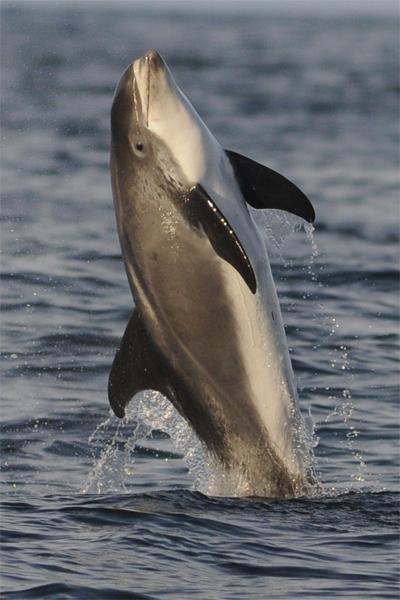
    After a couple of poor-weather weekends, the elements relented and we headed out from Royal Quays on the SarahJFK for a 4hr evening pelagic in the North Sea off southeast Northumberland.  Pomarine Skua, Manx Shearwater, Common Scoters and a summer-plumaged Red-throated Diver were the birdwatching highlights, but were eclipsed by what Stephen described as “the greatest wildlife experience of my life”.  We’ve got a busy programme of offshore wildlife trips over the coming months, and here a few images that show why they’re so popular;

    White-beaked Dolphin,dolphin watching trips,whale watching trips,Northern Experience Wildlife Tours

    White-beaked Dolphin,dolphin watching trips,whale watching trips,Northern Experience Wildlife Tours

    White-beaked Dolphin,dolphin watching trips,whale watching trips,Northern Experience Wildlife Tours

  • Winter birdwatching around the Farnes

    After postponing our Seal and Seaduck Special last Saturday (sea conditions were ideal, but it would have been really irresponsible to encourage anyone to drive on Northumberland’s roads at the time) we arrived at Seahouses Harbour yesterday morning ready for our final boat trip of the year.

    Everyone was well wrapped-up and we were soon boarding Glad Tidings VI.  As we sailed out of the harbour a veritable battery of long lenses was produced in readiness for the anticipated wildlife.  With a skipper and crewman with excellent eyesight and wildlife-spotting skills, 2 NEWT guides, and clients with sharp eyes as well, the boat was soon being manouvered to offer the best possible opportunities to view or photograph the wildlife.  After 13 years of organising offshore wildlife trips we know the importance of the skipper to the success (or otherwise…) of the trip and, with Craig and William, we were in excellent hands.

    The first half of the trip concentrated on the Farne Islands themselves.  A lot of the Grey Seals had well-grown pups, quite a few of the adults were moulting and there were a couple of cow seals still heavily pregnant.

    Grey Seal, Offshore wildlife photography, Northumberland, 11/12/2010
    Grey Seal
    Grey Seal, offshore wildlife photography, Northumberland 11/12/2010
    Grey Seal and the Longstone Lighthouse
    Grey Seal, offshore wildlife photography, Northumberland 11/12/2010
    Grey Seals

    Grey Seal, offshore wildlife photography, Northumberland 11/12/2010
    Grey Seals

    Shags were sitting around on the islands, Little Auks were bobbing about like corks in the increasing swell, and we had a brief view of a Black Guillemot as it flew from Gun Rock towards Inner Farne.  Heading north we enjoyed the sunny (but cold) weather and scoured the sea just south of Holy Island.  Plenty of Eider were sitting around, along with a pair of Scaup and several Red-breasted Mergansers but a Slavonian Grebe near Guile Point proved elusive.  Red-throated and Great Northern Divers were seen but in much smaller numbers than we would normally expect.  The journey back down the coast featured one of our favourite birds; Long-tailed Ducks were sitting around in groups of 10-15 and offering some excellent photo opportunities.

    Long-tailed Ducks on an offshore birdwatching trip, Northumberland 11/12/2010
    Long-tailed Ducks
    30 or 40 Common Scoters proved a bit more skittish and didn’t come near the boat.  2 Gannets were a bit of a surprise before we returned to the harbour.

    Although the wildlife was very obliging perhaps the best thing about the day was the truly beautiful lighting conditions, a real bonus for wildlife photography and something that all of the photographers on board commented on.  We can’t control the light, or the weather, but we keep taking clients to the right places at the right time…

  • On the beach

    Our monthly WeBS count should have been done a couple of weeks ago although, with weekends from mid-March through to mid-September fairly well occupied, this morning was the first chance I’d had to do the count.  With today’s tide times, and a mid-morning meeting with a potential sponsor for NEWT, I left the house just after 6am and drove to Cresswell.  Our usual method of covering the 3.75 miles of our survey section is to take 2 cars, leave one at East Chevington and then drive to Cresswell in the other, leaving us with a walk north along Druridge Bay.  As a solo survey it’s a 7.5 mile round journey, and good exercise on the sand.  As I headed north on a deserted beach, the southwesterly wind brought icy, stinging rain.  Nearly 100 Common Eiders were just offshore, 5 Common Scoter were just beyond them and a summer-plumaged Red-throated Diver brought a splash of colour.  A Sand eel had managed to become stranded almost 20m above the receding tideline so I did my good deed for the day and returned it to the sea, although it initially resisted my efforts to pick it up 🙂  Sandwich Terns were flying backwards and forwards along the shore, giving their creaky, rasping call, and a summer-plumaged Sanderling was feeding alongside 2 Ringed Plovers.

    With legs stretched and lungs filled with clean sea air I finished my walk and headed home.  All the while I was thinking about my early birdwatching days when I would get up before dawn and cycle to what I’d identified as promising local birdwatching spots.  Sometimes they produced the goods, sometimes they didn’t…but there was always that sense of having the world to yourself.  Sometimes, birdwatching in Northumberland can feel like that in the middle of the day 🙂

  • Not bad for mid-Feb

    Yesterday I led our first Safari Day of this week, to Lindisfarne and the North Northumberland coast.  Although I really enjoy trips where the main quarry is Red Squirrel/Badger/Otter/Fox/Roe Deer my lifelong love affair has been with birdwatching.  Northumberland is a top-quality destination for a winter birdwatching trip; just ask any of the writers/photographers who we’ve taken to the wilds of our home county during the cold(er) bits of the year.

    Yesterday was one of those days where you couldn’t wish for better conditions; clear blue sky, warm sunshine (although with sub-zero air temperatures for much of the day), no rain and only a very gentle breeze.  I collected Phil and Barbara from their holiday cottage near Guyzance and we followed the coast all the way to Lindisfarne.  Small groups of Pale-bellied Brent Geese beside the causeway were a novelty for birdwatchers from the southeast, who are used to seeing Dark-bellied Brents during the winter, and they commented immediately about just how black-and-white the Svalbard birds look.  Scanning the fields on the island we located a flock of ~800 Pale-bellied Brents, with a few Dark-bellied mixed in, allowing a direct comparison of the two.  The field was also shared by 200+ Curlew and smaller numbers of Redshank, Lapwing and Golden Plover.  Panic among a group of Starlings was traced to a 1st-Winter Merlin that helpfully perched on a post at the back of the Rocket Field.  It’s amazing how quickly time passes and after 2 hours we headed back towards the mainland among the general exodus that occurs as the end of safe-crossing approaches.  Another Merlin beside the causeway allowed even closer views so we stopped for a few more minutes of appreciation of this small predator.

    Our picnic spot, overlooking the mudflats between Holy Island and the mainland, provided excellent views of flocks of Lapwing and Golden Plover in the air as well as lots of Shelduck, Eider, Pintail and more PB Brents.  We enjoyed all of these in the company of Tom Cadwallender, Natural and Cultural Heritage Officer for the Northumberland Coast AONB, who was supposed to be meeting a camera crew from Inside Out.  When we left Tom, they were already 20mins late…

    Continuing down the coast, a very obliging Common Buzzard pranced around a field, presumably looking for worms.  The Skate Road held well over 1000 Common Scoter, 90+ Purple Sandpipers were huddled on the rocks as the incoming tide washed against their feet and a careful scan produced a few pairs of Long-tailed Ducks (Barbara’s 2nd lifer in a matter of minutes).  Red-throated and Great Northern Divers were, well diving mainly, and Slavonian Grebes were bobbing about just beyond the surf.

    Our final destination for the day was Newton, and the decision to detour from the coast route down the dead-end road to Low Newton proved to be an inspired one.  As dusk approached the assembled ducks on the pool (Teal, Goldeneye, Mallard, Gadwall) all provided entertainment as they called to each other.  Then, just a few feet in front of us, a Long-eared Owl silently hunting.  We all held our breath as it approached and then it veered away as silently as it had arrived.  The walk back to the Landy was to provide probably the best bird of the day, and one of those Northumberland birdwatching moments that was quite simply sublime; against an increasingly starry sky and crescent moon, with an impressive amount of Earthshine, a Bittern flew low over our heads and out over the bay.

  • A bit of this…

    The last few days have been fairly quiet, although quite varied.  On Thursday I was at the North Northumberland Tourism Association AGM at Paxton House.  On arrival the car park was close to full, with just a couple of spaces not occupied.  I reversed my Mondeo into one of them, thinking that the snow sounded very crunchy, and went into the meeting.  For me the highlight of the event was a talk by Laurie Campbell, covering things that he’s photographed in and around North Northumberland.  Returning to my car and the inevitable…it wouldn’t move anywhere with the wheels spinning on the snow.  Luckily Chris Calvert from Bamburgh Castle was leaving at the same time and, along with Verity from the Grace Darling Museum, he helped to push the car clear of the snow.  I wouldn’t have had that problem in the Landrover…

    On Friday I chaired a committee meeting of the Southeast Northumberland Tourism Association.  As a new project, all of the committee are putting in a lot of effort and our AGM will be in February, the website should be up and running soon and we’re designing a leaflet to highlight the tourist attractions in our area.

    On Sunday we carried out our WeBS count (a week late but the Birdwatching Northumberland Press Trip coincided with the scheduled count date).  Northeasterly winds at the start of the month have deposited huge volumes of sand a long way up the beach (and along the footpath in Cresswell village) almost to the height of the dunes in some places.  The highlight was a loose group of divers on the sea, 15 Red-throated, 2 Great Northern and 1 Black-throated.  As we approached the Chibburn mouth, the end of our survey section, Sarah commented on the sheer walls of sand next to the Chibburn as it wound it’s way down the beach.  Not surprisingly, Sarah took the sensible approach and walked well away from the edge…at least I earned some brownie points by removing Sarah’s ‘scope and tripod from my shoulder and throwing it clear as the sand gave way beneath my feet.

    Now I’ve got a day in the office and it’s gloomy and overcast.  Two Jays and a Great Spotted Woodpecker are in the apple tree and Siskins have started visiting the feeders (after merely flirting with the boundary of our garden earlier in the winter).  Lesser Redpolls are still around the edge of Choppington Woods.  Can we set a new high total for our garden when it’s the Big Garden Birdwatch next weekend?

  • Seal of approval

    Saturday was scheduled for our “Seal And Seaduck Special”  (sounds like a really bad curry concocted by the Farnes wardens to see them through the ‘hard times’, is in fact a 4 hour NEWT cruise around the Farne Islands and Holy Island).

    The weather forecast hadn’t been particularly promising (that’s not entirely true – it had been promising…heavy rain and howling southeasterlies) but a ‘phone call to William on Friday raised the possibility that we would be able to run the trip.  As we arrived at Seahouses Harbour we could see Glad Tidings VI approaching with the wardens safely on board and their zodiac towed behind.  We had time to welcome David Steel back onto the mainland and then we all boarded and set out into a noticeable swell. 

    The trip had a really good social event feel to it (as all of our pelagic trips tend to do); all three NEWT guides were on board, one of our clients was on her 5th trip with us (this time bringing two of her friends, for a trip they’ll probably never forget – for all the right reasons) and our friends Tim and Vera from Cottingburn House in Morpeth were among the other passengers.  Once we were across at the islands there were a lot of seals, and many of them were ‘singing’ their mournful song; surely the source of many legends of sea-monsters and mermaids.  1347 pups have been born on the islands this year and most of them have departed or moulted out of their cute baby fur already.  A Peregrine Falcon entertained everyone on board as it perched on the Pele Tower on Inner Farne before being pursued towards the Wideopens by a Herring Gull.  The next leg of our journey took us up to Holy Island and several Red-throated Divers flew by and a Great Northern Diver was on the water near Guile Point.  The weather changed at this point and sunlight illuminated Lindisfarne Castle.  We then began a slow run down the coast in search of seaduck.  Flocks of Common Scoter scattered well ahead of our arrival but Sarah managed to get some good images, showing the typical appearance of a flock of flying scoters;

    Common Scoters (Melanitta nigra)
    Common Scoters (Melanitta nigra)
    Common Scoters (Melanitta nigra)
    Common Scoters (Melanitta nigra)

    We also encountered one of the most beautiful birds that winters off Northumberland – Long-tailed Duck.  Camera shy?  These birds made the scoters look like they were hogging the limelight;

    Long-tailed Duck, the 'Stag Light' and St Aidan's Church
    Long-tailed Duck, the 'Stag Light' and St Aidan's Church

    The increasingly choppy seas were making photography frustrating but Sarah stuck gamely to it.  As she was using my camera, and a lens that she wasn’t familiar with, it was even more challenging than pelagic photography usually is.  As we passed by Bamburgh Castle (as impressive from the sea, if not more so, than it is from land) and then Monk’s House the tide turned the last 10 minutes of the cruise into a real experience.  That’s always the point when somebody on board reveals that they usually feel seasick on the boating lake in their local park…

    Nobody was adversely affected by the swell, everyone saw plenty of seals, and the flocks of seaduck flying around us added up to a real winter pelagic treat.  We couldn’t have asked for more from our final journey into the North Sea for 2009.