Tag: Greylag Goose

  • Watching the wildlife; Otter Safari 24/06/2013

    Sunday morning, and the weather forecast of impending doom brought the not unexpected ‘phone call that saw clients transferring from Sunday’s to Monday’s Otter Safari.  Monday afternoon, and the weather looked reasonable as I collected Ken and Rosemary from The Swan and then we drove to the coast and collected Paul, and Lisa and Steve, from Church Point.

    I’d seen at least ten Otters in the last month, so I was fairly confident that an afternoon and evening around Druridge Bay, southeast Northumberland and the Northumberland coast would have a higher-than-average chance of successfully locating our target species for the trip.  What we found raising interest in the local Mallards and Tufted Ducks in the mid-afternoon sunshine wasn’t an Otter, but the birds’ behaviour of slowly swimming along a reedbed, just a few metres from the shore, was a good indication of the predator they had spotted and we watched as a Red Fox slowly made it’s way along the edge of the pond followed by an ever-expanding entourage of ducks 🙂  At least eight Little Gulls provided some undeniably cute birdwatching interest and we continued our search.  The next mammal to join the day list was Rabbit, under-rated and attractive, but still not an Otter.  Flocks of geese and ducks seemed to be responding to some hidden menace;  getting out of the water, cackling as if startled, getting back in the water, getting out of the water…but still no sign of an Otter.

    As dusk approached, and a Roe Deer walked slowly along the edge of the pond, there was a change in the mood of the assembled ducks; suddenly alert, feeding stopped and heads were raised as high as their outstretched necks would allow.  A pair of Greylag Geese were doing the same and Paul soon spotted the cause of their consternation as the head, then the sinuous body, and finally the tail, of an Otter broke the surface 🙂  Heading into a small bay in the reeds it soon slipped out of sight, only to reappear a few minutes later; twisting and turning as it fed close to the reeds.  Common Pipistrelle, as we walked back to the car, and Brown Hare, as we drove back towards Newbiggin, were mammals #5 and #6 for the day and the trip was rounded off with a Barn Owl, flying from a fence post as we passed by.

  • Performer

    There are times when we’re out with clients and encounter a species that’s really unexpected, other times a bird or animal will do something really impressive and sometimes, just sometimes, it’s the often overlooked ‘little brown jobs’ that are the stars of the show.

    I collected Stephen from home in North Shields and headed north to collect Gordon and Mandy, and Susan for her second day out with me.  In weather that didn’t seem sure what it was going to do, we were soon watching a stunning Yellow Wagtail.  As House Martins, Sand Martins, Swallows and Swifts hawked insects just over our heads a singing Sedge Warbler was located at the top of a dead tree, and one of his near neighbours was busy answering the challenge laid down.  For over an hour everything we watched was accompanied by the frenetic warbling of this little bundle of energy; first he perched half way up a reedbed, then hopped higher to take a position on reeds that were so thin they swayed under his weight before beginning a series of song-flights, culminating in a dive into deep cover…then he started the whole process again.  Often we see Sedge Warblers as they flit from one reedbed to another, but this bird was going flat out – either trying to attract a mate, or warning his neighbours that the reedbed and its immediate surroundings was his domain.  Little Grebes, Coots, Moorhens, Mallards, Tufted Ducks and Greylag Geese were all staring nervously at one edge of the reeds, but the cause of their concern didn’t reveal itself.

    Down the coast in Druridge Bay there was a good assortment of Little Gulls, deftly dip-feeding and taking insects from the water’s surface, a Great Crested Grebe sailed serenely by, Tree Sparrows were picking insects from the shoreline vegetation and Fulmars were soaring effortlessly along the cliff edges.

    Just an excellent day birdwatching with lovely clients for company 🙂

  • Arrivals

    As I pulled into the car park at The Swan, Peter and Elizabeth were sitting in the bright sunshine.  There was still a cold edge to the breeze though, and we set out to explore Druridge Bay, south east Northumberland and the Northumberland coast.

    Masses of frogspawn was evidence that our amphibians were getting on with business as usual, regardless of the weather, and a newt rose to the surface of a small pond to take a gulp of air before sinking out of sight back into the murky depths.  Chaffinches, Robins, Song Thrushes and Blackbirds were singing, and a Chiffchaff was a welcome sound – we’d normally expect to start hearing them in mid-March, but this was our first this year.  A flock of Redwings were blown by like scraps of paper on the strengthening breeze and, just south of Cresswell, Fulmars glided effortlessly by, riding the updraft of the wind seemingly perilously close to the cliffs.

    Another amphibian joined the day list, as a Common Toad walked along the path towards us, realised we were there, then retreated to the edge of the path and tucked all of it’s legs in so that it resembled a stone and waited for us to pass by.  A Greylag Goose was incubating and I mentioned that the same site usually held a pair of Mute Swans…and one appeared, but we didn’t see where from.  The mystery was solved a few minutes later as it’s mate walked out of a reedbed, straight over the incubating Greylag and paddled across the water.  Incredibly the Greylag barely gave the swan a second glance, but just sat tight on it’s nest.

    A Brown Hare sat haughtily in a roadside field, and a Sparrowhawk flew just ahead of the car for over 100m, before perching on a hedgerow and staring menacingly at us as we drove by.  By early evening the wind had really stiffened again and it started raining.  This didn’t dissuade a sub-adult male Marsh Harrier from hunting over a reedbed close to our position, and he eventually dropped into the reeds and onto prey; judging by the squealing he may have caught a Water Rail. Sand Martin, Swallow and House Martin in one flock were additions to the year list, 18 Red-breasted Mergansers were displaying, a few Goldeneye were busy feeding and, as we finished our day, along one of NEWT’s favourite rivers, a dark shape moving slowly along the water’s edge caused some excitement.  Was this our quarry, the sinuous predator that terrorises fish, birds and small mammals?  No, it was a Moorhen…

  • Mud, Murmurations, Med Gulls and Marsh Harriers

    Sometimes, just one animal or bird can make a trip a special experience for our clients.  Other times it’s the scenery.  Maybe a combination of the weather, Northumberland’s stunning skies and the ‘atmosphere’.  Occasionally, it’s a little bit of each.

    I collected Keith and Anne from their home in the Tyne valley, and headed east towards Druridge Bay and southeast Northumberland.  As we scoured the woods for Red Squirrels, the high winds made it impossible to pick out any movement that might have been our quarry.  Dragonflies hawked around the edges of the trees and some rather late tadpoles were wriggling around in shallow ponds.  A quick stop at Church Point, produced the hoped-for Mediterranean Gulls; beautiful ghostly pale adults hanging in the breeze over our heads.

    Then we were on our way up the coast in search of mud, glorious mud.  Dunlin, Ringed Plover, Redshank, (Grey) Red Knot and an immaculate Curlew Sandpiper were all found at very close range and then noisy skeins of Greylag and Canada Geese filled the air around us.  Alarmed by the sudden appearance of a juvenile Marsh Harrier, the geese lifted from where they were feeding and headed straight for the nearest pool…where they encountered an adult Marsh Harrier, hanging almost motionless above a reed bed, held in position by the wind.  Small groups of Starlings started to appear, tossed around like leaves on the breeze, merging to form a murmuration.  The late evening light made the haystacks in nearby fields seem to glow, the sky was quite breathtaking and, as dusk rapidly advanced and the wind strengthened, flocks of Golden Plover and Curlew arrived to roost as we headed west again.

  • Those lazy, hazy days…of early spring

    I’ve often said that what really makes our tours so enjoyable is our clients, and yesterday was no exception.

    I collected Dave, Rachel, Emily and Thomas  from their holiday cottage in Bamburgh and we drove down the Northumberland coast.  The warm sunshine, and layer upon layer of birdsong, was more like late spring or early summer, and 8-year old Thomas was soon constantly attached to his camera viewfinder; a wildlife photographer of the future I think 🙂  Emily kept us all entertained with suggestions as to how native Northumbrians will evolve and why several common flowers should be renamed.

    Our picnic spot, overlooking Druridge Bay, produced an interesting observation.  As we watched a roosting flock of Turnstones, Oyestercatchers and Purple Sandpipers I could see a raft of birds well offshore.  Closer inspection revealed nearly 100 tightly rafted Pink-footed Geese.  Perhaps the mystery of where they roost when we can’t find them at their usual winter haunts is close to being solved?  It’s going to make our winter roost counts for the IGC a bit difficult though 😉

    As the red orb of the sun sank behind the slate grey clouds we settled into position by a coastal pool.  3 Roe Deer wandered through a nearby field, Common Pipistrelles hawked insects in front of us (described as “awesome” by Thomas), Mute Swans and Greylag Geese paddled serenely across the pool and the whole scene was given a surreal air with thick layers of mist hanging just above the water.  Still my favourite time of day…and there really isn’t anything better than sharing it with our clients 🙂

  • Northumberland; Birdwatching on the high sea

    Yesterday was our final full-day pelagic for the year.  With a couple of late cancellations, ten of us boarded the SarahJFK and headed out to sea.  Before we reached the end of the Tyne piers there was already a bit of swell…

    Once we were out and heading offshore it was exhilarating, with an often icy westerly breeze and long rolling waves from the north.  Small groups of Pale-bellied Brent Geese passed by during the day and a small group of Greylag Geese and Pink-footed Geese as well – a sure sign that the autumn is here.  There was an almost complete absence of Fulmars, leading to speculation about what these enigmatic seabirds are doing when we can’t find them, and only one Manx Shearwater.  Arctic Skuas were a bit thin on the ground, but we did find a good pelagic prize – a sub-adult Pomarine Skua that passed by with two Great Skuas.  Excellent views of the latter species, and some stunning Sooty Shearwaters were the highlight of the day, and there were lots of Kittiwakes and Gannets, although that accolade could have gone to the 2 White-beaked Dolphins that were seen briefly on 3 occasions late in the afternoon.

    Northumberland birdwatching, pelagic, Great Skua
    Great Skua or 'Bonxie'
    Pelagic, Birdwatching Northumberland, Sooty Shearwater
    Sooty Shearwater

    Pelagic Birdwatching Northumberland Sooty Shearwater
    Sooty Shearwater – the epitome of grace
    The swell proved a bit too much for some participants so, in between scanning for birds and cetaceans, I spent some time providing sympathy and advice for the worst of the stricken 🙂  Don’t let that put you off signing up for any of next-year’s pelagics though; it’s actually quite unusual for anyone to be really seasick on one of our pelagics, but the big swell (probably originating a few days ago from the near the north west coast of Norway) combined with a strengthening westerly breeze was a freak combination of conditions that managed to hinder the enjoyment of all the birds around the boat for a couple of the girls.  I was once asked, by someone who was a self-professed non-sailor, why I would spend so much time on a small boat in the North Sea…I think that now I would just send them a link to the images in this post and the videos in my Farne Deeps trip report

    We’ve got one more pelagic this year, around the Farne Islands, Holy Island and the Skate Road on Saturday December 4th, so give us a call on 01670 827465 for further details or to book.

  • A Rosy outlook

    Saturday saw a change in our normal Safari routine, and an early afternoon start.  I collected Gareth and Ruth from the Red Lion at Alnmouth and we drove south.  The hot, sunny weather had brought out hundreds of people to Plessey Woods but we still found a peaceful, undisturbed glade where we could listen to the birds singing and we watched a female Great Spotted Woodpecker; at least we were able to watch her until she realised that we were!  Cresswell Pond produced a real avian soap opera as a Mute Swan defended his pond against two interlopers, racing across the pond like the Spanish Armada.  A Little Gull was as cute and dimunitive as ever, alongside Black-headed, Common and Herring Gulls.  Druridge Pools was hosting some obviously confused geese; amongst the expected flock of Greylags there were single Pink-footed and Barnacle Geese as well.  A late finish concluded with a beautiful, ghostly Barn Owl and at least 3 different species of bat along the River Coquet at dusk.

    Sunday was a day for doing whatever we felt like.  With temperatures still soaring, a day inland, doing survey work for the BTO Bird Atlas, was considered then rejected in favour of a visit to the coast.

    Sarah had the excellent idea of taking a boat trip around Coquet Island, which I was really enthusiastic about.  When myself and Tom Cadwallender from the Northumberland Coast AONB were designing the backdrop for this year’s Birdwatching Northumberland stand at the Bird Fair we chose eight species that we felt symbolised Northumberland birding; Curlew, Eider, Pale-bellied Brent Goose, Golden Plover, Black Grouse, Roseate Tern, Dipper and Puffin.  A mix of everything that’s good about birdwatching in Northumberland; inland, coastal, summer and winter.  I had images of seven of those species, but the Roseate Tern is the one that I haven’t photographed during the digital age.  Hence, my enthusiasm for a trip around Coquet Island; with 35-40 Rosies already back at their Northumberland colony I was hopeful that photo opportunities would arise.  As we sailed across to the island onboard Shokwave, there was a strengthening NNE breeze and the temperature began to decrease rapidly.  Once Dennis manouvered the boat into the jetty, we could see Roseates sitting on their nest boxes.  They were a bit distant for photography so I waited patiently until I heard the distinctive ‘choo-it’ call and a bird flew by the boat.

    Britain's rarest breeding seabird

    Grey Seals popped their heads above the water to look at the boat, Puffins whizzed past at breakneck speed and more Roseates were busy displaying around the boxes.

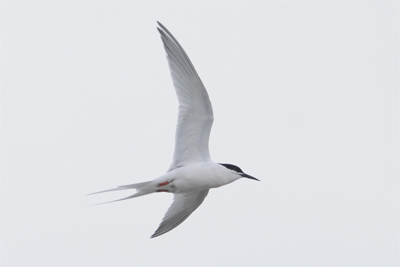
    Roseate Tern

    After a pleasant Sunday morning cruise it was time to return home. En route, we stopped off to check a Little Owl nest site and one of the adult birds sat staring at us from the roof of a derelict building.  Finalising the paperwork for a forthcoming project was followed by a wonderful evening sitting on our patio, drinking wine and working on part of our bonsai collection as Blackbirds were singing from our trees and Coal Tits collected food to take to the noisy, and hungry, nestlings that we could hear.  Now, that’s my idea of heaven 🙂

  • Oats, coast, stoat

    Today dawned bright and clear; very cold but just the sort of day to spend birdwatching in southeast Northumberland.  After a breakfast of porridge I was warmed through and ready for the day ahead.  I collected Keith and Chris from Morpeth and took them on what appeared to be a magical mystery tour as we searched for Little Owls and Waxwings before reaching the coast at Newbiggin.  20 minutes later we were on our way towards Druridge Bay, with two clients who now had the knowledge of how to identify Mediterranean Gulls, and had put this into practice on at least two birds.

    Wildfowl are still the major attraction in the bay, and the bright sunlight really showed Teal, Wigeon, Goldeneye, Shelduck, Gadwall, Red-breasted Merganser and even the humble Mallard in their best light.  Big flocks of Pink-footed and Greylag Geese featured throughout the day and binocular-filling views of Skylarks and Twite went down very well.  A Little Owl watched us intently from high in a tree and a Common Buzzard was soaring over East Chevington.  Eventually we located a big flock of Pink-footed Geese on the ground and we searched through them for Bean Geese.  No luck, but just as we turned our attention to a flock of Greylags, Keith spotted a white blur and we watched the tail of a Stoat vanishing into some long grass.  Nothing ventured, nothing gained, so I started squeaking and kept going for a couple of minutes until the ermine predator came to see what was in distress.  It showed incredibly well, first poking its nose through the grass before reappearing behind a fence and fixing us with a Little Owl-esque stare.  As it slipped out of sight again I looked up…and there was a Bittern overhead.  Another stunning end to another stunning day 🙂