Tag: Grey Seal

  • Winter birdwatching around the Farnes

    After postponing our Seal and Seaduck Special last Saturday (sea conditions were ideal, but it would have been really irresponsible to encourage anyone to drive on Northumberland’s roads at the time) we arrived at Seahouses Harbour yesterday morning ready for our final boat trip of the year.

    Everyone was well wrapped-up and we were soon boarding Glad Tidings VI.  As we sailed out of the harbour a veritable battery of long lenses was produced in readiness for the anticipated wildlife.  With a skipper and crewman with excellent eyesight and wildlife-spotting skills, 2 NEWT guides, and clients with sharp eyes as well, the boat was soon being manouvered to offer the best possible opportunities to view or photograph the wildlife.  After 13 years of organising offshore wildlife trips we know the importance of the skipper to the success (or otherwise…) of the trip and, with Craig and William, we were in excellent hands.

    The first half of the trip concentrated on the Farne Islands themselves.  A lot of the Grey Seals had well-grown pups, quite a few of the adults were moulting and there were a couple of cow seals still heavily pregnant.

    Grey Seal, Offshore wildlife photography, Northumberland, 11/12/2010
    Grey Seal
    Grey Seal, offshore wildlife photography, Northumberland 11/12/2010
    Grey Seal and the Longstone Lighthouse
    Grey Seal, offshore wildlife photography, Northumberland 11/12/2010
    Grey Seals

    Grey Seal, offshore wildlife photography, Northumberland 11/12/2010
    Grey Seals

    Shags were sitting around on the islands, Little Auks were bobbing about like corks in the increasing swell, and we had a brief view of a Black Guillemot as it flew from Gun Rock towards Inner Farne.  Heading north we enjoyed the sunny (but cold) weather and scoured the sea just south of Holy Island.  Plenty of Eider were sitting around, along with a pair of Scaup and several Red-breasted Mergansers but a Slavonian Grebe near Guile Point proved elusive.  Red-throated and Great Northern Divers were seen but in much smaller numbers than we would normally expect.  The journey back down the coast featured one of our favourite birds; Long-tailed Ducks were sitting around in groups of 10-15 and offering some excellent photo opportunities.

    Long-tailed Ducks on an offshore birdwatching trip, Northumberland 11/12/2010
    Long-tailed Ducks
    30 or 40 Common Scoters proved a bit more skittish and didn’t come near the boat.  2 Gannets were a bit of a surprise before we returned to the harbour.

    Although the wildlife was very obliging perhaps the best thing about the day was the truly beautiful lighting conditions, a real bonus for wildlife photography and something that all of the photographers on board commented on.  We can’t control the light, or the weather, but we keep taking clients to the right places at the right time…

  • To intervene in nature…or not?

    We were watching Autumnwatch yesterday evening and one discussion between the presenters, concerning intervention when you’re filming/photographing an animal in distress, was particularly pertinent to the mini-safari that Martin led earlier yesterday evening…but back to that later in this post.

    The half-term week was busy, as expected, and included some fantastic wildlife watching; Salmon leaping up a weir on the River Coquet, Starlings massing and swirling above a coastal reedbed before dropping to roost, 2000+ Pink-footed Geese filling the sky overhead, as they left their feeding sites and headed for the overnight safety of the water, and Grey Seals around the Farne Islands as they approach the height of their breeding season.

    Yesterday brought an evening mini-safari in southeast Northumberland.  Damp gloomy conditions and increasingly glowering clouds weren’t making things look too promising.  Our walk along the River Blyth produced a Nuthatch, and a Kingfisher called as it flew along the swollen, muddy river.  Two birdwatching gems, but quality rather than quantity was the order of the evening.  A Sparrowhawk provided some entertainment as it swooped repeatedly down towards the trees, flushing flocks of Woodpigeon with each descent, before finally vanishing into the canopy.  We continued our walk and, as we rounded a bend in the path, we found the reason for the Sparrowhawk’s disappearance; flapping lamely in the undergrowth was a Woodpigeon with a nasty head wound.  The predator had presumably flushed as we approached.  We’ve seen similar before and the question from clients is always “what are we going to do?”.  The answer may seem quite cold and heartless but we do nothing.  The pigeon was mortally wounded and would provide a meal either for the hawk or possibly a Red Fox would come along and make off with it.  Nature really is ‘red in tooth and claw’ and we shouldn’t interfere in the everyday life (and death) of our wildlife where we can avoid doing so.

    Our next destination was what is rapidly becoming our favourite Badger sett.  As we watched quietly (and we really have to congratulate the 6-year old in our group for remaining so very quiet) over the open area close to the sett, a Red Fox crossed the track ahead of us, we could hear scuffling in the undergrowth and then two stripy black-and-white faces appeared out of the gloom.  After a withering stare in our direction the two cubs trotted along the hillside and were joined by a third before vanishing into the night.  The final leg of the trip was a search for owls.  Local knowledge paid off, as the ghostly figure of a Barn Owl floated through the beam of our headlights just where we expected it to.  There was still time for more wildlife though and the application of our bat detector revealed a Common Pipistrelle feeding on the rich bounty of moths.  After the recent frosts it was good to find bats still active, and our final event for this October is a Bat Walk at Bamburgh Castle tomorrow evening.  Give us a call on 01670 827465 to book your place for what should be an evening of family fun.

  • Frenetic Friday

    Yesterday involved a real mixture of my favourite places, and a wide range of activities.

    Starting just after 07:00 I checked the 12 Longworth traps that we set on pre-bait in Choppington Woods earlier in the week.  With 9 of the 12 having been emptied of food, the small mammals we’re interested in had obviously found the bait.  The one slight problem was that initially I could only find 11 traps!  Despite having a GPS location for each, and marking adjacent vegetation with tags, it took 20 minutes to locate one of them.  Veronica Carnell, who is supervising me while I gain sufficient experience to run a trapping programme on my own, had warned me that this would happen 🙂

    Then I had a short drive across to Blyth for the second day of the Netgain regional hub meeting.  It’s been incredibly educational to listen to the views and concerns of other stakeholders, who don’t necessarily approach things from a conservation point of view.  Equally, it was impressive to see such wide and varied viewpoints coalescing into a concensus by the end of the meeting.  Although I have an interest in the project from a nature tourism angle, my main input was on the distribution and seasonality of cetaceans and seabirds off the Northumberland coast.  The protection of the marine habitat is so important to us that, as a business, we’ll keep making my time available for Netgain meetings until the conclusion of the project.

    After the meeting I drove to Seahouses and collected a journalist from the Edinburgh Evening News, for a trip across to the Farne Islands.  We occasionally run press trips where the journalist will be accompanied by wife/husband/partner, but 2 adults, a 6-year old, a 3-year old and a baby was pretty much a first (apart from a guy from a local paper in Cumbria who managed to blag a free holiday, for himself and his family, from accommodation providers, activity providers and attractions in Northumberland in 2008…and then never wrote the article that was used as the hook for getting all the freebies – ah well, live and learn).  The trip across to the Farnes was everything I would expect in late October; breezy, cold and a fantastic wildlife experience.  The Grey Seal pups were predictably cute, and at least 3 Peregrines were hunting the Feral Pigeons that live on the islands.  We’ve got a Seal Safari next Friday, which includes a trip around the Farne Islands (weather permitting), a Landrover safari and picnic so give us a call on 01670 827465 for more details or to book (especially if you are a family – it’s 1/2 term week so we’re offering generous discounts on family bookings).  With 5 trips out with clients over the next 5 days (including 2 days where we’re fully booked already) it’s going to be  a busy week.

    All of that would have a been a busy day…but there was one thing left, and it was something that I was really looking forward to.  As Newcastle University graduates, myself and Sarah both have an emotional attachment to the Hancock Museum (or Great North Museum:Hancock as it’s now named…but you won’t find either of us, or many other local naturalists, calling it that).  So, yesterday evening I felt quite honoured to be standing in the Clore Learning Centre at the museum giving a lecture about the Northeast Cetacean Project to the Natural History Society of Northumbria.  With an attendance of over 100 at the lecture it’s a subject that people are really interested by.  One of the question asked at the end of the talk was “how will the data be used?  what value does it have?”.  Which took us nicely back round the loop to the day and a half of Netgain meetings.

  • Stress reduction

    It wasn’t a relaxing afternoon for the birds in Budle Bay yesterday, as a juvenile Peregrine worked it’s way back and forth, causing havoc as it went through.  Further north, and looking towards Holy Island from the mainland, flocks of Wigeon and Pale-bellied Brent Geese were moving as the tide fell, and Redshank, Dunlin and Grey Plover all took advantage of the newly exposed mud.  A Common Buzzard perched in a  hawthorn hedge at the roadside flushed as we approached but then hovered lazily over the fields.

    Looking the opposite way, from Holy Island back towards the mainland, dark steel grey clouds on the horizon were outlined in gold by the setting sun, Bar-tailed Godwits were feeding along the water’s edge and a quite stunning aural backdrop was provided by Grey Seals.  As the sun slipped out of sight, Grey Herons became inky black silhouettes against the shimmering golden reflection of the sky and the air was filled first with the plaintive calls of Grey Plover and then with the high yapping of Pink-footed Geese.  Skein after skein rose from the dark backdrop of the clouds on the horizon, appearing like swarms of bees against the dying embers of the day’s light.  A Little Egret flapped by, a ghostly white heron vanishing into the night.  Then, a grand finale to the afternoon’s birdwatching as the sky darkened, revealing a stunning array of stars, and the dark shapes of more Pink-footed Geese passed overhead, briefly cloaking the pin-points of light.  Relaxing, sublime, awe-inspiring…

  • White is the new Black

    We had back-to back birdwatching trips earlier this week, covering two of our favourite areas.

    On Tuesday afternoon I collected Keith and Jen from home in Monkseaton and we headed northwards up the Northumberland coast.  Our destination was the Holy Island of Lindisfarne, one of the birding hot-spots of the entire country.  The strong winds were the only downside to the afternoon, but the birdwatching was good.  After checking out a large group of Grey Seals we covered the area around the harbour and the Rocket Field.  Bar-tailed Godwits, Common Redshank and lots of Ringed Plover were along the shoreline and a delightful charm of Goldfinches were around the Heugh.  A distant group of Lapwings, Starlings and Golden Plover took to the air and the cause of their alarm was glimpsed briefly, although too briefly and too distant to make a positive ID.  Holy Island birdwatching stalwart Ian Kerr put us on to a Little Stint and, as we headed back through the village, groups of Golden Plover passed overhead.  Re-tracing our route back down the coast and checking the Budle Bay on the rising tide, we were just discussing the indications of the presence of predators when a huge number of birds lifted from the mud.  As well as the gulls and waders, Jackdaws, Rooks and Woodpigeons joined the throng as they came out of adjacent fields and trees.  This time the culprit was seen and identified; a Peregrine, that most majestic of raptors and one of the highlights of any birdwatching day on the Northumberland coast in the autumn and winter.  A quick seawatch produced Sandwich Terns feeding, and Gannets soaring effortlessly on the breeze.

    Wednesday was a full day out around Druridge Bay and Southeast Northumberland.  I collected Jayne and Andrew from Seahouses, and then Hilary and John from Alnmouth, before beginning our tour of some of the best birdwatching spots in our local area.  While we were watching Lapwings, Redshanks, Greenshanks, Ruff, Herons and Cormorants on the River Wansbeck I could hear a rough ‘sreee’ call from high overhead.  The strong breeze meant that it wasn’t straightforward to locate the bird, but eventually I picked it out.  It was an unfamiliar call, but a familiar species; a juvenile Common Cuckoo.  The walk back along the river produced a nice flock of Long-tailed Tits.  After lunch we stopped off at Cresswell Pond.  Hilary and John mentioned that they’d visited Cresswell once before – when they noticed a large group of birders and stopped, managing to see a Buff-breasted Sandpiper.

    Northumberland birdwatching following the floods of September 2008
    Buff-breasted Sandpiper and Ruff, Cresswell Pond, Northumberland 12/09/2008
    With luck like that, we joked about what this visit could produce...

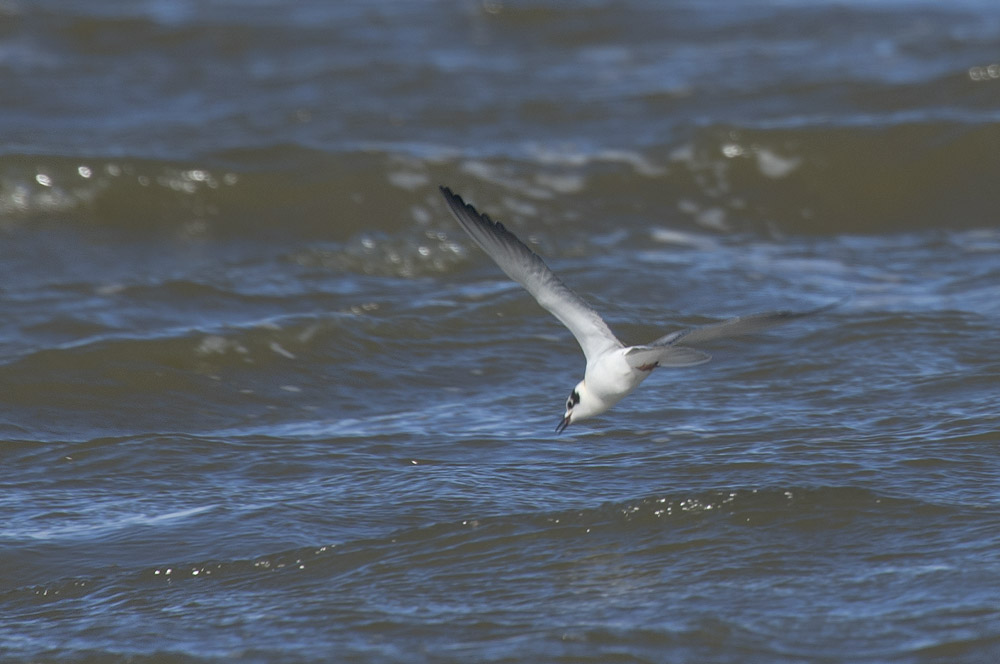
    When we arrived at the hide, Jaybee mentioned that he’d had a juvenile Sandwich Tern.  I scanned the pond but couldn’t see the tern anywhere and we settled to enjoying the quite remarkable views of Common Snipe that were available.  After checking through the assembled ducks, gulls and waders I scanned across the pond again and spotted a tern dip-feeding near the causeway.  The bird’s behaviour, combined with it’s very dark back, white rump and silver-grey wings caused me to get rather excited.  White-winged Black Tern is a very special bird, and a personal highlight as it’s the third Chlidonias tern that I’ve found in Northumberland.  Whiskered Tern is very rare and Black Tern is always a nice bird to see but White-winged Black Tern is such a beautiful species.  Jaybee kindly sent me some images to use 🙂

    White-winged Black Tern, a Northumberland birdwatching highlight 15/09/2010
    White-winged Black Tern, Cresswell Pond, Northumberland 15/09/2010
    Highlight of a day birdwatching on the Northumberland coast 15/09/2010
    White-winged Black Tern, Cresswell Pond, Northumberland 15/09/2010

    White-winged Black Tern, Northumberland, Birdwatching
    White-winged Black Tern, Cresswell Pond, Northumberland 15/09/2010
    As other birders began to arrive to enjoy the fruit of our good fortune we continued up the coast.  Eiders and a Goosander, as well as some very obliging Grey Herons, were seen as we stopped by the River Coquet.  A superb couple of day’s birdwatching, a beautiful rarity and clients who were excellent company.

  • Birdwatching by boat off the Northumberland coast

    Now, you shouldn’t need to read too many of my blog posts to realise that seabirds and cetaceans occupy a special place in my heart, and that I’m in my element once I’m on a boat off the Northumberland coast.

    Saturday was our annual ‘Whale and Dolphin Cruise’ on Glad Tidings V, out of Seahouses.  With 36 participants, including the other NEWT guides (Sarah and Andy), all safely on board we set off down the coast.  We were soon enjoying views of two Arctic Skuas and then panic on the deck as our eagle-eyed skipper spotted two Sooty Shearwaters off to one side and everyone rushed to see them.  These ocean wanderers are one of the great sights of pelagic seabirding in the North Sea at this time of the year.  For one participant though the real excitement was the bird sitting beside the shearwaters; a Puffin 🙂  It’s a few weeks too late to see them at their breeding colonies, but I’d told Sam that we had a good chance of coming across one.  Throughout the day we found a few more, as well as plenty of Fulmars, Kittiwakes, Guillemots  and a few Razorbills.  Perhaps the best entertainment of the day was provided by several feeding groups of Gannets, throwing fountains of water into the air as they hit the sea.  There was clearly a lot of fish for them to eat, and it was real mystery to myself, Sarah, Andy and John that there were no cetaceans feeding in the same areas.  Oh well, if they weren’t so mysterious it wouldn’t be such an adrenaline rush when we do find them I suppose.  A lone Manx Shearwater avoided the boat, as they tend to do, and we headed northwards to the Farne Islands, hoping to see the White-tailed Eagle that has been there for the last week.  We were in radio contact with other boats so we knew it had just killed a Shag and was eating it.  As we neared the islands our one cetacean for the day appeared, a Harbour Porpoise just to one side of the wake of the boat.  Just as we arrived, the eagle crept into a cleft between a grassy bank and some rocks so only one or two people managed to get a glimpse of it’s head as it dropped out of sight.  Grey Seals were playing, splashing and racing around and we headed back into the harbour, after a marathon effort by our skipper and everyone on board.  We’ve already set the date for the 2011 Whale and Dolphin Cruise – Saturday September 10th so put it in your diaries and give us a call on 01670 827465 to book your place.

    Blue skies, calm sea, what more could you wish for?
  • A real challenge

    In the 17 years that I’ve lived here, I’ve always believed that Northumberland is one of the finest counties for birdwatching in the whole of the UK.  That belief played a big part in reaching the decision to launch NEWT, and it’s why we’re such an enthusiastic member of the Birdwatching Northumberland Consortium.  We’ll be at the Bird Fair in August (Marquee 1, Stand 53/54) so come along to meet us and find out just how good Northumberland is.

    This morning, though, my attention is on mammals.  We don’t do too badly for them either; Badger, Red Fox, Grey Seal, Red Squirrel, Roe Deer, Weasel, Stoat and Brown Hare all feature regularly on our safaris and, on our Northern Experience Pelagics, there’s the possibility of Minke Whale, White-beaked Dolphin, Harbour Porpoise and other cetaceans.  We’ve had some random sightings as well; a Bank Vole that sat munching on a leaf just a few feet away from us and a Mole that walked into a hide we were sitting in were both bizarre (especially the Mole; I hadn’t seen a live one for a long, long time).

    With the exciting news earlier this week of the first confirmed evidence in 16 years of Pine Marten in Northumberland, we’ve got a new challenge 🙂  We’ve spent some time in the last couple of years checking likely sites and following up reports that we’ve received.  Some of those have been very tantalising, and the species may be more widespread than people imagine.  Otters and Badgers are fairly difficult, but we’ve developed an excellent track record with those two species.  Pine Marten is going to be an altogether different proposition, but we relish a challenge.

  • Landscape photography and birdwatching on the Northumberland coast

    This has been one of our busiest weeks since we started NEWT, and I’ve only just got around to finding the time to sit in our office and blog about the last few days.

    Tuesday saw Mike, one of our returning clients, coming for his second day out with NEWT, including some photography tuition in the Northumberland Coast AONB and a birdwatching trip across to the Farne Islands.

    After a session on exposure theory, covering topics such as exposure values, ND filters and average metering (the bane of photographers everywhere) and a bit of practice with slow shutter speeds to creatively blur the rising tide it was time to head across to Inner Farne.

    No matter how many times I visit the Farne Islands, I’m always awestruck by just how good the experience is;  Grey Seals, Common, Sandwich and Arctic Terns, Eiders, Kittiwakes, Fulmars, Guillemots, Puffins and Razorbills all offer excellent photo opportunities so plenty of memory cards are a must.

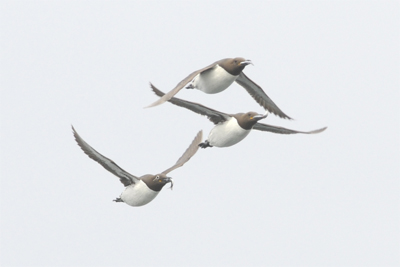
    Common Guillemots (including a 'bridled' Guillemot) after a successful fishing trip
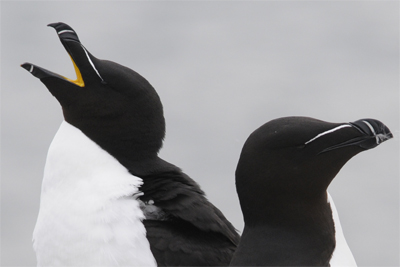
    Razorbills
  • Early to rise

    4am, and the insistent ringing of the alarm prises me out of bed.  Stagger down the stairs, get dressed, find binoculars/hat/gloves and head out into the chill early morning Southeast Northumberland air.  The Dawn Chorus is in full flow; Blackbirds are leading the way, and dominating the soundscape around our house, Chiffchaffs are singing from the churchyard and I make a mental note to do this again tomorrow to get some sound recordings.

    Walking along the River Wansbeck I can see a pointed snout sticking out of the water distantly.  Closer inspection reveals a Grey Seal.  A Grey Heron flies by, croaking and screeching as a pair of Carrion Crows harrass it until it turns through 180 and heads away from the annoyance.  I move on as well, heading towards Druridge Bay.  With ethereal mist rising from a coastal pool, Sedge Warblers are singing from the bushes around me, and I’m concentrating on the mimicry that they employ, when a group of Rabbits suddenly scatter and Lapwings, Black-headed Gulls and Common Terns begin circling and alarming.  A movement in the grass reveals itself as a Red Fox; wary, immaculate and healthy – this isn’t the urban scrounger so familiar to many people, but rather what a recent client described as “that’ll be one of those rural foxes then”. 

    Then, one of those moments that take me back the best part of four decades; a Cuckoo starts calling.  My first Cuckoo, all those years ago, was on an early morning birdwatching cycle ride to a site several miles from home.  With nobody else anywhere to be seen, and all of the sounds of the early morning to myself, that haunting sound carried from nearby trees before the pointy-winged long-tailed shape of the bird raced across my field of view.  I stand and marvel at the bird.  It’s fascinating breeding ecology and migration still grip me the way that birdwatching did when I was a little lad.  Perhaps I need to start setting the alarm for very early every morning 🙂

  • A Rosy outlook

    Saturday saw a change in our normal Safari routine, and an early afternoon start.  I collected Gareth and Ruth from the Red Lion at Alnmouth and we drove south.  The hot, sunny weather had brought out hundreds of people to Plessey Woods but we still found a peaceful, undisturbed glade where we could listen to the birds singing and we watched a female Great Spotted Woodpecker; at least we were able to watch her until she realised that we were!  Cresswell Pond produced a real avian soap opera as a Mute Swan defended his pond against two interlopers, racing across the pond like the Spanish Armada.  A Little Gull was as cute and dimunitive as ever, alongside Black-headed, Common and Herring Gulls.  Druridge Pools was hosting some obviously confused geese; amongst the expected flock of Greylags there were single Pink-footed and Barnacle Geese as well.  A late finish concluded with a beautiful, ghostly Barn Owl and at least 3 different species of bat along the River Coquet at dusk.

    Sunday was a day for doing whatever we felt like.  With temperatures still soaring, a day inland, doing survey work for the BTO Bird Atlas, was considered then rejected in favour of a visit to the coast.

    Sarah had the excellent idea of taking a boat trip around Coquet Island, which I was really enthusiastic about.  When myself and Tom Cadwallender from the Northumberland Coast AONB were designing the backdrop for this year’s Birdwatching Northumberland stand at the Bird Fair we chose eight species that we felt symbolised Northumberland birding; Curlew, Eider, Pale-bellied Brent Goose, Golden Plover, Black Grouse, Roseate Tern, Dipper and Puffin.  A mix of everything that’s good about birdwatching in Northumberland; inland, coastal, summer and winter.  I had images of seven of those species, but the Roseate Tern is the one that I haven’t photographed during the digital age.  Hence, my enthusiasm for a trip around Coquet Island; with 35-40 Rosies already back at their Northumberland colony I was hopeful that photo opportunities would arise.  As we sailed across to the island onboard Shokwave, there was a strengthening NNE breeze and the temperature began to decrease rapidly.  Once Dennis manouvered the boat into the jetty, we could see Roseates sitting on their nest boxes.  They were a bit distant for photography so I waited patiently until I heard the distinctive ‘choo-it’ call and a bird flew by the boat.

    Britain's rarest breeding seabird

    Grey Seals popped their heads above the water to look at the boat, Puffins whizzed past at breakneck speed and more Roseates were busy displaying around the boxes.

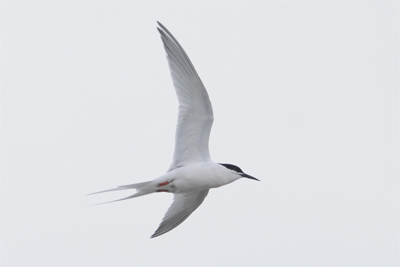
    Roseate Tern

    After a pleasant Sunday morning cruise it was time to return home. En route, we stopped off to check a Little Owl nest site and one of the adult birds sat staring at us from the roof of a derelict building.  Finalising the paperwork for a forthcoming project was followed by a wonderful evening sitting on our patio, drinking wine and working on part of our bonsai collection as Blackbirds were singing from our trees and Coal Tits collected food to take to the noisy, and hungry, nestlings that we could hear.  Now, that’s my idea of heaven 🙂