Just as I arrived at Harkess Rocks to collect Andy and Helen for an afternoon of birdwatching around the Holy Island of Lindisfarne and the North Northumberland coast, the first drops of sleety rain began splattering on the windscreen. We haven’t really had any sort of winter yet, apart from an hour of snow on December 16th, but yesterday afternoon did feel positively chilly. Undaunted by the easterly wind and icy showers we enjoyed the wader and wildfowl spectacle that is the Northumberland coast in the winter. Curlews singing as they flew by must have a joie de vivre that lets them vent that emotional haunting call wherever they may be. Other wading birds entertained as they probed, prodded and buried their bills face-deep in the mud; Grey Plovers, Bar-tailed Godwits, Redshanks and Oystercatchers were all making the most of the exposed mud at low tide. A big flock of Yellowhammers, Chaffinches, Greenfinches, Goldfinches, Tree Sparrows, House Sparrows and Reed Buntings held our attention for a good while and wildfowl were well represented with Shelduck, Eider, Mallard, Teal, Wigeon, Goosander and Pintail. As we watched a very obliging Dark-bellied Brent Goose, it was a sobering thought that our wintering birds are generally here because conditions in the areas where they breed are too harsh at this time of the year. Mammals were braving the cold too; 7 Roe Deer, a Brown Hare and 5 Common Seals made a not too shabby mammal list for the afternoon.
I often reflect on my decision to return to Northumberland from Arizona, and as we watched that lone Brent Goose, with the biting wind driving waves of showery rain, were my thoughts of the warmth and sunshine of Tucson? No, what I was thinking was that this is the weather I came home for…and the reason that good outdoor clothing is a necessity 😉
After a planned break from days out with clients, and regular exercise and ice-pack treatment for my knee, we had a mini-Safari on Wednesday afternoon. Southeast Northumberland is our local patch, so I was getting back into the swing of things with something comfortingly familiar.
I collected Alastair and Zoe from Church Point and we set out on an exploration of the River Wansbeck. Stunning Red-breasted Mergansers and Goldeneye, and subtly attractive Little Grebes (amazing how many people still think of them as Dabchicks – a far nicer name!), were diving along the edge of the river. A handsome drake Goosander flew upstream and the first of the afternoon’s 4 Sparrowhawks drifted high overhead. A flock of Long-tailed Tits, those noisy endearing pink and white fluffballs, made their way in procession from one side of the river to the other and Mallards began dropping out of the sky and following each other through the vegetation, quacking noisily. As daylight faded a flock of Teal drifted backwards and forwards between a reedbed and open water, roosting Pheasants (my vote for most underrated bird in Britain) flushed from a Hawthorn hedge as we made our way back to the car in the dark, and it was time to return Zoe and Alastair to Newbiggin.
Last week was our Winter Wonderland birdwatching holiday, although as I arrived at Saughy Rigg I wondered if Windy Wonderland would be a better name for it 😉
The original itinerary involved the Solway coast on Tuesday and the North Pennines on Wednesday, but a quick discussion with our guests on arrival meant that our coastal day was switched to Northumberland to avoid the poor weather in the west.
The plan worked well, at least until mid-afternoon when the weather caught up with us and we had a couple of hours of dodging the showers. The waders and wildfowl that winter here featured throughout the day and Greylag, Pink-footed, Pale-bellied Brent, Barnacle and Eurasian White-fronted Geese were all enjoying the mild weather on the Northumberland coast. 3 splendid drake Goosanders were blown across Druridge Pools before battling their way back against the wind, and a Roe Deer was grazing in the gap between 2 reed beds. As so often seems to happen, some of the best wildlife of the day saved its appearance until the light began to fade. First a Short-eared Owl, with a strikingly white face, quartering backwards and forwards along the margins of a field, then 2 Water Rails, those small, secretive denizens of the reeds, stepped gingerly into view; prodding and poking and squealing like piglets as they vanished back into the gloom. Then, as flocks of geese descended to roost, a Bittern flew from the reeds and headed south.
Wednesday brought another breezy morning, and we headed into the hills. Remarkable numbers of Red Grouse chuckled at us as we watched from the comfort of the car, and 7 Black Grouse were the first of no less than 75 that we found during the day. The weather closed in all around us and, after a quick check of a lough wher Teal, Wigeon and Lapwing were roosting and Goldeneye were feeding, we finished the day at one of our favourite evening venues. An unidentified raptor flew low across the heather moorland and out of sight over a ridge, Red Grouse burst from cover before settling again a short distance away and a lone Short-eared Owl battled into a brutal headwind as the evening faded to darkness.
Winter Wonderland is one (in fact, two) of the holidays on our itinerary for 2012, so give us a call on 01670 827465 for more details or to book your place.
Thursday afternoon found me leading an afternoon of birdwatching, and searching for Otters around our local area; Druridge Bay and southeast Northumberland.
I collected Ruth and Margaret from the Swan at Choppington and we drove the short distance to Newbiggin to collect Mike and Maggie (for their second trip with us this week), Ben and Siobhan. A ghostly white Mediterranean Gull drifted by the car before we headed north. The River Coquet produced one of my own favourite wildlife experiences as we watched Salmon leaping, and Cormorants, Grey Herons and Goosanders fishing. Lapwings, Redshank, Curlew and a Greenshank all flew by and, after enjoying our lunch by the river, we headed down the bay. East Chevington produced lots of Knot, Dunlin, Ruff, Lapwing, Curlew, Golden Plover, Pintail, Goldeneye, Tufted Duck, Pochard, Gadwall, Mallard, Teal andWigeon and our next stop was Cresswell. Along the hedge leading down to the hide there were at least 8 Goldcrests, and from the hide there was another nice wader roost. As well as the species we’d already seen at East Chevington there was a single Black-tailed Godwit, plenty of Turnstone and 2 Purple Sandpipers. As the sun began falling towards the horizon, we settled into position to search for Otters. Flocks of Pink-footed Geese filled the sky to the north and a Daubenton’s Bat moved back and forth over the water.All of the signs were there; ducks, Coots and Swans moving en masse from one spot to another, nervously moving back before reversing direction again and, successive groups of birds across the water exploding into the air in a state of panic. The only thing that didn’t happen, was the Otter coming out into view! Still, with a success rate of 75% on Otter Safaris since mid-April, we’re always optimistic whenever we go in search of them.
I collected Ian and Pauline from Rothbury for a Prestige Tour of Druridge Bay and southeast Northumberland and headed towards the coast in what could only be described as a stiff breeze 😉
Nuthatches, Great Tits, Blue Tits, Coal Tits and a Treecreeper were all watched as we sat amongst the trees and Pauline spotted our only Red Squirrel of the trip as it ran between patches of fern nearby.
Beside the River Coquet a Grey Heron sat impassively, Goosanders were sleeping along the riverbank and Curlew prodded around in the mud. The wader roost at East Chevington was a bit lacking in variety; lots of Lapwings, 20 Ruff, 30 Curlew and single Knot and Bar-tailed Godwit. An unfamiliar call heralded the arrival of 4 Snow Geese, accompanied by the 3 Bar-headed Geese that have been wandering around Druridge Bay this summer, and a juvenile Marsh Harrier was tossed around on the wind. A good selection of ducks was on offer; Mallard, Shoveler, Teal,Wigeon, Tufted Duck, Pochard, Gadwall and Pintail. Birdwatching can be tricky in strong wind, but there was plenty to see. As we drove towards Druridge Pools, I stopped the car so we could look at an unfamiliar shape flying from Cresswell towards Druridge. A (presumably) escaped Eagle Owl! Druridge produced another magical moment as well, with a juvenile Peregrine hunting Teal above the main pool.
As the final traces of daylight faded, a Tawny Owl serenaded us as the wind whipped around our ears.
Friday morning dawned dry and bright; again not exactly as predicted by the weather forecast! After breakfast we headed south to Newton by the Sea, and the tern colony at the Long Nanny estuary. The walk through the dunes was enlivened by a myriad of Common Blue, Red Admiral, Small Tortoiseshell, Meadow Brown, Gatekeeper and Dark Green Fritillaries as well as 2 strikingly attractive moths; Cinnabar and Narrow-bordered Five Spot Burnet, and Harebell, Pyramidal Orchid and Bloody Cranesbill.
After the tern colony, with its ~1000 pairs of Arctic Terns and 40 pairs of Little Terns we headed north through Seahouses and towards Holy Island. As we passed Budle Bay, Geoff spotted a Little Egret, still a relatively scarce species up here, and we stopped for a while to search the mudflats. As well as wading birds, we found 3 Goosander. A further stop before Holy Island provided an ideal picnic spot and the theme of passage waders continued with Golden and Grey Plover, Knot, and Curlew. A walk around the iconic location of Holy Island produced Grey Seals, Red-breasted Merganser and breathtaking views from The Heugh. We were scanning the mudflats around the mouth of the South Low when a nearby Oystercatcher began calling in alarm. The cause of that alarm appeared just a few seconds later and we watched the Peregrine Falcon as it raced low across the mud before perching obligingly.
Against the backdrop of another iconic location, Bamburgh Castle, we scanned the Eider flock just offshore. A lone drake Common Scoter was proving difficult to pin down, but the arrival of a flock of 60 scoters allowed everyone to enjoy good views and appreciate the variation in the bill pattern of the drakes. Just before returning to Seahouses, we stopped to scan Monk’s House Pool; a Pintail was picked out by Roy, and 2 Common Sandpipers were walking along the edge of the pond. 8 Golden Plover flew by and a male Stonechat perched close by on a fence post.
An after-dinner excursion produced 2 Brown Hares, a Roe Deer and her fawn in the gloom, and the first rain of the trip…
Our first blog post of 2011 has been slightly delayed by some technical difficulties, but we’re up and running again 🙂
We decided that the first few days of the year would be spent birdwatching around southeast Northumberland. New Year’s Day saw us spending a couple of relaxed hours around Druridge Bay, producing 63 different bird species…followed by a very cold, windswept seawatch from Snab Point as we waited for the Humpback Whale found by Mark Newsome and Steve Addinall at Whitburn. It didn’t pass by us (at least not at the sea surface) but hopefully it will herald another excellent year for cetacean sightings off the northeast coast. With the cetacean species accounts for ‘Mammals of the Northeast’ to write, Martin will be hoping for more additions to the already comprehensive Northeast Cetacean database as the year progresses.
Sunday was a family and friends day at the christening, and then birthday party, for Annabel, Sarah’s god-daughter. The only new bird for the year was our garden speciality Willow Tit.
Another relaxed birdwatching day yesterday produced, amongst others, a Waxwing, 5 Goosanders, 2 Grey Wagtails and 2 Nuthatches. All very attractive birds, that brought a warm glow to a cold winter’s day.
Now the working week starts again, and we’re busy dealing with enquiries, bookings and 3 major projects that we’re going to be involved in this year. There’s always time for a spot of birdwatching or photography though 🙂
November is generally a quiet month for NEWT; the half-term rush in late October has come and gone, thoughts are turning to Christmas…and the weather can be a bit suspect. We had a Safari Day around Druridge Bay and Southeast Northumberland at the end of last week that could have succumbed to the elements but, as it turned out, a combination of excellent birdwatching sites that could be watched from the Land Rover, clients with a real interest in natural history (and expertise in wildlife sound recording)and a badger-watching spot where the trees sheltered us from the rain, made it an enjoyable afternoon. The flock of Waxwings in Ashington delighted yet again. Who could fail to be impressed by them? After a spell of birdwatching that was then characterised by ‘lovely weather for ducks’ (Teal, Wigeon, Mallard, Gadwall, Goosander, Goldeneye and Pochard were all seen), and some good flocks of Lapwing, Golden Plover, Redshank and Pink-footed Goose, we headed inland to the steep, wooded hillside that has produced some excellent views of Badgers on our Safaris in recent months. Only one Badger came wandering along – perhaps the others that we’ve watched so often this year were indulging in that particularly human pastime of curling up somewhere nice and warm out of the wind and the rain.
Since then it’s been a busy week, mainly with planning and preparation for 2011 but also giving 2 presentations about the Northeast Cetacean Project. The first was to a group of postgrad students and lecturers at Newcastle University and then last night, to the Northumberland & Tyneside Bird Club. Both presentations produced some interesting questions, and some potentially excellent volunteers to assist with our ongoing survey work.
Now it’s Friday morning, the howling westerly winds are bringing waves of rain and then sunshine, there’s an intense rainbow visible from our office window and a flock of Redwings are being blown about like autumn leaves. No matter what the weather throws at us, Northumberland is still a superb county for wildlife and birdwatching; you just need to know how to enjoy it 🙂
We had back-to back birdwatching trips earlier this week, covering two of our favourite areas.
On Tuesday afternoon I collected Keith and Jen from home in Monkseaton and we headed northwards up the Northumberland coast. Our destination was the Holy Island of Lindisfarne, one of the birding hot-spots of the entire country. The strong winds were the only downside to the afternoon, but the birdwatching was good. After checking out a large group of Grey Seals we covered the area around the harbour and the Rocket Field. Bar-tailed Godwits, Common Redshank and lots of Ringed Plover were along the shoreline and a delightful charm of Goldfinches were around the Heugh. A distant group of Lapwings, Starlings and Golden Plover took to the air and the cause of their alarm was glimpsed briefly, although too briefly and too distant to make a positive ID. Holy Island birdwatching stalwart Ian Kerr put us on to a Little Stint and, as we headed back through the village, groups of Golden Plover passed overhead. Re-tracing our route back down the coast and checking the Budle Bay on the rising tide, we were just discussing the indications of the presence of predators when a huge number of birds lifted from the mud. As well as the gulls and waders, Jackdaws, Rooks and Woodpigeons joined the throng as they came out of adjacent fields and trees. This time the culprit was seen and identified; a Peregrine, that most majestic of raptors and one of the highlights of any birdwatching day on the Northumberland coast in the autumn and winter. A quick seawatch produced Sandwich Terns feeding, and Gannets soaring effortlessly on the breeze.
Wednesday was a full day out around Druridge Bay and Southeast Northumberland. I collected Jayne and Andrew from Seahouses, and then Hilary and John from Alnmouth, before beginning our tour of some of the best birdwatching spots in our local area. While we were watching Lapwings, Redshanks, Greenshanks, Ruff, Herons and Cormorants on the River Wansbeck I could hear a rough ‘sreee’ call from high overhead. The strong breeze meant that it wasn’t straightforward to locate the bird, but eventually I picked it out. It was an unfamiliar call, but a familiar species; a juvenile Common Cuckoo. The walk back along the river produced a nice flock of Long-tailed Tits. After lunch we stopped off at Cresswell Pond. Hilary and John mentioned that they’d visited Cresswell once before – when they noticed a large group of birders and stopped, managing to see a Buff-breasted Sandpiper.
Buff-breasted Sandpiper and Ruff, Cresswell Pond, Northumberland 12/09/2008With luck like that, we joked about what this visit could produce...
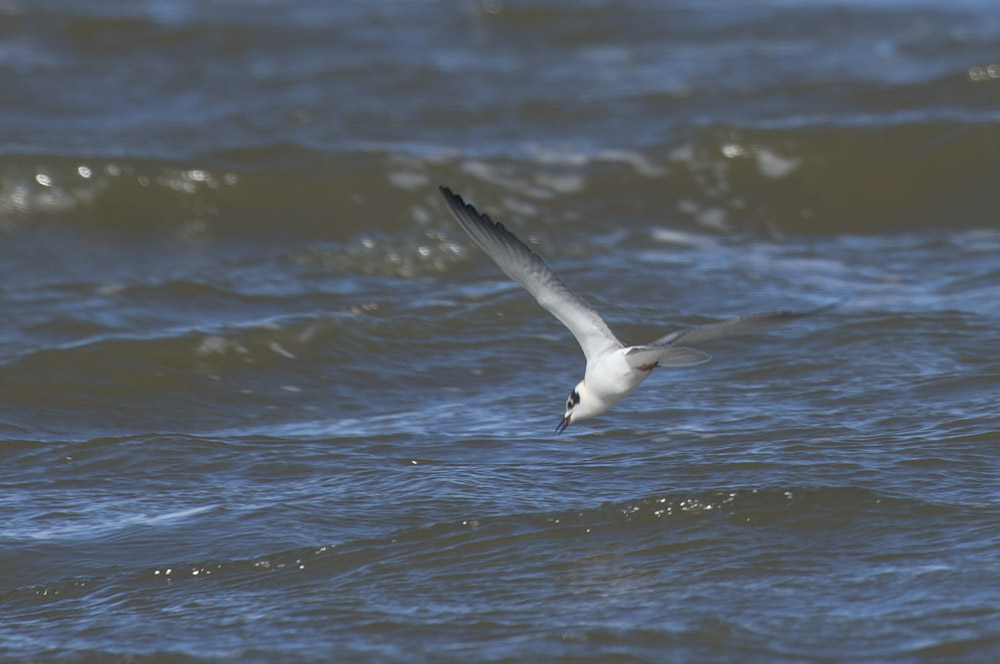
When we arrived at the hide, Jaybee mentioned that he’d had a juvenile Sandwich Tern. I scanned the pond but couldn’t see the tern anywhere and we settled to enjoying the quite remarkable views of Common Snipe that were available. After checking through the assembled ducks, gulls and waders I scanned across the pond again and spotted a tern dip-feeding near the causeway. The bird’s behaviour, combined with it’s very dark back, white rump and silver-grey wings caused me to get rather excited. White-winged Black Tern is a very special bird, and a personal highlight as it’s the third Chlidonias tern that I’ve found in Northumberland. Whiskered Tern is very rare and Black Tern is always a nice bird to see but White-winged Black Tern is such a beautiful species. Jaybee kindly sent me some images to use 🙂
White-winged Black Tern, Cresswell Pond, Northumberland 15/09/2010White-winged Black Tern, Cresswell Pond, Northumberland 15/09/2010
White-winged Black Tern, Cresswell Pond, Northumberland 15/09/2010As other birders began to arrive to enjoy the fruit of our good fortune we continued up the coast. Eiders and a Goosander, as well as some very obliging Grey Herons, were seen as we stopped by the River Coquet. A superb couple of day’s birdwatching, a beautiful rarity and clients who were excellent company.