Tag: Goldfinch

  • Sublime panic

    “What do you on days when you’re not working?” is a question I’m frequently asked by clients.  My answer’s always the same “I do this, just without clients 🙂  It’s what I love doing, and what I’ve done since I was very young”

    Friday was an ‘office day’ (which translates roughly into ‘day when I really should be working at home…) but, after a few hours of admin tasks, I decided to have a couple of hours on the coast.  As I passed Cooper’s Corner I could see that it was misty towards the coast.  Always promising at this time of the year, so I started to think about where to search.  I’d been in a meeting with Ipin on Thursday afternoon, and neither of us had been convinced that the conditions forecast for Friday would bring anything particularly exciting to the Northumberland coast…

    “Druridge bushes or Hadston links? Druridge bushes or Hadston links?”  I settled on Druridge and began slowly working around the edge of the bushes.  A flock of Reed Buntings and Goldfinches seemed to be spending most of their time tucked away in the back of a clump of Blackthorn so I made my way around the back of that clump.  The birds were feeding happily with me standing just a few metres away from them and then a Lesser Whitethroat put in a brief appearance.  I texted Ipin, knowing that had booked the day off work and would be somewhere close by, and waited for the bird to reappear.  Another bird flitted up to the top of the blackthorn with it’s back to me.  Looking quite grey, I thought it was the Lesser Whitethroat again, until it turned round…and I found myself looking at the white sub-moustachial stripes and orangy pink breast of a male Subalpine Warbler 🙂 I’d forgotten to charge my mobile, and the battery symbol had turned red, but getting the news out was a priority.  I ‘phoned Ipin, but his mobile went straight to voicemail (it turned out I’m not the only one who’d forgotten to charge their ‘phone…), Alan Tilmouth and Andy McLevy, before finally managing to get through to Ipin, who was only a couple of hundred metres away and covered the distance like Usain Bolt would cover it – if he was desperate for a patch tick too 😉

    When Alan and Andy arrived just ahead of other local birders, the bird was proving elusive and I volunteered to check the back of the blackthorn (reasoning that if the bird was there and flicked across to the other side then everyone else would see it).  Sure enough it was back where I’d first found it, but continued feeding contentedly as I used the last drop of power left in my ‘phone to let Alan know exactly where the bird was in relation to the Reed Bunting that had helpfully perched at the top of the bush.

    The damp misty conditions weren’t good for photography, so the promising forecast for Saturday morning had me planning for a couple of hours at Druridge before heading to Snab Point for a seawatching session as part of the Druridge Bay Big Wildlife Count.  In excellent light the bird showed well, although was very mobile, and I managed to get a few shots of this little gem 🙂

    Subalpine Warbler,Sylvia cantillans,Druridge Pools,Northumberland,guided birdwatching,bird photography tuition,bird photography holidays

    Subalpine Warbler,Sylvia cantillans,Druridge Pools,Northumberland,guided birdwatching,bird photography tuition,bird photography holidays

    Subalpine Warbler,Sylvia cantillans,Druridge Pools,Northumberland,guided birdwatching,bird photography tuition,bird photography holidays

  • The Kill; Druridge Bay birdwatching 24/09/2013

    Through the thickening mist, just inches above the ground, the Sparrowhawk maneuvered it’s way at speed around bushes and the edge of a reedbed.  From that position it couldn’t see any possible targets.  Of course, that meant it couldn’t be seen either…

    I’d collected Laura and Barry from Church Point at midday. for an afternoon birdwatching around Druridge Bay and southeast Northumberland.  Unlike the stunning sunshine and warmth of Monday, conditions were rather overcast.  On a walk through woodland, we came across a roving tit flock.  Goldcrests could be heard high in the trees, and a quick session of pishing soon had one just a few feet away from us as it descended to investigate where the squeaking noise was coming from.  Our lunch stop, overlooking the length of Druridge Bay, gave us the opportunity for a spot of seawatching although, with the lack of any substantial breeze, there wasn’t a great deal of movement offshore.  Eider were dotted here and there, Cormorants were flying along the coast, a few Swallows  were catching insects low over the clifftop vegetation and flocks of Goldfinch and Linnet were noisily flitting about.  Lapwings, Curlew, Dunlin, Ruff, Snipe, Ringed Plover and Redshank, the latter in what seemed to be a state of perpetual motion, were working their way along exposed mud as Grey Herons stalked with an imperceptibly slow motion that  spells danger to fish, frogs and ducklings everywhere.  As the afternoon continued, we were suddenly confronted with heavy mist.  Then the rain started.  Thinking this would clear the mist proved a forlorn hope, and we watched a flock of Dunlin make several low passes over the mud in front of us before they vanished into the mist.  Eiders and Cormorants were diving repeatedly on the River Coquet near Amble and Salmon were leaping from the water – a real joy to watch when all three of us in the car are keen flyfishers.  With dusk approaching, although this wouldn’t differ too much from the rest of the afternoon, the yapping of Pink-footed Geese could be heard from behind the grey impenetrable curtain of mist.  Growing louder, and with the calls of Greylag and Canada Geese intermingled, the flock appeared on the edge of the mist.  Just beyond the limit of clarity, the amorphous mass of several hundred geese dropped onto the water and then upped the volume of their calls.  As another flock arrived they were greeted noisily by the birds already on the water.

    …accelerating on powerful wings, following an approach of supreme stealth, the Sparrowhawk exploded from a gap in the reeds, still just inches from the ground.  Lapwings and Starlings took to the air in panic, but the predator quickly fixed it’s baleful stare on the three closest birds to the edge of the reeds.  The Dunlin took flight, but the concealed approach by the Sparrowhawk had given it the edge that it needed in the game of life and death that was playing out in front of us.  With lightning quick reflexes it plucked the Dunlin deftly from the air, turned back through the channel in the reeds, and settled to devour it’s catch out of sight.  Not out of sight from us though 🙂

  • Big Garden Birdwatch 2013

    Last weekend was the Big Garden Birdwatch and we followed tradition by sitting in our kitchen with a mug of coffee, and a bacon and tomato sandwich, having topped up all of the feeders the evening before.  An hour later, we’d racked up a list of 21 species; Blackbird 3, Jackdaw 2, Collared Dove 2, Robin 3, Chaffinch 20, Great Tit 3, Coal Tit 3, Magpie 1, Blue Tit 2, Dunnock 1, Goldfinch 8, Jay 1, Bullfinch 1, House Sparrow 1, Greenfinch 1, Woodpigeon 2, Redwing 1, Tree Sparrow 1, Song Thrush 1, Sparrowhawk 1, Brambling 2. Quite a successful hour, although most species weren’t present in the numbers we would have expected and, as usual, several species that had been visiting the garden in recent days (Marsh Tit, Willow Tit, Long-tailed Tit, Siskin, Great Spotted Woodpecker) failed to appear during the 1 hour of the survey.  Easy birding, and part of a huge national survey.  If you didn’t do it this year, give it a go in 2014 🙂

  • Northumberland Winter Bird Race 2013

    After a relaxing break over Christmas and New Year, last Saturday was one of the most eagerly anticipated events of the year; the Northumberland Winter Bird Race.

    A simple set of rules; start any time you like after midnight, teams of four (or three…or five…), three members of the team must positively identify a species for it to be counted, get to the Three Horse Shoes between 17:00-17:30 and be ready to declare your team total at 18:00.

    The starting point for our, vaguely planned, itinerary for the day was to be the NEWT office at 06:00.  As Sarah opened the door at 05:45, when our other team members (NTBC Field Trips officer Trevor, and local legend the Liverbirder) arrived, bird #1 was added to the list as a vocal Tawny Owlsang his haunting melody from the churchyard opposite our house.  #2 Barn Owl (the first of at least five found around dawn and dusk)joined the list as we headed north in Gordon’s car for our first ‘only one chance’ species…Red Grouse duly obliged and we’d made a flying start.  Down on the coast a stunning sunrise also brought Little Egret for the list, as well as occasional good-natured banter with two other teams that had started in the north (including ‘The Tiddlers’) and three more hours in North Northumberland, coupled with Gordon’s local knowledge of Cramlington, which brought us a Kingfisher that we pointed out to several curious dog walkers, saw us reach #85 by midday.  The afternoon proved much more testing, and some excellent birds including Smew, Slavonian Grebe, Mediterranean Gull and a fly-by Bittern, took us to a total of 105 by the time we’d eventually given up on trying to tick Goldfinch on call in the dark 🙂

    Four of the other five teams were already at the Three Horse Shoes by the time we arrived.  Species missed were being compared and there was a general feeling that it had been a difficult day.  We were only one species short of our best winter bird race total (achieved the last time that we didn’t have an itinerary planned to the nth degree…) but were expecting to be somewhere round 5th out of 6 (historically we’ve been a much stronger Spring bird race team).  With other teams declaring totals of 98, 101, 103, 104 and 108, we’d exceeded all expectations and finished 2nd, with 105 species out of a cumulative total across all 6 teams of 129 🙂 To put the day in context, the highest total for Northumberland in a Winter Bird Race is 126 for a single team…

    Looking forward to early January 2014 already!

  • Creatures of the night

    As darkness descends it seems like a whole different world appears, and in the remnants of the daylight you need to be alert as the creatures that frequent the shadowy hours make an appearance.

    With Lawrie and Linda, Mike and Mary & Pat and Janice all safely in the car, we set off for an afternoon and evening around Druridge Bay and south east Northumberland on an Otter Safari.  One of the best things, about any wildlife that we go looking for, is that it’s in a series of superb wildlife-filled locations so there’s always something to look at.  At this time of the year, that’s often passage waders like Dunlin and Ruff, large roosting and feeding flocks of Lapwing, Golden Plover and Curlew and gatherings of Linnets and Goldfinches in newly harvested fields.

    Invariably, the part of the trip that I get really excited about is that bit that takes place in the half-light.  As we walked along a riverbank, a Water Vole put in a very brief appearance and a Grey Heron, stalking through the shallows, took flight in alarm as Mallards hurried nervously away from the vegetation at the water’s edge.  Something was unsettling them, and Lawrie soon picked up the menacing figure of an Otter as it crossed the river.  Two more brief sightings, as Daubenton’s Bats skimmed the water surface below us, and then it was too dark to make out any detail and we headed back, under a clear sky.

  • Here for the weather?

    Just as I arrived at Harkess Rocks to collect Andy and Helen for an afternoon of birdwatching around the Holy Island of Lindisfarne and the North Northumberland coast, the first drops of sleety rain began splattering on the windscreen.  We haven’t really had any sort of winter yet, apart from an hour of snow on December 16th, but yesterday afternoon did feel positively chilly.  Undaunted by the easterly wind and icy showers we enjoyed the wader and wildfowl spectacle that is the Northumberland coast in the winter.  Curlews  singing as they flew by must have a joie de vivre that lets them vent that emotional haunting call wherever they may be.  Other wading birds entertained as they probed, prodded and buried their bills face-deep in the mud; Grey Plovers, Bar-tailed Godwits, Redshanks and Oystercatchers were all making the most of the exposed mud at low tide.  A big flock of Yellowhammers, Chaffinches, Greenfinches, Goldfinches, Tree Sparrows, House Sparrows and Reed Buntings held our attention for a good while and wildfowl were well represented with Shelduck, Eider, Mallard, Teal, Wigeon, Goosander and Pintail.  As we watched a very obliging Dark-bellied Brent Goose, it was a sobering thought that our wintering birds are generally here because conditions in the areas where they breed are too harsh at this time of the year.  Mammals were braving the cold too; 7 Roe Deer, a Brown Hare and 5 Common Seals made a not too shabby mammal list for the afternoon.

    I often reflect on my decision to return to Northumberland from Arizona, and as we watched that lone Brent Goose, with the biting wind driving waves of showery rain, were my thoughts of the warmth and sunshine of Tucson?  No, what I was thinking was that this is the weather I came home for…and the reason that good outdoor clothing is a necessity 😉

  • Familiarity breeds content

    During the winter, when I’m busy with admin and business development, I do most of my birdwatching close to home.  Studying Jackdaw and Starling roosts involves a short walk, but with a constant level of activity around the feeding station (conveniently placed to be visible from the office window) I can enjoy the hobby that has been with me since early childhood throughout most of the day.

    For the last couple of weeks, I’ve had my camera and tripod set up in the kitchen.  Any newcomers to bird photography could do worse than concentrate on the birds in their own garden.  I blogged about our feeding station recently, but I make no apologies for adding a few more images to the blog now 🙂

    Brambling, bird photography, Northumberland
    Brambling

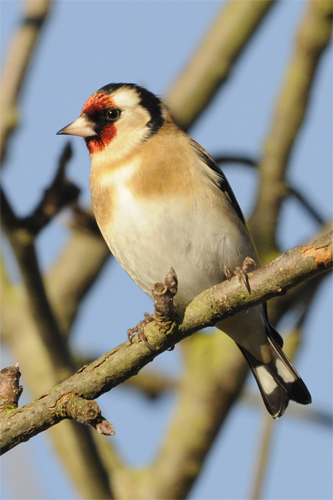
    Goldfinch, bird photography, Northumberland
    Goldfinch
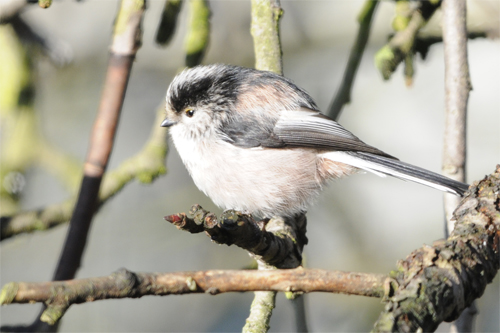
     One species I finally managed to get some good images of is a bird that captivated me when I first saw a flock of them, nearly 40 years ago, in my neighbour’s Pear tree.  With their almost non-stop movement, persistent vocalisations and, let’s face it, looks that are so cute it should be illegal Long-tailed Tits are enchanting.  In previous years they’ve been infrequent visitors to our garden but this winter they are here pretty much all day every day.  A lot of our clients have made similar observations and wondered why this change of behaviour has happened.  Long-tailed Titsare insectivorous and it seems that likely that the hard winter weather, coming so early in the winter has had a devastating impact on their natural food source and made them increasingly reliant on artificially provided food.

    Long-tailed Tit, bird photography, Northumberland
    Long-tailed Tit
  • Autumnal February

    Finishing a mini-safari at dusk combines two of my greatest pleasures; showing our clients the wildlife and landscape of Northumberland, and still being outside as it gets dark.

    I met up with Alastair, Roz, Keith and Marian mid-afternoon last Thursday for a few hours of wildlife and birdwatching around Druridge Bay and Southeast Northumberland.  As I got out of our Landrover in the car park at Church Point, it occurred to me that it was so cold and misty that I’d be really quite excited if it was mid-October 🙂  Even so, in mid-February a mini-safari finishing at dusk is still exciting.

    Beside the River Coquet, a wave of panic rippled through the Jackdaws and Woodpigeons.  No sign of any cause though.  Then another wave of panic and a Sparrowhawk raced by, narrowly missing a Black-headed Gull perched on a fence post.  A group of Roe Deer were spotted by Marian, walking along a ridge opposite us and vanishing behind the bushes before reappearing and then vanishing again.  At least 28 Goldeneye were displaying on the river, the comical contortions of the drakes providing good entertainment.  Almost as good as the entertainment provided by the sense of humour of all 4 clients 🙂

    A flock of 25 Goldfinches was well appreciated, as were all of the tiny lambs in the fields nearby and no fewer than 9 Grey Herons all sitting around one small pool.  A pair of Pintail were dabbling, as dabbling ducks do, and Alastair’s sharp eyes provided a Barn Owl for the list as it ghosted it’s way through the sky above the flooded meadows.

    Dusk beside a pool with a wader roost is almost indescribable; Lapwing, Curlew and Dunlin all huddled close together is quite a sight but the thing that takes almost everybody by surprise is the noise.  The level of vocalisation between the birds is extraordinary, and then the Lapwings fall silent as they begin to fly off to feeding areas.  Then, as the light faded to a level where binoculars, and even our eyes, weren’t really sufficient anymore, the trumpeting of 24 Whooper Swans coming to roost rounded the day off.

  • Feeding time

    I’ve never been good at sitting in the office and concentrating on one task for any length of time.  Having an office window that looks out over the 76ha of mixed woodland of Choppington Woods LNR is a real blessing, allowing me to mix work and birdwatching.  When I need to stretch my legs, a quick trip downstairs lets me open the patio door and turns the kitchen into a very comfortable and convenient bird photography hide.

    Our garden is currently hosting at least 8 Bramblings, along with Greenfinches, Goldfinches, Chaffinches, Bullfinches, Blue, Great, Coal and Long-tailed Tits, occasional visits from Siskin, Redpoll and Treecreeper and regular fly-throughs by our local Sparrowhawks.

    It’s a wonder I ever get any work done 🙂

    European Goldfinch, bird photography, wildlife photography
    Goldfinch
    Chaffinch, bird photography, wildlife photography
    Chaffinch
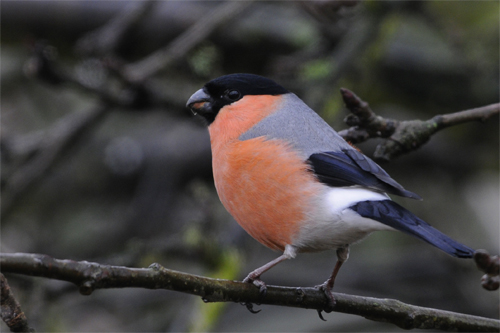
    Bullfinch, bird photography, wildlife photography
    Bullfinch
    Brambling, bird photography, wildlife photography
    Brambling
    Brambling, bird photography, wildlife photography
    Brambling

  • Another big freeze

    Here we go again…

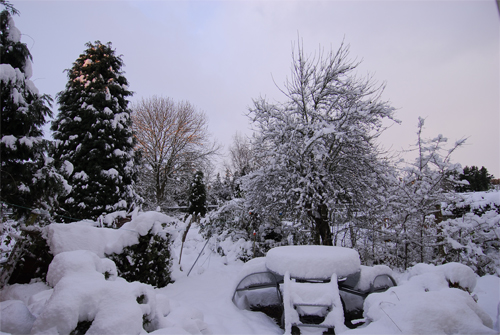
    It’s hard to believe that we posted on the blog back in January about the big freeze last winter and here we are again in a similar position already before the end of November (although at least at the moment it isn’t so prolonged).

    I went in to Newcastle last Wednesday for a seminar about the IMCORE project, and there was a bit of light snowfall.  When I came out of the Ridley Building an hour later the world was white, and it’s just gone on from that point.  After Sarah got home from work on Thursday evening the next time we used either of the cars was when we dug her car out of the snow this morning so she could go to work.  We’ve made the most of the last few days though; walking the 2 miles there (and 2 miles back) each day to visit a friend who’s now in a residential care home, doing most of the admin in 3 days that we would usually do through the winter (including adding all of our 2011 trips to the website) and finalising a couple of projects that we’ve been working on.

    Birdwatching in our little part of southeast Northumberland has been interesting for the last few days.  We’ve got an ever-expanding flock of Coal, Great and Blue Tits, Dunnocks and Wrens are now ever present around the feeding station and a very optimistic pair of Collared Doves were mating at the top of the Apple tree earlier this morning.  Two pairs of Bullfinches are regular visitors but other finches are in short supply; there’s just a single pair of Chaffinches, we’ve only had one visit from Goldfinches in the last few days and, particularly worrying, we haven’t seen any Greenfinches around the feeders at all.  A Sparrowhawk is still regularly patrolling over Choppington Woods and a flock of 50-60 Redwings flies out from the woods each morning.

    Now, after a morning of blue skies, it’s just started snowing again.