In near-perfect conditions we arrived at Seahouses yesterday evening for our 3hr coastal cruise on Ocean Explorer. As well as some of our ‘regulars’ we had Andy, Jan and Sam on board, on their final evening in Northumberland.
Soon after heading south down the coast towards Dunstanburgh we came across a couple of Harbour Porpoises. Typically shy, they surfaced a few times and then vanished into the depths. Gannetsfeatured throughout the evening, passing both north and south, and one or two were seen diving. Puffins, Guillemotsand Razorbillswere bobbing about on the water and a mixed flock of Arctic andCommon Terns andKittiwakeshad found something to hold their interest. We stopped to see if anything else would come along, and were soon joined by a Fulmar,stunning in the beautiful light.
We gradually headed north, and approached the Farne Islands as the sun began to set. Grey Sealspoked their heads out of the water and came off the rocks to investigate our boat, Cormorantsand Shagsperched sentinel-like on the rocky islets, Turnstonesprodded and poked their way around the edge of the mass of Sealsand Sam punched the air in elation as his first Curlewflew by 🙂 The setting sun provided an opportunity to experiment with an aspect of photography that I’ve never really been able to get to grips with, and one which I’ve always been fairly ambivalent about. Excellent light, excellent location, all the ingredients were there to convince me…
Our Druridge mini-Safari with Karl and Linda featured some of those species that are at or near their northern limit in Britain; Avocets, a recent colonist of Northumberland, and Marsh Harriers, here for a few years longer, are always much appreciated and Newbiggin’s Mediterranean Gulls are an excellent example of a group of birds that is often overlooked or simply ignored by many. Some of our commoner species go down well; Grey Heron, Curlew and Cormorant always get plenty of attention and Wigeon, Shelduck, Mallard, Red-breasted Merganser, Goldeneye, Teal and Great Crested Grebe all have their own attraction too.
What I really enjoy about our trips is enthusiastic clients. So long as we keep getting them, and Karl and Linda were no exception, I don’t think I’ll ever get jaded, no matter how much time I spend in the field. A couple of frequent questions from our clients are ‘what do you do on your days off?’ and ‘what do you do when you’re away on holiday?’ For some reason, they never seem surprised when I give them the answer 😉
Whenever we have a trip with clients who have been given gift vouchers, I always wonder what they expect. Some will have chosen gift vouchers when asked what they would like, some will have been given them by our existing clients, and for some it must be a complete mystery tour. When we get an enquiry we always try to determine exactly what our clients want, but at the start of a trip I’ll always enquire “is there anything you’re particularly keen to see while you’re in Northumberland?” Then, the pressure is on to try and deliver that experience…
I collected Patrick and Bronwyn from Amble yesterday morning for a day of birdwatching around Druridge Bay and southeast Northumberland. As we set off it was a beautiful morning; sunny, calm and dry and I soon determined that one bird they would love to see was Bittern – they’ve visited sites where Bitterns breed and Bitterns overwinter but not, so far, anywhere where the aforementioned birds were obliging enough to come into view for them. An hour into the trip and it was already windy, bitterly cold and spotting with rain but the birding was good. 2 Bewick’s Swans in a roadside field were very obliging, nibbling on the vegetation as we studied them, 12 Goosanders sailed majestically across a lake, Patrick’s sharp eyes picked out an immaculate male Sparrowhawk on a fence post and the air was filled with skeins of geese (Canada, Greylag, Pink-footed, White-fronted and Bean), a Skylark battled into the wind and Wigeon, Teal, Tufted Duck, Gadwall, Pochard, Mallard andGreat-crested Grebe were picked out from the flock on the water.
A brief visit to Newbiggin to track down a Mediterranean Gull (or four) was followed by lunch overlooking the North Sea. Heading up through the bay, Red-breasted Mergansers were displaying and a Short-eared Owl (the first of three for the afternoon) perched on a roadside fence-post. Reedbeds were illuminated by that beautiful winter afternoon light (I wax lyrical about it frequently, but it really is a breathtaking backdrop to the wildlife and part of the experience). As the afternoon light began to fade, Venus appeared overhead, a herd of Whooper Swans trumpeted their arrival for the evening roost and a Grey Heron shot out of one reedbed, flew across in front of us, landed just out of sight and flushed a Bittern that flew almost the reverse of the route taken by the heron, along the near edge of the pool directly in front of us and dropped into a reedbed and out of sight! Wildlife may be unpredictable, but those days when it seems to perform to order leave me, and our clients, with a big grin 🙂 After that what more was there to do than spend the evening relaxing back at home with a glass of good red wine. Cheers 🙂
Thursday afternoon found me leading an afternoon of birdwatching, and searching for Otters around our local area; Druridge Bay and southeast Northumberland.
I collected Ruth and Margaret from the Swan at Choppington and we drove the short distance to Newbiggin to collect Mike and Maggie (for their second trip with us this week), Ben and Siobhan. A ghostly white Mediterranean Gull drifted by the car before we headed north. The River Coquet produced one of my own favourite wildlife experiences as we watched Salmon leaping, and Cormorants, Grey Herons and Goosanders fishing. Lapwings, Redshank, Curlew and a Greenshank all flew by and, after enjoying our lunch by the river, we headed down the bay. East Chevington produced lots of Knot, Dunlin, Ruff, Lapwing, Curlew, Golden Plover, Pintail, Goldeneye, Tufted Duck, Pochard, Gadwall, Mallard, Teal andWigeon and our next stop was Cresswell. Along the hedge leading down to the hide there were at least 8 Goldcrests, and from the hide there was another nice wader roost. As well as the species we’d already seen at East Chevington there was a single Black-tailed Godwit, plenty of Turnstone and 2 Purple Sandpipers. As the sun began falling towards the horizon, we settled into position to search for Otters. Flocks of Pink-footed Geese filled the sky to the north and a Daubenton’s Bat moved back and forth over the water.All of the signs were there; ducks, Coots and Swans moving en masse from one spot to another, nervously moving back before reversing direction again and, successive groups of birds across the water exploding into the air in a state of panic. The only thing that didn’t happen, was the Otter coming out into view! Still, with a success rate of 75% on Otter Safaris since mid-April, we’re always optimistic whenever we go in search of them.
Things weren’t looking too promising as I headed up the A697 to collect Ian and Barbara from their holiday accommodation at The Coach House; rain, mist and fog were all conspiring to reduce visibility. Once we were on our way towards Holy Island things improved though, and our walk on the island was in reasonable weather. Plenty of Curlew and Bar-tailed Godwits were along the water’s edge and little parties of Guillemot and Red-breasted Merganser were spotted on the relatively calm sea. Back on the mainland, things took a turn for the worse and the rain hammered down, making the mudflats seem to be boiling. The numbers of Curlew grew and grew, all demonstrating just how vigorous their feeding technique is. As everything began to disappear into the rain, the eerie calls of Grey Seals came echoing across the mud. Eider, Common Scoter, Puffin, Shag, Cormorant, Guillemot and Razorbill were all on the sea in the shadow of Bamburgh Castle, Turnstones were doing just what their name suggests, 2 Little Egrets were in Budle Bay and 3 Common Buzzards were soaring around as the sun finally began to beat down on the northern edge of the Cheviots as we returned to Crookham at the end of a day of changeable weather, and good birdwatching.
Our Druridge Bay/southeast Northumberland mini-safari at the end of last week ‘enjoyed’ a range of weather conditions; after collecting Richard and Maureen from Blyth, we set off for the Coquet estuary. Howling winds and sheets of rain didn’t deter us though, and using the car as a birdwatching hide we had excellent views of Grey Herons, Cormorants, Goldeneye, Redshank and Wigeon. A real highlight of the morning was a young male Marsh Harrier, hunting the coastal reedbeds. With a range of waders and wildfowl to fill the ‘scope, and the weather improving to bright sunshine, the morning was all too soon over and I was on my way home to wash and clean the car ready for our next trip.
October ended with a Prestige Tour around Druridge Bay and Southeast Northumberland. I collected Christine and Mark from Stannington and we headed across to the coast. Flocks of Linnets. Lapwings and Grey Partridges were close to the road and we settled to check one of our regular Otter sites. All of the assembled Mallard, Teal, Wigeon, Gadwall and Coot were concentrated in one area of the pool and clearly nervous about one particular corner. We weren’t fortunate enough to catch a glimpse of any predators, but the behaviour of the waterfowl was typical of the type of indication you get that there’s an Otter about. Our lunch spot for the day was beside the River Coquet and, along with the Cormorants and GreyHerons that were patrolling the water’s edge, an Atlantic Salmon provided some spectacular entertainment as it launched itself vertically out of the water, three times in rapid succession, just a few metres away from us.
As we walked along the River Wansbeck after lunch, via a detour around the north edge of Ashington to enjoy the spectacle of 90+ Waxwings gorging themselves on Rowan berries, skeins of Pink-footed Geese passed overhead and, as the sun sank towards the horizon, it was time to seek out the wildlife that occupies that magical time of day. As we settled into position near one of our favourite badger-watching spots there was an incredible commotion from the trees on the other side of the stream. Blackbirds, Song Thrushes, Wrens, Robins and Magpies were all alarming loudly. The mobbing was too intense, and too stationary, to be the mild alarm that a Red Fox or Badger often triggers and shortly after one Tawny Owl flew through the trees opposite, a second bird finally got fed up with the mobbing and flew from it’s perch. An unwelcome sighting was a Grey Squirrel, in a woodland that until recently still held Red Squirrels. Our first Badger of the evening was a big adult, trotting across the top of the clearing. Then, after a few minutes of near silence, two Badger cubs came crashing through the undergrowth. They crossed the stream beneath a fallen tree, paused briefly rising on their haunches like stripy black-and-white meerkats, and then headed uphill behind us. Our fourth Badger of the evening followed the same route before we headed back to the Landrover and civilisation.
I dropped Christine and Mark back at Stannington and there was time for one last piece of magic as a Barn Owl floated lazily from a fence post as I drove back towards the A1.
Throughout the late autumn and winter we’ll be scheduling most of our trips to finish in darkness. Druridge Bay and Lindisfarne are both excellent locations through the winter, and as darkness descends, so give us a call on 01670 827465 to find out how we can bring that experience to you.
We had back-to back birdwatching trips earlier this week, covering two of our favourite areas.
On Tuesday afternoon I collected Keith and Jen from home in Monkseaton and we headed northwards up the Northumberland coast. Our destination was the Holy Island of Lindisfarne, one of the birding hot-spots of the entire country. The strong winds were the only downside to the afternoon, but the birdwatching was good. After checking out a large group of Grey Seals we covered the area around the harbour and the Rocket Field. Bar-tailed Godwits, Common Redshank and lots of Ringed Plover were along the shoreline and a delightful charm of Goldfinches were around the Heugh. A distant group of Lapwings, Starlings and Golden Plover took to the air and the cause of their alarm was glimpsed briefly, although too briefly and too distant to make a positive ID. Holy Island birdwatching stalwart Ian Kerr put us on to a Little Stint and, as we headed back through the village, groups of Golden Plover passed overhead. Re-tracing our route back down the coast and checking the Budle Bay on the rising tide, we were just discussing the indications of the presence of predators when a huge number of birds lifted from the mud. As well as the gulls and waders, Jackdaws, Rooks and Woodpigeons joined the throng as they came out of adjacent fields and trees. This time the culprit was seen and identified; a Peregrine, that most majestic of raptors and one of the highlights of any birdwatching day on the Northumberland coast in the autumn and winter. A quick seawatch produced Sandwich Terns feeding, and Gannets soaring effortlessly on the breeze.
Wednesday was a full day out around Druridge Bay and Southeast Northumberland. I collected Jayne and Andrew from Seahouses, and then Hilary and John from Alnmouth, before beginning our tour of some of the best birdwatching spots in our local area. While we were watching Lapwings, Redshanks, Greenshanks, Ruff, Herons and Cormorants on the River Wansbeck I could hear a rough ‘sreee’ call from high overhead. The strong breeze meant that it wasn’t straightforward to locate the bird, but eventually I picked it out. It was an unfamiliar call, but a familiar species; a juvenile Common Cuckoo. The walk back along the river produced a nice flock of Long-tailed Tits. After lunch we stopped off at Cresswell Pond. Hilary and John mentioned that they’d visited Cresswell once before – when they noticed a large group of birders and stopped, managing to see a Buff-breasted Sandpiper.
Buff-breasted Sandpiper and Ruff, Cresswell Pond, Northumberland 12/09/2008With luck like that, we joked about what this visit could produce...
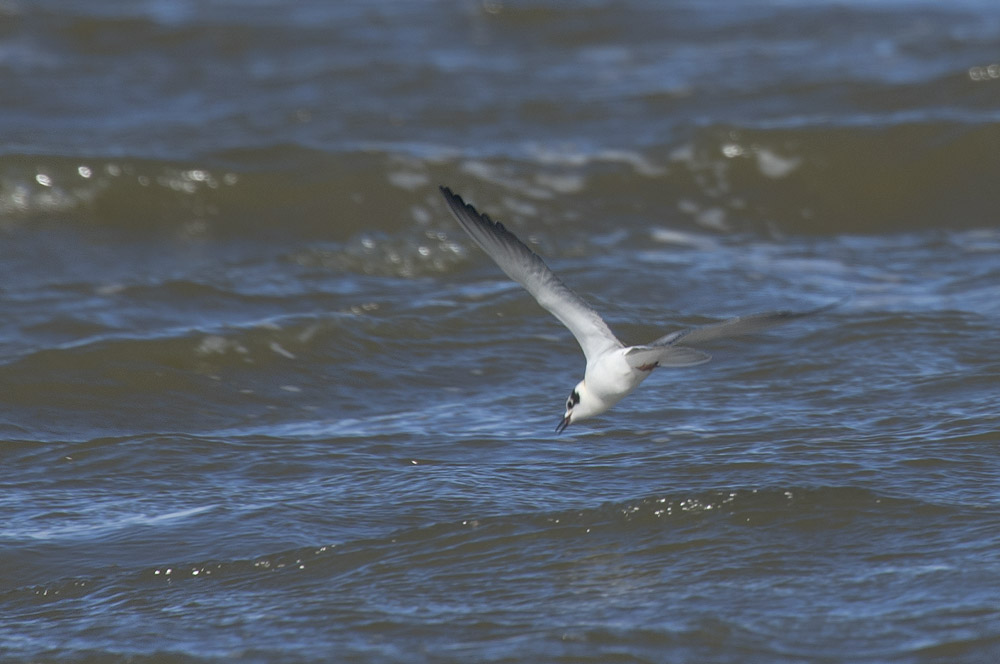
When we arrived at the hide, Jaybee mentioned that he’d had a juvenile Sandwich Tern. I scanned the pond but couldn’t see the tern anywhere and we settled to enjoying the quite remarkable views of Common Snipe that were available. After checking through the assembled ducks, gulls and waders I scanned across the pond again and spotted a tern dip-feeding near the causeway. The bird’s behaviour, combined with it’s very dark back, white rump and silver-grey wings caused me to get rather excited. White-winged Black Tern is a very special bird, and a personal highlight as it’s the third Chlidonias tern that I’ve found in Northumberland. Whiskered Tern is very rare and Black Tern is always a nice bird to see but White-winged Black Tern is such a beautiful species. Jaybee kindly sent me some images to use 🙂
White-winged Black Tern, Cresswell Pond, Northumberland 15/09/2010White-winged Black Tern, Cresswell Pond, Northumberland 15/09/2010
White-winged Black Tern, Cresswell Pond, Northumberland 15/09/2010As other birders began to arrive to enjoy the fruit of our good fortune we continued up the coast. Eiders and a Goosander, as well as some very obliging Grey Herons, were seen as we stopped by the River Coquet. A superb couple of day’s birdwatching, a beautiful rarity and clients who were excellent company.
Even though we live in southeast Northumberland, we’ll never tire of getting out and about searching for new experiences for our clients. Days out with clients are always exciting as well, because we never know exactly what we’ll see or what it will be doing.
Last Thursday we had a Southeast Northumberland/Druridge Bay safari with clients from a fairly wide geographical area; Jeff and Jean from Huddersfield, Lawrie and Linda from Glasgow and Yvonne from southwest Northumberland. Starting at Newbiggin we managed a brief view of a Mediterranean Gull on the beach, and a small flock of Sanderling. These little grey, white and black ‘clockwork toys’ are always entertaining as they scurry back and forth along the water’s edge. The River Wansbeck was our next destination. As expected there was a good sized flock of Lapwing roosting and Cormorants and Herons were doing what they do; standing with their wings out and just sort of standing respectively. All of a sudden a wave of panic spread through the Lapwings. We all scanned backwards, forwards, skywards but couldn’t see any cause. Perhaps it was just a false alarm? The birds settled but were up again within a minute, gradually settling back down with a great deal of conversation between them all. Greenshanks flew by calling and the Lapwings were becoming increasingly jittery. Even birds from distant streams were high in the air, forming the quite tight flocks that indicate the presence of a predator, something that creates anticipation wherever we’re birdwatching. Eventually we found a distant Peregrine, and a big female Sparrowhawk slid menacingly through the trees opposite our watchpoint. One or both of them was presumably the cause for concern. Even the Great Black-backed Gulls flushed and flew overhead, giving calls of consternation.
Among the coastal waders, perhaps the best were three Common Snipe, unusually confiding and just a few metres away from us. The fall of passerine migrants earlier in the week had left a few goodies behind. Spotted and Pied Flycatchers were quite elusive, sallying forth and then back into cover, Willow Warblers and Chiffchaffs were picking their way through willows beside the path and, providing a visual feast to rival the gaudiest of birds from elsewhere in the world, six male Common Redstarts were along one short stretch of hedge. There really is little to rival the beauty of these birds.
At the conclusion of our journey up the coast a bird as lacking in colour as the Redstart is bathed in it was a final wonderful sighting. As we watched two Grey Herons perched in trees overhanging the River Coquet, a Little Egret flew by before returning and perching high in the treetops in a spot where we could watch it through the ‘scope. There can’t be many better places to be birdwatching than the Northumberland coast in September 🙂