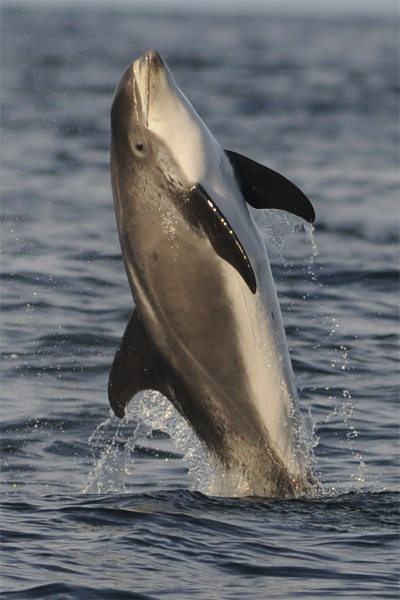
After a couple of poor-weather weekends, the elements relented and we headed out from Royal Quays on the SarahJFK for a 4hr evening pelagic in the North Sea off southeast Northumberland. Pomarine Skua, Manx Shearwater, Common Scoters and a summer-plumaged Red-throated Diver were the birdwatching highlights, but were eclipsed by what Stephen described as “the greatest wildlife experience of my life”. We’ve got a busy programme of offshore wildlife trips over the coming months, and here a few images that show why they’re so popular;
Blog
-
Conserving the marine environment
Last week I had a 2 day visit to my home town of Kingston upon Hull, to attend the Netgain large group meeting. Although I’m a member of the North East Regional Hub to represent the views of wildlife tourism, and the Northeast Cetacean Project, I’ve developed an increasing amount of empathy with the commercial fishermen involved in the process, and I know from speaking to other conservation focussed hub members that they feel the same, and that the view of hub members is that all sectors have worked well together to try and reach a concensus about the location of rMCZ’s (recommended Marine Conservation Zones) and RA’s (Reference Areas). It’s been occasionally tetchy, often contentious, but at the end of the day we all need the North Sea to be healthy enough to deliver what each sector needs. It’s as simple as that.
Now we’re well into our pelagic season, and we’ve already had excellent views of White-beaked Dolphins on our RIB trip to the Farne Deeps. If that isn’t worth conserving, I don’t know what is 🙂
-
Seabird Spectacular
Our Seabird Spectacular package holiday managed to coincide with some increasingly heavy seas and strong northerly winds. Getting on a boat would have been somewhat inadvisable , but we still managed to get good views of all the target species for the holiday, including Roseate Tern, Little Tern and Puffin. Perhaps we should have renamed the holiday Mammal Magic as Noctule, Pipistrelle, Red Fox, Rabbit, Grey Seal, Weasel, Stoat, and Otter were all seen during the 2 days 🙂 With excellent accommodation and food at The Swan throughout the holiday, it was a great way to spend a weekend in late July. We’ll be running Seabird Spectacular again in 2012 (11th-14th June) so give us a call now on 01670 827465 for more details or to book your place.
-
Burning desire
Tuesday, and I’m sitting with Matt and Becky, waiting in anticipation as dusk approaches. An orange/yellow glow rimming the horizon and the pallid, diffuse nature of the clouds covering the rest of the sky enhancing the impression that a thousand fires were burning in the distance. Through the flames, dark ashes danced across our field of view; Tufted Ducks, Mallards and Coots skittering across the water. Against the smoke, more dark soot tossed on the strong northerly breeze, this time Noctule Bats and Pipistrelles.
Then a burst of excitement as a whirling dervish appears, chasing ducks and geese; the Otter porpoising with serious intent, hitting the water with a splash like the crackle of a burning log. Then the flames die and we’re left with the last few pops of the dying embers.
-
Deeply moving
Yesterday brought a new product to the NEWT stable, as we launched our first RIB trip to the Farne Deeps on Ocean Explorer.
As we headed southeast at a speed of 27knots Puffins, Guillemots, Razorbills, Gannets, Kittiwakes and Storm petrels were seen. In less than an hour we were over the edge of the deep water, and the first cetaceans of the trip were spotted; 2 fins were seen, and just a few minutes later we found ourselves surrounded by White-beaked Dolphins 🙂 At least 6 animals, including a calf, came to investigate the boat – bow-riding, racing past within a few metres of us and, for the lucky crew member with the wetsuit and camcorder with underwater housing, performing like the stars that they are. Eventually they vanished back into the deep as unexpectedly as they’d arrived, and we watched for a Minke Whale that surfaced to breathe just once.
After an exhilarating ride around some of our offshore waters, we finished with something a little more familiar to most of our clients and a sailing around the Farne Islands. Grey Seals watched us from the rocks as some impressive white surf rolled along the edges, and an Arctic Skua (the only one of the trip) harrassed terns as we headed back towards the harbour.
We’re running 3hr evening trips on Ocean Explorer on August 2nd, 9th, 16th and 25th, searching down the coast to Dunstanburgh and back up to the Farne Islands for seabirds and cetaceans. Give us a call on 01670 827465 to find out more and book your place, or click here to book now.
-
The icing on the cake
As the rain hammered down while I packed the car ready for Sunday’s Otter Safari I was filled with optimism; the weather forecast (really, I should stop believing these…) suggested that the afternoon and evening would be dry and bright.
When I arrived at Church Point Marc and Marika were already there, and we were joined by Becky and Jim soon after. The trip was a present for one of each couple, and we set off for an afternoon of birdwatching combined with searching for Otters. First stop was one of our Little Owl sites, and Becky’s sharp eyes picked out a juvenile bird that was doing a very passable impression of a stone. Our next stop, beside the River Coquet, produced Common Terns fishing, flyby Curlews (and a discussion of separation from Whimbrel), 4 Common Sandpipers and some impressive thunderstorms away to the north and west of us.
A heavy shower as we reached the NWT reserve at East Chevington kept us in the car for a few minutes, during which time we were entertained by a family party of Stonechats. As the rain eased we walked to the hide overlooking the north pool. Amongst the throng of Common, Sandwich and Arctic Terns and Lapwings were 3 adult Knot, still in breeding plumage. Suddenly the entire roosting flock lifted, and the unmistakeable figure of a Spoonbill flew across our field of vision. It seemed intent on landing, but the constant harrassment from the terns meant that we were treated to several flypasts, including one where it was just 20m away from us. As if this wasn’t spectacular enough, 2 Little Egrets appeared, while the Spoonbill was still circling, and were subjected to the same treatment. Eventually a semblance of calm returned and we watched a juvenile Marsh Harrier as it pranced comically in the wet grass, presumably eating worms that had been brought to the surface by the rain, and a second juvenile harrier harrassed by crows. Another creature to benefit from the rain was a very young Hedgehog busily eating worms and, in a real ‘aahh’ moment, pausing briefly to sniff the air.
Our picnic stop, overlooking the southern end of Druridge Bay, produced rafts of Eiders and Common Scoters, the piping calls baby Guillemots rising from the waves below, Gannets and Sandwich Terns plunging into the sea, at least 3 Arctic Skuas and the majestic lumbering menace of a Pomarine Skua passing south just offshore.
Changeable, showery weather often produces good sunsets, and this was no exception; as a band of steel grey cloud drifted along the horizon, sunlight shone through a narrow gap, fading from gold to orange to red to pink. And there, in the reflection of the dramatic sky, was the main event – an Otter, twisting and turning, creating panic among the waterfowl, perched imperiously on a boulder and then vanishing into the deepening shadows of the water’s edge. Clouds of Noctule Bats and Common Pipistrelles swirled overhead, occasionally passing within a few feet of us, a female Tawny Owl called from the nearby trees, and the scene faded to darkness…
-
Exposure compensation
When we’re on a trip with a specific target, we usually find what we’re looking for. Sometimes, we don’t though…and sometimes we find something that we hadn’t even considered as a possibility.
I collected Gary and Stephanie from Seahouses and we headed south towards Druridge Bay and southeast Northumberland. ‘Red Squirrel and raptors’ was the aim of this photography/birdwatching trip. Our first raptor of the day was a Common Buzzard, although it was soaring too high in the morning heat to allow Gary any realistic chance of locking onto it with his camera.
For once, we didn’t have any luck with the squirrels. I’d checked and replenished our feeding site a couple of hours earlier but, although there was evidence that food had been taken in the 2 hours prior to us arriving, the squirrels stayed high in the canopy and out of sight.
Heading inland, through some of our favourite Northumberland countryside, a distant speck over a plantation caught my eye. The speck had that almost undefinable ‘something’ about it that set my pulse racing. I knew what it was, and it was all I could do to not yell the name loudly enough to deafen my clients. Lazily drifting like an oversized gull, carrying what seemed an impossibly large (and recently decapitated) fish, the Osprey eventually passed overhead 🙂
Dropping back to the coast, we stopped for lunch just south of Cresswell…and watched a Minke Whale lunge-feeding offshore.
Rare birds, scarce mammals. All part of what makes Northumberland so very, very good 🙂
-
Bird Watching Magazine Reader Holiday Day 3: 09/07/2011
On Saturday morning our destination was Druridge Bay and southeast Northumberland and another poor weather forecast ( a bit of a running theme during the holiday…) suggested that we may well get wet. An addition to the mammal list for the trip raced across the road ahead of us; a Stoat – an endearing predator and one of NEWT’s favourite animals.
We arrived in Amble for our sailing around Coquet Island with Dave Gray’s Puffin Cruises; as Dave manoeuvred the excellent Steadfast into the harbour, the rain arrived from the northeast. The sailing around the island produced excellent views of Roseate Terns, as well as Common, Arctic and Sandwich Terns, Gannets, Puffins, Razorbills and Guillemots. As we sailed in a wide arc from the island to begin the journey back to the harbour an Arctic Skua was harassing terns away to the north. Four more Arctic Skuas were followed by a real seawatching prize as a Pomarine Skua lumbered menacingly by before settling on the sea. Our final Arctic Skua flew over the harbour just before we docked and I suggested that the Country Barn Coffee Shop at Widdrington would be the best destination once we were back on dry land.
Refreshed, dried and ready to go we visited the NWT reserve of East Chevington. The tern roost allowed close comparison of Common and Arctic Terns, but the bird described by one participant as ‘bird of the holiday’ was a superb male Marsh Harrier. A juvenile harrier appeared briefly over the reedbed as well, but the male perched for several minutes on a fence post. Just after we reached Druridge Pools, the heavens opened, lightning flashed, thunder rolled and 2 Wood Sandpipers bobbed along the edge of the main pool. A trip to Cresswell, and the most northerly breeding Avocets in England, followed and we all enjoyed views of a very obliging Brown Hare, Little Gulls and both Little and Great Crested Grebes. Another excellent evening meal and entertaining conversation (including David’s comment about Captain Birdseye in a cape..a reference to my appearance during the Coquet Island trip), concluded our final night in Seahouses.
As I put my coffee cup and glass of orange juice on the table at breakfast on Sunday morning I looked out over the harbour and the words “it’s a glorious morning” were quickly followed by “and there’s a Spoonbill!”. Everyone rushed to the window to watch, as Northumberland delivered a fantastic finale to the holiday; poor weather forecasts, some stunning downpours, big seas, beautiful weather, iconic landscapes, excellent birdwatching…all in four days!
-
Bird Watching Magazine Reader Holiday Day 1: 07/07/2011
I met with Geoff and Jenny, Roy and Lorraine & David and Linda on the Wednesday evening in the bar of the Bamburgh Castle Inn and, after introductions and drinks, we went upstairs to the conservatory for dinner. A steady stream of Gannets was heading north and I outlined the plan for the coming days; modified in light of the weather forecast!
An 06:30 start on Thursday morning appealed to three of the group, so we set off to walk around Seahouses Harbour and along to the golf course. Lorraine had dreamt the night before that we found a Bluethroat. Not just any Bluethroat though; a Fork-tailed Bluethroat (something that doesn’t exist…although we spent the rest of the holiday looking for one!). The heavy swell and breaking waves gave the sea an imposing look, and the strong, cold southeasterly wind and dark clouds all around added to the atmosphere. With high tide approaching, wading birds were concentrated onto just a few exposed rocks; among the Oystercatchers, Redshanks and Curlews were a single Ringed Plover and 5 summer-plumaged Knot, their peachy-orange underparts showing why, in some parts of the world, they’re known as Red Knot. A Whimbrel flew by and Linnets, Pied Wagtails, Rock Pipits and a reeling Grasshopper Warbler were all added to the day list and we headed back to the inn, and breakfast. No less than 6 Rock Pipits were outside the window during breakfast and an all too brief probable Hummingbird Hawkmoth whizzed by.
The main question was whether our all-day birdwatching trip to the Farne Islands with Glad Tidings would go ahead; the weather forecast wasn’t promising, and the sea looked foreboding. I was optimistic though – by our planned departure time the tide would be ebbing and should take off some of the swell. Sure enough, we boarded Glad Tidings III just after 10am and headed towards the islands. Gannets soared majestically above the swell, Puffins raced by on whirring wings and our passage wader list grew with the addition of Grey Plover and Purple Sandpiper. Grey Seals bobbed around, watching as we passed by on our way to Staple Island. Enjoyment of the breeding auks, Shags, Kittwakes and Oystercatchers was enhanced by the wild feeling of the islands, as waves smashed into the cliffs and fountained high above the birds. Transferring to Inner Farne at 1pm, we were the first group onto the island for the day. The Arctic Terns gave us their usual warm welcome and we spent the afternoon enjoying the fascinating bird behaviour that can be witnessed at close range. The group were keen to fix the separation criteria for Common and Arctic Terns firmly in mind, so we spent some time looking carefully at lots of birds and considering individual variation. We spent a lot of time watching Puffins as well; not an identification problem, but endearing and fascinating! With mobs of Black-headed Gulls waiting to rob the adult Puffins as they return with beaks filled with Sand eels, the Puffins have quickly developed strategies to deal with this; circling back out over the sea until the gulls have moved away from your burrow is an obvious one, but the one that is most fascinating involves a Puffin running into another bird’s burrow, waiting until the gulls have moved and then running to another burrow – sometimes visiting as many as 5 or 6 sanctuaries before reaching their own chick. In an increasingly heavy swell, the journey back to the mainland was quite an experience.
![White-beaked Dolphin [Lagenorhynchus albirostris], Northumberland UK, 29/07/2011 (c)Martin Kitching/Northern Experience Images White-beaked Dolphin,dolphin watching trips,whale watching trips,Northern Experience Wildlife Tours](https://www.northernexperiencewildlifetours.co.uk/blog/wp-content/uploads/2011/07/DSC8570.jpg)
![White-beaked Dolphin [Lagenorhynchus albirostris], Northumberland UK, 29/07/2011 (c)Martin Kitching/Northern Experience Images White-beaked Dolphin,dolphin watching trips,whale watching trips,Northern Experience Wildlife Tours](https://www.northernexperiencewildlifetours.co.uk/blog/wp-content/uploads/2011/07/DSC8537.jpg)
![White-beaked Dolphin [Lagenorhynchus albirostris], Northumberland UK, 29/07/2011 (c)Martin Kitching/Northern Experience Images White-beaked Dolphin,dolphin watching trips,whale watching trips,Northern Experience Wildlife Tours](https://www.northernexperiencewildlifetours.co.uk/blog/wp-content/uploads/2011/07/DSC8528.jpg)