Blog

  • Sentinel

    It’s a rare day when a trip features a limited number of birds and other wildlife, but even the days with lots to see often have a few things that really stand out; sometimes by being scarce, sometimes it’s an intriguing behaviour, and sometimes it can be something that’s quite common but rarely seen.  An outstanding day would produce all of those…

    I collected Helen and Chris from Church Point for an afternoon of birdwatching and other wildlife around Druridge Bay and southeast Northumberland in near-perfect weather.  Before we headed up the coast though, we spent some time studying the Mediterranean Gulls on the beach and in the car park.  Cormorants were feeding just offshore and a very long-billed Dunlin was pottering about on the sand.  Working our way along the reserves that line Druridge Bay, one of NEWT’s favourite winter visitors provided some entertainment; a small herd of Whooper Swans had chosen a pool as a stop-off point – provoking a furious reaction from the resident pair of Mute Swans. Teal, Goldeneye, Wigeon, Shoveler, Mallard and Gadwall drakes were all looking good, following their exit from eclipse plumage, Long-tailed Tits flew past, one by one, a Goldcrest was flicking around in a bush nearby, a chirping Tree Sparrow allowed us to approach incredibly close and a Guillemot was hanging around at the base of the weir on the River Coquet.  Flocks of Curlew, Golden Plover and Lapwing filled the air, and a Jack Snipe provided lots of entertainment as it bobbed up and down on the edge of a reedbed, as nearby Common Snipe seemed more interested in disputing possession of feeding areas than actually feeding.

    As the end of the trip approached, much too soon with such good company, we were in a small wooded valley, searching for Badgers.  We could hear the sound of them blundering through the undergrowth, but a barking dog nearby seemed to spook them and all went quiet.  For most of the time that we were there we were under the baleful glare of a feathered sentinel, as a Tawny Owl stared at us from the fork between a branch and tree trunk.  Wildlife, watching the wildlife-watchers 🙂

  • When the sun goes down

    The dark nights seem to creep up on us very quickly, and it was already 3.30pm when I collected Ruth and David for a mini-safari on the Northumberland coast.  It was an entertaining afternoon with clients, who came to university in Newcastle at about the same time as myself and Sarah and decided to not leave the area after graduation – and who would?

    The air around Druridge Bay was filled with noisy flocks of Pink-footed and Greylag Geese, one of the wildlife spectacles that everyone should enjoy at least once, and duck numbers are growing on all of the coastal pools, with several drakes starting to show their finery.

    Often, there’s a lot of wildlife activity as daylight fades; Little Grebes were catching tiny fish as Teal and Mallard stared intently at a reedbed that we’ve watched an Otter emerge from several times in the last few months.  Moorhens came crashing out of the reeds in all directions but the cause of their alarm remained hidden.  Bats flitted close overhead and, as everything settled to a state that looked much more relaxed, and the light faded to the point where it’s a struggle to be certain that you’re seeing genuine movement, rather than that your eyes are playing tricks on you, we headed back to Newbiggin, pausing to admire a beautiful Barn Owl, perched at the roadside.

  • Every cloud has a silver(y) grey lining

    Our final full-day pelagic for 2012 was on Saturday and, although I was really looking forward to it, it’s always a shame when we reach the end of our offshore season.

    With strong winds on Thursday, and charter boats cancelling trips on Friday, I still felt that we’d be able to sail.  We gathered at Royal Quays just before 09:00 and boarded the SarahJFK.  Brian spotted a Great Spotted Woodpecker just after we set sail, and as we headed downstream we could see a little bit of swell and a few whitecaps offshore.  A skein of Pink-footed Geese high overhead were heading south, and we weren’t too far out of the river when we had our first skua of the day; and it was one of those ‘is it, isn’t it?’ moments as what was probably a dark Pomarine Skua flew north low over the waves.  Three Great Skuas were heading the same way, and another one later caused a ‘dread’ amongst the birds gathered round a fishing boat.  Fulmars and Kittiwakes were with us throughout most of the day and Gannets were soaring by on the breeze.  Our first Sooty Shearwater was in a raft of gulls behind a trawler, and we had at least five more during the day.

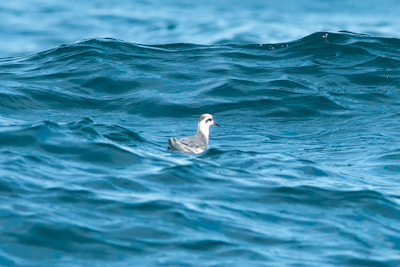
    As the swell began to ease slightly we were 8 miles off Cresswell, heading north west, when I saw two small waders flying up and over a wave crest.  As they dropped onto the sea I shouted “Grey Phalaropes!” and called to Allan to stop the boat.  Eventually we all had excellent views of these two tiny birds as they bobbed about in the swell.  They were the 2nd and 3rd that I’ve seen on pelagics I’ve organised, following the 1st out in the Farne Deeps in 2010.

    Grey Phalarope,Northumberland,bird photography,pelagic birdwatching trips,pelagic wildlife trips

    Grey Phalarope,Northumberland,bird photography,pelagic birdwatching trips,pelagic wildlife trips

    Grey Phalarope,Northumberland,bird photography,pelagic birdwatching trips,pelagic wildlife trips

    We headed towards the coast, and turned to make our way back towards Royal Quays.  Our only Manx Shearwater of the trip was followed soon after by a Pomarine Skua, found by Cain, six Red-throated Divers (including four flying south together), 42 Pale-bellied Brent Geese heading north, 20 Wigeon and 30 Common Scoter.  With only one Manx Shearwater, and no Arctic Skuas at all, this was quite an unusual pelagic but, if you like waders, and you like seabirds, then phalaropes are a dream bird 🙂

  • Autumn chill

    Friday was a trip that I’d been looking forward to for quite some time.  Emily had been on the bird ID course that I ran as part of North Pennines WildWatch and had then booked herself and her dad, Steve, onto an Otter Safari.

    I arrived at Church Point to collect them, and we set off up the coast.  With bright sunshine and a northerly wind, I predicted that our regular Little Owl would be sunning itself on the edge of its nest hole.  Sure enough, it was sitting in full view soaking up the rays 🙂  Waders featured throughout the afternoon, as they have done for over a month now, with Black-tailed Godwit, Curlew, Common Redshank, Common Snipe, Lapwing and very close views of Dunlin and Ringed Plover.  Wigeon, Teal, Shoveler, Gadwall, Tufted Duck, Pochard and Mallard were all paddling around, Little and Great Crested Grebes were, as always, much admired, restless flocks of Greylag and Pink-footed Geese swirled from field to pool and back again, and several skeins of Pink-footed Geese passed south high overhead, their presence betrayed by their high-pitched calls.  A Grey Seal was loitering with intent in the Coquet Estuary, and a Grey Heron sat motionless by the water’s edge.

    We ended the day by a  moonlit river, under a starry sky.  A Grey Heron stalked through the riverside vegetation, and a group of Mallards stared intently into the shadows of the overhanging trees on the opposite bank, then scattered soon after the wake from an, otherwise unseen, animal caught our attention.  Darkness, and the chill night air, settled on the river as we made our way back to the car.

  • Seal of approval

    There’s always something special about days out with clients who have a connection with the north east; often we’ll visit locations that they haven’t seen for a long time, and they’ll share their memories of the place.  One thing that’s constant though, is that they always have a passion for Northumberland, no matter how long they’ve been away, or where they live now.

    I collected Dickie and Caroline from Church Point and we set off on the drive north along the Northumberland coast, heading towards Seahouses.  The main part of the trip was a Seal Cruise on Glad Tidings 5, although in the ‘stiff’ breeze I wasn’t certain that we’d be sailing.  We arrived in Seahouses to be greeted by the good news that we would be sailing, and the ‘interesting’ news that a party of 30 schoolchildren was booked on the same sailing.  As we headed across to the islands, with John expertly guiding the boat to avoid everyone getting wet (as far as possible!) the school party were having a whale of a time.  Then when the first Grey Seals began to bob their heads up out of the water and stare at the boat they got really excited 🙂  Gannets were soaring overhead, Turnstones and Purple Sandpipers were fluttering around the base of the rocks, staying just above the breaking surf, and Shags and Eiders were bobbing around in the increasing swell.  After an exciting journey back to the mainland, we had our picnic stop in the shadow of Bamburgh Castle, and only a few hundred yards from where Dickie and  Caroline used to live.  A big bull Grey Seal made his way north just beyond the surf, and Caroline went for a paddle in the icy-cold sea 🙂  As we made our way back down the coast (after a Caroline-requested stop at Swallow Fish in Seahouses), the weather was an extraordinary mixture of blue sky, sunshine and that breeze…

  • Creatures of the night

    As darkness descends it seems like a whole different world appears, and in the remnants of the daylight you need to be alert as the creatures that frequent the shadowy hours make an appearance.

    With Lawrie and Linda, Mike and Mary & Pat and Janice all safely in the car, we set off for an afternoon and evening around Druridge Bay and south east Northumberland on an Otter Safari.  One of the best things, about any wildlife that we go looking for, is that it’s in a series of superb wildlife-filled locations so there’s always something to look at.  At this time of the year, that’s often passage waders like Dunlin and Ruff, large roosting and feeding flocks of Lapwing, Golden Plover and Curlew and gatherings of Linnets and Goldfinches in newly harvested fields.

    Invariably, the part of the trip that I get really excited about is that bit that takes place in the half-light.  As we walked along a riverbank, a Water Vole put in a very brief appearance and a Grey Heron, stalking through the shallows, took flight in alarm as Mallards hurried nervously away from the vegetation at the water’s edge.  Something was unsettling them, and Lawrie soon picked up the menacing figure of an Otter as it crossed the river.  Two more brief sightings, as Daubenton’s Bats skimmed the water surface below us, and then it was too dark to make out any detail and we headed back, under a clear sky.

  • Not so Ruff

    Wading birds seem to hold a fascination for so many birdwatchers, from beginners all the way to birders with decades of experience, and Druridge Bay and southeast Northumberland at this time of year is often very productive.

    I collected Reg and Val (for their second trip within a week) and Nick from Church Point and we started with one of our favourite birds, and one that always impresses, Mediterranean Gull.  With the strong breeze driving sand across our field of vision, there was a real wild feel to the experience of watching the birds as they withstood the elements.

    Heading north along the coast we witnessed one of the oddest pieces of fieldcraft that I’ve seen with clients.  Checking out a small subsidence pond, we were enjoying the sight of Dunlin, Ringed Plovers, Common Redshank and a juvenile Curlew Sandpiper all probing and prodding through the mud at the water’s edge.  Another birdwatcher made his way stealthily to the wall along the roadside, and settled to watch the birds from a crouched position.  Good fieldcraft, the birds continued feeding appearing completely unconcerned by his presence.  Then, when he was ready to leave, he popped up like a jack-in-the-box flushing all of the birds!  As the flock eventually settled back down, there was no sign of the Curlew Sandpiper.  It’s an important lesson that fieldcraft skills should always be applied when retreating from your position as well as when approaching it 🙂

    Cresswell Pond continued the wader theme, with some very obliging Common Snipe, Dunlin, Ruff and both Bar-tailed and Black-tailed Godwits (standing alongside one another and allowing excellent comparison of the differences between these species).

    At East Chevington, Reg spotted a distant bird perched on a fence post and commented that it didn’t look quite right for a Crow.  Tucked down against the wind, the view through our telescope soon revealed that the bird was a juvenile Marsh Harrier.  It remained perched for several minutes, regularly turning it’s head to reveal a lovely orange/cream crown contrasting with the uniform dark-brown of the rest of it’s plumage.  Hundreds of Lapwings and Starlings were flying back and forth, twisting and turning against the very stiff breeze, Cormorants sat motionless and we headed back to Newbiggin at the end of our day.

  • A Whale of a time on a millpond

    Our ‘Whale and Dolphin Cruise’ has become an integral part of the Northern Experience Pelagics annual itinerary, and with an excellent weather forecast for yesterday’s sailing (and some detailed discussions between Martin and our skipper, John) optimism was running high.

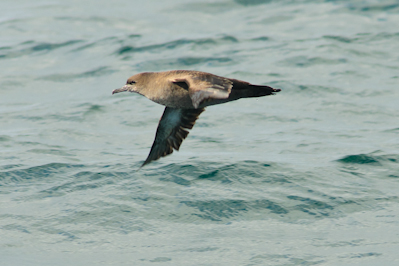
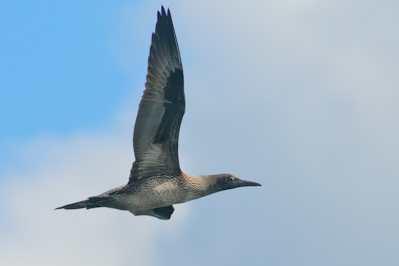
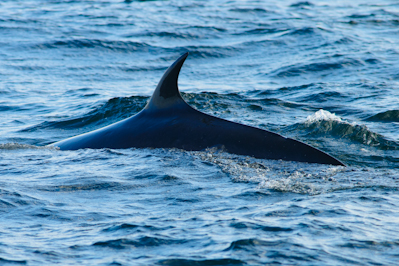
    As we boarded Glad Tidings 5 with 50 clients, there was a really sociable atmosphere.  Plenty of returning clients, and lots of new faces, were soon scanning the sea all around the boat.  Martin started in the wheelhouse with John and they soon spotted a distant whale surfacing.  The quite young animal surfaced again as we passed, another could be seen away to the north near the Farne Islands, and we headed in the direction of a feeding frenzy of Gannets.  Another whale appeared, then another, and another.  All told, in 4 hours we had 5 or 6 different Minke Whales 🙂  Gannets provided a spectacular wildlife experience as vast flocks plunged into the sea in search of Herring, 3 Sooty Shearwaters soared effortlessly past the boat, a single Great Skua carved a path through the circling mass of Gannets, Fulmars glided by on stiff outstretched wings, a small flock of Kittiwakes lifted from the water as the boat approached, and one of the largest cheers of the day came when a small pod of Harbour Porpoises surfaced just ahead of us.  Martin was kept busy, answering lots of questions from our very enthusiastic clients about whales and dolphins in the North Sea, and managed to grab a few images as well 🙂

    Sooty Shearwater,Northumberland,North Sea,pelagics,bird photography
    Sooty Shearwater
    Northern Gannet,pelagics,North Sea,Northumberland,bird photography
    Northern Gannet
    Northern Gannet,North Sea,Northumberland,pelagics,bird photography
    Northern Gannet
    Minke Whale,whale watching,dolphin watching,North Sea,Northumberland,pelagic,wildlife photography tuition
    Minke Whale
    Minke Whale,whale watching,dolphin watching,North Sea,Northumberland,wildlife photography tuition
    Minke Whale
    Minke Whale,whale watching,dolphin watching,North Sea,Northumberland,wildlife photography tuition
    Minke Whale
    Minke Whale,whale watching,dolphin watching,North Sea,Northumberland,wildlife photography tuition
    Minke Whale

  • Mud, Murmurations, Med Gulls and Marsh Harriers

    Sometimes, just one animal or bird can make a trip a special experience for our clients.  Other times it’s the scenery.  Maybe a combination of the weather, Northumberland’s stunning skies and the ‘atmosphere’.  Occasionally, it’s a little bit of each.

    I collected Keith and Anne from their home in the Tyne valley, and headed east towards Druridge Bay and southeast Northumberland.  As we scoured the woods for Red Squirrels, the high winds made it impossible to pick out any movement that might have been our quarry.  Dragonflies hawked around the edges of the trees and some rather late tadpoles were wriggling around in shallow ponds.  A quick stop at Church Point, produced the hoped-for Mediterranean Gulls; beautiful ghostly pale adults hanging in the breeze over our heads.

    Then we were on our way up the coast in search of mud, glorious mud.  Dunlin, Ringed Plover, Redshank, (Grey) Red Knot and an immaculate Curlew Sandpiper were all found at very close range and then noisy skeins of Greylag and Canada Geese filled the air around us.  Alarmed by the sudden appearance of a juvenile Marsh Harrier, the geese lifted from where they were feeding and headed straight for the nearest pool…where they encountered an adult Marsh Harrier, hanging almost motionless above a reed bed, held in position by the wind.  Small groups of Starlings started to appear, tossed around like leaves on the breeze, merging to form a murmuration.  The late evening light made the haystacks in nearby fields seem to glow, the sky was quite breathtaking and, as dusk rapidly advanced and the wind strengthened, flocks of Golden Plover and Curlew arrived to roost as we headed west again.

  • North Pennines 04/09/12

    One of my favourite locations, at a time of year when it isn’t often visited, and returning clients (always a pleasure!) made for an excellent day’s birdwatching in southwest Northumberland and north west County Durham yesterday.

    I collected Reg and Val from their home in Newcastle and, as we headed west along the Tyne valley, the clear blue sky promised a good day.  Starting with a walk along the River Allen, we soon encountered a mixed flock that included Nuthatch, Coal Tit, Great Tit, Blackbird and Robin.  The river produced some stunning Grey Wagtails and a brood of Goosanders, shepherded by mum as they scoured the river, heads held below the surface as the current carried them along.  Common Buzzards were calling from high against the azure sky and we could have been forgiven for thinking it was a nice Spring day – other than that the only birds singing were Robins.

    Once we were out on the moors. we started to encounter Red Grouse.  Always a stunning bird, whether you’re looking at the handsome males or the intricately patterned females, the sunlight really brought out the best in this moorland specialist.  Black Grouse proved slightly more difficult, unsurprising as there was a ‘stiff’ breeze racing across the fells of the North Pennines AONB 🙂  After a lot of effort, we did find three young Blackcocks sheltering between clumps of rush, and they were very obliging for Reg’s camera.  As we crossed one (very) minor road, we came across my own personal highlight of the day.  Two Ravens appeared over a nearby ridge and headed towards a plantation at the top of the ridge ahead of us.  As they soared higher, a third Raven came into view and began tumbling.  The two closer birds responded with a breathtaking display of aerobatics and, as they plunged towards the ground before swooping up again, their deep croaking calls carried on the breeze to where we were sitting.  A special bird in a special place, and simply awe-inspiring 🙂

    birdwatching,northumberland,north pennines aonb,Goosander

    birdwatching,northumberland,north pennines aonb,Red Grouse

    birdwatching,northumberland,north pennines aonb,Black Grouse