Category: Southeast Northumberland

  • Never work with children or animals…

    Back when I was a teacher, and developing demonstration experiments, I came across a piece of advice that has stuck with me since then ‘prior practice prevents poor presentation’.  It served me well; it’s far better to accidentally set fire to the ceiling tiles in your classroom when there’s just yourself, a lab technician and a fire extinguisher there.  And what did I learn from that incident? Make sure your class are sitting towards the back of the room, and keep the fire extinguisher close to hand 😉

    We apply a similar philosophy with NEWT.  Recce sites consistently and, even when a site is regularly producing sightings of the target species, keep searching for new sites too.  Preparation for our beginners photography workshop at the weekend involved baiting three locations with hazelnuts, to maximise the chances of Red Squirrels appearing right in front of us in a photogenic location with lighting angles worked out well in advance.  We visited the sites on Saturday in poor weather conditions and re-baited with over a pound of nuts.  Sunday dawned and I met up with Bryan.  His previous trip with us had been a successful search for Otters, and Red Squirrels have always been an easier mammal to track down…

    The weather couldn’t have been better; bright sunshine always helps.  Coal Tits, Great Tits, Blue Tits, Long-tailed Tits, Chaffinches, Blackbirds and Magpies seemed to be everywhere around us.  However, not any sight of a squirrel 🙂 They’d cleaned out the nuts from all of the sites we’d baited, so we re-baited, and waited.  The likely explanation is that the combination of a stiff cold breeze and the extraordinary number of people walking their dogs through the woods meant that they were keeping their heads down.  So I’ve set up a baiting area in a much quieter piece of woodland, and invited Bryan to come along for a session photographing the squirrels there once I’ve determined the best angles and times of day.  No matter how much preparation you put in, sometimes the unpredictable nature of wildlife still gets the better of you 🙂

  • Winter Wonderland Day Two 05/12/2013

    04:30, and I wake to what sounds like a train crashing through our garden.  It isn’t though, instead it’s the howling gales that had been forecast.  Meeting up with David for breakfast at The Swan, I’m glad that we switched our day in Druridge Bay and Southeast Northumberland to today.  Lindisfarne in howling gales and torrential rain would be close to unbearable, Druridge Bay would be much closer to manageable…

    Starting with a seawatch as the rain lashed against the rear window of the car, Eider and a single Common Scoter were just offshore as Sanderling scurried around the piles of seaweed on the shore, a ghostly white adult Mediterranean Gull struggled past against the wind and two Dark-bellied Brent Geese flew north low over the waves.  Then the weather cleared and we were suddenly in beautiful sunshine and blue skies with a light breeze…before the wind strengthened again, the sky turned black and a squally shower had the entire surface of the pool at Hauxley looking like it was boiling.  Goldeneye, Long-tailed Duck, Tufted Duck, Scaup and Little Grebe

    Little Grebe,Tachybaptus ruficollis,Druridge Bay,Northumberland,birdwatching holidays,photography holidays,northern experience wildlife tours

    all faced the elements…then it turned nice again and a Peregrine flew through, scattering Wigeon and Teal but paying them no heed 🙂  A line of Black-headed Gulls dip-feeding into the breeze at East Chevington contained a surprise in the dainty form of a Little Gull, then it started to rain again.  Sitting by the River Coquet eating lunch, we watched Eider and Red-breasted Merganser, as well as Lapwing, Turnstone, Curlew and Redshank…as the first of the afternoon’s hailstorms began.  Another break in the weather brought David an excellent photo opportunity with a flock of Eider

    Common Eider,Somateria mollissima,Druridge Bay,Northumberland,birdwatching holidays,photography holidays,northern experience wildife tours

    before hailstones the size of peas led to a hasty retreat back to the shelter of the car 🙂 Soon the hail was replaced by snow, before another break in the weather brought some simply sublime late afternoon light.

    Druridge Bay,Northumberland,birdwatching holidays,photography holidays,northern experience wildlife tours

    and a flock of Lapwings were tossed about in the air like pieces of black and white paper.

    Northern Lapwing,Vanellus vanellus,Druridge Bay,Northumberland,birdwatching holidays,photography holidays,northern experience wildlife tours

    With the howling northwesterly winds, the water at Cresswell was being driven towards the channel under the road and between the dunes.  A Black-necked Grebe swam by and then, subtly, and with the inevitability of the tide, water started flowing the other way and a boundary between wind-driven pond and incoming tidal surge developed in front of us.  After a Starling murmuration just up the coast,

    European Starling,Sturnus vulgaris,Druridge Bay,Northumberland,birdwatching holidays,photography holidays,northern experience wildlife tours

    we followed the road back down through Druridge and discovered the tide had overwhelmed the culvert and was still coming in, but now straight over the road in front of us.  Watching the car in front safely traverse the water, we made our way across and headed back to The Swan at the end of an extraordinary day.  David was a pleasure to guide on this holiday, and he kindly sent us the images that illustrate the two blog posts 🙂

    We’re taking bookings now for our 2014 holidays, so please get in touch for more details or to book.  We’ve got a range of holidays, each designed to showcase the best of Northumberland, the North Pennines and the Scottish Borders at the best times of the year.

  • Winter Wonderland Day One 04/12/2013

    As I met up with David for breakfast at The Swan on Wednesday morning, ahead of two days on the Northumberland coast, we’d already switched our itinerary round.  The plan to visit Holy Island on Thursday looked as though it might be slightly impacted by the weather, so we switched Druridge Bay to that day instead.

    The drive north on the A1 was in glorious weather, with Common Buzzards soaring low over plantations in the chill of the early morning and we were soon on Holy Island in a stiffening breeze, carefully stalking towards a flock of Dark-bellied Brent Geese that posed for David’s camera.  Bar-tailed Godwits, and a lone Black-tailed Godwit were probing the exposed mud of the harbour at low tide and Wigeon and Teal were on the Rocket Pool.  A Common Kestrel was hovering nearby and, as the tide turned, we headed to the causeway to see what would be pushed towards us by the advancing water.  Redshank, Curlew, Dunlin, Bar-tailed Godwit, Shelduck and a Little Egret all fed along the swelling channels

    Eurasian Curlew,Numenius arquata,Northumberland,birdwatching holidays,photography holidays,Holy Island,Lindisfarne

    and then a mass of Pale-bellied Brent Geese flew in from the south.  As the water began to lap at the edge of the causeway we drove back on to the mainland, and headed to a quiet stretch of shoreline where I knew David could use the cover of a hedgerow to approach a flock of Pale-bellied Brents whilst avoiding detection.

    Pale-bellied Brent Geese,Branta bernicla hrota,Holy Island,Lindisfarne,Northumberland,photography holidays,birdwatching holidays

    Using the car as a photographic hide (something of a theme  for the holiday!) we got very close views of a flock of Wigeon,

    Eurasian Wigeon,Anas penelope,Holy Island,Lindisfarne,Northumberland,birdwatchinf holidays,photography holidays,northern experience wildlife tours

    and then we settled in the iconic shadow of Bamburgh Castle and scanned the sea in temperatures that were now bone-chilling 🙂  Purple Sandpipers, Turnstones, Oystercatchers and Redshank were roosting just above the water line and beyond the rafts of Eider were flocks of Common Scoter, with one large group of females looking stunningly orange in the beautiful late afternoon sunlight.  Long-tailed Ducks played hide and seek, utilising their propensity for diving, and the developing swell, to keep me on my toes as I located a group with the ‘scope so that David could see them.  Scanning the scoter flocks paid dividends as a female Velvet Scoter rose up and over one advancing wave crest, Red-throated Divers cruised along in their eternal search for fish and a last scan before we headed back down the coast produced a Slavonian Grebe.  As it turned dark, the clear sky afforded excellent ‘scope views of the crescent Venus, and the thinnest sliver of crescent Moon.  So soon after New Moon would be a spring tide, and the one forecast for the following day was predicted to be a big one…

  • Waders and wildfowl; Northumberland Coast 30/11/2013

    Did you hear the one about the Leeds fan, the Liverpool fan and the Hull City fan who had a day out birding in Northumberland?…

    I collected Andy and Sue from their hotel in Bamburgh and we headed south for a day around Druridge Bay and the southeast Northumberland coast. In glorious early morning sunlight, a very obliging Common Buzzard was perched on a hedge by the road and we were soon admiring the first of several species of duck that we were to encounter during the day with two pairs of Eider on the River Coquet. Sue spotted two Roe Deer as Redshank and Curlew were pottering along the water’s edge, Turnstone were engaged in using their heads to turn over large heaps of seaweed and a Little Egret flew upstream.  Sanderling were skittering back and forth along the gently breaking surf and Bar-tailed Godwits and Ringed Plover were on the beach as ghostly white Mediterranean Gulls soared overhead.

    Ducks proved to be a theme for the day, as did large numbers of Curlew, with Gadwall, Mallard, Red-breasted Merganser, Tufted Duck, Scaup, Teal, Wigeon and, probably the most stunning of all, two Long-tailed Ducks at Druridge Pools.  A Black-necked Grebe was a picture of elegance in black and white, and small skeins of Pink-footed Geese were heading south.  Starlings were massing as dusk approached and we headed back towards Bamburgh as darkness decended.


  • Rest and recuperation; A walk in the woods 04/11/2013

    Goldcrests are flitting tirelessly through the branches just overhead, Jays are leaving the edge of the wood and flying over nearby fields on strange bat-like wings, the thin high seee calls of Redwings mingle with the calls of Blackbird and Song Thrush as they head for the deepest darkest interior of the woods, seeking the sanctuary of their night-time roost and, beneath my feet, the soft yet lacerating carpet of pine needles adds to the earthy scent of autumnal decay as the putrid stench of a Common Stinkhorn assaults my sense of smell.  The cold damp air penetrates through to my gloved hands, biting at the flesh, a gentle hint that winter is on it’s way.

    I’m on familiar territory; Choppington Woods occupies almost the entire view from our office window and provides an escape from the office and the fresh air to invigorate my mind.  Today though, it isn’t just about getting outside.  It’s ten days since I had surgery to remove the scar tissue from an old shoulder injury.  By next week I’ll be able to drive again, and the stitches will be removed from the operation wounds.  Another two weeks in and around the office and then I’ll be back guiding clients before the end of the month 🙂

    For now though, I’m wrapped in the warming embrace of the multi-sensory comfort blanket of the world outside, with the words of my surgeon, when I came round from the anesthetic, still firmly burned into my memory “best thing for your recovery is to just get on with your normal life” …

  • Eye to eye with the predator; Bespoke Photography 21/10/2013

    The chilly morning air was biting as I arrived in Seahouses to collect Peter, Caroline and Aidan.  With camera gear loaded into the back of the car we headed down the Northumberland coast with two species in particular on our target list for the day – one relatively easy, one slightly less so…

    I’d planned the morning to take in a couple of sites for Red Squirrel, and the early afternoon to stake out a regular Otter spot.  So, Red Squirrel is the relatively easy species out of those two…but the first rule of wildlife photography should be ‘wildlife doesn’t perform to order’ and both sites we visited, which have healthy populations of Red Squirrel, didn’t produce any sightings.  That’s often the case though when it’s damp, cool and breezy, so we headed on in search of our second target for the day.  After a brief stake out of a handsome male Stonechat we made our way to the edge of a pond, and were told by another birdwatcher who was there that he’d seen an Otter just 15mins earlier, and it had headed across the pond.  I looked across in the direction he thought it had gone…and the entire bank was lined with ducks and geese.  A good sign; the Otter had obviously spooked them out of the water but it must be still somewhere in the pond, as all of the birds were staring intently.  I couldn’t see any disturbance in the water in that direction though and I was just remarking that I thought the Otter could still be nearby, when it surfaced in front of us 🙂  For the next couple of hours we were treated to regular feeding sorties as the sinuous mustelid caught fish after fish, including at least one large FlounderCormorants and Grey Herons were fishing too, a Water Rail put in a couple of typically fleeting appearances, Common Snipe were prodding, probing and miraculously vanishing in short vegetation, Lapwing, Curlew and Redshank were roosting, calling and occasionally flushing, Mallard and Teal kept standing to attention every time the Otter was close by, a murmuration of Starlings away to the north disbanded into smaller flocks that flew straight over our heads and seven Little Gulls danced their dainty flight back and forth over the pond.  Perhaps the moment of the day though, was when the Otter appeared around the edge of a reedbed and started straight into Aidan’s camera lens.  The second rule of wildlife photography should be ‘…and sometimes it does’ 🙂

  • A walk in the woods; Beginners Photography 12/10/2013

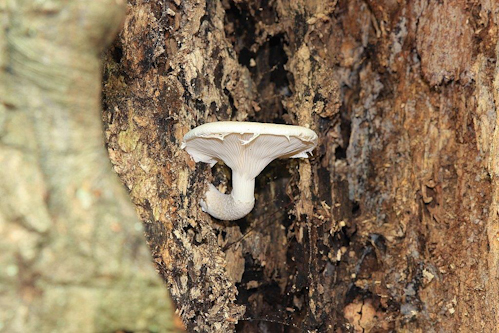
    Our October photography workshop subject was Fungi.  The morning was damp and drizzly, but I’d packed several versatile waterproof camera covers – you can pick them up from your local supermarket, usually free with your shopping 🙂 Dave was on his third day with us this year, and kindly emailed some of his images from the day to post in our blog.  We’ve just added our 2014 dates and topics to our Beginners Photography page.  You could come along yourself or, if you’ve got a friend or relative who’s trying to get to grips with their camera, our Gift Vouchers make ideal Christmas presents 🙂

    fungi,macro photography,photography workshops, photography tuition,Northumberland

    fungi,macro photography,photography workshops, photography tuition,Northumberland

    fungi,macro photography,photography workshops, photography tuition,Northumberland

    fungi,macro photography,photography workshops, photography tuition,Northumberland

  • Stoats, Sandpipers, Starlings and Sparrowhawks; Druridge Bay birdwatching 30/09/2013

    With a brisk southeasterly wind rattling the Northumberland coast, I arrived in Alnmouth on Monday morning to collect John, Annie and Steve for a day of bespoke birdwatching.

    Starting with a seawatch, Gannets were streaming south , occasionally pausing to circle and then plunge into the sea, and Common Scoter were dotted amongst the rafts of Eider, appearing for brief periods as they rode up and over the considerable swell.

    Heading south to Druridge Bay produced the expected crop of passage waders; Redshank, Curlew, Black-tailed Godwit, Dunlin, Lapwing and Ruff were expected and two Curlew Sandpipers were a nice find.  Teal, Mallard, Wigeon, Tufted Duck, Gadwall, Goosander and Pintail provided wildfowl interest and skeins of Canada, Greylag and Pink-footed Geese, which we’d seen earlier in the afternoon as they fed in nearby fields, began to arrive at their overnight roosts.  A Stoat was all energy as it raced backwards and forwards, exploring every nook and cranny along the edge of the water and, as dusk approached, we watched one of the great wildlife spectacles as a murmuration of Starlings swirled above a reedbed before dropping in to roost.  The mass of birds attracted the attention of a Sparrowhawk, and the female raptor made several low passes through the tops of the reeds above the roosting Starlings.  They weren’t going to be tricked into flying out and becoming an easier target though, and the Sparrowhawk soon settled on a fence post.  Then a second Sparrowhawk appeared, this time a male, and the two birds perched on adjacent fence posts, allowing an excellent comparison of their gender differences.  As we headed off, in the fading light and bitterly cold wind, it looked like they would be going without their supper…

  • The Kill; Druridge Bay birdwatching 24/09/2013

    Through the thickening mist, just inches above the ground, the Sparrowhawk maneuvered it’s way at speed around bushes and the edge of a reedbed.  From that position it couldn’t see any possible targets.  Of course, that meant it couldn’t be seen either…

    I’d collected Laura and Barry from Church Point at midday. for an afternoon birdwatching around Druridge Bay and southeast Northumberland.  Unlike the stunning sunshine and warmth of Monday, conditions were rather overcast.  On a walk through woodland, we came across a roving tit flock.  Goldcrests could be heard high in the trees, and a quick session of pishing soon had one just a few feet away from us as it descended to investigate where the squeaking noise was coming from.  Our lunch stop, overlooking the length of Druridge Bay, gave us the opportunity for a spot of seawatching although, with the lack of any substantial breeze, there wasn’t a great deal of movement offshore.  Eider were dotted here and there, Cormorants were flying along the coast, a few Swallows  were catching insects low over the clifftop vegetation and flocks of Goldfinch and Linnet were noisily flitting about.  Lapwings, Curlew, Dunlin, Ruff, Snipe, Ringed Plover and Redshank, the latter in what seemed to be a state of perpetual motion, were working their way along exposed mud as Grey Herons stalked with an imperceptibly slow motion that  spells danger to fish, frogs and ducklings everywhere.  As the afternoon continued, we were suddenly confronted with heavy mist.  Then the rain started.  Thinking this would clear the mist proved a forlorn hope, and we watched a flock of Dunlin make several low passes over the mud in front of us before they vanished into the mist.  Eiders and Cormorants were diving repeatedly on the River Coquet near Amble and Salmon were leaping from the water – a real joy to watch when all three of us in the car are keen flyfishers.  With dusk approaching, although this wouldn’t differ too much from the rest of the afternoon, the yapping of Pink-footed Geese could be heard from behind the grey impenetrable curtain of mist.  Growing louder, and with the calls of Greylag and Canada Geese intermingled, the flock appeared on the edge of the mist.  Just beyond the limit of clarity, the amorphous mass of several hundred geese dropped onto the water and then upped the volume of their calls.  As another flock arrived they were greeted noisily by the birds already on the water.

    …accelerating on powerful wings, following an approach of supreme stealth, the Sparrowhawk exploded from a gap in the reeds, still just inches from the ground.  Lapwings and Starlings took to the air in panic, but the predator quickly fixed it’s baleful stare on the three closest birds to the edge of the reeds.  The Dunlin took flight, but the concealed approach by the Sparrowhawk had given it the edge that it needed in the game of life and death that was playing out in front of us.  With lightning quick reflexes it plucked the Dunlin deftly from the air, turned back through the channel in the reeds, and settled to devour it’s catch out of sight.  Not out of sight from us though 🙂

  • Wild Geese and small predators; Druridge Bay 20/09/2013

    After a damp morning around Druridge Bay on Thursday, Friday looked much more promising.  I collected Simeon and Kathy from their holiday accommodation in Warkworth and we set off down the coast for an afternoon around Druridge Bay and southeast Northumberland.  Late summer/early autumn trips often feature plenty of waders and wildfowl and this was no exception.  Common Snipe were playing ‘hard-to-spot’ as they slept in sparse clumps of reed, Dunlin, Ruff, Ringed Plover, Black-tailed Godwit, Lapwing and Golden Plover were all either roosting or sticking their beaks into the mud and a lone Greenshank was sitting on the periphery of a big flock of Lapwing.  On slow deep wingbeats a Sparrowhawk flew low across the water towards us, pulling sharply up and over us at the last minute.  Over a coastal reedbed a juvenile Marsh Harrier drifted lazily along, swooping down towards the water and scattering the Mallard and Teal that had been dozing contentedly there.

    Mid-afternoon we were treated to the spectacle of the sky filled with skein after skein of geese; mainly Pink-footed, but with small groups of Greylag and Canada interspersed amongst the yapping flocks of one our favourite Icelandic winter visitors.  Our next magic moment came courtesy of a mustelid.  Not the Otter that we were searching for, but instead the beautiful little predator that has featured on so many of our trips in the last few weeks.  For several minutes we watched as a Stoat ran backward and forwards along the water’s edge, perched on rocks, had a good look at a Moorhen and finally bounded away through the poolside vegetation.  Another small predator provided the next wildlife experience.  Lapwing, Golden Plover, Ruff, Black-tailed Godwits, Dunlin, Teal, Mallard, Gadwall and Starling all took to the air; had they spotted an Otter lurking in the reeds?  maybe a Fox?  No, what was coming was the Grim Reaper on tiny pointed wings.  A Merlin was suddenly amongst the scattered birds in the air.  Twisting and turning, the tiny falcon had singled out a Dunlin from the multitude of possible targets in front of it.  The chase was on and could be easily followed by watching the path carved through the tightly bunched Lapwings that had taken to the air in alarm.  As the Dunlin made a final bid for freedom, the Merlin gave up the chase and settled, out of sight, in a hawthorn bush in the dunes.  It didn’t have long to catch it’s breath before it was disturbed by a dog walker and flew into a dune slack away from disturbance.  Simeon’s comment after this life and death chase echoed those of many of our clients previously “it’s gripping, but I was really willing the Dunlin to get away”.

    As the evening progressed and the Sun dropped below the western horizon, geese began arriving to roost, bats were flitting back and forth across our field of view and, as the light finally faded to black and we headed back to Warkworth, a Barn Owl flew low over the car.