Category: North Sea

  • White-beaked Dolphins

    Friday was our final Royal Quays evening pelagic for this summer, and we were heading once again on to the North Sea in search of a species that has come to occupy much of my time; White-beaked Dolphin.  My first encounter with them was in 2003, on an evening pelagic, and we’ve found them many times since then.

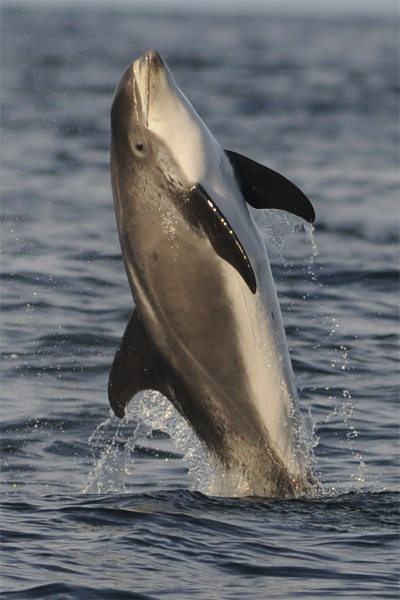
    I’ve spent long, difficult days offshore in the winter, researching their distribution while leading the North East Cetacean Project, I’ve stood on a clifftop with clients (on an Otter and Badger Safari!) as a pod covering several square miles of the North Sea passed by, I’ve taken photos like this one on flat seas in beautiful weather

    White-beaked Dolphin,dolphin watching trips,whale watching trips,Northern Experience Wildlife Tours

    and I’ve had brief encounters in conditions where I was surveying but would never have taken clients out.  I’ve spent several hours watching them bow-riding

    and I’ve laid on the front of a boat, looking down at a dolphin that was bow-riding upside down looking at me.

    On Friday though, we witnessed behaviour that myself and Andy (who was also on board) had never come across before.  We think that what happened was a small group, including a tiny calf, were resting near the surface and we inadvertently woke them up.  The first indication we had that there were any dolphins around was when an adult crossed close to our bow, tail-slapping.  Another adult (or possibly the same one) then began breaching and for 20 minutes we found ourselves shadowed by a pod of about 10 animals.  No bow-riding, no interaction other than escorting us as we travelled slowly through their area, and a rare insight into the behaviour of a pod of dolphins protecting the next generation.  Eventually the pod dropped away from us and, as we headed south, we saw them for the final time as they milled about distantly in our wake.

    We’ve got just one place still available for our September Royal Quays trips (that space is on September 22nd), our Whale and Dolphin Cruise from Seahouses on September 8th is filling rapidly and we’ve got a few spaces on our Farne Deeps trip from Royal Quays in search of White-beaked Dolphin, Minke Whale and seabirds on August 15th and our evening RIB trips from Seahouses.  Click here for more details or to book, or call 01670 827465 to reserve your place before they’re all sold out.

  • My lucky Tilley hat

    It protects my head from attack by Arctic Terns on trips to the Farne Islands, it prevents me getting sunburn, but now it seems to have developed an additional, almost mystical, power…

    With a spell of settled weather, and incredibly obliging sea conditions, I was full of optimism as I arrived at Seahouses Harbour for the first of this year’s Northern Experience Pelagics Farne Deeps trips.  We boarded Ocean Explorer and headed offshore, in search of Minke Whale and White-beaked Dolphin.  As always we found birds close to land, and then a period with little wildlife other than an occasional Gannet gliding by.  With land-based trips you learn to ‘read’ the habitat and weather conditions.  At sea, you don’t have that luxury; whatever the sea bed is like, the surface always looks pretty much the same 🙂  The wildlife itself provides the visual clues, and splashing in the distance simply didn’t look right for diving Gannets. Alan slowed the RIB and I scanned the horizon.  Again the same splashing, and it became obvious that there were lots of Gannets sitting on the sea in that area as well.  The first dorsal fins began to appear, and soon we could see a small pod of White-beaked Dolphins heading towards us.  Then more appeared…and more…and more.  Eventually we had between 60-100 dolphins bow-riding, breaching, feeding and generally providing excellent entertainment for all on board.

    White-beaked Dolphin [Lagenorhynchus albirostris],whale watching,dolphin watching,Northumberland

    White-beaked Dolphin [Lagenorhynchus albirostris],whale watching,dolphin watching,Northumberland

    White-beaked Dolphin [Lagenorhynchus albirostris],whale watching,dolphin watching,Northumberland

    White-beaked Dolphin [Lagenorhynchus albirostris],whale watching,dolphin watching,Northumberland

    White-beaked Dolphin [Lagenorhynchus albirostris],whale watching,dolphin watching,Northumberland

    The dolphins, Gannets and the fish they were feeding on drifted away so we sat with engines off and had our own meal break.  Just over half an hour later we encountered the dolphins again and they charged headlong towards the boat.  After another long session of breaching and bow-riding, we stopped the engines and let the dolphins head off to whatever they were planning to do next.

    We were heading back to shore at just over 30knots when my Tilley hat was lifted from my head by the breeze and landed in the wake 🙁  Now, one of the things about a Tilley hat is that if it falls in the water it floats.  Alan turned the boat and a few minutes later we recovered my hat 🙂  After nearly 4 hours of staying firmly on my head, it was a surprise that it had suddenly departed seawards…

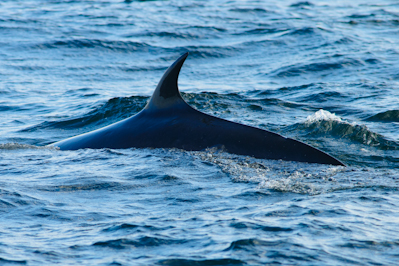
    We’d just started heading again towards the shore when Sue said that she’d seen a fin and thought it might be a Harbour Porpoise.  Alan slowed the boat right down, and the fin surfaced again.  Much better than a porpoise though, it was a distant Minke Whale 🙂  We watched it surface several times, and then it became obvious that although everyone on board was watching a Minke Whale not everyone was looking in the same direction!  There were at least two, and possibly three, whales around us and, even though the dolphins were spectacular, there was something really special about watching these huge marine mammals as they surfaced with a stunning sunset, and the distant Northumberland coast, as a backdrop.

    The best pelagic that we’ve organised? Probably…

    We’re heading to the Farne Deeps again on August 15th (from Royal Quays) so give us a call on 01670 827465 to book your space before it sells out.

  • Dark night

    This has been a difficult year for boat operators on the east coast, with unseasonable winds and frequent heavy rainfall making it unwise to head out to sea.

    Tuesday was the first of this year’s evening pelagics to survive the weather so, as we set out from Royal Quays on the SarahJFK, I was full of optimism.  Soon after leaving the mouth of the Tyne, Allan spotted a Harbour Porpoise, although it remained typically elusive.  Kittiwakes were following us throughout the evening, no doubt wondering if we were going to throw any scraps overboard, Gannets and Fulmars were passing by and, all around us, the sky looked heavy with something…

    I’d had a call earlier in the day to say that a small pod of dolphins were passing Newbiggin, so I took a guess on where they would be by mid-evening and asked Allan to plot a course that would take us through the area.  Sure enough, just where we expected them, 6 White-beaked Dolphins, including the smallest calf that I’ve seen in the ten years since we first found White-beaked Dolphins on one of our pelagic trips, appeared in front of the boat and then came in to bow-ride 🙂  They stayed with us for several minutes before heading south, probably to feed, and we continued north.    5 Manx Shearwaters were heading north, and a flock of 30 Common ScotersAll the while the weather around us was looking poor, and eventually we found ourselves in a heavy, misty drizzle as we headed back to port, and by the time we docked it was properly dark – not something we’d normally expect in mid-July.

    Glowering, oppressive weather conditions, remarkably good visibility, a sea state that was ideal for cetacean spotting, a boat full of enthusiastic clients and a pod of dolphins…perfect 🙂

  • North East Marine Wildlife Festival Pelagic 10/06/2012

    Our Marine Wildlife Festival pelagic trip should have taken place on Saturday, but the poor weather led to several ‘phone calls and e-mails, and a re-scheduling to Sunday instead.

    We lost a few participants who couldn’t make the rearranged date, but we gathered a few extras on Saturday/Sunday too, and arrived at Seahouses Harbour full of enthusiasm for our first pelagic trip this year.  In the extremely capable hands of John, onboard Glad Tidings V, we headed across to the Farne Islands and the Guillemots, Razorbills, Puffins, Shags, terns, Kittiwakes, Fulmars and Grey Seals.  After a journey through the islands we sailed south and then east before heading back north along the coast.   Harbour Porpoises provided the cetacean interest, lots of Gannets were soaring majestically by and three Manx Shearwaters flew north.  The number of positive comments by text, e-mail and ‘phone, since Sunday evening has been great and it’s always good to see how much people appreciate the marine environment of the North Sea, even if it sometimes seems impenetrable.

    Bird of the day though, was the one that was only seen by a couple of very lucky participants.  We were a couple of miles south of the islands when someone asked the question “Martin, which Storm-petrel is it likely to be that we saw back there?”…

  • North East Marine Wildlife Festival 2012

    Our pelagic season will be getting underway soon, and our first offshore event this year is the final event of the North East Marine Wildlife Festival 2012

    The festival is an excellent idea, and organised/sponsored by 3 organisations that we’ve worked closely with in the last few years – DFDS, ORCA and ERIC NE – so we were more than happy when asked if we could run a pelagic trip as part of the festival.  No matter how many talks you attend, how many wildlife documentaries you watch or how much time you spend on the coast looking out to sea, actually getting on a boat and experiencing the North Sea up close is still the best way to really appreciate how special it is.

    I was interviewed on Radio Newcastle earlier this week, responding to the question ‘conservation – can we afford it?’.  When I look at the importance of our ecosystem, and the North Sea in particular through my work with MARINElife, the North East Cetacean Project and ERIC NE, I think the question should be ‘conservation – can we really afford not to do it?’.  A sustainable world can only be achieved through conserving what we have and sustaining our planet for future generations.  The definition of sustainability is an often contentious issue, but clients, friends and colleagues who we’ve spoken to since the phone-in all agree that conservation should be a priority for government.  We wouldn’t expect anything else 😉

  • Marine Conservation Zones

    Last week I had an interesting day in Peterborough, meeting with Natural England and stakeholders from all of the Marine Conservation Zone Projects.  We were there to discuss the protocols that Natural England will use to assess the recommendations from the regional projects, but it was clear that there is great concern across all sectors about how decisions will be made on the designations.

    In total there are 127 rMCZ’s (recommended Marine Conservation Zones) and it’s certain that not all will be designated initially.  The Wildlife Trusts have a Marine Conservation Zones page on their website, and we’d urge everyone reading our blog to take a look at that page and write to Richard Benyon MP, Parliament Under-Secretary for Natural Environment and Fisheries, to add your voice to the call for all 127 rMCZ’s to be designated so that we have an ecologically-coherent network of MCZ’s.  Only that way will we be conserving the marine environment for future generations, for our fishing industry and for the wildlife that depends on a clean, healthy marine environment.  We’ve linked to this video before, but it really does give an example of the beauty that exists offshore from Northumberland.  It was a great privilege, and a quite moving experience, to take this video.  Lots of our clients enjoyed superb views of White-beaked Dolphins this year, and we want future generations to enjoy these experiences as well.

  • Whalefest (2)

    After spending the weekend exhibiting at Whalefest we were left with more than a few thoughts, ideas, and plans for the future;

    Brighton is a long way from home 🙂  The drive back on Sunday evening was easier than the drive there on Friday afternoon, but didn’t seem that far!

    There are a lot of charities/volunteer-led organisations in the marine sector and NEWT are proud to be involved in research projects and other activities with several of them.  The Northeast Cetacean Project is about to enter an important expansion phase, and will become a major driving force for marine conservation in the North Sea.  It was heartening to hear about all of the research and community engagement stuff that’s either going on or is in the pipeline for the near future as well.  One burning question though, is why was one marine conservation organisation giving away helium-filled balloons?

    There was only one way to follow Whalefest, so Martin spent Tuesday on the PV St Oswald.  Conditions weren’t exactly conducive to cetacean surveying; 5-6′ of swell, plenty of whitecaps, and misty drizzle, made it more of a physical challenge than usual, so it became more of a ‘pleasure’ cruise 😉  There were a couple of avian highlights, though.  A small group of Little Auks flew by and the tricoloured upperparts of a juvenile Sabine’s Gull shone out in the gloom as it passed close by the bow.

    It’s good to be home 🙂

  • Whalefest

    For some reason, everyone we know laughs when we tell them the name of the event where we’ll be on the first weekend in November…

    Whalefest is the first event of it’s kind in Europe; sort of a British Birdwatching Fair for cetacean watchers 😉  We’ll be there, promoting our pelagic trips and holidays and selling our new range of postcards, greetings cards, notelets and limited edition prints.  If you’re visiting Whalefest then please come along and say hello 🙂  We’re really looking forward to this; an opportunity to spread the word about how good Northumberland is and meet other operators, researchers and charities.  We’ve got a few exciting new projects that we’ll be discussing in meetings during Whalefest so watch this space…

    We’ve just added our 2012 dates to the calendar, including an expanded set of pelagic trips.  After excellent sightings of White-beaked Dolphins in 2010 and 2011, we’re looking forward to 2012 already.

  • Long, lazy swell

    When I was on the coast just south of Cresswell on Friday evening, I didn’t hold out much hope for Saturday’s pelagic going ahead;  a menacing sea, with waves forming towering peaks, didn’t look likely to abate.

    However, the sea is often fickle and Saturday saw nothing more than a long, lazy swell as we set sail into the North Sea for a day of offshore birdwatching along the coastlines of Druridge Bay and southeast Northumberland.  Conditions changed throughout the day with, at times, the sea as calm as a millpond.  3 ‘Blue’ Fulmars, 5 Great Skuas, a probable Pomarine Skua, 3 Arctic Skuas, 5 Sooty Shearwaters, 4 Red-throated Divers, 2 Manx Shearwaters, Teal, Puffins, Guillemots, Razorbills, Kittiwakes, Gannets, Mediterranean Gulls and Swallows! were all appreciated and a Grey Seal and 2 Harbour Porpoises added some mammalian interest.

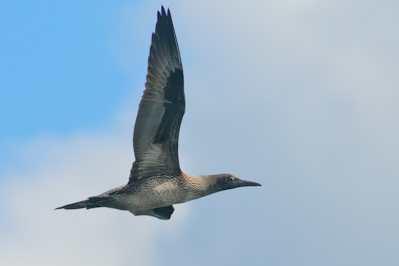
    Gannet,Northumberland,offshore wildlife trips,pelagic trips,birdwatching


    Fulmar,offshore wildlife watching,pelagic trips,Northumberland,birdwatching


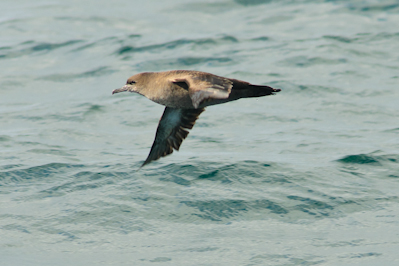
    Sooty Shearwater,offshore wildlife watching,pelagic trips,Northumberland,birdwatching


    Blue Fulmar,offshore wildlife watching,pelagic trips,Northumberland,birdwatching


    Mediterranean Gull,offshore wildlife watching,pelagic trips,Northumberland,birdwatching

  • The whistling wind

    Saturday’s Whale and Dolphin Cruise from Seahouses turned out to be an excellent few hours of birdwatching off the Northumberland coast.

    As we left the harbour, the swell of the tide had the boat rocking gently up and down.  A mile or so later and we were in what I think of  as ‘proper’ pelagic conditions; choppy sea, lots of whitecaps, an eerie wind whistling around the boat…and birds everywhere.  The atmosphere when the North Sea is like that is filled with anticipation.  A Pomarine Skua, athletic, muscular and menacing harrassed Kittiwakes, our first Great Skua of the trip (the first of several) lumbered by, Arctic Skuas flew along the wave troughs and the fragile, delicate figure of a Long-tailed Skua headed north in the rapidly strengthening wind.  Fulmars soared effortlessly by, small groups of Gannets, those masters of efficient flight, featured throughout the trip and Sooty Shearwaters, a real seawatcher’s bird, entertained as they circled the boat.  Added to that there were Puffins, Guillemots, Razorbills, Manx Shearwaters and Herring, Great Black-backed, Lesser Black-backed and Black-headed Gulls  and Arctic, Common, Sandwich and Roseate Terns.  With so many whitecaps, and some ‘interesting’ swell, we weren’t fortunate enough find any cetaceans, but one participant summed up offshore wildlife so well “You’re on a boat, it’s an experience, enjoy it, you never know what you’ll see.”