Category: Birdwatching

  • Angel of Death; Bespoke Coastal Safari 26/08/2014

    I’ll never tire of watching wildlife.  Whether it’s the birds around the feeding station in our garden, whales and dolphins far from land, grouse on the high moors or hoverflies around wildflowers, I’m fascinated by it all.  There are some species though that are so ethereal and attention-grabbing that I’ve often seen clients literally transfixed watching them.

    I collected Steve and Sue from The Swan and we set off north to begin our exploration of the Northumberland coast and its wildlife.  Waders dominated, as they have done for a few weeks now; Ringed Plover, Curlew, Lapwing, Common Snipe, Golden Plover and Dunlin are all birds of the high moorland in the spring, and the coastal strip for most of the rest of the year.  These annual visitors were alongside Ruff and Black-tailed Godwit, which don’t breed in Northumberland (but probably could!) and the ever expanding (northwards, not outwards) Little Egrets. Grey Herons seemed to be everywhere that we looked, and Goosanders were lazing on a midstream rock as Salmon gorged themselves on the plethora of flies forming a thick film on the river’s surface.  Skeins of Canada and Greylag Geese were heading to roost as dusk approached and we searched without success for an Otter, but a nocturnal bird, putting in an appearance in bright early evening sunlight, was the equal of any television documentary.  Sue spotted it first, as it hovered noiselessly over a small reedbed listening for the tell-tale rustle of a small mammal.  It pounced, then rose carrying a mouse and flew back to its hungry brood.  This has been a good year for our Barn Owls, with many pairs having second broods.  Soon it was out again, quartering, hovering and plunging before lifting again with prey.  Eventually we watched as it perched on a fence post.  Beautiful and deadly in one pale ghostly form.
  • Sealed; Bespoke North Northumberland Coast Safari 22/08/2014

    After some poor sea conditions recently, things looked more promising for Friday’s trip; a seal cruise around the Farne Islands, followed by a few hours of birdwatching along the North Northumberland coast.  A change is as good as a rest, and the North Northumberland coast is quite a change from the sand dunes and coastal pools of Druridge Bay 🙂

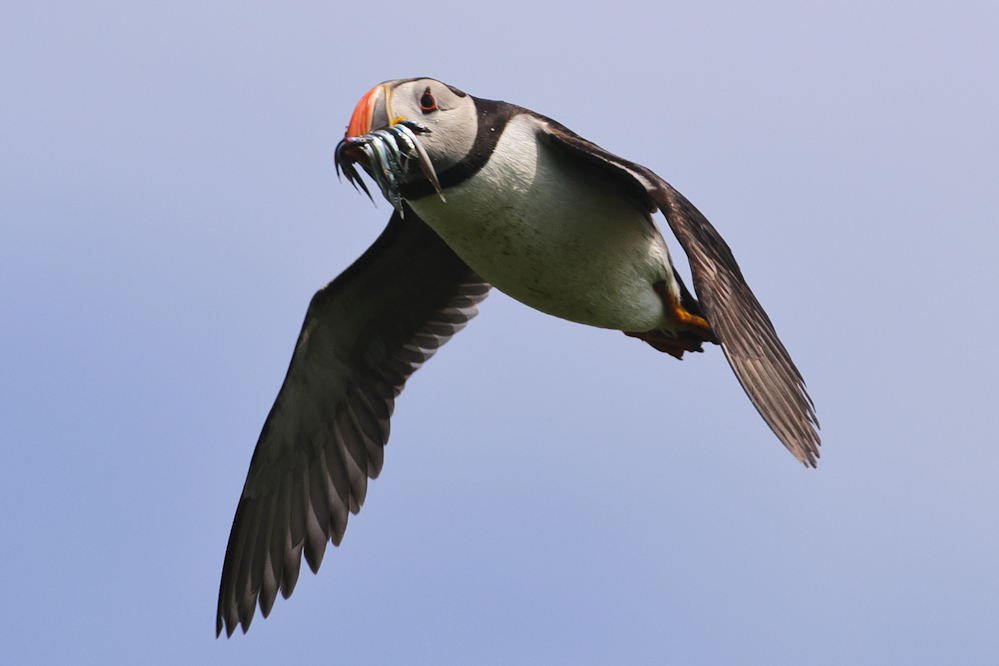
    I collected Anne-Marie, Dave, Melanie and Mike from the Queen’s Head in Berwick and we drove to Seahouses for our sailing on Glad Tidings V, which thankfully was fairly smooth, and featured plenty of wildlife.  Gannets were soaring by, Kittiwakes were still on their cliff-edge nest sites in good numbers as Fulmars arced over them, Grey Seals were hauled out on rocks and bobbing around in the water, two Common Guillemots were still sitting on the rocks, Cormorants and Shags were drying their wings in the stiff breeze, Sandwich Terns called as they flew back to the islands and, unexpectedly, five Puffins were seen with beakfuls of fish.  Photographing Puffins in flight can be a challenge on land, with lots of birds to choose from, and a bird appearing unexpectedly at sea is an even harder proposition but Anne-Marie and Melanie responded with lightning fast reflexes to capture these late breeding birds.

    Back on dry land we had our lunch in the impressive shadow of Bamburgh Castle, as Eiders bobbed around just beyond the breaking surf, and then we explored the coast as the tide fell.  Little Egrets have become a frequent feature of our coastal trips, and two birds flew by at quite close range.  Dozens of Grey Seals could be seen ‘bottling’ at high tide and then, as the water receded, exposing patches of mud, we started encountering waders.  Redshank, Ringed Plover, Curlew, Lapwing, Dunlin  and Oystercatcher were joined by Knot, Ruff and Greenshank as more Little Egrets, and a flock of Teal, flew by.

    Heading back to Berwick we could see poor weather to the north and to the east, and I got caught in some heavy rain as I drove south on the way home, but we’d had a day where the only water that landed on us was the spray from the bow of the boat 🙂

  • Wading through coastal flocks; Druridge Bay mini-Safari 21/08/2014

    Changeable, that’s the thing I love about Northumberland’s weather.  Thursday’s mini-Safari in managed to feature bright sunshine, strong winds and torrential rain – all in just a few hours.

    I collected Diana and Aveen from Alnmouth and we headed down the coast towards Druridge Bay.  Starting with a brief seawatch, we found Eider and Common Scoter on the sea, and Redshank, Oystercatcher and Turnstone on the rocks just above the crashing waves.  Curlew, Avocet, Dunlin, Knot, Ruff, Lapwing and Redshank were roosting at Cresswell, and flushing frequently although we couldn’t see the cause of their concern.  A Little Egret added a touch of grace and elegance, Little Grebes swam amongst Tufted Ducks and Mallard and at one point we had no less than five Kestrels in the air at the same time.  Two lovely clients, and the Northumberland coast delivering the sort of birdwatching experiences that it does so well 🙂

  • The magic of dusk; Otter Safari 20/08/2014

    After four consecutive successful Otter Safaris since mid-July, I was fairly sure that dusk would be the best time to search for them, and the afternoon could be spent enjoying some excellent birdwatching with the added possibility of stumbling across an Otter in broad daylight…

    I arrived in Craster to collect Dave and Naomi and we headed south towards Druridge Bay.  We started with Grey Wagtails bobbing up and down on mid-stream rocks, as Salmon hungrily seized flies from the water’s surface, and then moved on to large roosting flocks of Sandwich Tern, Black-headed Gull, Curlew, Oystercatcher and Lapwing with two Little Egrets standing sentinel-like on an elevated bank above the roost.  Knot, Dunlin, Ruff, Wood Sandpiper, Redshank, Greenshank, Common Sandpiper, Common Snipe and Black-tailed Godwit added to the wader haul for the afternoon and real surprise came in the shape of a Kingfisher over Cresswell Pond.  Ghostly white Mediterranean Gulls drifted over Newbiggin and, as dusk approached, Naomi started spotting mammals.  First a Roebuck, prancing, leaping and sparring with tall plant stems like a boxer with a punchbag.  Then, the big one; an Otter 🙂  Swimming towards us, we followed it’s dives by the trail of bubbles on the water’s surface, before  it eventually disappeared below the edge of the reedbed that we were looking over, with just the tell-tale ‘ring of bright water’ as it surfaced.  After a few minutes without any sign, the Otter, or a second one, reappeared.  As we each gave directions to where the Otter was, it quickly became apparent that we weren’t all watching the same animal.  Then there were two together to our left, and a third away to our right 🙂  At least three Otters, including the smallest cub that I’ve ever seen, and we eventually left, when the light levels had fallen so low that binoculars were all but a hindrance.  As we walked back to the car a Barn Owl passed by, carrying prey, as skeins of Canada and Greylag Geese flew noisily south.

  • Lifers; Druridge Bay birdwatching 13/08/2014

    It isn’t unusual for our clients to see species for the first time on one of our tours, but it’s much less usual for me to see something new…

    I collected Chris from home in Gosforth and we headed out towards the coast and Druridge Bay.  It’s always a great pleasure to have Chris out on a tour with us, although this one held the possibility of an early, and sudden, finish as his step-daughter was due to have her second child.  Mid-August is still an excellent time for wading birds and the selection on offer was impressive; Dunlin, Knot, Avocet, Lapwing, Curlew, Whimbrel, Redshank, Ruff, Common Sandpiper and Oystercatcher were perhaps overshadowed by one of Chris’ two lifers for the day; Stilt Sandpiper 🙂  Pied, Yellow and Grey Wagtails were all flycatching close to water and a 2cy male Marsh Harrier managed to be both impressive and educational at the same time.

    Chris’ other lifer for the day was a new bird for me too.  Gulls aren’t everybody’s cup of tea, but the Caspian Gull in Amble Harbour was an impressive bird; a whole lesson in structure, behaviour, moult and ageing all wrapped up in in one ‘large white-headed gull’; the alternative to ‘little brown jobs’ for birders who prefer staring at mud rather than bushes 🙂

  • The pointy end of wildlife watching; Otter mini-safari 12/08/2014

    As I collected Paul, Lily and Charlie from North Shields, dark clouds were gathering away to the north.  Over Druridge Bay – just where we were heading…

    A late brood of Barn Swallows, still in the nest and being fed by their parents, were quite a size contrast to Grey Herons stalking along the water’s edge. Little Grebe, Tufted Duck, Mallard and Gadwall were dabbling and diving, small groups of Starling were heading to roost and, as darkness approached quicker than it would on a nicer evening, we settled into position to watch for Otters.  We were in a struggle with dusk and the weather, but distantly, in the gloom of the waters’ edge, the tell-tale ‘Loch Ness Monster’ shape of an Otter was resting at the surface 🙂  As it moved around the pool, distant plantations and nearby reedbeds were used as landmarks so that everyone knew just where it was.  Then it began moving closer and eventually came up out of the water onto an exposed patch of mud; an apex predator silhouetted against the dying embers of daylight as an unseasonably cold wind began cutting across us and the first drops of rain dimpled the water’s surface around the gulls, ducks and geese settling down for the night as their mortal enemy watched on with mustelid curiosity and cunning.

  • Breathtaking; Bespoke Druridge Bay safari 05/08/2014

    I know I may go on a bit about how wonderful Northumberland is but, even after more than 20 years living here, there are days when even I find it hard to believe just how good it can be…

    I collected Colin and Hazel from the hills above Budle Bay and we headed south along the coast for an afternoon and evening around Druridge Bay.  Colin was keen to improve his handling of his new dSLR, and they were also quite keen on searching for Otters.  The afternoon started with some top quality birdwatching; Avocet, Black-tailed Godwit, Scaup, Common Snipe and Dunlin are all nice, but the standout bird was the Stilt Sandpiper that has been enjoying a tour of Cresswell and Druridge Pools over the last week.  Arriving at our picnic spot just south of Cresswell, I mentioned that, with such good visibility and relatively calm seas, whales and dolphins are always a possibility, perhaps tempting fate to deal us a poor hand… A few minutes later I was scanning the sea out towards the horizon when I saw a splash.  I raised my binoculars, to check that it wasn’t a distant boat, and there was another splash, and another, and another, then four together 🙂  As the synchronous breaching continued I trained the ‘scope on the area where the dolphins were, and was surprised to see that they were Bottlenose Dolphins.  In early August, the default dolphin for the Druridge Bay coast is White-beaked Dolphin, and that’s the species we’ve been finding on our recent pelagic trips, but this has been an extraordinary year so I shouldn’t be too surprised to have found myself showing Bottlenose Dolphins to our clients too 🙂

    The evening continued with some very obliging birds in front of Colin’s camera; Common Snipe, Dunlin, Linnet, a flock of Starlings taking a bath and an assortment of wagtails then, as light levels began to fall, we switched our attention to the patient waiting game of looking for Otters,as flock after flock of Starlings flew towards their evening roost.  Soon, we were watching the sleek, sinuous shape of an Otter as it hunted and fed.  It passed out of sight for a few minutes, only to reappear and surface just in front of a second Otter!  A third one was slightly further way from us and eventually we watched as one of them came straight towards us before disappearing behind the reeds.

    The day isn’t over ’til it’s over though, and Northumberland’s wildlife provided one last moment of magic as a Tawny Owl was perched on the road sign outside Colin and Hazel’s holiday let at The Ducket 🙂

  • Twitching; Druridge Bay 29/07/2014

    I collected Stephen from home in North Shields and we headed north to Druridge Bay for an afternoon and evening of birdwatching.  Late July can produce some very good birds, and this was to be no exception…

    Mediterranean Gull is a bit of a southeast Northumberland speciality, and the ghostly white adult drifting across the field of view of Stephen’s new binoculars was a lifer for him.  The rest of the afternoon was dominated by waders, with flocks of Curlew, Redshank, Oystercatcher, Lapwing and Black-tailed Godwit all flushing in alarm at an unseen (at least by us) menace.  The banks of the River Aln produced Curlew, Whimbrel, Greenshank, Spotted Redshank and four Little Egrets.  We bumped into a few of NEWT’s other clients during the afternoon and, when Len and Gill calmly mentioned that there was Stilt Sandpiper at Cresswell, we restructured the afternoon 🙂  Arriving at Cresswell, the news wasn’t good; the bird had apparently disappeared into long grass on the edge of the pool four hours earlier and hadn’t reappeared.  Knot, Dunlin, Common Snipe, Redshank, Black-tailed Godwit, Whimbrel, Curlew, Lapwing, Golden Plover and Avocet are all very nice birds, but they’re no Stilt Sandpiper.  We decided to head down the coast and have something to eat while scanning the sea.  As we left Cresswell, Gill said that they’d ‘phone me if the bird reappeared so I took my mobile off silent although, with a four and a half gap since the last sighting, I wasn’t overly optimistic.  Ten minutes later, I’d just poured the soup and we were enjoying our picnic when my ‘phone rang.  I didn’t manage to get it out of my pocket in time to answer it, but it soon rang again and this time it was a call from Ipin “Martin, it’s back”.

    Stephen had his second lifer of the afternoon, and late July was doing what it does really well – excellent waders 🙂

  • Challenge; Farne Islands Photography 20/07/14

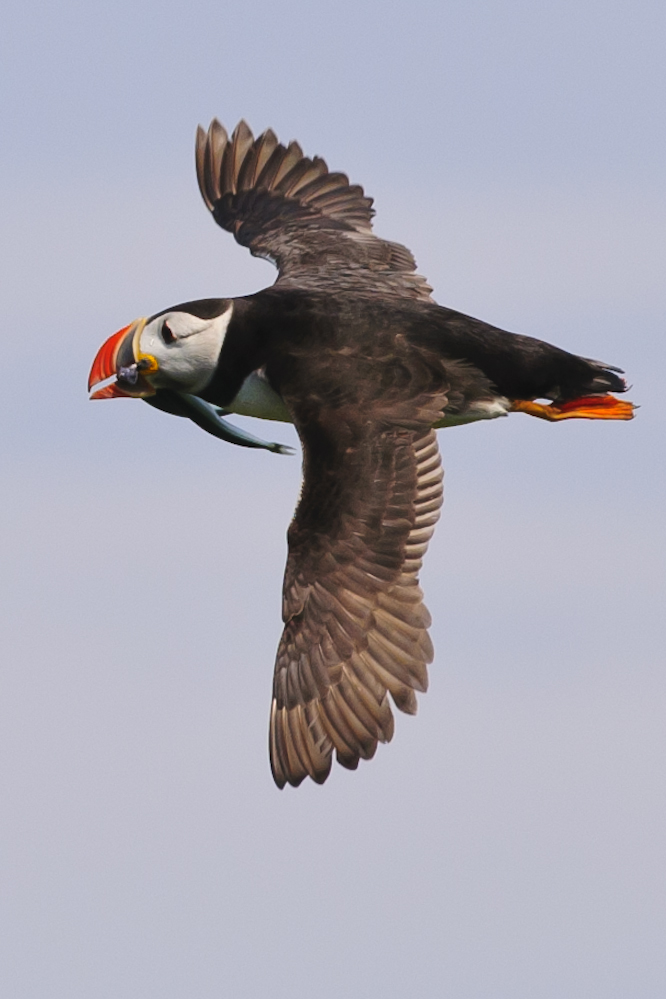
    Our rearranged Farne Islands photography workshop was a second day out with NEWT for Bryan, and a chance for him to take on the challenge of Puffins in flight 😉  We sailed across to the islands on Glad Tidings IV (returning at the end of the afternoon on St Cuthbert III), and amidst the chaos of Arctic, Sandwich and Common Terns, Fulmars, Kittiwakes, Guillemots, Razorbills and Shags we worked on camera settings for action photography, but also on the elusive, almost instinctive skills that need to be developed to capture flight photographs of such a fast moving target.  At one point we swapped cameras, with Bryan taking on the physical challenge of the substantial lump of kit that is a Nikon D300s and 70-200mm f2.8 lens 🙂  As he settled into a smooth panning action, aided by the weight of my camera/lens, and began taking the shot at just the right time, he switched back to his camera with Puffin after Puffin captured through the lens, and I grabbed a couple of shots myself 🙂

    Atlantic Puffin,Fratercula arctica,Inner Farne,Farne Islands,Northumberland,photography workshops,photography holidays,photography tuition

    Atlantic Puffin,Fratercula arctica,Inner Farne,Farne Islands,Northumberland,photography workshops,photography holidays,photography tuition

    Black-headed Gull,Chroicocephalus ridibundus,Atlantic Puffin,Fratercula arctica,Inner Farne,Farne Islands,Northumberland,photography workshops,photography holidays,photography tuition

  • “That’s not a bill. That’s a bill”; Otter Safari 12/07/2014

    Often, the species that we’re specifically searching for appears and is the highlight of the day.  Sometimes, the scenes involving the supporting cast take some beating though…

    I arrived at Church Point to collect Rose, Tom and Alison, and we headed up the coast for an afternoon around Druridge Bay searching for Otters.  July is one of our favourite times to visit the coast, as wading birds are starting to head south, still in breeding plumage.  Black-tailed Godwit, Golden Plover and Dunlin were all lazing at the water’s edge in the increasingly breezy afternoon, and one of our most delicate looking birds provided a lot of entertainment.  Avocets are a fairly recent addition to Northumberland’s breeding avifauna, and their delicate appearance belies their feisty nature.  As three fluffy Avocet chicks swept their heads from side to side in shallow water, occasionally breaking off to go and tuck themselves under their parent’s wing, the adult Avocets were busy keeping the area clear of other birds.  Black-headed Gulls, and even Pied Wagtails were driven off, but the most ferocious assaults were reserved for a flock of Common Snipe.  Secretive and usually hidden out of sight, the snipe had ventured away from the shelter of the reedbeds and into shallow water where they were feeding with a sewing machine action, faces in the water and constantly probing the soft mud beneath.  The Avocets weren’t having that though, and the snipe were persistently flushed by attack after attack.  When we’d first arrived a Spoonbill had been flying above the pond, and it settled and went to sleep.  Eventually it woke up and began walking along the edge of the pond before disappearing from view.  Then it took off and flew across the water, settling near the Avocets

    The first furious airborne assault on the Spoonbill left it completely unmoved, so the Avocet landed nearby and charged at it, head down and neck stretched forward, menacing with that long, upcurved rapier like bill.  The Spoonbill lifted it’s head from the water, opened it’s bill and waved it as if to say “Do you really want me to slap you with this?” 🙂  Obviously a different approach was required, which involved the Avocet pretending to feed, whilst slowly sidling towards the Spoonbill, ready to launch another attack.  That was greeted in the same manner, and when the Avocet tried again, the Spoonbill simply kept it’s head in the water and charged straight at the Avocet, sweeping it’s bill from side to side.  Eventually the Avocets gave up the attack, but kept a close eye on the Spoonbill, as another ten Avocets flew over and a Little Egret put in a brief appearance.

    As dusk approached we settled into position overlooking another pool.  All seemed calm, Marsh Harriers were hunting the reedbeds as daylight faded, and then an Otter appeared, making it’s way across the shadow-dappled water, twisting, turning, diving, pausing at the surface to consume its catch before resuming the hunt 🙂  A second Otter was hunting in the deep shadow of a reedbed, and the closer one betrayed it’s own presence with the classic ‘ring of bright water’ each time it surfaced.  A Barn Owl came as a shock, when it flew through Rose’s binocular view, and a white Rabbit and four Brown Hares were illuminated by the car headlights as we made our way back to Church Point in the rain.