Category: Birdwatching

  • The hills are alive…

    …with the sound of Meadow Pipits.

    Yesterday morning I decided to set out from home nice and early, so that I could spend a few hours in the North Pennines before exhibiting at the Tourism Fair in Hexham.

    Birdwatching in Northumberland’s southwestern reaches is (almost always) about quality rather than quantity.  Although it may seem sacrilegous, I prefer the dawn chorus on the moors to the one in our woodlands and gardens.  Meadow Pipits (in almost overwhelming numbers after the dearth of sightings during the winter), Skylarks, Curlew, Lapwing, ‘drumming’ Snipe and the beautiful haunting calls of Golden Plover all contribute to a near sensory overload.

    Raven and Merlin were both top-quality birds for the morning (both, frustratingly, between my position and the Sun, so only allowing record shots).  Two species that always bring a particular quality to birdwatching, and photography, in the North Pennines are the two perpetually controversial/contentious species; Red Grouse and Black Grouse.  We’ve been taking clients to see and photograph these two species since we first started NEWT, and the opportunity to wander the moors with my camera yesterday, enveloped by birdsong, was the sort of experience that our clients appreciate so much.  Our North Pennines Safari Days rarely fail to encounter both grouse species, and we organise bespoke photography packages and holidays in the area as well, so give us a call and join us on one of our tours to this remarkable area of southwest Northumberland.

    Red Grouse, bird photography, wildlife photography tuition, wildlife photography holidays, wildlife photography courses

    Red Grouse, bird photography, wildlife photography tuition, wildlife photography holidays, wildlife photography courses

    Black Grouse, bird photography, wildlife photography tuition, wildlife photography holidays, wildlife photography courses

    Black Grouse, bird photography, wildlife photography tuition, wildlife photography holidays, wildlife photography courses

    Black Grouse, bird photography, wildlife photography tuition, wildlife photography holidays, wildlife photography courses

  • It’s Sunday, so it must be Lindisfarne

    After enjoying an all too brief view of the ‘super Moon’ on Saturday as I drove eastwards across Northumberland on my way home from the North Pennines, we’d got something completely different in the booking diary for Sunday; guided birdwatching on the Holy Island of Lindisfarne.  Having Sarah along as an additional guide was a real bonus as well.

    Gillian and Roger are existing clients, and this time we’d got other members of the family along as well – Roddy, Lucy and Alec.  We’ve done plenty of family trips with young children, but a request to see “Seals, Lions and Tigers” from a 2-year old was a new experience for us!  We managed one of those three 😉

    Black-tailed Godwit (a stunning bird, well on it’s way to breeding plumage), Pale-bellied and Dark-bellied Brent Geese, Oystercatchers, Bar-tailed Godwits, Red-breasted Mergansers and Long-tailed Ducks were all well appreciated.  Gillian picked out a tiny dark dot, high overhead, as a Skylark sang his evocative melody, and Roger spotted a Goldcrest, with a very very gold crest, as we ascended The Heugh.  18 Whooper Swans flew over the island, accompanied by a single Bewick’s Swan.  With that species so scarce in Northumberland during the winter, we wondered if it was the same bird that we first found, a few miles down the coast, in late December.  All too soon, it was time to return the family to the starting point of the tour and make our way down the Northumberland coast, along Druridge Bay and back to the office.

  • Pressing the right buttons

    Saturday evening saw me in the far southwest of Northumberland, with a potentially tricky assignment…’in 2 hours, show a visiting journalist, and her husband, the best birdwatching in the North Pennines‘.

    So, we stealthily approached four of our favourite Black Grouse sites, enjoying unbelievably close views of 9 Blackcocks,  travelled across bleak, exposed, moorland roads, marvelling at the luminosity of the red eyebrows of an almost endless succession of Red Grouse, watched Curlew, Oystercatcher  and Lapwing displaying and gazed, awestruck, at the incredible beauty of breeding-plumaged Golden Plover.  The 2 grouse species were so close that Jo-anne was able to practice her wildlife photography using a small compact camera with a quite limited zoom.  The big open landscapes, and birds perched on tussocks in the heather, lend themselves well to an ‘un-British’ style of wildlife photography; one that I’m planning to work on whenever the time, and opportunity, arises this year.

    I’d planned the route to take in a Short-eared Owl breeding site at sunset.  They’ve been a bit thin on the ground (and in the air) at some of their traditional Northumberland wintering sites so it was a long-shot, and meant going beyond the 2 hour time limit although, unsurprisingly, this went down quite well with our guests 🙂  Fortune favours the brave and, after 2 hours of guided birdwatching that, I’m assured, delivered what I’d been asked to, the ghostly shape crossing the moors in the twilight, and the cryptic plumage and staring yellow eyes as the bird perched obligingly on a fence post just metres away from us, was rightly described as  “the icing on the cake”.

  • I wish I could remember…

    …the clever title I’d thought of for this blog post 😉

    Just at the moment the pace of life and work is starting to really accelerate.  Last week I had a day of meetings, a day in the office, a day distributing leaflets (and getting the graphics applied to our new vehicle), a day in the North Pennines AONB, and a day out with my camera close to the office.

    The North Pennines day was interesting; giving a talk, and a guided walk, as part of the Know Your North Pennines training programme.  Birdwatching in hail, snow and howling wind all featured during the day.  The bit in the snow came while I was still on my journey to the training session; leaving home in plenty of time had given me the opportunity to check out some potential sites for Black Grouse photography.  I really wish I’d had my camera with me as I found a field with 6 adult Blackcocks in it.  We’ll be checking the site over the next few weeks, but it has the potential to produce even better photo opportunities than the sites where I photographed the birds pictured in this blog post from last year.

    The morning spent close to home in southeast Northumberland had one focus; get a photograph of a Treecreeper.  Not any photograph though; the one I was picturing in my mind was with the bird vertical on a tree trunk, with a dark background.  I even knew exactly where I was going to get the shot – we’ve been baiting an area in some local woodland for quite a while now, and the effort we’ve put into choosing the location and baiting it regularly is starting to pay off.  With some exciting wildlife and landscape photography holidays coming up later this year, our clients can benefit from the work we’re doing year-round as well.

    Red Squirrels were visiting our feeding station;

    Red Squirrel, mammal photography, photography tuition, photogarphy courses, photography holidays

    Nuthatches are always entertaining, active and vocal;

    Nuthatch, bird photography, photography tuition, photography courses, photography holidays

    and the target for the morning put in an appearance 🙂  For whatever reason, it’s a species that I’ve struggled to capture to my satisfaction previously.  I’m fairly happy with this shot…but the shadows could have been lessened using a reflector.  At least that gives me an excuse to spend another morning at the feeding station 🙂

    Treecreeper, bird photography, photography tuition, photography courses, photography holidays

  • Getting ready

    We just had an all too infrequent ocurrence; both of us at home and able to go out and about together for a whole weekend 🙂

    On Saturday we decided to concentrate on our local area.  Southeast Northumberland offers some excellent wildlife and birdwatching opportunities and, with bookings for the rest of this year coming thick and fast, we’re checking over our Safari Day routes whenever we get the chance so that we hit the ground running once the season gets properly underway.

    If our morning excursion is the shape of things to come then it’s going to be an excellent Spring 🙂  Little Owl, Roe Deer (including a handsome buck with velvet antlers, who watched us between the trees as we trained our binoculars on him), Red Squirrel, point-blank views of Treecreeper, Nuthatch and Great Spotted Woodpecker and lots of fresh Otter spraint all combined into a memorable morning.

    As dusk approached we were out and about again.  We monitor a few Badger setts regularly and the activity around the sett we checked on Saturday evening was exactly what we’d expect in early March.  Another successful outing 🙂

    Yesterday we were doing something completely different (although birdwatching featured again, of course).  We set out for the southwestern border of Northumberland, and beyond, as we pre-walked the route that Martin will be leading for the North Pennines AONB ‘Know Your North Pennines’ course on Wednesday.  Journeying to Upper Teesdale gave us the chance to check out some of our favourite Black Grouse sites en route (you’ll be pleased to know that the species hasn’t vanished from Northern England!) and enjoy the sight of Lapwings displaying and flocks of Golden Plover  in the fields.  Our photography holiday in late October ‘Autumn Colours’ is based in the North Pennines and we finished the day with a visit to one of the area’s gems.

    North Pennines,Photography Holidays,Northumberland,Photography Tuition
    Low Force
  • Findings

    On our photography tours I carry my camera with me, particularly when delivering photography tuition, but on our other trips I don’t; our clients deserve, and receive, my full attention.  When I’m out on my own I don’t always carry a camera either – sometimes it would just be inconvenient (scrambling up trees, crags and dunes isn’t always compatible with having a heavy camera bag on your back).  Occasionally, though, there are times when a camera would come in quite handy.  These are nearly always stunning sunsets, and a quick shot with my Blackberry records the scene…and is then forgotten about 😉  I was downloading the images from the Outdoor Leisure Show yesterday when I realised that there were a few sunset shots sitting on the memory card;

    First at the end of a stunning day birdwatching on the Northumberland coast in February ’10

    Landscape photography, photography courses, photography tuition, Northumberland

    And then a couple of images from May last year, after our clients had been safely returned to their b&b, showing how light (or the camera’s perception of it) changes so quickly; these two images were taken only a minute apart.

    landscape photography, photography tuition, photography courses, Northumberland

    landscape photography, photography tuition, photography courses

  • Familiarity breeds content

    During the winter, when I’m busy with admin and business development, I do most of my birdwatching close to home.  Studying Jackdaw and Starling roosts involves a short walk, but with a constant level of activity around the feeding station (conveniently placed to be visible from the office window) I can enjoy the hobby that has been with me since early childhood throughout most of the day.

    For the last couple of weeks, I’ve had my camera and tripod set up in the kitchen.  Any newcomers to bird photography could do worse than concentrate on the birds in their own garden.  I blogged about our feeding station recently, but I make no apologies for adding a few more images to the blog now 🙂

    Brambling, bird photography, Northumberland
    Brambling

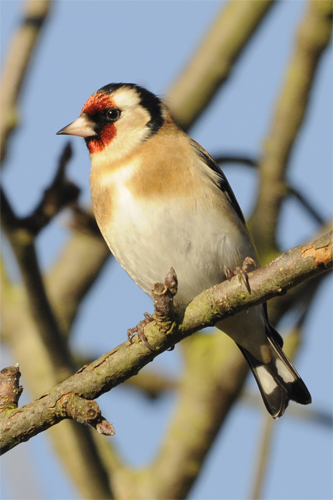
    Goldfinch, bird photography, Northumberland
    Goldfinch
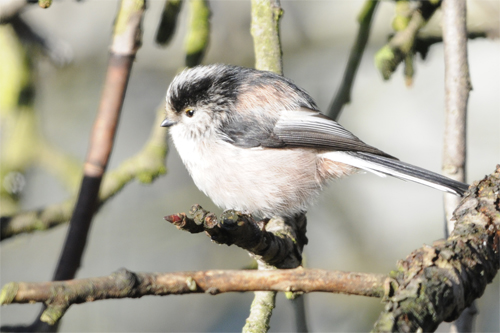
     One species I finally managed to get some good images of is a bird that captivated me when I first saw a flock of them, nearly 40 years ago, in my neighbour’s Pear tree.  With their almost non-stop movement, persistent vocalisations and, let’s face it, looks that are so cute it should be illegal Long-tailed Tits are enchanting.  In previous years they’ve been infrequent visitors to our garden but this winter they are here pretty much all day every day.  A lot of our clients have made similar observations and wondered why this change of behaviour has happened.  Long-tailed Titsare insectivorous and it seems that likely that the hard winter weather, coming so early in the winter has had a devastating impact on their natural food source and made them increasingly reliant on artificially provided food.

    Long-tailed Tit, bird photography, Northumberland
    Long-tailed Tit
  • Autumnal February

    Finishing a mini-safari at dusk combines two of my greatest pleasures; showing our clients the wildlife and landscape of Northumberland, and still being outside as it gets dark.

    I met up with Alastair, Roz, Keith and Marian mid-afternoon last Thursday for a few hours of wildlife and birdwatching around Druridge Bay and Southeast Northumberland.  As I got out of our Landrover in the car park at Church Point, it occurred to me that it was so cold and misty that I’d be really quite excited if it was mid-October 🙂  Even so, in mid-February a mini-safari finishing at dusk is still exciting.

    Beside the River Coquet, a wave of panic rippled through the Jackdaws and Woodpigeons.  No sign of any cause though.  Then another wave of panic and a Sparrowhawk raced by, narrowly missing a Black-headed Gull perched on a fence post.  A group of Roe Deer were spotted by Marian, walking along a ridge opposite us and vanishing behind the bushes before reappearing and then vanishing again.  At least 28 Goldeneye were displaying on the river, the comical contortions of the drakes providing good entertainment.  Almost as good as the entertainment provided by the sense of humour of all 4 clients 🙂

    A flock of 25 Goldfinches was well appreciated, as were all of the tiny lambs in the fields nearby and no fewer than 9 Grey Herons all sitting around one small pool.  A pair of Pintail were dabbling, as dabbling ducks do, and Alastair’s sharp eyes provided a Barn Owl for the list as it ghosted it’s way through the sky above the flooded meadows.

    Dusk beside a pool with a wader roost is almost indescribable; Lapwing, Curlew and Dunlin all huddled close together is quite a sight but the thing that takes almost everybody by surprise is the noise.  The level of vocalisation between the birds is extraordinary, and then the Lapwings fall silent as they begin to fly off to feeding areas.  Then, as the light faded to a level where binoculars, and even our eyes, weren’t really sufficient anymore, the trumpeting of 24 Whooper Swans coming to roost rounded the day off.

  • Appreciating what we have

    During the winter months, our mini-safaris are concentrated on the coast and we always keep a close eye on the weather.  Sometimes that doesn’t work out though, as the Northumberland coast frequently seems to have it’s own microclimate that doesn’t match either the forecast, or the weather, a few miles inland.

    When I arrived at the mainland end of the Holy Island causeway to collect Sharon and Andrew, I was surprised to discover that it was a sublimely beautiful morning.  A bitingly cold wind was scything across Fenham Flats but the forecast rain was nowhere to be seen.

    Curlew and Bar-tailed Godwit were beside the causeway, and flocks of smaller waders were wheeling around in the air near the island.  Winter wildfowl are a feature of the Northumberland coast and, with drakes in near full breeding-dress, Teal and Wigeon are particularly breathtaking.  Pale-bellied Brent Geese were alongside Dark-bellied Brent Geese, allowing an easy comparison, Lapwings were gloriously iridescent in the bright sunlight and a Peregrine caused panic before beating a path towards the mainland. 12 Common Seals were an unexpected bonus and a covey of Grey Partridges scurried across a field as we walked by.  Common Buzzards were perched on hedgerows and the number of Kestrels we found was astonishing; at least 8 birds in just a few miles of birdwatching on the coast.

    After just over 3 hours of birdwatching in near-perfect conditions it was time to return to our starting point and then onwards; Sharon and Andrew heading back across to Holy Island and me heading to Rothbury to Chair a meeting between Northumberland Tourism, Northumberland County Council and the Chairs of Northumberland’s Tourism Associations.  The stunning morning really emphasised in my mind the importance of the meeting in the afternoon; Northumberland has some outstanding birdwatching, wildlife and photography opportunities during the winter (and throughout the rest of the year as well) so we need to make sure that we keep shouting as loudly as we can about them.

  • Feeding time

    I’ve never been good at sitting in the office and concentrating on one task for any length of time.  Having an office window that looks out over the 76ha of mixed woodland of Choppington Woods LNR is a real blessing, allowing me to mix work and birdwatching.  When I need to stretch my legs, a quick trip downstairs lets me open the patio door and turns the kitchen into a very comfortable and convenient bird photography hide.

    Our garden is currently hosting at least 8 Bramblings, along with Greenfinches, Goldfinches, Chaffinches, Bullfinches, Blue, Great, Coal and Long-tailed Tits, occasional visits from Siskin, Redpoll and Treecreeper and regular fly-throughs by our local Sparrowhawks.

    It’s a wonder I ever get any work done 🙂

    European Goldfinch, bird photography, wildlife photography
    Goldfinch
    Chaffinch, bird photography, wildlife photography
    Chaffinch
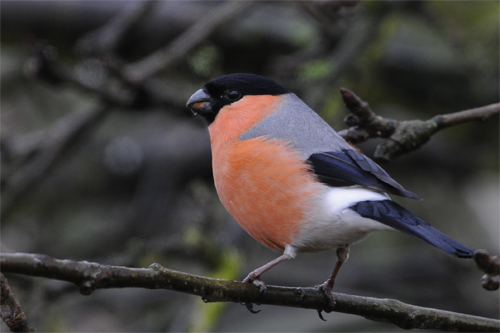
    Bullfinch, bird photography, wildlife photography
    Bullfinch
    Brambling, bird photography, wildlife photography
    Brambling
    Brambling, bird photography, wildlife photography
    Brambling