Month: October 2013

  • Eye to eye with the predator; Bespoke Photography 21/10/2013

    The chilly morning air was biting as I arrived in Seahouses to collect Peter, Caroline and Aidan.  With camera gear loaded into the back of the car we headed down the Northumberland coast with two species in particular on our target list for the day – one relatively easy, one slightly less so…

    I’d planned the morning to take in a couple of sites for Red Squirrel, and the early afternoon to stake out a regular Otter spot.  So, Red Squirrel is the relatively easy species out of those two…but the first rule of wildlife photography should be ‘wildlife doesn’t perform to order’ and both sites we visited, which have healthy populations of Red Squirrel, didn’t produce any sightings.  That’s often the case though when it’s damp, cool and breezy, so we headed on in search of our second target for the day.  After a brief stake out of a handsome male Stonechat we made our way to the edge of a pond, and were told by another birdwatcher who was there that he’d seen an Otter just 15mins earlier, and it had headed across the pond.  I looked across in the direction he thought it had gone…and the entire bank was lined with ducks and geese.  A good sign; the Otter had obviously spooked them out of the water but it must be still somewhere in the pond, as all of the birds were staring intently.  I couldn’t see any disturbance in the water in that direction though and I was just remarking that I thought the Otter could still be nearby, when it surfaced in front of us 🙂  For the next couple of hours we were treated to regular feeding sorties as the sinuous mustelid caught fish after fish, including at least one large Flounder.  Cormorants and Grey Herons were fishing too, a Water Rail put in a couple of typically fleeting appearances, Common Snipe were prodding, probing and miraculously vanishing in short vegetation, Lapwing, Curlew and Redshank were roosting, calling and occasionally flushing, Mallard and Teal kept standing to attention every time the Otter was close by, a murmuration of Starlings away to the north disbanded into smaller flocks that flew straight over our heads and seven Little Gulls danced their dainty flight back and forth over the pond.  Perhaps the moment of the day though, was when the Otter appeared around the edge of a reedbed and started straight into Aidan’s camera lens.  The second rule of wildlife photography should be ‘…and sometimes it does’ 🙂

  • A walk in the woods; Beginners Photography 12/10/2013

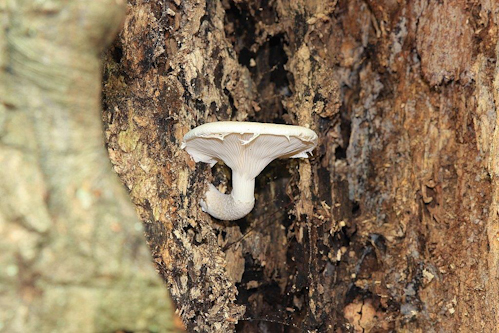
    Our October photography workshop subject was Fungi.  The morning was damp and drizzly, but I’d packed several versatile waterproof camera covers – you can pick them up from your local supermarket, usually free with your shopping 🙂 Dave was on his third day with us this year, and kindly emailed some of his images from the day to post in our blog.  We’ve just added our 2014 dates and topics to our Beginners Photography page.  You could come along yourself or, if you’ve got a friend or relative who’s trying to get to grips with their camera, our Gift Vouchers make ideal Christmas presents 🙂

    fungi,macro photography,photography workshops, photography tuition,Northumberland

    fungi,macro photography,photography workshops, photography tuition,Northumberland

    fungi,macro photography,photography workshops, photography tuition,Northumberland

    fungi,macro photography,photography workshops, photography tuition,Northumberland

  • Something in the air; Holy Island birdwatching 10/10/2013

    Mist, drizzle, rain, howling north/northeasterlies, dreich…just what I pray for on our Lindisfarne birdwatching trips in mid-October 🙂

    I collected Malcolm from Newbiggin, and we headed north in weather that can best be described as less than pleasant.  Dunlin, Curlew, Lapwing, Redshank, Oystercatcher and Bar-tailed Godwit were on the mud by the causeway as we crossed onto the island, and the heaviest shower of the morning greeted our arrival in the carpark so, as it eased slightly, we set off to walk around the village.  Occasionally, the weather conditions will throw out an oddity with the visible migration of just one species, and this was one of those days.  Although every tree and bush seemed to hold Robins and Song Thrushes, the high-pitched flight calls of one of our favourite winter visitors cut through the rushing wind.  Redwings, those beautifully marked thrushes, were arriving from the north.  Overshooting the island on the strong breeze they turned back into the headwind just over St Cuthbert’s Isle and battled back towards the sanctuary of the trees around St Mary’s Church.  Wave after wave of birds arrived, intertwined with wave after wave of rain and we had one of those frustrating moments that birdwatchers occasionally suffer during poor weather in the autumn.  Malcolm spotted a warbler flitting in and out of cover (the warbler that is, not Malcolm!) and, with rain spotting our binoculars, and the sudden arrival of another heavy shower, we only had a split-second to identify it as a Phylloscopus warbler with an obvious pale supercilium and a yellowish breast before it dropped back into the depths of the bush and we took shelter ourselves.  As the rain eased we checked the bushes again and a Chiffchaff popped out, very different to the earlier bird.  Another rain break, and now both birds had departed…

    Down the coast, a short spell of seawatching produced an impressive raft of Eiders on the rather angry-looking sea, and a stream of Gannets heading south as we headed that way ourselves and back to southeast Northumberland.  It’s always a pleasure to have a local birdwatcher as a client on one of our trips.  With local knowledge, and a slightly different perspective on the issues that affect our wildlife and landscape, there’s always so much to chat about that the day seems to go too quickly.

  • Never mind the Balearics…

    …here’s the Bonxies.

    Watching the weather forecast during the week, and having a day on Holy Island on Thursday with Malcolm (trip report to come soon!), convinced me that there was somewhere I needed to be at dawn on Friday.  Arriving at Church Point in the half-light there were a few cars already parked, and a wander along to the point with Mike H found the owners of those cars already intently scanning the angry-looking sea.  Andy McL, Tim C., Eric B., David D. and Jimmy S. were all clustered around the ‘seawatching hut’.

    It would be good to be able to report that I’m thoroughly domesticated and house-trained and, after the few hours I’d planned to spend seawatching, I went home, via the supermarket to do the grocery shopping, and did all of the housework.  However, back in what Sarah refers to as ‘the world according to Martin’ that couple of hours to see if there was any movement of seabirds turned into a plan to stay until 12:00…then mid-afternoon…and finally, as the light faded to the point where you could hallucinate the sort of sightings that Ellington’s second best birdwatcher * was enjoying a few miles to the north of us, I gave up just after 18:00.  11 hours on Church Point, but a not-too-shabby day list;

    Black Guillemot 1

    Great Crested Grebe 1

    Pale-bellied Brent Goose 20

    Dark-bellied Brent Goose 2

    Long-tailed Duck 4

    Goldeneye 9

    Velvet Scoter 15

    Shoveler 24

    Red-throated Diver 24

    Black-throated Diver 3

    Great Northern Diver 7

    Manx Shearwater 53

    Sooty Shearwater 62

    Balearic Shearwater 2

    Great Skua 261

    Pomarine Skua 3

    Long-tailed Skua 3

    Arctic Skua 8

    Red-breasted Merganser 7

    Little Gull 3

    Arctic Tern 1

    ‘blue’ Fulmar 12

    Short-eared Owl 1

    *Ellington’s best birdwatcher is, and it really goes without saying, Iain’s better half, Janet 🙂

  • Sublime panic

    “What do you on days when you’re not working?” is a question I’m frequently asked by clients.  My answer’s always the same “I do this, just without clients 🙂  It’s what I love doing, and what I’ve done since I was very young”

    Friday was an ‘office day’ (which translates roughly into ‘day when I really should be working at home…) but, after a few hours of admin tasks, I decided to have a couple of hours on the coast.  As I passed Cooper’s Corner I could see that it was misty towards the coast.  Always promising at this time of the year, so I started to think about where to search.  I’d been in a meeting with Ipin on Thursday afternoon, and neither of us had been convinced that the conditions forecast for Friday would bring anything particularly exciting to the Northumberland coast…

    “Druridge bushes or Hadston links? Druridge bushes or Hadston links?”  I settled on Druridge and began slowly working around the edge of the bushes.  A flock of Reed Buntings and Goldfinches seemed to be spending most of their time tucked away in the back of a clump of Blackthorn so I made my way around the back of that clump.  The birds were feeding happily with me standing just a few metres away from them and then a Lesser Whitethroat put in a brief appearance.  I texted Ipin, knowing that had booked the day off work and would be somewhere close by, and waited for the bird to reappear.  Another bird flitted up to the top of the blackthorn with it’s back to me.  Looking quite grey, I thought it was the Lesser Whitethroat again, until it turned round…and I found myself looking at the white sub-moustachial stripes and orangy pink breast of a male Subalpine Warbler 🙂 I’d forgotten to charge my mobile, and the battery symbol had turned red, but getting the news out was a priority.  I ‘phoned Ipin, but his mobile went straight to voicemail (it turned out I’m not the only one who’d forgotten to charge their ‘phone…), Alan Tilmouth and Andy McLevy, before finally managing to get through to Ipin, who was only a couple of hundred metres away and covered the distance like Usain Bolt would cover it – if he was desperate for a patch tick too 😉

    When Alan and Andy arrived just ahead of other local birders, the bird was proving elusive and I volunteered to check the back of the blackthorn (reasoning that if the bird was there and flicked across to the other side then everyone else would see it).  Sure enough it was back where I’d first found it, but continued feeding contentedly as I used the last drop of power left in my ‘phone to let Alan know exactly where the bird was in relation to the Reed Bunting that had helpfully perched at the top of the bush.

    The damp misty conditions weren’t good for photography, so the promising forecast for Saturday morning had me planning for a couple of hours at Druridge before heading to Snab Point for a seawatching session as part of the Druridge Bay Big Wildlife Count.  In excellent light the bird showed well, although was very mobile, and I managed to get a few shots of this little gem 🙂

    Subalpine Warbler,Sylvia cantillans,Druridge Pools,Northumberland,guided birdwatching,bird photography tuition,bird photography holidays

    Subalpine Warbler,Sylvia cantillans,Druridge Pools,Northumberland,guided birdwatching,bird photography tuition,bird photography holidays

    Subalpine Warbler,Sylvia cantillans,Druridge Pools,Northumberland,guided birdwatching,bird photography tuition,bird photography holidays

  • Shining in the gloom;Druridge Bay 02/10/2013

    I always look forward to trips with returning clients, and Louise was booked in for her third bespoke photography day.  A client who’s a professional photographer is a real treat as there’s a lot to chat about; equipment, photo libraries, how to deal with your images being used without permission, wildlife photography workshops, other photographers… What I’m not so keen on though, is weather forecasts that promise rain for the Northumberland coast 🙁

    With occasional heavy showers, the day around Druridge Bay brought a mixed bag of photographic opportunities for Louise.  Too quick, and in rain that was just too heavy, a Peregrine entertained us during our lunch break as it targeted a flock of Starlings. First it appeared just few metres in front of us, coming from below our feet and shooting up above a clifftop.  A few minutes later it was heading at breakneck speed in the opposite direction, straight through the Starlings.  Curlews, Dunlin and Little Grebes all appeared in front of the camera and, as a female Eider drifted by, Louise mentioned that drake Eider was something that had so far evaded her camera.  A few minutes later, after a quick change of location, a flock of drake and duck Eiders were particularly obliging, cooing contentedly as Louise focused on them from just a few metres away.  Turnstones posed helpfully on fishing nets laid out on the sides of trawlers in Amble harbour and, as the light worsened, we had a surprise in the shape of an Arctic Tern, roosting next to a 1st winter Mediterranean Gull.

    Even in poor weather there are lots of possibilities for excellent wildlife experiences.  Having a client who’s excellent company helps too 🙂

  • Bittern by the birdwatching bug; Druridge Bay 01/10/2013

    The cold wind that had developed during Monday was still whipping across the Northumberland coast as I collected Sara from Church Point for an afternoon birdwatching around Druridge Bay.  Newbiggin Bay was an impressive mass of rolling swell and white water as we headed along the coast.

    Damp, cold and misty were the conditions for the afternoon, but there were plenty of birds to hold our attention.  with Ruff, Black-tailed Godwit, Curlew, Dunlin, Lapwing, Curlew Sandpiper and Golden Plover still around from the day before it was good to find another wader species; a small flock of Dunlin flying by caught my eye, not so much because they were Dunlin, but because there were two smaller birds flying with them.  Small enough to only be stints of some description, they resolved through the telescope into Little Stints and, as Sara watched them through the ‘scope, I sent a text to Ipin, so that he could get them on his patch list for the year…and he repaid me by describing me as Scotland Gate’s second best wildlife tour leader 🙂

    In the increasing murk we headed to East Chevington and had two Bramblings flying overhead and calling.  A reported Corncrake didn’t show itself, but there was an odd call, that I’ve never heard before, coming from a patch of rank grass just a few metres away from us…

    Probably the bird of the afternoon was an unexpected surprise; as Sara watched the assembled waders through the ‘scope, and skeins of Pink-footed Geese lifted from nearby fields with calls rising to a crescendo as they approached the pool, I was scanning around the water’s edge…and a Bittern walked out of the reeds and into full view 🙂  For a few minutes we were treated to excellent views of this strange skulking heron.  It seemed to be confused as to where it was in relation to the reeds as it suddenly stood upright and stretched it’s head and neck skyward in the classic ‘bitterning’ pose.  When it finally took flight, it was mobbed by a flock of Lapwings before dropping out of sight into a reedbed…where it was soon joined by the members of a Starling murmuration 🙂

  • Stoats, Sandpipers, Starlings and Sparrowhawks; Druridge Bay birdwatching 30/09/2013

    With a brisk southeasterly wind rattling the Northumberland coast, I arrived in Alnmouth on Monday morning to collect John, Annie and Steve for a day of bespoke birdwatching.

    Starting with a seawatch, Gannets were streaming south , occasionally pausing to circle and then plunge into the sea, and Common Scoter were dotted amongst the rafts of Eider, appearing for brief periods as they rode up and over the considerable swell.

    Heading south to Druridge Bay produced the expected crop of passage waders; Redshank, Curlew, Black-tailed Godwit, Dunlin, Lapwing and Ruff were expected and two Curlew Sandpipers were a nice find.  Teal, Mallard, Wigeon, Tufted Duck, Gadwall, Goosander and Pintail provided wildfowl interest and skeins of Canada, Greylag and Pink-footed Geese, which we’d seen earlier in the afternoon as they fed in nearby fields, began to arrive at their overnight roosts.  A Stoat was all energy as it raced backwards and forwards, exploring every nook and cranny along the edge of the water and, as dusk approached, we watched one of the great wildlife spectacles as a murmuration of Starlings swirled above a reedbed before dropping in to roost.  The mass of birds attracted the attention of a Sparrowhawk, and the female raptor made several low passes through the tops of the reeds above the roosting Starlings.  They weren’t going to be tricked into flying out and becoming an easier target though, and the Sparrowhawk soon settled on a fence post.  Then a second Sparrowhawk appeared, this time a male, and the two birds perched on adjacent fence posts, allowing an excellent comparison of their gender differences.  As we headed off, in the fading light and bitterly cold wind, it looked like they would be going without their supper…