Month: August 2013

  • Great North Bike Ride 2013

    After decades of struggling to find any form of exercise that I really enjoy, I started cycling in May.  By June I’d modified my mountain bike with lightweight alloy wheels and slick tyres and started following a 0-100mile training plan, by July I’d bought a road bike and last Sunday I completed the Great North Bike Ride 2013🙂

    I’m not keen on warm weather, so waking up on Sunday morning to discover it was cool and misty with a reasonable NNW breeze was near perfect.  Sarah drove me to Seahouses, waved me off at the start and then drove down to Tynemouth ready to collect me at the end of the ride.  I thought I’d prepared well for the ride;  checked the entire route, ridden some of the more challenging bits, followed my training plan fairly closely and made sure everything on my bike was working properly.  Still a couple of nagging doubts though…could I manage to ride 56.5mi, and how would I cope with another 2000 riders on the road when I only ever train alone?  The longest training ride I’d done was 44mi, so there was still a bit to go beyond that distance to make it to the finish line at Tynemouth Priory.  I estimated that it would take me 4-5 hours to complete, so Sarah said she would be at the finish 4h after I started.  As soon as I passed under the start line, those nagging doubts evaporated; having other cyclists around provided lots of inspiration and the miles quickly passed beneath my wheels.  A quick check at the half-way point generated another concern…if I continued at that speed I’d finish in 3h 30m 🙂  As I crossed the finish line in Tynemouth I was cheered on by Sarah and Jodie, and glanced down at my bike computer to discover I’d finished the ride in 3h 22m!  500ml of orange juice barely touched the sides as I rehydrated, and a slice of malt loaf and a packet of Jelly Babies vanished almost as quickly.

    Now I’ve set myself some new goals; 100mi ride, sub-30min 10mi time trial and, of course, complete GNBR 2014 in a faster time than I managed this year 🙂

    What could be better than contributing to a good cause, getting some fresh air and exercise and enjoying the beautiful Northumberland coast…all in one easily accessible package 🙂  Sign up now!  It’s well organised and a really enjoyable way to spend a Sunday morning in late August.

    Great North Bike Ride 2013
    Warming up in the mist
    Great North Bike Ride 2013
    Crossing the start line
    Great North Bike Ride 2013
    Final push to the finish line
  • Beauty in the ‘mundane’

    LBJ.  No, not the 36th President of the United States, but the acronym used by many birdwatchers to describe any relatively small, nondescript brown bird – ‘Little Brown Job’.  Over the last few years, a number of our clients have applied that term to two birds that I always think deserve closer attention…

    I collected Jo and Kirsty from Alnwick for their second consecutive day out with me and we headed straight up the coast and made our way on to Holy Island.  Curlews were passing overhead as we walked around the bits of the island that weren’t full of other people, those two LBJ’s, Skylark and Meadow Pipit, were dodging in and out of long grass in the fields by the path, Kirsty started photographing Swallows and quickly progressed to using flash to freeze the action as they hovered in front of us feeding beakfuls of flies to recently fledged juveniles and Golden Plover and Oystercatcher were probing around rockpools as Grey Seals bobbed about in the gentle surf just offshore.  Edges are always a productive area; edges of fields, woodland, moorland and the shoreline – that ever shifting edge of the sea and the land.  That latter edge produced some stunning Bar-tailed Godwits, and an impressively large group of very vocal Grey Seals.

    As we continued back down the coast the mist thickened and we were eventually in the surreal position of having blazing sunshine on our backs and visibility of less than 100m in front of us.  As a loose flock of Eiders drifted close inshore and then back out again, and Swallows and House Martins hawked insects low over the beach, a dark menacing shape drifted out of the mist, passed in front of us, and then drifted back into the impenetrable white mass.  Always a bird to grab the attention on a seawatch, the Arctic Skua was only in view for a few seconds as it made it’s way south along the coast, and we headed inland into glorious weather again.

  • Predators

    The one group of birds that have gripped my imagination and my attention since I was very young are the birds of prey.  Loved by many, hated by a few, persecuted by the ignorant, the stupid and the self-involved…

    Two raptors put in an appearance during our safari around Druridge Bay and the Northumberland coast last week, and they’re both species that I’ll never tire of watching.  As I drove our carload (Sharon and June, Francis and Julie, Jo and Kirsty) between Embleton and Warkworth, the bird that is the embodiment of power, musculature, speed and scythe-winged menace carved an arc across the sky alongside the road.  Persecuted by gamekeepers, pigeon-fanciers and egg collectors, and once decimated by a population crash caused by pesticides, the sight of a Peregrine beating it’s way majestically across the landscape is one that should stir the heart of everyone, birdwatcher and non-birdwatcher alike.

    The second raptor of the day was a species that, if such a thing is possible, manages to provoke even more outrage than the Peregrine. As we scanned the shadowy edges of a pool at dusk searching, unsuccessfully, for an Otter, I could see that a distant rock didn’t look quite right.  With the increased magnification offered by our telescope the ‘rock’ resolved into the familiar shape of a Sparrowhawk.  As well as gamekeepers, pigeon-fanciers and everyone else with a bee in their bonnets about Peregrines, the Sparrowhawk has managed to make itself even less popular by hunting in urban and suburban gardens.  Bird tables attract small birds, and small birds attract Sparrowhawks…now, while I can understand the indignation of anyone who puts food out for their local birds, only to see their feeding station become a fly-through fast food outlet for a Sparrowhawk, that’s the way that nature works; you have large numbers of very small creatures (e.g. insects) which are food for a smaller number of slightly larger creatures (e.g. Blue Tits), which in turn are food for a very small number of even larger birds (e.g. Sparrowhawks).  A number of organisations, acting very disingenuously with hidden self-interest, would have people believe that there’s a Sparrowhawk population of plague proportions and it’s busy decimating the tits, sparrows and finches in all of our gardens.  Wouldn’t it be better if we could all appreciate the beauty, adaptation and precision of our birds of prey?

  • Deep water; NEWT’s North Sea Pelagic 14/08/2013

    Probably my favourite pelagic of all of the North Sea pelagic trips that we run (although I enjoy all of them immensely!) is our 10hr Farne Deeps – Northumberland’s ‘Ultimate Pelagic’.  The forecast looked about as promising as it gets and I arrived at Royal Quays in good time, to discover that most of our participants were already there 🙂  This was just a day before I would be heading south to the British Birdwatching Fair and five of our participants would also be visiting Rutland over the coming weekend.

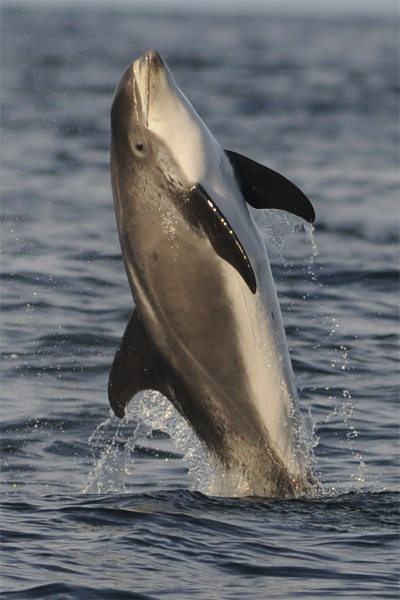
    As we sailed north east we soon found our first cetaceans of the day, a small pod of Harbour Porpoise.  10 minutes later our progress northeast was slowed as we enjoyed prolonged views of a Minke Whale.  Continuing towards the Farne Deeps, a deep-water offshore area that I’ve been interested in since the late 1990’s and the North East Cetacean Project has been surveying since 2009, we encountered our first White-beaked Dolphins of the trip.  In an interesting rolling swell seabirds were passing by too; Fulmars, Gannets, Kittiwakes, Guillemots, Razorbills, Manx and Sooty Shearwaters, Great and Arctic Skuas and the occasional Puffin all attracted interest.  Small groups of White-beaked Dolphins were found in locations where we expected them before we headed further offshore to the area that we’ve shown to hold large aggregations of dolphins in the mid-late summer.  Almost exactly where we would expect them to be we found several dolphins breaching.  Others began bow-riding and soon there were groups of White-beaked Dolphins in every direction; tail-slapping, breaching, spy-hopping and just generally performing.  Eventually as many as 60 of these stunningly beautiful dolphins were in view and all of the photographers on board were busy filling their memory cards.  16 years of organising North Sea pelagic trips and they just get better every year 🙂

    Minke Whale,Balaenoptera acutorostrata,North Sea,Northumberland,North Sea pelagics,whalewatching Northumberland,dolphin watching Northumberland,www.northernexperiencepelagics.co.uk

    White-beaked Dolphin,Lagenorhynchus albirostris,North Sea,Northumberland,North Sea pelagics,whalewatching Northumberland,dolphin watching Northumberland,whalewatching North Sea,dolphin watching North Sea,Farne Deeps,www.northernexperiencepelagics.co.uk

    White-beaked Dolphin,Lagenorhynchus albirostris,Farne Deeps,North Sea,Northumberland,North Sea pelagics,whalewatching North Sea,dolphin watching North Sea,whalewatching Northumberland,dolphin watching Northumberland,www.northernexperiencepelagics.co.uk

  • A mixed bag of wildlife; Lindisfarne Safari 12/08/2013

    As I collected Jaap, Nancy, Maartje and Laura for their Lindisfarne Safari it was good to see that we’d made the right decision in postponing from the previous Monday (which would have been an unpleasant day to be out and about on Holy Island).

    Lindisfarne is an excellent birdwatching location in the winter months, and can be spectacular during spring and autumn migration, but the summer brings a real variety of things to look at.  As we walked around the island Starlings were swirling, Grey Seals and Eiders were bobbing just beyond the breaking surf and Swallows were feeding hungry nestlings.  There was plenty on the ground too; Cinnabar Moth caterpillars were munching on Ragwort, Viper’s Bugloss was by the side of the paths and Maartje spotted, and identified, a Dark Green Fritillary.  With exposed sandbars at low tide there were lots of Grey Seals just lazing about and the shoreline was bustling with bird activity; Bar-tailed Godwits, Curlews, Dunlin, Ringed Plover, Grey Plover and Turnstone were around the island’s edge and in the gooey mud of the harbour.  Golden Plover were swirling over the island in impressive flocks before settling in the fields, an adult Mediterranean Gull was perched obligingly close as we headed back to the village, and all too soon it was time to leave the island as the rising tide approached the causeway.  Landscape photography stops at Bamburgh and Newton on the way south were followed by distant views of lightning and then an impressively dark sky out over the North Sea.  With so much wildlife in one day it would be hard to choose one highlight…but my own personal favourite was the brightest pink binoculars that I’ve ever seen 🙂

  • “That’s a big dorsal fin…”; NEWT’s North Sea Pelagic 10/08/2013

    Sometimes things go right, sometimes things go wrong, and sometimes things go just right and completely wrong all at the same time…

    We set sail from Beadnell with a full boat, and stopped just outside the harbour to ask a local yachtsman if he’d seen any whales or dolphins during the day.  “Yes, White-beaked Dolphins, about 6 of them, 3 miles E of Boulmer…6 hours ago”.  Even though his sighting was before lunchtime, it was still encouraging news, particularly as our plan was to head south as far as Boulmer anyway.

    Gannets, Fulmars, Guillemots, Razorbills and Puffins were soon spotted and then, as we headed from Craster towards Boulmer, Andy spotted a dark shape away to the east.  We stopped and waited, then it surfaced again.  Guessing where it would surface next I lifted my binoculars and then almost dropped them as the centrally-placed, upright, dorsal fin of an Orca passed across my field of view!  I’m notoriously sceptical of claims of Orca in the north east but, with over 1000h offshore, I always thought I’d bump into one eventually 🙂 I needed a longer lens on my camera so I reached into my camera bag, took out a 300mm f2.8, removed the 70-200 from the camera…and then broke the camera lens mount as I tried to attach the longer lens 🙁  As the distant dark shape appeared again, still heading slowly north, we suddenly had White-beaked Dolphins close by too.  Eventually we had ~20 of them close to the boat, and I was stuck with one broken camera and a spare camera body that had decided that it wasn’t going to communicate properly with the lens.  I managed to get a few record shots of the dolphins, and planned to set my alarm for early on Sunday morning so I could try to sort out camera issues before heading offshore on a North East Cetacean Project survey.

    White-beaked Dolphin,Northumberland,North Sea,North Sea Pelagics,Dolphin watching North Sea,Dolphin watching Northumberland,Whale watching North Sea,Whale watching Northumberland

  • “I am Gadwall…”

    After the heavy rain of Monday, it was good to drive to Newbiggin, to collect Bryan and Zoe & Simon, in warm sunshine and broken cloud.  Our evening Otter mini-Safari would take in the best of Druridge Bay and southeast Northumberland…

    One thing that I always enjoy is the response to bird names from clients who’ve never come across a particular species before.  Godwit is a name that always raises a chuckle, and both Bar-tailed Godwit and Black-tailed Godwit, resplendent in their breeding finery, were among the noisy flocks of Redshank and Curlew.  Turnstones were also looking particularly stunning, two juvenile Marsh Harriers were drifting over reedbeds, a particularly dark male Pheasant couldn’t make his mind up which way to run when we stopped to admire him and a Stoat poked it’s head out of the grass, then back in, then out again, before finally running across in front of us.  Gadwall and Wigeon invoked more bemusement at bird names and we added Red Admiral, Meadow Brown and Magpie Moth to the trip list.  Small groups of Starlings were heading to roost and it was time for us to head to our final site of the evening.

    As the sun dropped towards the horizon we settled to scan for any indication of Otter activity.  A Sparrowhawk passed through, causing consternation in the Swallows, Sand Martins and House Martins and a Common Snipe was illuminated by a patch of sunlight, raising it from the level of ‘brown bird with long bill that pokes it’s face in mud’ to something quite sublime.  Then, a sudden panic among the ducks.  Females with ducklings were fanning out rapidly from one edge of the pond and we intensified our scanning of the reedy margins.  Nothing, but the birds weren’t settling.  Then a pair of Mute Swans gave a call that we’ve come to associate with one thing, and it was only a matter of time…in the dark shadow of a reedbed, I saw a line of bright water appear.  Everyone’s attention turned to that edge of the pool and then the Otter popped up at the surface 🙂  For 20 minutes it made it’s way steadily across the water, including a stunning few minutes in the reflection of the sunset, before finally vanishing into the darkening gloom.

    As we headed back towards Newbiggin, the discussion turned back to bird names and led to one of my all time favourite things that any client has said “I am Gadwall, a wizard of the elven kingdom, and you are Turnstone, a Dwarf” 🙂

  • The sun goes down; NEWT’s North Sea Pelagic 26/07/2013

    Our final Royal Quays Friday evening North Sea pelagic for this year was remarkable in that it was Sarah’s second evening pelagic in two weeks.  Now, of the two owners of NEWT one of us loves small boats – and has now racked up over 1000hrs at sea – and the other doesn’t 😉  Not going out on our evening pelagics had a consequence for her life list though…we have a 30″x20″ canvas of a leaping White-beaked Dolphin

    White-beaked Dolphin,dolphin watching trips,whale watching trips,Northern Experience Wildlife Tours

    on our office wall and Sarah has been closely involved with our work for the North East Cetacean Project, but she’d never seen a WBD in real life!

    A late cancellation, and a stunning weather forecast, led to me making an ‘executive decision’ to keep the place available so that Sarah could join us on the trip, and we could celebrate 10 years of marriage in a slightly unorthodox way 🙂

    Our first group of four White-beaked Dolphins came alongside the boat and stayed with us for 1/4 mile before peeling off and heading back to where we’d first encountered them.  When they made that decision we continued heading north and found another group, this time of three White-beaked Dolphins feeding.  One of the dolphins decided to put on a display, before they all melted away into the inky depths and we sailed home against the backdrop of another stunning sunset.

    We’ve still got spaces on our 4hr Whale and Dolphin cruise from Seahouses on August 31st, and there are a limited number of spaces on our 8hr sailings from Royal Quays on 7th and 21st September so give us a call today 01670 827465 for more details or to book your place 🙂

    White-beaked Dolphin,Northumberland,North Sea,North Sea pelagics,dolphin watching Northumberland,whale watching Northumberland

    Sunset,North Sea,Northumberland,North Sea pelagics,dolphin watching Northumberland,whale watching Northumberland

  • Supporting cast; NEWT’s North Sea Pelagic 19/07/2013

    In late July there are a few species that we’d be amazed to not find on a North Sea pelagic trip; Guillemot, Razorbill, Puffin, Kittiwake, Fulmar and Gannet are all great birds to see, and are all part of the experience that is the North Sea in mid-summer.  There are other species that can overshadow the regular cast list though; Sooty Shearwater is a real ‘birders bird’, close views of any of the skuas grab the attention and, with seabirds covering such vast distances, there’s always the possibility of something completely unexpected.  But, for crowd-pleasing spectacular there’s little that can compete with our marine mammals.  Grey Seals often pop their heads up as we pass, but the real awe-inspiring species are whales and dolphins.  Our previous pelagic had been illuminated by Minke Whales but on this trip we were confident of finding a different species.  Ten years of finding, studying, and mapping the distribution of, White-beaked Dolphins gives us a narrow target area to search in the third week in July…

    As we headed north, a shout from Jimmy alerted everyone to the presence of a small pod of dolphins ahead of us.  Sure enough, the White-beaked Dolphins came across to investigate our boat and we soon had 12 of them around us 🙂  Once I was sure that everyone had seen them – which didn’t take too long! – I waited for them to surface alongside us so that I could take photographs of their dorsal fins.  Through a combination of NEWT pelagic trips and survey work for the North East Cetacean Project, we’ve built up a catalogue of individual White-beaked Dolphins off the Northumberland coast.  Having been the first pelagic tour operator to regularly find White-beaked Dolphins off the Northumberland coast, and the only one to have contributed to the Marine Conservation Zones project, we’re proud to have been involved in leading the way in groundbreaking research to map the distribution and abundance of White-beaked Dolphins. We’d like to thank all of our clients who’ve contributed, and continue to contribute, to the catalogue too 🙂

    Of course, dolphin dorsal fin images aren’t the most exciting shots you can get, and the glassy calm water produced lots of other interesting possibilities…

    White-beaked Dolphin,Lagenorhynchus albirostris,Northumberland,North Sea,North Sea pelagics,dolphin watching Northumberland,whale watching Northumberland

  • Wading through bird identification

    Along with my passion for seabirds and raptors, there’s another group of birds that always set my pulse racing.  With an endearing habit of poking their faces into gooey mud in search of food, waders are always exciting 🙂  Large flocks of Knot, Dunlin and Golden Plover are a spectacular sight during the winter months, rivalling the huge murmurations of Starlings that attract so much attention, but there’s one time of year when I think waders are particularly good…

    I collected Jamie and Louise from Alnwick and we headed southeast towards Druridge Bay.  Marsh Harriers, Little Egrets and a steady northward flow of Gannets were all good, but a mixed flock of waders was the sort of spectacle that late July can produce.  ~200 Knot, 150 Dunlin, 12 Turnstone and a Sanderling would be a good mixed flock at any time of the year, particularly at a fairly short distance.  This isn’t just any time of the year though, this is the time when adult waders, still in breeding plumage, are heading down our coastline on migration; Red Knot being properly red, with a stunning silvery wash to their upperparts, Dunlin with solidly black bellies, Turnstone with rich mahogany upperparts, white heads and striking face patterns and a lone Sanderling – not the stark black-and-white of the birds we see dodging the onrushing tideline during the winter, but with the brick red/orange face and throat that can make you look twice before you’re sure what you’re looking at.  Who said that July can be a dull month…